



Acetic Acid Solution For Cleaning Applications in Food Processing
By vanchor
2026-07-10Related Posts
Custom Packaging Solutions from an Anhydrous Sodium Acetate Supplier in China
2026-09-23
Application Trends in Anhydrous Sodium Acetate for Special Chemical Manufacturing
2026-09-23
Anhydrous Sodium Acetate for Leather Tanning: Improve Dyeing Uniformity
2026-09-22
Formic Acid 85% for Textile Dyeing: Industrial Applications, Technical Benefits and Future Trends
2026-09-22
Maintaining hygienic standards in industrial food production and commercial cooking involves more complex processes than the simple removal of visible soil from surfaces. For the complete control of microbial hazards, it is necessary to remove protein residues and scale deposits. Removal of such residues must still be performed in a manner that is compatible with food safety and operational concerns.
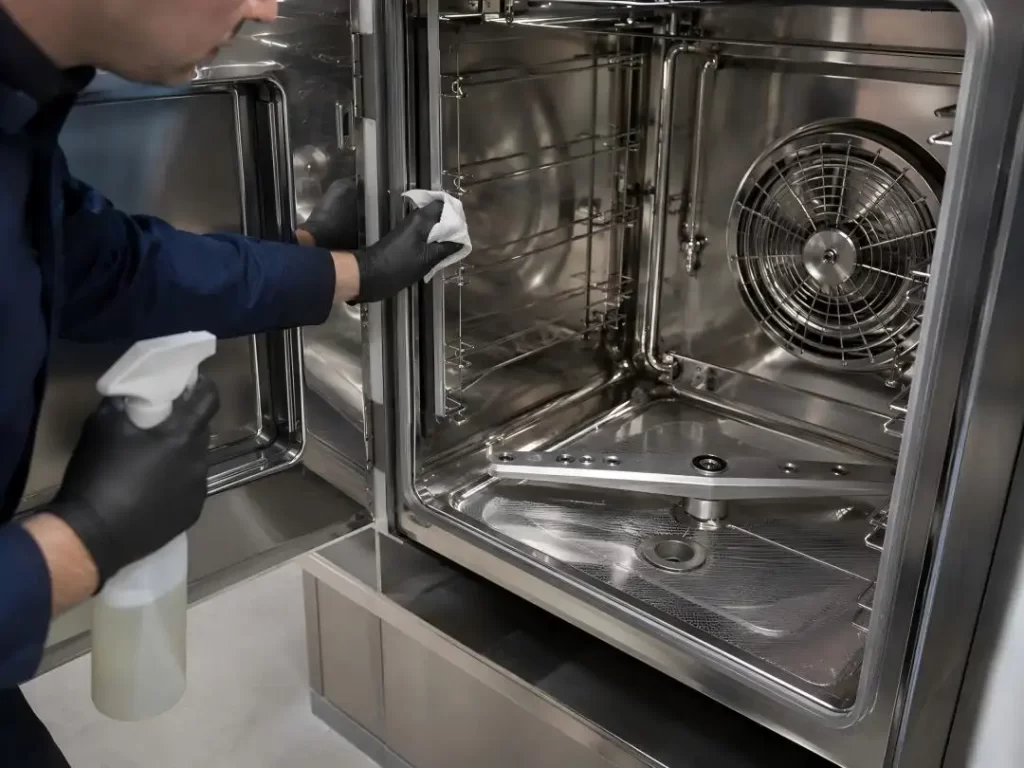
In cleaning in place (CIP) systems, the cleaning agent is an acetic acid solution. Cleaning with acetic acid is effective, and the solution can be safely rinsed from stainless steel CIP systems.
1. What Is Acetic Acid Cleaning Solution?
Acetic acid cleaning solution contains the organic acid CH₃COOH in a water-based solution. Because the acid is of a fermented nature, it is distinct from other cleaning solutions. In food and manufacturing applications, the solution is most commonly used in a diluted state of about 5 to 15%.
It's key differentiator is:
• Cleaning aid → Assists the removal of scales, residues, and surface films.
• It is not a disinfectant → does not act as an approved food-grade sanitizer.
2. Functional benefits in food-contact environments
When applied correctly, there can be many functional benefits of using acetic acid solutions for cleaning food contact surfaces.
2.1 Removal of Limescale (Calcium Carbonate)
When in contact with limescale, acetic acid undergoes the following reaction:
• CaCO₃ + 2CH₃COOH → soluble calcium acetate + CO₂ + H₂O
This reaction allows for the removal of limescale without the need of a rinse, thus eliminating any abrasiveness.
2.2 Reduction of Light Grease & Soap Residue
• Designed to dissolve soap scum
• Loosens light grease films on stainless steel
• Best used after degreasing as part of a maintenance routine
2.3 Surface Hygiene Enhancement
• Mildly acidic environment may lessen the occurrence of some bacteria and mold on surfaces
• Only works on clean, non-porous surfaces
• Does not replace the need for approved sanitizing agents (quaternary ammonium or chlorine-based sanitizers, etc.)
2.4 Rinse Compatibility & Eco-friendliness
• Completely dissolves in water
• Leaves very little residue after rinsing
• Meets biodegradability criteria for use in wastewater
Supports the environmental initiatives of sustainability in food manufacturing
3. Key Application Scenarios
3.1 Descaling of Thermal and Washing Equipment
• Equipment: dishwashers, steamers, combi ovens, boilers
Normal procedure:
• Circulation (or soaking) followed
• By an extensive rinse with potable water
Suggested concentration:
• 5 – 10 % (for normal scale)
• 10 – 12 % (for medium scale)
3.2 Maintenance of Stainless Steel Surfaces
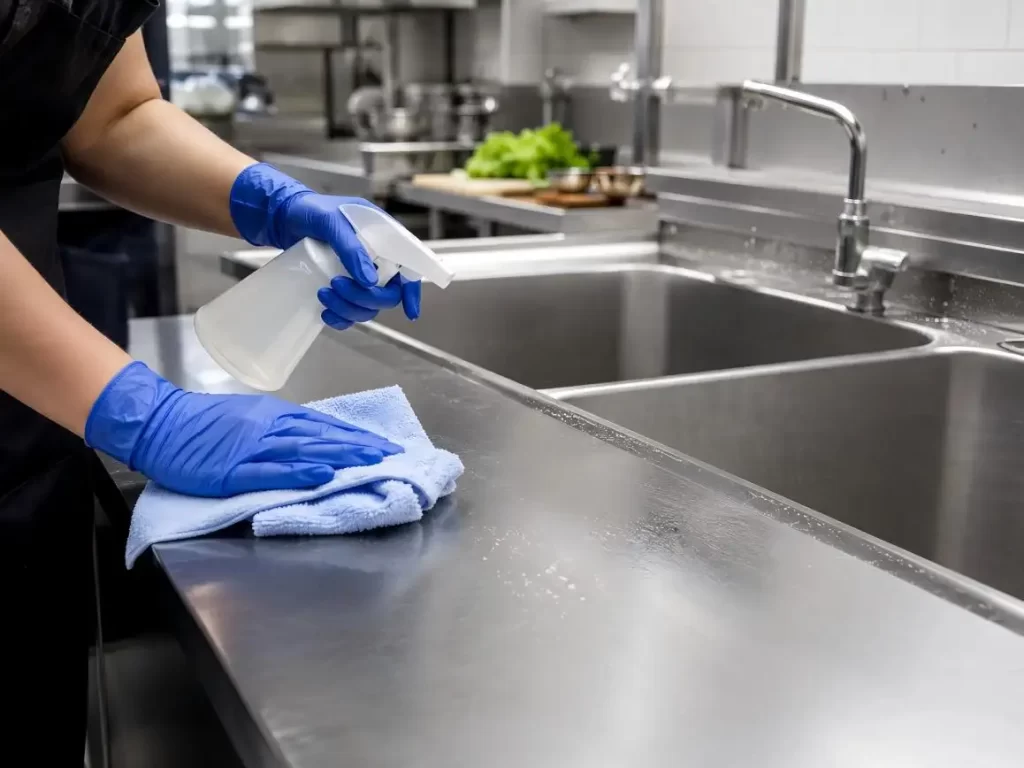
• Areas: worktables, sinks, food prep surfaces
Procedure:
• Spray (or wipe) application
• Short dwell time, rinse with potable water
Important note:
• While stainless steel surfaces are resistant to many chemicals, strong acid solutions can lead to surface dulling if not rinsed promptly.
3.3 Removing Protein and Light Grease Residues
Step in a multi-step process:
- First: Alkaline degreasing
- Followed by a rinsing step with diluted acetic acid
- Final rinse with water
3.4 Ice Machines and Cold Water Circulation Systems
• Aim: Removal of scale from evaporators and piped systems
Essential requirements:
• Follow manufacturers' guidelines
• Multiple rinsing cycles are mandatory
• No residual acetic acid allowed before starting equipment
• Generally used in the 5 – 10 % concentration range
4. Recommended Concentration Guide
| Cleaning Task | Recommended Concentration | Key Considerations |
| Routine stainless steel surface maintenance | 5 – 8 % with rinse | No effect on stainless steel |
| Descaling of dishwashers and steam equipment | 8 – 12 % | Should be checked with equipment manufacturers |
| Descaling of ice machines | 5 – 10 % | Full rinse cycle mandatory |
| Removal of heavy industrial scale from controlled systems | 10 – 15 % | Must be performed by a professional |
⚠️ Note: Concentrations above 15 % are usually reserved for controlled systems in industrial maintenance and require trained personnel.
5. Concentration Strategy and Supply Considerations
The performance of an industrial cleaning operation requires the control of concentration and the ability to maintain it consistently.
5.1 On-Site Dilution Systems
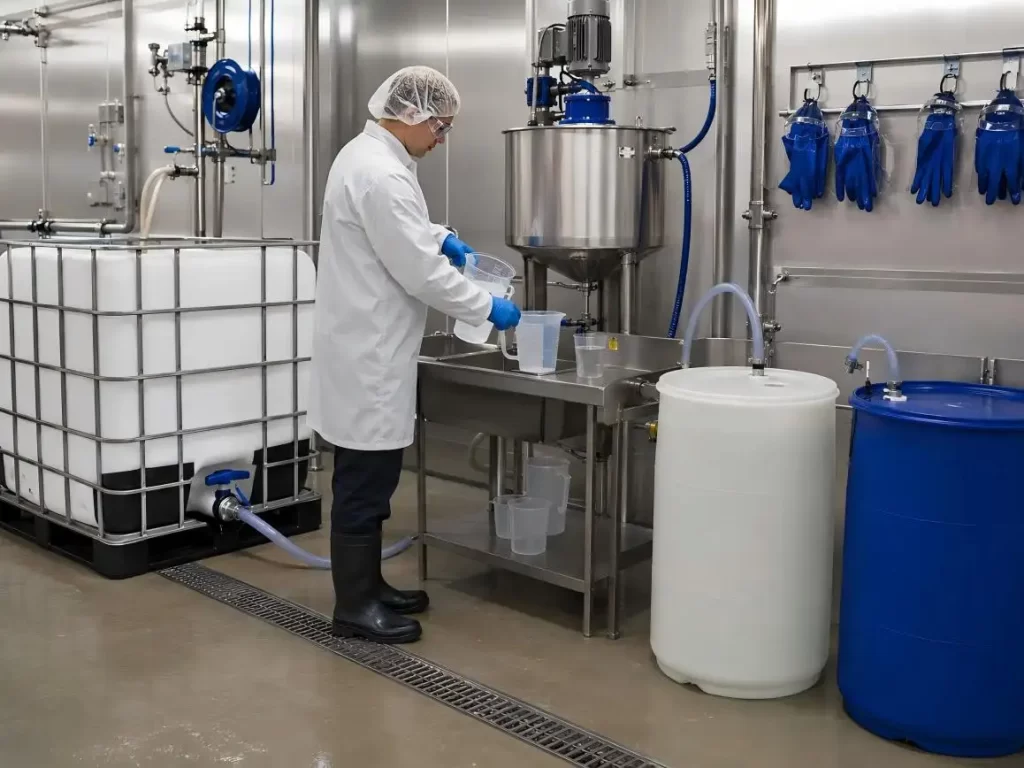
Many plants utilize concentrated acetic acid to form working solutions:
• Acetic Acid 80% Min
• Utilized as an intermediate grade
• Establishes company-wide dilution standard
• Decreases the overall variability (in dilution concentration) from operatives and from shift to shift
5.2 Pre-Diluted Cleaning Solutions
Some processes prefer cleaning solutions ready to use:
• Acetic Acid Solution of concentration (10%–80%) as per requirement
• Decreases the risks associated with handling
• Decreases the requirement for training
• Improves the consistency of safety at work
5.3 Industrial Supply Support
Vanchor provides the following:
• Acetic Acid 80% Min
• Acetic Acid Solution (10%–80%)
• COA
• SDS
• Exportable packaging (drums/ IBCs)
Supports traceability, regulation compliance, and supply continuity for food manufacturing and food service operations.
6. Guidelines for Safe Handling of Chemicals
Appropriate chemical handling procedures must be adopted even for acetic acid solutions which have been diluted.
Key safety practices:
• Use of PPE: gloves, goggles, protective clothing
• Use in well-ventilated areas
• Do not mix with chlorine-based cleaners (risk of formation of toxic chlorine gas)
• Rinse all food contact surfaces with potable water
• Use pH test strips to confirm neutralization
• Store away from oxidizers and alkalis
7. Role in a Food Hygiene Program
Acetic acid cleaning solutions should have the following roles:
✔ Removal of mineral scale
✔ Aiding in the cleaning maintenance of surfaces
✔ Conditioning of cleaning surfaces
Should not have the following roles:
✘ Disinfectant
✘ Removal of heavy soiled surfaces
✘ A replacement for sanctioned cleaning and disinfecting processes
When used properly, it increases the effectiveness of the cleaning and disinfecting process.
Conclusion
In cleaning applications, an acetic acid solution provides a chemistry-based solution that is practical for controlling scaling and light residue in food processing and in commercial kitchens. It is most effective where proper dilution, application, and rinsing controls are observed.
Standardized supply options (Acetic Acid 80% Min, and/or pre-diluted) allow food operations to optimize cleaning control and safety with an improved and simplified workflow when applied with a trustworthy industrial supplier.
FAQ - Applications for Acetic Acid Cleaning
Q1: What is an example of an acetic acid cleaning solution?
An acetic acid cleaning solution can remove scale and light residues as well as surface films from food environments.
Q2: Can I use acetic acid on surfaces that contact food?
Yes, if properly diluted and rinsed thoroughly.
Q3: Does acetic acid clean and disinfect surfaces?
No, it assists in cleaning, but is not a certified disinfectant.
Q4: What is the cleaning concentration of acetic acid?
Cleaning concentrations typically range from 5% to 15%.
Q5: Does acetic acid remove limescale?
Yes, it can remove limescale since it dissolves calcium carbonate.


Contact Us
In This Article
Related Posts
Custom Packaging Solutions from an Anhydrous Sodium Acetate Supplier in China
2026-09-23
Application Trends in Anhydrous Sodium Acetate for Special Chemical Manufacturing
2026-09-23
Anhydrous Sodium Acetate for Leather Tanning: Improve Dyeing Uniformity
2026-09-22
Formic Acid 85% for Textile Dyeing: Industrial Applications, Technical Benefits and Future Trends
2026-09-22


