



Formic Acid 85% for Textile Dyeing: Industrial Applications, Technical Benefits and Future Trends
By Vanchorsc
2026-09-22Related Posts
Custom Packaging Solutions from an Anhydrous Sodium Acetate Supplier in China
2026-09-23
Application Trends in Anhydrous Sodium Acetate for Special Chemical Manufacturing
2026-09-23
Anhydrous Sodium Acetate for Leather Tanning: Improve Dyeing Uniformity
2026-09-22
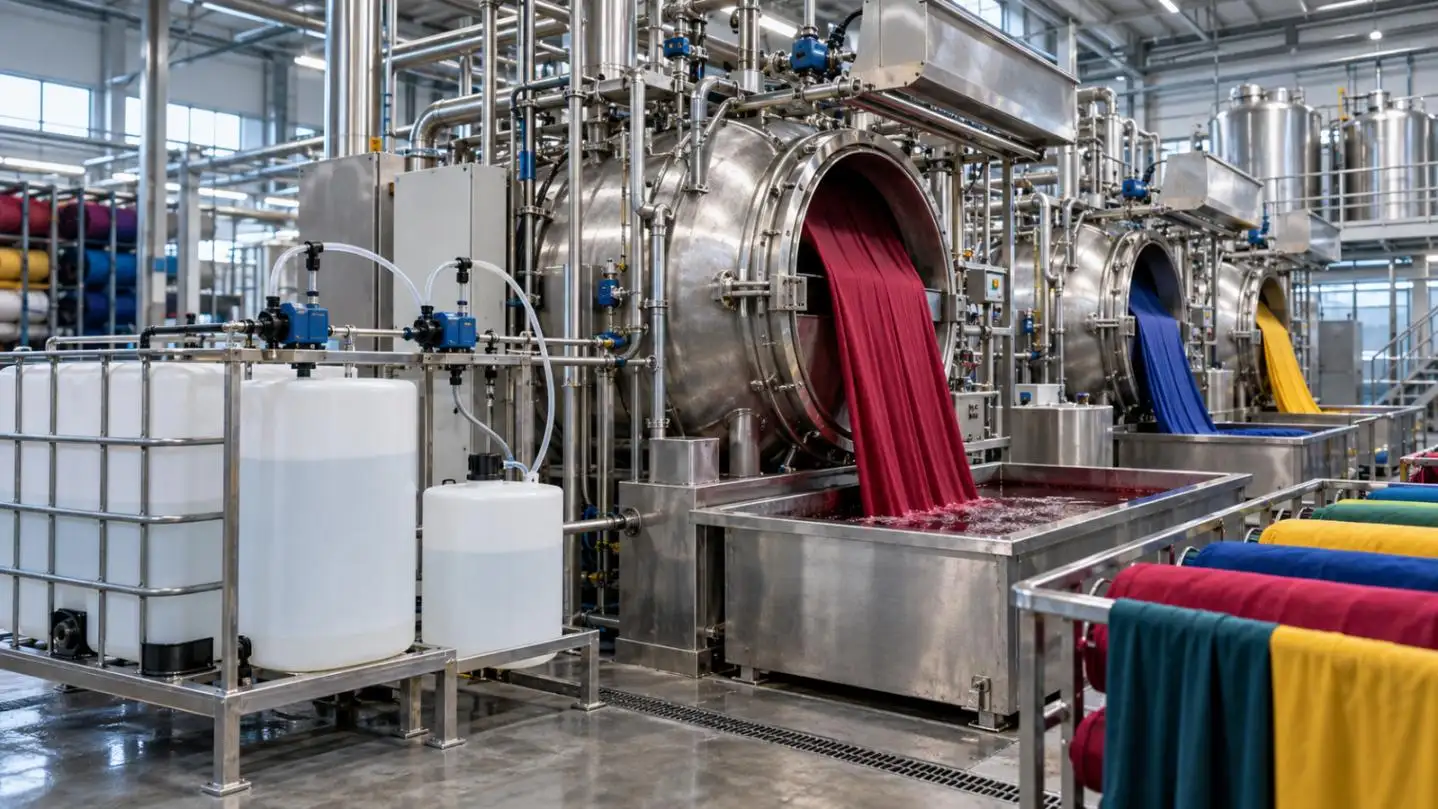
Formic Acid 85% for Textile Dyeing: Industrial Applications, Technical Benefits and Future Trends
2026-09-22
Consistent textile coloration is not achieved by dye concentration alone. Bath pH, acid addition rate, temperature profile, liquor circulation, fiber chemistry and residual alkalinity all influence dye exhaustion and shade reproducibility. For mills working with acid-sensitive processes, Formic Acid 85% for Textile Dyeing provides a practical way to introduce controlled acidity without using a near-anhydrous acid grade.
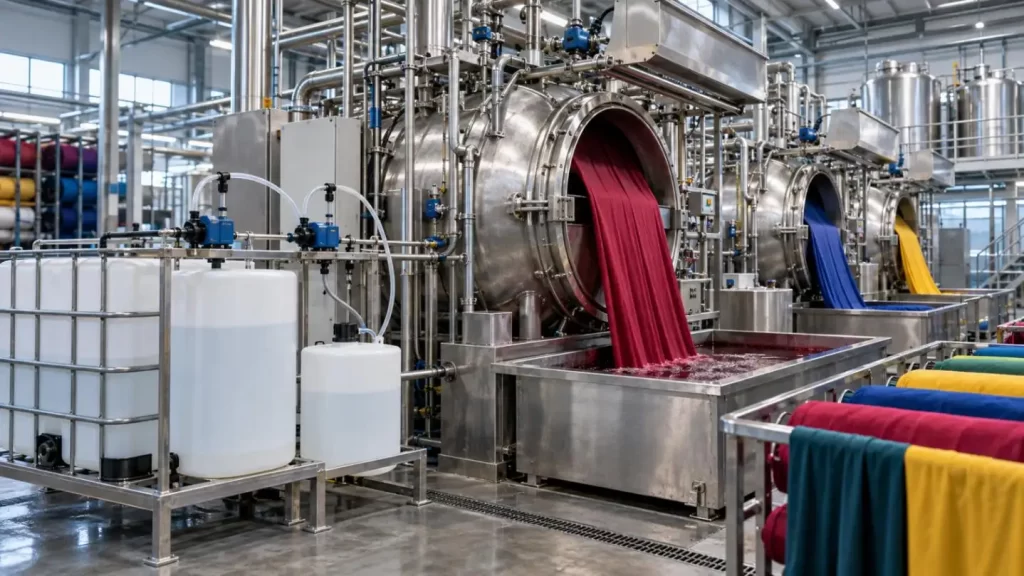
Vanchor supplies Formic Acid 85% as a clear, colorless, water-miscible liquid with the molecular formula HCOOH, CAS No. 64-18-6 and molecular weight 46.03. Its 85% concentration is positioned for textile, leather and other industrial liquid-processing applications where dilution flexibility matters.
Dyeing Problems Often Start with the pH Profile
A dye bath can reach the specified final pH and still produce poor levelness.
The reason is how the bath reached that pH.
Rapid acid addition may create localized low-pH zones and accelerate dye strike before liquor circulation has distributed the acid evenly. In wool and nylon systems, acidic conditions protonate available amino groups, creating positively charged sites that attract anionic acid dyes. pH therefore influences both dye affinity and exhaustion rate.
Typical symptoms of poor acid control include:
•Side-to-side or batch-to-batch shade variation;
•Rapid surface dyeing with insufficient penetration;
•Inconsistent exhaustion;
•Excessive correction additions;
•Poor reproducibility when the same recipe is repeated.
For this reason, Formic Acid 85% for Textile Dyeing should be treated as a process-control chemical, not simply as an ingredient added to reach a final pH number.
Match Formic Acid 85% to the Fiber and Dye System
Not every textile process needs the same acidic conditions.
| Textile System | Role of Formic Acid 85% | Main Control Point |
| Wool + acid dyes | Dye-bath acidification | Avoid excessive acidity and prolonged exposure |
| Nylon + acid dyes | Controls protonation and dye uptake | Prevent excessively rapid strike |
| Wool/nylon blends | Coordinates acid environment between components | Balance differential dye affinity |
| Polyester blends | Neutralization or selected acidic stages | Consider the second fiber and auxiliaries |
| Reactive-dyed cotton | Post-fixation neutralization | Do not acidify before alkaline fixation is complete |
For nylon and wool, Formic Acid 85% for Textile Dyeing can support controlled exhaustion and shade development when acid dosage is coordinated with temperature rise and circulation. For reactive-dyed cotton, however, formic acid is generally more relevant after fixation for residual-alkali neutralization; premature acidification can interfere with an alkaline reactive-dye process.
Formic Acid 85% vs Acetic Acid: Compare the Process, Not Only the Price
Formic acid and acetic acid are both used as organic acidifiers, but they should not be treated as interchangeable solely on a kilogram-for-kilogram basis.
| Decision Factor | Formic Acid 85% | Acetic Acid |
| Acidification | Stronger organic acid response | More moderate response |
| Required addition | Can require less active chemical for equivalent neutralization | May require higher addition |
| Dosing sensitivity | Requires controlled addition | Often provides gentler adjustment |
| Best evaluation method | Target pH + shade reproducibility + total dose | Same |
The correct comparison is delivered cost at the validated operating dose, not purchase price per tonne.
A mill should run laboratory or production trials using the actual fiber, dye, auxiliaries, water hardness, liquor ratio and temperature program before changing acid systems.
Dosing Control Matters as Much as Concentration
With Formic Acid 85% for Textile Dyeing, three variables should be monitored together:
Acid concentration → Addition rate → Bath pH trajectory
Good plant practice normally includes:
•Controlled dilution where required by the recipe;
•Gradual or metered addition rather than uncontrolled dumping;
•Adequate liquor circulation during dosing;
•pH measurement at defined process stages;
•Calibration of dosing pumps and pH probes;
•Recipe records for dose, time, temperature and final pH.
Modern dyehouses are increasingly moving from operator-dependent additions toward metering pumps, recipe automation and online pH feedback. This improves repeatability without assuming that simply adding more acid will improve fixation.
What Buyers Should Verify on Formic Acid 85%
For textile use, concentration alone is not enough.
Vanchor lists its Formic Acid 85% as 85% concentration, clear colorless appearance and fully miscible with water. COA and SDS documentation are available upon request.
Before approving a shipment, buyers should agree on:
•Formic acid assay and tolerance;
•Appearance and relevant impurity limits;
•Test methods;
•Batch-specific COA;
•SDS and transport classification;
•Packaging and retention-sample procedures;
•Acceptance and dispute-testing rules.
Do not assume an industrial chemical carries a textile sustainability certification simply because it is used in dyeing. ZDHC/customer RSL requirements and market-specific chemical-management rules should be checked against the actual product documentation and end-use process.
Storage, Handling and Equipment Reliability
Formic Acid 85% is corrosive and requires controlled chemical handling. Vanchor recommends cool, dry, well-ventilated storage, tightly closed containers and separation from strong bases, oxidizing agents and incompatible materials. Appropriate gloves, eye protection and protective clothing are required during handling.
For dosing systems, mills should periodically inspect pumps, seals, hoses, valves, storage tanks and pH probes according to the equipment supplier's chemical-compatibility recommendations. A concentration change should never be made without recalculating the active-acid dose.
Why Supply Consistency Matters to Dyehouse Reproducibility
A stable dyeing recipe assumes that the acid entering the process is also consistent.
Vanchor's manufacturing base reports more than 30 years of chemical-production experience, a 50,000 m² facility and annual Formic Acid capacity of 20,000 tonnes. The company also operates logistics hubs near Qingdao and Tianjin ports and supports international chemical shipments.
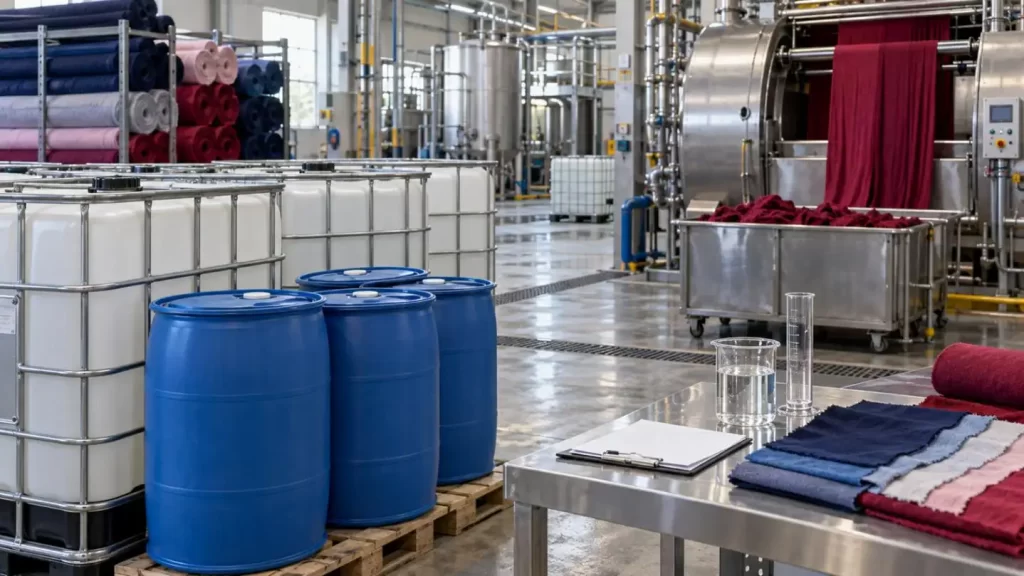
For different purchasing volumes, Vanchor lists 25 kg, 35 kg and 250 kg plastic drums, 1,200 kg IBCs and tank shipment options subject to applicable dangerous-goods requirements.

The Future Is Precision Acid Control, Not Higher Acid Consumption
Future textile dyeing will increasingly combine lower chemical consumption with better process measurement. Automated dosing, digital recipe control, wastewater-load reduction and tighter batch traceability will make Formic Acid 85% for Textile Dyeing most valuable where its dosage is engineered around the actual fiber-dye system.
For mills, distributors and textile-chemical buyers evaluating Formic Acid 85% for Textile Dyeing, Vanchor can provide product specifications, COA/SDS documentation, packaging options and bulk-supply support for application-specific qualification.
FAQs
Q1. What is Formic Acid 85% used for in textile dyeing?
Formic Acid 85% is mainly used as an acidifying agent in textile dyeing processes to control dye bath pH, especially for wool, nylon and acid dye systems. It helps create suitable acidic conditions for consistent dye absorption and improved color reproducibility.
Q2. Why choose Formic Acid 85% instead of other organic acids for textile processing?
Formic Acid 85% provides stronger acidification efficiency compared with many common organic acids. Textile mills evaluate it based on pH control performance, dosage requirements, dyeing results and total process cost rather than only chemical purchase price.
Q3. What specifications does Vanchor provide for Formic Acid 85%?
Vanchor provides Formic Acid 85% with controlled concentration, clear appearance and technical documentation including COA and SDS. Product specifications can be reviewed according to customer application requirements.
Q4. Is Vanchor Formic Acid 85% suitable for wool and nylon dyeing?
Yes. Formic Acid 85% is commonly evaluated for acid dyeing applications involving wool and nylon fibers because these systems require controlled acidic conditions for effective dye absorption.
Q5. How does Formic Acid 85% affect textile dyeing quality?
Proper use of Formic Acid 85% helps maintain stable dye bath conditions, supporting consistent dye exhaustion, better shade repeatability and reduced color variation between production batches.


Contact Us
In This Article
Related Posts
Custom Packaging Solutions from an Anhydrous Sodium Acetate Supplier in China
2026-09-23
Application Trends in Anhydrous Sodium Acetate for Special Chemical Manufacturing
2026-09-23
Anhydrous Sodium Acetate for Leather Tanning: Improve Dyeing Uniformity
2026-09-22
Formic Acid 85% for Textile Dyeing: Industrial Applications, Technical Benefits and Future Trends
2026-09-22


