



Potassium Formate Brine Supplier: Quality, Applications, and Purchasing Guide
By vanchor
2026-07-22Related Posts
Custom Packaging Solutions from an Anhydrous Sodium Acetate Supplier in China
2026-09-23

Application Trends in Anhydrous Sodium Acetate for Special Chemical Manufacturing
2026-09-23

Anhydrous Sodium Acetate for Leather Tanning: Improve Dyeing Uniformity
2026-09-22

Formic Acid 85% for Textile Dyeing: Industrial Applications, Technical Benefits and Future Trends
2026-09-22
A good Potassium Formate Brine Supplier can assure stable concentration, controlled impurities, complete technical documentation, appropriate packaging, and reliable delivery to the oilfield companies, refrigeration-system operators, deicing formulators, and industrial buyers.
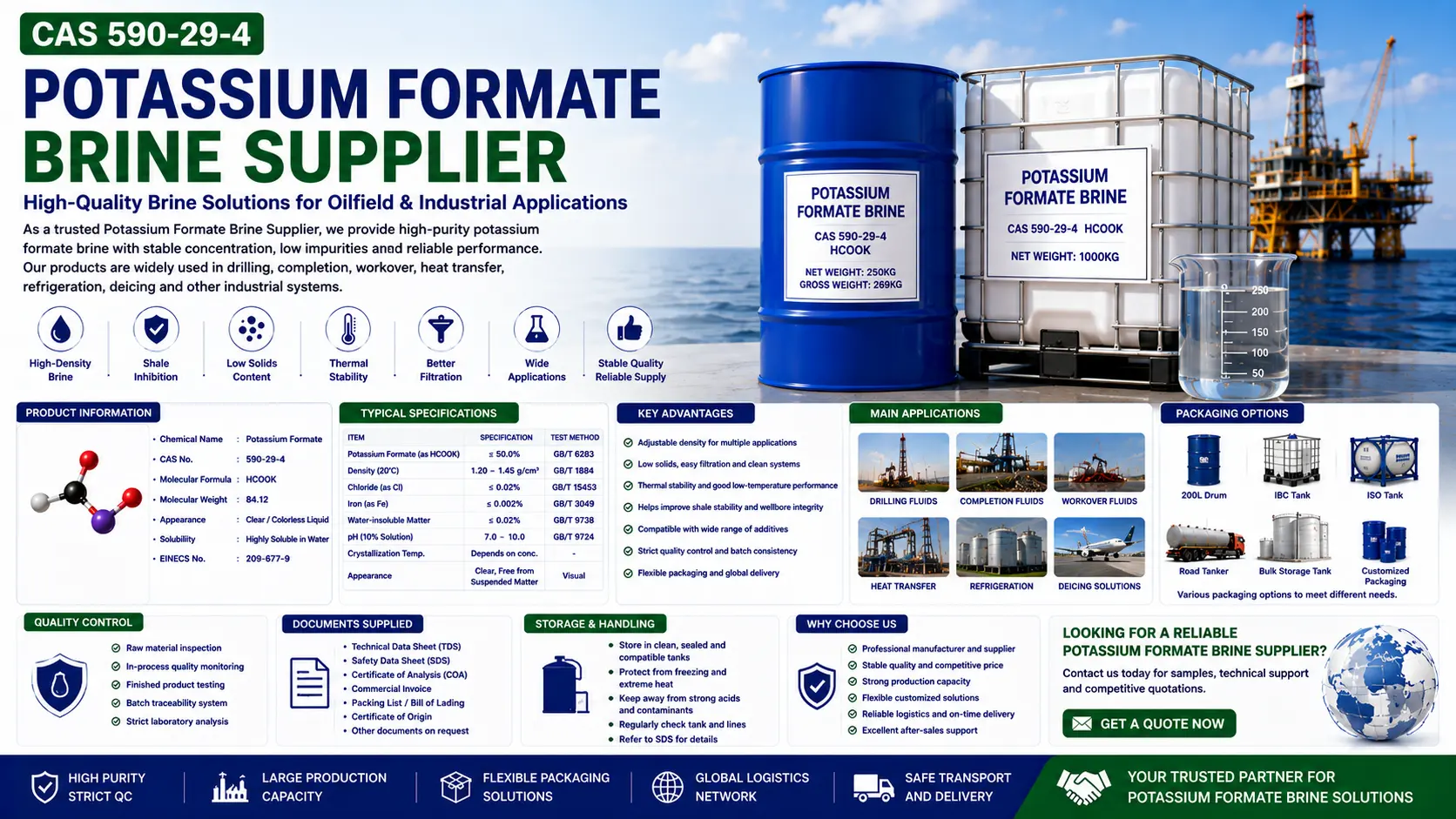
Potassium formate brine is a highly concentrated aqueous solution of potassium formate. Applications where a high water solubility, adjustable density, low suspended solids, and stable low-temperature performance is required make it widely used in drilling, completion, workover, heat-transfer, refrigeration, deicing and industrial processing applications.
When it comes to choosing the right supplier, there's more to it for buyers than just the cost per metric ton. The final application may be affected by concentration, density, chloride, iron, insoluble matter, pH, crystallization temperature, corrosion performance, packaging and batch consistency.
What Is Potassium Formate Brine?
Potassium formate is the potassium salt of formic acid. Its chemical formula is HCOOK, and its CAS number is 590-29-4.
Potassium formate brine is produced by dissolving solid potassium formate in water or by preparing a controlled aqueous solution during manufacturing. It is usually supplied as a clear or nearly colorless liquid.
Typical product information includes:
- Chemical name: Potassium Formate
- CAS number: 590-29-4
- Molecular formula: HCOOK
- Molecular weight: approximately 84.12
- Product form: Aqueous brine
- Appearance: Clear or nearly colorless liquid
- Solubility: Completely miscible or highly soluble in water
- EINECS number: 209-677-9
Commercial brines may be available in different concentrations according to the required density, crystallization temperature, and end-use application.
The exact product specification should always be confirmed through the supplier’s technical data sheet and batch-specific certificate of analysis.
Why Potassium Formate Is Used in Brine Systems
Potassium formate can form highly concentrated aqueous solutions while maintaining useful fluid properties.
Potential advantages include:
- Adjustable solution density
- Low suspended-solids content
- High water solubility
- Good thermal stability
- Convenient pumping and dosing
- Reduced powder handling
- Flexible dilution
- Compatibility with selected additives
- Suitable low-temperature performance
The final brine properties depend on concentration, temperature, water quality, impurity control, and formulation design.
Main Applications of Potassium Formate Brine
Oilfield Drilling Fluids
Potassium formate brine can be used as the liquid phase in selected drilling-fluid systems.
It may support:
- High-density fluid preparation
- Low-solids drilling systems
- Shale inhibition
- Improved fluid clarity
- Better filtration
- Reduced weighting solids
- Thermal stability
- Reduced formation-damage risk
The complete drilling fluid should be tested for rheology, fluid loss, lubricity, shale recovery, thermal aging, corrosion, and contamination tolerance.
Completion Fluids
Potassium formate brine is widely considered for clear completion-fluid systems where hydrostatic pressure and low solids are important.
Potential benefits include:
- Adjustable brine density
- Low suspended solids
- Easier filtration
- Reduced particle invasion
- Cleaner completion equipment
- Stable solution properties
- Compatibility with selected completion additives
Before field use, the fluid should be evaluated for formation compatibility, scale tendency, corrosion, elastomer compatibility, fluid loss, and return permeability.
Workover Fluids
Workover operations may require stable brines to control well pressure during maintenance, repair, or stimulation activities.
Potassium formate brine may provide:
- Reliable density control
- Clean fluid performance
- Reduced solids loading
- Good pumpability
- Flexible field adjustment
- Suitable thermal properties
The brine should be compatible with wellbore materials, formation fluids, tools, and treatment chemicals.
Drill-In Fluids
Potassium formate brine can also be used in selected drill-in systems designed to reduce reservoir damage.
Recommended evaluations include:
- Filter-cake quality
- Return permeability
- Fluid loss
- Rheology
- Breaker compatibility
- Thermal aging
- Formation interaction
- Solids invasion
Heat-Transfer Fluids
Potassium formate brine may be used in secondary refrigeration and industrial heat-transfer systems.
Potential applications include:
- Cold-storage warehouses
- Food-processing facilities
- Ice rinks
- Refrigerated logistics
- Industrial cooling
- Process-temperature control
The complete fluid should be tested for:
- Freezing or crystallization temperature
- Viscosity
- Thermal conductivity
- Corrosion
- Pump compatibility
- Seal compatibility
- Long-term stability
Deicing and Anti-Icing
Potassium formate brine may also be incorporated into liquid deicing and anti-icing systems.
Potential application areas include:
- Airport runways
- Roads
- Bridges
- Industrial yards
- Railway facilities
- Logistics terminals
The finished formulation should be tested for freezing-point performance, ice-melting capacity, corrosion, concrete compatibility, surface residue, and storage stability.
Concentration and Density
Concentration and density are two of the most important potassium formate brine parameters.
A higher concentration generally provides:
- Higher active potassium formate content
- Higher solution density
- Greater freight efficiency per unit of active material
- Different crystallization behavior
- Different viscosity
Buyers should confirm:
- Concentration by weight
- Density at a stated temperature
- Testing method
- Acceptable concentration tolerance
- Recommended operating range
Density changes with temperature, so test values should only be compared under the same conditions.
Crystallization Temperature
Crystallization temperature is critical for concentrated potassium formate brines.
If a solution is stored below its recommended temperature, crystals may form and cause:
- Blocked transfer lines
- Pumping difficulties
- Valve obstruction
- Tank deposits
- Uneven concentration
- Production or field delays
A supplier should clearly state the crystallization or salt-out temperature for each available concentration.
Buyers operating in cold climates may require:
- Insulated tanks
- Heated pipelines
- Recirculation
- Temperature monitoring
- Emergency warming procedures
The selected concentration should match the expected storage and operating environment.
Important Quality Specifications
A professional Potassium Formate Brine Supplier should provide clear limits for:
- Potassium formate concentration
- Density
- Chloride
- Iron
- Water-insoluble matter
- pH
- Appearance
- Color
- Crystallization temperature
- Suspended solids
Chloride Content
Chloride content is important because excessive chloride may increase corrosion in oilfield, refrigeration, deicing, and heat-transfer systems.
Potential consequences include:
- Metal corrosion
- Higher inhibitor consumption
- Reduced equipment life
- Compatibility problems
- Increased maintenance costs
Buyers should define acceptable chloride limits based on metallurgy, operating temperature, pressure, and the corrosion-control program.
Iron Content
Iron may affect:
- Brine color
- Fluid clarity
- Chemical stability
- Scale formation
- Corrosion behavior
- Final formulation appearance
Low iron is especially important for clear completion fluids and sensitive heat-transfer systems.
Water-Insoluble Matter
Low insoluble matter helps reduce:
- Filter blockage
- Tank deposits
- Pipeline contamination
- Nozzle obstruction
- Formation damage
- Equipment wear
The supplier should provide a tested batch value rather than only a general typical range.
pH Control
The pH of potassium formate brine can influence corrosion, additive compatibility, and storage stability.
Unexpected pH variation may indicate:
- Raw-material inconsistency
- Contamination
- Concentration changes
- Production-control problems
- Incorrect dilution
The acceptable pH range should be specified according to the final application.
Brine Clarity
Clear brine is important in completion, workover, and heat-transfer systems.
Cloudiness or visible particles may indicate:
- Insoluble contamination
- Precipitation
- Poor filtration
- Incompatible dilution water
- Incorrect storage
- Cross-contamination
Incoming product inspection should include a visual clarity check.
Water Quality for Dilution
Potassium formate brine may be diluted to achieve a lower concentration or target density.
Water quality can affect:
- Brine clarity
- Scale tendency
- Corrosion
- Additive compatibility
- Final pH
- Suspended solids
Potential water contaminants include:
- Calcium
- Magnesium
- Sulfate
- Carbonate
- Iron
- Suspended solids
- Microorganisms
Clean, tested water should be used for dilution.
Dilution and Blending
A general dilution process may include:
- Inspecting and cleaning the mixing tank
- Confirming dilution-water quality
- Adding the required water volume
- Starting controlled agitation
- Adding potassium formate brine gradually
- Mixing until uniform
- Measuring density and concentration
- Adjusting the blend
- Adding compatible additives
- Testing before use
Actual procedures should be developed by qualified technical personnel.
Additive Compatibility
Potassium formate brine may be used with selected:
- Corrosion inhibitors
- Oxygen scavengers
- Scale inhibitors
- Biocides
- Viscosifiers
- Fluid-loss additives
- Surfactants
- Lubricants
- Defoaming agents
All additives should be tested at the actual brine concentration and operating temperature.
Products that perform well in freshwater may behave differently in concentrated formate brine.
Corrosion Testing
Corrosion control should be evaluated before long-term use.
Important test factors include:
- Brine concentration
- Chloride level
- pH
- Temperature
- Oxygen
- Flow rate
- Metal type
- Exposure time
- Corrosion-inhibitor dosage
Representative equipment metallurgy should be used wherever possible.
Packaging Options
Potassium formate brine may be supplied in:
- 200-liter drums
- IBC tanks
- ISO tanks
- Road tankers
- Dedicated bulk tanks
- Customized delivery systems
The best packaging option depends on order quantity, destination, unloading equipment, and storage capacity.
Drum Supply
Drums may be suitable for:
- Trial orders
- Smaller industrial users
- Remote sites
- Controlled batch dosing
However, drums usually have a higher packaging cost per metric ton.
IBC Tank Supply
IBC tanks provide convenient handling for medium-volume customers.
Potential advantages include:
- Forklift handling
- Easy pump connection
- Reduced manual transfer
- Reusable storage potential
- Better inventory control
ISO Tank Supply
ISO tanks may be more economical for large international bulk shipments.
Buyers should consider:
- Tank availability
- Rental period
- Cleaning charges
- Detention
- Heating requirements
- Return logistics
- Destination handling
Road Tanker Delivery
Road tankers may be suitable for regional bulk supply.
The receiving facility should have:
- Compatible unloading lines
- Suitable storage tanks
- Safe access
- Transfer pumps
- Spill-control procedures
- Trained personnel
Tank and Material Compatibility
Storage tanks, transfer lines, pumps, seals, and valves should be compatible with potassium formate brine.
Buyers should verify:
- Tank construction material
- Internal lining
- Seal material
- Pump design
- Valve compatibility
- Hose condition
- Temperature limits
- Previous cargo history
Contaminated or incompatible equipment may affect brine quality.
Storage and Handling
Potassium formate brine should be stored in a clean, sealed, and compatible tank.
The product should be protected from:
- Strong acids
- Contamination
- Extreme cold
- Incorrect dilution
- Open storage
- Incompatible materials
- Unclean transfer equipment
Storage tanks should be labeled clearly and inspected regularly.
Workers should follow the supplier’s safety data sheet and site-specific handling procedures.
How to Evaluate a Potassium Formate Brine Supplier
Review the Technical Data Sheet
The supplier should clearly state:
- Concentration
- Density
- Chloride
- Iron
- Insoluble matter
- pH
- Appearance
- Crystallization temperature
- Storage requirements
Request Batch-Specific COAs
The certificate of analysis should match the actual shipment batch and include measured values.
Test a Representative Sample
Recommended tests include:
- Concentration
- Density
- Chloride
- Iron
- Insoluble matter
- pH
- Appearance
- Crystallization behavior
- Application performance
Confirm Production Capacity
Buyers should ask about:
- Monthly output
- Available inventory
- Standard lead time
- Emergency supply capability
- Repeat-order capacity
- Available concentrations
Review Quality Traceability
Each shipment should be traceable through:
- Batch number
- Production date
- Laboratory results
- Retained samples
- Packaging records
- Loading records
- Shipping documents
Evaluate Export Experience
International suppliers should understand:
- Liquid chemical classification
- Drum and IBC loading
- ISO tank procedures
- Customs documents
- Freight coordination
- Destination regulations
- Tank return requirements
Required Documents
A professional supplier should provide:
- Technical data sheet
- Safety data sheet
- Certificate of analysis
- Commercial invoice
- Packing list
- Certificate of origin
- Bill of lading
- Customs declaration documents
- Inspection reports when required
All documents should show consistent concentration, net weight, batch number, packaging, and consignee details.
How to Request an Accurate Quotation
A complete quotation request should include:
- Required concentration
- Target density
- Maximum chloride
- Maximum iron
- Maximum insoluble matter
- Order quantity
- Packaging
- Destination
- Incoterm
- Delivery schedule
- Storage temperature
- Intended application
- Required documents
For example:
“Please quote potassium formate brine at the required concentration in ISO tanks, CIF Rotterdam, including density, chloride, iron, crystallization temperature, TDS, SDS, and batch-specific COA.”
Total Procurement Cost
The total purchasing cost includes more than the quoted product price.
Buyers should consider:
- Active potassium formate content
- Packaging
- Inland transport
- Ocean freight
- ISO tank rental
- Cleaning charges
- Detention
- Customs clearance
- Import duties
- Storage
- Heating
- Pumping
- Dilution
- Filtration
- Corrosion control
- Quality inspection
- Operational risk
A stable brine with controlled impurities may reduce filtration costs, equipment problems, corrosion, and production delays.
Common Purchasing Risks
Potential risks include:
- Incorrect concentration
- Density variation
- Excessive chloride
- High iron
- Insoluble contamination
- Crystallization during storage
- Incompatible packaging
- Tank contamination
- Incomplete documents
- Delayed delivery
These risks can be reduced through detailed specifications, sample testing, batch-specific COAs, pre-shipment inspection, and proper storage planning.
Benefits of Long-Term Cooperation
Long-term cooperation with a reliable Potassium Formate Brine Supplier may provide:
- Stable concentration
- Consistent impurity control
- Better delivery planning
- Customized packaging
- Faster document preparation
- Improved technical communication
- More predictable pricing
- Faster complaint resolution
- Reliable repeat supply
For regular industrial users, supply continuity and consistent quality may be more valuable than short-term price savings.
Questions to Ask Before Ordering
Buyers should confirm:
- Which concentrations are available?
- What is the density at the stated temperature?
- What is the crystallization temperature?
- What are the chloride and iron limits?
- What is the insoluble-matter specification?
- Can recent batch COAs be provided?
- Is a representative sample available?
- What packaging options are offered?
- Can ISO tank delivery be arranged?
- What is the monthly production capacity?
- What is the standard lead time?
- Can customized concentration be supplied?
- Which export documents are included?
- Can third-party inspection be arranged?
Conclusion
It is necessary to conduct a comprehensive assessment and analysis on concentration, density, chloride, iron, insoluble matter, pH, crystallization temperature, packaging, quality control, delivery capacity for choosing a reliable Potassium Formate Brine Supplier.
Potassium formate brine may be used as oilfield drilling, completion, workover, heat transfer, refrigeration, de-ice, and industrial chemical systems. The performance will depend on the complete formulation, storage conditions, equipment compatibility and operational conditions.
Buyers are advised to check the full technical specification before purchasing, obtain a Certificate of Analysis for each batch of purchased product, and test a sample before making the purchase and ensure packaging, storage and transportation conditions.
A reliable supplier should be able to offer consistent concentration, controlled impurities, compatible packaging, proper documentation, quick technical support and consistent worldwide delivery.


Contact Us
In This Article
Related Posts
Custom Packaging Solutions from an Anhydrous Sodium Acetate Supplier in China
2026-09-23
Application Trends in Anhydrous Sodium Acetate for Special Chemical Manufacturing
2026-09-23
Anhydrous Sodium Acetate for Leather Tanning: Improve Dyeing Uniformity
2026-09-22
Formic Acid 85% for Textile Dyeing: Industrial Applications, Technical Benefits and Future Trends
2026-09-22


