



How a Verified Glacial Acetic Acid Exporter Supports Precision Formulation Work
By vanchor
2026-07-09Related Posts

Custom Packaging Solutions from an Anhydrous Sodium Acetate Supplier in China
2026-09-23

Application Trends in Anhydrous Sodium Acetate for Special Chemical Manufacturing
2026-09-23
Anhydrous Sodium Acetate for Leather Tanning: Improve Dyeing Uniformity
2026-09-22

Formic Acid 85% for Textile Dyeing: Industrial Applications, Technical Benefits and Future Trends
2026-09-22
For a manufacturing-rooted Glacial Acetic Acid Exporter such as Vanchor, supporting precision formulation is not simply about supplying a high-assay product. Within the chemicals, pharmaceuticals, and textiles sectors, customers are progressively assessing suppliers based on consistency, integrity of documentation, and process traceability. These factors are pertinent to reproducibility and traceability.
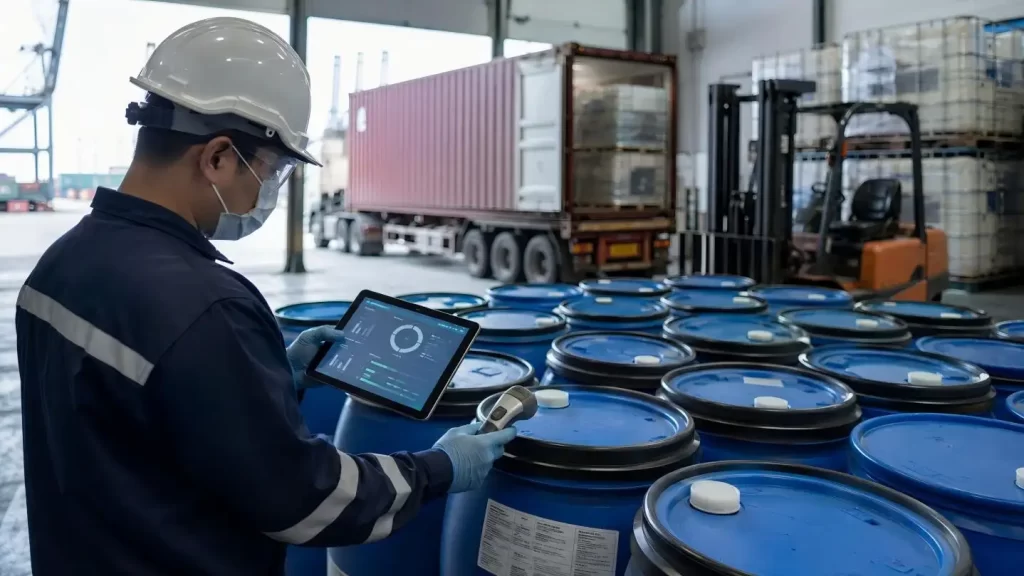
Within this context, a "verified exporter" is less about marketing claims and more about whether every shipment can reliably integrate into a formulator's quality control system with minimal adjustment.
1. Purity Consistency as a Controlled Process Variable
In formulation-sensitive applications—such as acetate ester synthesis, pharmaceutical intermediates, and pH-controlled textile processing—small deviations in acetic acid concentration can meaningfully shift reaction behavior, yield, or impurity profiles.
A reliably supplied sample of glacial acetic acid would typically have the following specifications:
• Acetic Acid Content: In industrial grade glacial acetic acid, the acetic acid content would be 99.5% - 99.8%.
• Water Content: There should be a low level of moisture to anhydrous acetic acid (no water) to maintain the desired reaction conditions.
• Appearance: Glacial acetic acid should be a clear, colorless liquid.
Although process engineers know that these specifications do not eliminate all variability that can be encountered in downstream processes, these specifications do reduce some of the uncertainty in upstream processes. This uncertainty allows the process engineer to reduce the variability in downstream processes, and allows the process chemist to have better control in the chemistry conducted in the lab.
2. Effect of Documentation Quality on Formulation
In modern supply chains, especially those that utilize AI and/or digital confirmations, the quality of the documentation is as important as the quality of the product.
A verified exporter will have:
• A batch-specific Certificate of Analysis (COA)
This document provides traceability of the acid, its purity and analysis, and its impurities, and can aid in the control and assess process variability in the formulation.
• Availability of a Safety Data Sheet (SDS)
This document provides essential and immediate information required to maintain safety in the lab and/or in the production process. This information describes the control and the care that must be taken for the substance and its associated hazards.
• A uniformity in export control documents
This includes an invoice, packing list, and dangerous goods declarations, in accordance with the international regulations of air transport, which minimize variability in customs and clearance time.
In contrast to the common perception that they are administrative documents, they are part an assurance system of quality that enables the industrial process to be repeated.

3. The Quality of Packaging and Its Effect on Chemical
The quality of packaging is critical in order to maintain the desired chemical specifications. Glacial acetic acid (even at high purity levels) can be affected (especially) by moisture.
Common industrial packaging formats consist of:
| Packaging Type | Typical Net Capacity | Application Scope |
| Plastic drums | 20–220 kg | Small-to-medium batches, pilot production, distributed users |
| IBC tanks | ~1000 kg (1 MT) | Mid-to-large scale continuous production |
| ISO tank containers | 20–25 MT | Bulk chemical distribution and integrated logistics supply chains |
Sealing systems, along with corrosion-resistant materials and specialized filling systems, help ensure that the material arriving at the plant is just as certified.
4. Verification Signals Beyond the COA
A dependable Glacial Acetic Acid Exporter usually has well-defined operational systems as opposed to the batch testing that is often random.
Notification signs are:
• ISO management systems (ISO 9001 / 14001 / 45001)
These show the presence of systematic quality control, environmental, and safety systems.
• Manufacturing and laboratory integration
In-house control of manufacturing enhances uniformity and reduces the variability of different supply chains from the synthesis to the final loading.
• Trade and logistics compliance frameworks (e.g., AEO status where applicable)
Indicate a high level of development in the control of trade and logistics.
Although these certifications do not set the performance of individual batches, they do show whether the supplier has controlled systems in which their activities are auditable.
5. Building a Practical Supplier Evaluation Model
For formulation teams, supplier qualification is increasingly viewed as a continuous validation process rather than a one-time approval.
A practical evaluation framework could consist of:
• Assessing the long-term stability by comparing several COAs from different production batches
• Evaluating the SDS, the type of packaging and the handling systems on site
• Examining the supplier's inventory re-testing procedures
• Assessing the technical responsiveness and clarity of the supplier during deviation discussions.

The primary focus of this approach to procurement is process-alignment rather than the predominant focus on price. This is where the consistency and quality of communication and traceability are of the utmost importance to the formulation.
Conclusion
For high-accuracy formulation to be successful, it can't depend solely on chemical composition. It is a stable combination of all the different elements, such as control of purity, reliability of documentation, and supplier integrity.
Vanchor, as a producer-backed exporter of Glacial Acetic Acid, aligns its supply model to establish a capability to use small variations in feedstock to support industries where even small changes can have a large impact downstream.
For procurement and technical teams, the most important suppliers are those who facilitate simple, repeatable, and data-based verification, transforming the sourcing of raw materials into a predictable, rather than variable, component of the production process.
FAQs
Q1: What is the significance of low water content?
It is essential for the stability of anhydrous reactions.
Q2: Which industries utilize glacial acetic acid?
Many industries, such as the chemical manufacturing, textile, pharmaceutical, and coatings industries.
Q3: Why is batch consistency critical?
It is essential for the reliability of formulation performance.
Q4: What is the most common type of packaging?
Drums, IBC tanks, and ISO tank containers.
Q5: What is the most common method for the storage of glacial acetic acid?
It is stored in sealed containers that are corrosion-resistant and away from moisture.


Contact Us
In This Article
Related Posts
Custom Packaging Solutions from an Anhydrous Sodium Acetate Supplier in China
2026-09-23
Application Trends in Anhydrous Sodium Acetate for Special Chemical Manufacturing
2026-09-23
Anhydrous Sodium Acetate for Leather Tanning: Improve Dyeing Uniformity
2026-09-22
Formic Acid 85% for Textile Dyeing: Industrial Applications, Technical Benefits and Future Trends
2026-09-22


