



Acetic Acid Concentration Guide: Choose the Right Industrial Grade
By vanchor
2026-07-09Related Posts
Custom Packaging Solutions from an Anhydrous Sodium Acetate Supplier in China
2026-09-23
Application Trends in Anhydrous Sodium Acetate for Special Chemical Manufacturing
2026-09-23
Anhydrous Sodium Acetate for Leather Tanning: Improve Dyeing Uniformity
2026-09-22
Formic Acid 85% for Textile Dyeing: Industrial Applications, Technical Benefits and Future Trends
2026-09-22
Acetic acid concentration matters because it changes how the material behaves in storage, handling, and end use. If you are choosing between glacial acetic acid and a diluted acetic acid solution, the right option depends on the application, not just the strength. For a broader sourcing context, see the How a Verified Glacial Acetic Acid Exporter Supports Precision Formulation Work (inferred) page.
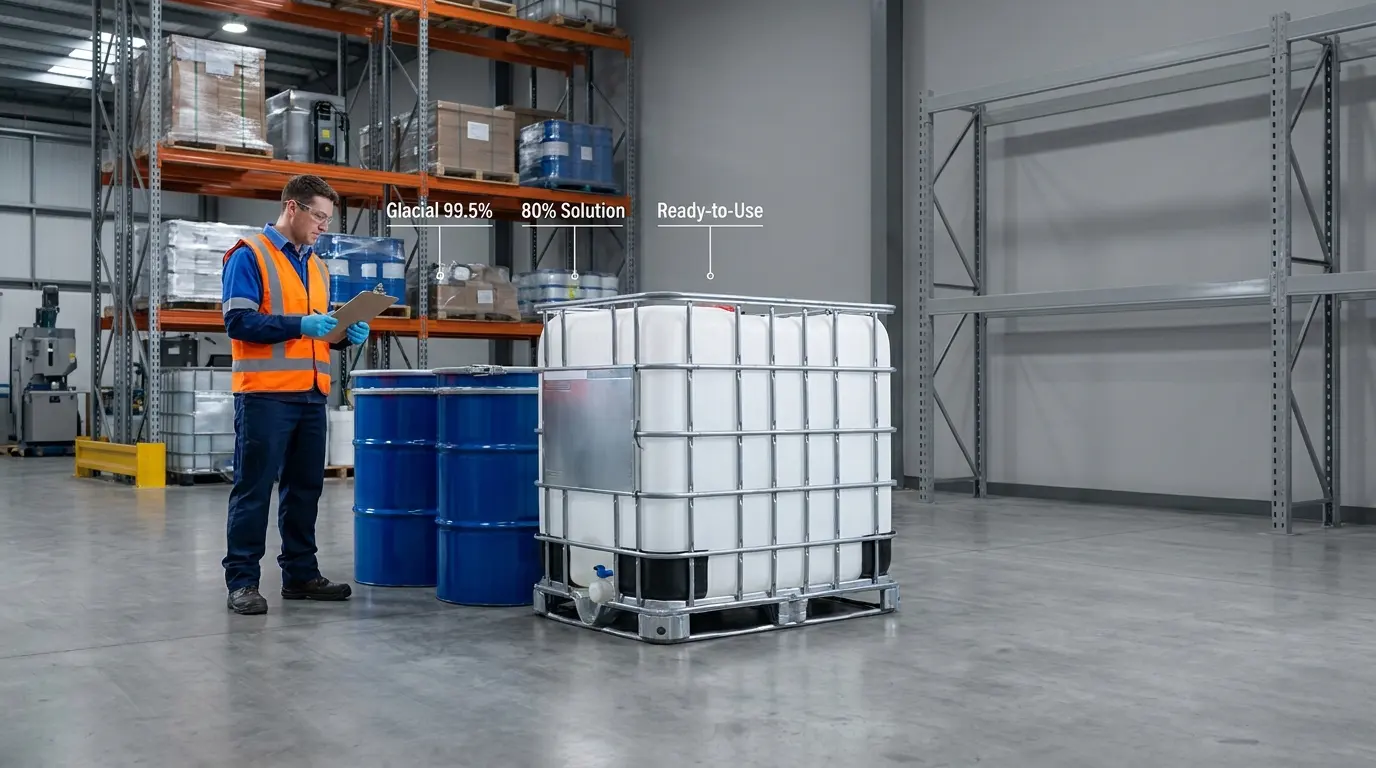
What Acetic Acid Concentration Means for Buyers
For buyers, concentration is the practical measure of how strong the acetic acid is and how much water is present in the supply. Higher concentration usually means less water, which can make the product more suitable for certain formulation or process needs, but it can also increase handling caution. The key question is not “what is the strongest option?” but “what concentration fits the job safely and efficiently?”cdc+1
Glacial acetic acid is the high-strength form most buyers mean when they talk about concentrated acetic acid. A diluted solution is the more convenient option when the process needs a ready-to-use blend instead of a concentrate that must be diluted on site. That distinction is central to industrial buying decisions because the supply form affects labor, storage, and process consistency.alliancechemical+2
Glacial Acetic Acid vs Diluted Solution
Glacial acetic acid fits buyers who need a stronger feedstock and want to control dilution themselves. Vanchor’s product pages show glacial acetic acid at 99.5% min and also list acetic acid 80% min, which shows that concentration options can vary by process requirement. A diluted acetic acid solution is better when the application is already defined and the buyer wants less in-house handling.vanchorsc+2
| Option | Best Fit | Main Advantage | Main Trade-Off |
|---|---|---|---|
| Glacial acetic acid | Precision formulation, high-strength feedstock, controlled dilution | Stronger base material and more flexibility | Requires more careful handling and dilution control |
| Diluted acetic acid solution | Defined application, routine use, simpler handling | Easier to use and apply | Less flexibility if a different concentration is needed later |
How to Choose the Right Concentration by Application
The best concentration depends on the application’s tolerance for strength, water content, and handling complexity. Vanchor’s own cleaning-application guidance shows that a lower dilution can be appropriate for routine cleaning tasks, while custom solutions may suit more controlled industrial use. That is the kind of decision logic buyers need: match the concentration to the process, then verify the supply format.vanchorsc+1
If the application is a cleaning task, a diluted solution is often more practical than glacial acid because the end use does not require the strongest possible feedstock. Vanchor’s cleaning page notes a generally used 5–10% range for cleaning applications, which is helpful as a practical benchmark for that use case. If the application is broader industrial formulation work, a stronger base material may be preferable so the buyer can tailor the final concentration internally.vanchorsc+1
For other industrial settings, the same principle still applies: the process determines the supply form. Textile, dyeing, and leather-related uses are part of Vanchor’s published chemical scope, which suggests the company positions acetic acid within broader industrial processing, not just one narrow application. Buyers should therefore evaluate whether they need a finished solution or a higher-strength input for downstream blending.vanchorsc+1
When a Ready-Made Solution Makes More Sense
A ready-made acetic acid solution is the better choice when consistency and convenience matter more than maximum flexibility. Vanchor says it provides customized concentrations and COA support, which is useful for buyers who need a defined specification rather than a concentrate they must dilute themselves. This option can reduce handling steps and make routine operations simpler.vanchorsc
In practice, that means a ready-made solution works well when the buyer already knows the target concentration and wants to minimize in-house preparation. It is also helpful when the process team wants a product that arrives closer to the final-use condition. If the buyer expects to adjust concentrations often, glacial acid may offer more control.vanchorsc+1
What to Check Before You Buy
The most important verification step is confirming that the supplier can document the concentration, batch quality, and safety information. Vanchor’s site states that it supports COA documentation and global logistics on its acetic acid solution page, and its product pages emphasize export-ready packaging and quality documentation for glacial acetic acid. Those are useful buyer signals, but they still need to be checked against the exact grade and batch being purchased.vanchorsc+1
A practical buyer checklist should include these items:
COA, to confirm the assay or concentration of the lot.
SDS, to confirm safe handling and transport information.
Packaging format, to make sure the product fits storage and process needs.
Batch consistency, if repeat orders matter.
Final-use fit, so the concentration matches the application instead of forcing extra dilution steps.cdc+2
A supplier can offer a broad product range without every option being suitable for every use. That is why documentation matters as much as concentration. For an industrial buyer, a good price on the wrong specification is still the wrong purchase.vanchorsc+2
Common Trade-Offs and Mistakes
The most common mistake is choosing the highest-strength option by default. Stronger acid is not automatically better if the process only needs a dilute solution, because extra strength can increase handling caution and complicate dilution control. The second common mistake is buying a ready-made concentration that is too fixed for a process that changes from batch to batch.cdc+1
Another mistake is treating grade and concentration as the same thing. They are related, but they answer different questions: grade tells you about intended use and compliance context, while concentration tells you how strong the supply is. If you need that distinction, the separate glacial acetic acid food vs industrial grade page is the better place to go.vanchorsc
What This Means for Industrial Buyers
If your job is to choose the right acetic acid concentration, the decision should start with use case, not with a generic “high purity” label. Choose glacial acetic acid when you need a strong base material and controlled dilution, and choose a diluted solution when the process benefits from simpler handling and a more defined final-use concentration. Vanchor’s related product pages show both options, which makes the selection process more practical for industrial buyers.vanchorsc+1
For cleaning-specific use cases, the acetic acid solution for cleaning applications page is the most relevant next step. For buyers who already know they need a formulated supply, the acetic acid solution manufacturer page is the better follow-up.vanchorsc+1
If you are still comparing options, start with the concentration your application actually needs, then verify the COA, SDS, and packaging before you place the order.


Contact Us
In This Article
Related Posts
Custom Packaging Solutions from an Anhydrous Sodium Acetate Supplier in China
2026-09-23
Application Trends in Anhydrous Sodium Acetate for Special Chemical Manufacturing
2026-09-23
Anhydrous Sodium Acetate for Leather Tanning: Improve Dyeing Uniformity
2026-09-22
Formic Acid 85% for Textile Dyeing: Industrial Applications, Technical Benefits and Future Trends
2026-09-22


