



Glacial Acetic Acid Uses and Applications: Technical Guide for Industrial Processing
By vanchor
2026-08-12Related Posts
Custom Packaging Solutions from an Anhydrous Sodium Acetate Supplier in China
2026-09-23
Application Trends in Anhydrous Sodium Acetate for Special Chemical Manufacturing
2026-09-23
Anhydrous Sodium Acetate for Leather Tanning: Improve Dyeing Uniformity
2026-09-22
Formic Acid 85% for Textile Dyeing: Industrial Applications, Technical Benefits and Future Trends
2026-09-22
Glacial acetic acid is not simply a stronger version of diluted acetic acid. In industrial production, its high active-acid content and low water content make it an important feedstock, reaction component, pH-control source and precursor for downstream chemicals.
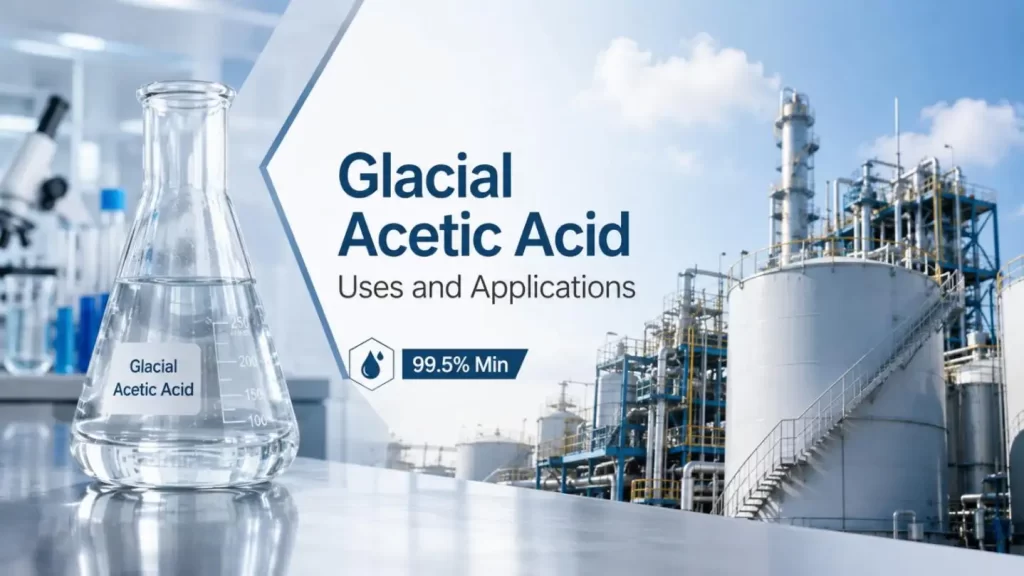
The Main Uses and Applications of Glacial Acetic Acid Include Use in Chemical Synthesis, Production of Acetate Esters, Textile Dyeing, Intermediates for the Pharmaceutical Industry, Production of Coatings, Adhesives and Resins and Cellulose Acetate Manufacturing. The Right application of Acetic Acid 99.5% Min will depend on the required moisture tolerance, purity, working concentration and other downstream processing conditions.
Vanchor provides Glacial Acetic Acid 99.5% Min for industrial use with specifications and customized packaging for bulk and packaged chemical supply respectively.
What is Glacial Acetic Acid?
Glacial Acetic Acid, CH₃COOH with CAS No. 64-19-7, is a clear, colorless and highly concentrated liquid.
"Glacial" pertains to its crystallization at approximately 16.7°C and formation of crystals similar to ice.
From a processing perspective, the important difference is water content. Compared with diluted acetic acid, concentrated material provides:
•Higher CH₃COOH input per unit mass
•Lower introduction of process water
•Greater flexibility for controlled on-site dilution
•Better suitability for water-sensitive synthesis
•More efficient transportation of active acid
These characteristics explain why Glacial Acetic Acid Uses and Applications differ significantly from those of ready-diluted acid solutions.
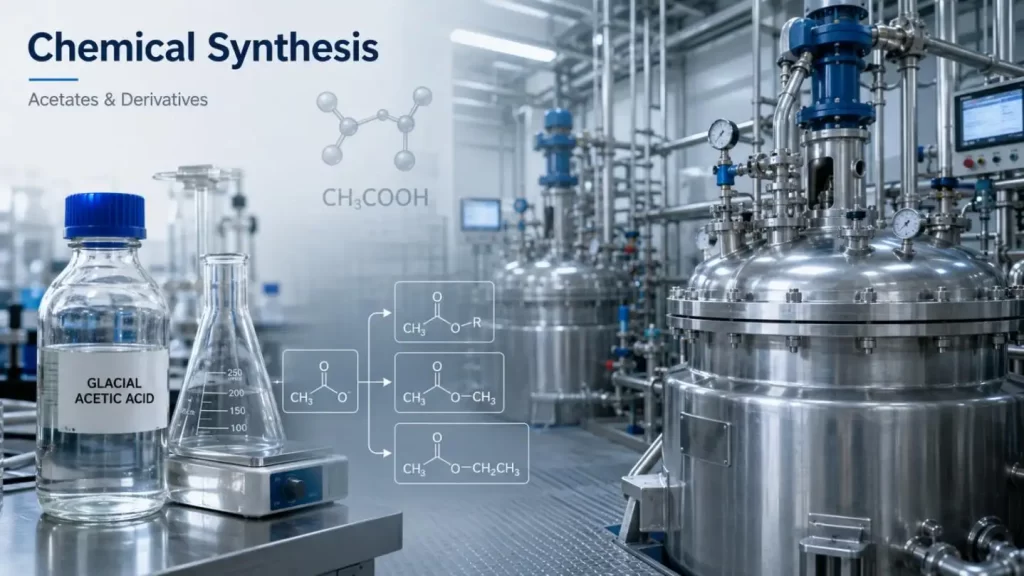
Main Glacial Acetic Acid Uses and Applications
| Application | Function of Acetic Acid | Key Process Consideration |
| Chemical synthesis | Reactant / feedstock | Purity and moisture |
| Acetate esters | Esterification feedstock | Reaction water balance |
| Textile processing | pH control after dilution | Working concentration |
| Pharmaceutical intermediates | Reagent / reaction medium | Impurity specification |
| Coatings and inks | Precursor to acetate solvents | Downstream consistency |
| Adhesives and resins | Chemical intermediate | Batch stability |
| Cellulose acetate | Acetylation-related feedstock | Controlled chemistry |
1. Chemical Synthesis and Acetate Derivatives
Chemical synthesis represents one of the largest Glacial Acetic Acid Uses and Applications. Concentrated acetic acid can participate directly in reactions or serve as a precursor for:
•Acetate salts
•Acetate esters
•Acetic anhydride
•Cellulose acetate
•Organic and specialty intermediates
Why Low Water Content Matters
In many reaction systems, water is not an inert component. Excess moisture may affect equilibrium, separation efficiency or downstream purification.
Using 99.5% Min glacial acetic acid allows manufacturers to define the water balance more precisely rather than introducing a significant amount of water with the raw material.
For industrial chemical customers, Vanchor therefore controls product purity and batch quality as key parameters rather than treating concentration as the only purchasing specification.
2. Acetate Ester Production
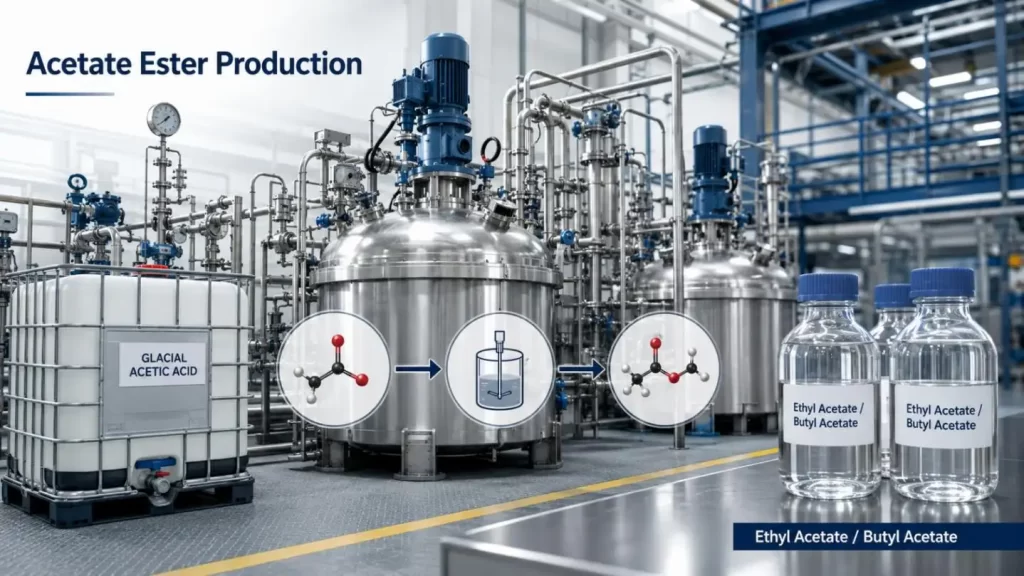
Glacial acetic acid is a major raw material for producing acetate esters such as:
•Ethyl acetate
•Butyl acetate
•Other industrial acetate solvents
A simplified esterification system involves acetic acid reacting with an alcohol to produce an ester and water.
Water that enters with the feedstock becomes a reaction product causing a shift in the position of the reaction equilibrium. Because of this, better control of reaction conditions may be achieved with the use of high-concentration acetic acid.
Acetate esters are commercially utilized as:
•Coatings
•Paints
•Printing inks
•Adhesives
•Resin systems
•Industrial solvent formulations
and as such, glacial acetic acid production is a necessity in the acetic acid value chain.
3. Textile Dyeing and Finishing
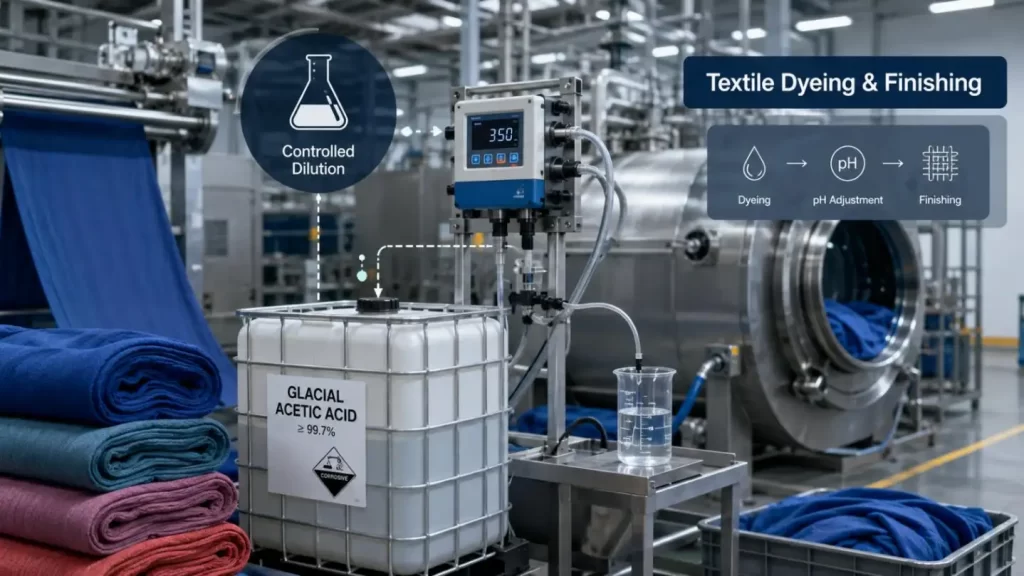
Textile processing uses glacial acetic acid differently from chemical synthesis. The concentrated product is normally metered and diluted before entering the process.
Typical functions include:
•Dye-bath pH adjustment
•Neutralization after alkaline treatment
•Control of acidic dyeing conditions
•pH correction during finishing
•Preparation of controlled acidic process solutions
Concentrated Supply vs. Ready-Diluted Acid
Textile plants with centralized chemical dosing systems may prefer concentrated material because they can prepare the required working concentration internally.
However, glacial acetic acid should not be dosed simply because a "stronger acid" is desired. The final concentration must be determined by the dyeing recipe, bath ratio, substrate and process pH target.
Vanchor supplies 99.5% Min material for textile and industrial customers who require controlled dilution at the plant level.
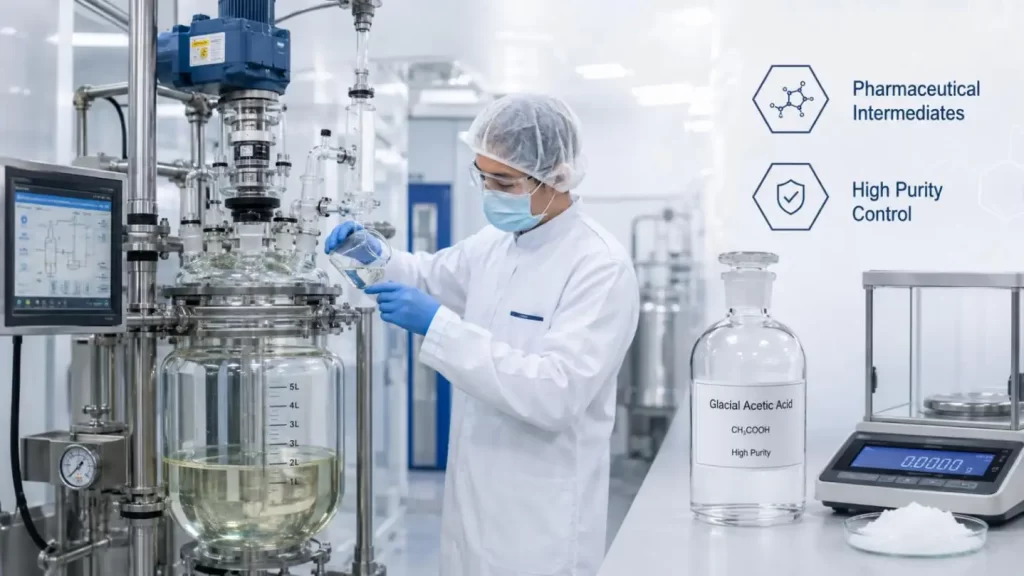
4. Pharmaceutical and Specialty Chemical Intermediates
Another technically important area of Glacial Acetic Acid Uses and Applications is organic intermediate synthesis.
Depending on the process, acetic acid may function as:
•Reaction reagent
•Chemical feedstock
•Reaction medium
•Solvent component
•Intermediate-production acid source
For these applications, buyers should evaluate more than nominal purity.
Important Specification Variables
•Acetic acid assay
•Moisture level
•Relevant trace impurities
•Required application grade
•Batch consistency
•COA availability
•Regulatory requirements
An industrial 99.5% product should not automatically be classified as pharmaceutical grade unless its complete specification satisfies the intended pharmaceutical process.
5. Coatings, Inks, Adhesives, and Resins
Glacial acetic acid enters the supply chain at the following segments:
Glacial Acetic Acid → Acetate Ester → Solvent/ Resin System → Coating, Ink or Adhesive
This means that the stability of raw materials can affect the consistency of downstream solvent and formulation.
Vanchor provides chemical analysis and finished-product inspection as part of the supply-chain services to fulfill repetitive industrial orders that are dependent on consistent specifications of raw materials.
6. Cellulose Acetate and Polymer Processing
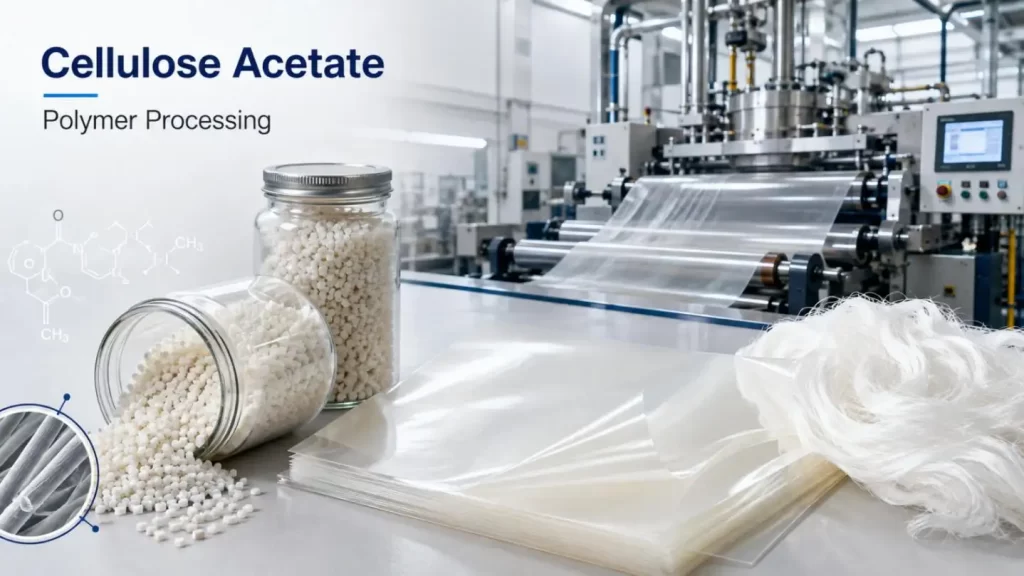
Glacial acetic acid is also associated with cellulose acetate and related acetylation chemistry.
Cellulose acetate can be processed downstream into:
•Fibers
•Films
•Coating materials
•Specialty plastics
•Other acetate-based products
Here, glacial acetic acid functions primarily as an upstream process chemical rather than a direct additive to the final plastic product.
Glacial Acetic Acid vs. Diluted Acetic Acid
The correct choice depends on the manufacturing process rather than concentration alone.
| Decision Factor | Glacial Acetic Acid | Diluted Acetic Acid |
| Active acid content | Very high | Lower |
| Added water | Minimal | Significant |
| On-site dilution flexibility | High | Limited |
| Reaction synthesis | Often advantageous | Process-dependent |
| Direct low-strength dosing | Requires dilution | Easier |
| Active acid transported per tonne | Higher | Lower |
| Handling requirements | More stringent | Concentration-dependent |
When 99.5% Glacial Acetic Acid Is More Suitable
It is commonly selected where:
•Reaction water must be controlled
•Acetic acid is a chemical feedstock
•Large quantities are consumed
•The plant has automated dilution equipment
•Transportation efficiency is important
Does Glacial Acetic Acid Need to Be Diluted?
Not always.
In chemical synthesis and esterification, concentrated material may enter the reaction directly according to the process formulation.
For textile processing, pH correction and many general industrial applications, controlled dilution is normally required.
There is therefore no universal glacial acetic acid dilution ratio. Working concentration should be calculated according to:
•Required process pH
•Target acid concentration
•Reactor or bath volume
•Dosing equipment
•Substrate or reactant chemistry
•Process safety requirements
Industrial Purchasing Checklist
For buyers comparing Glacial Acetic Acid Uses and Applications with available supply specifications, key parameters include:
•Purity: e.g. 99.5% Min
•Moisture: especially for synthesis
•Impurity profile: according to downstream chemistry
•COA and SDS: for quality and handling review
•Batch consistency: important for continuous production
•Packaging: matched to consumption and unloading systems
•Storage compatibility: tanks, ventilation and materials
•Transport compliance: particularly for international shipment
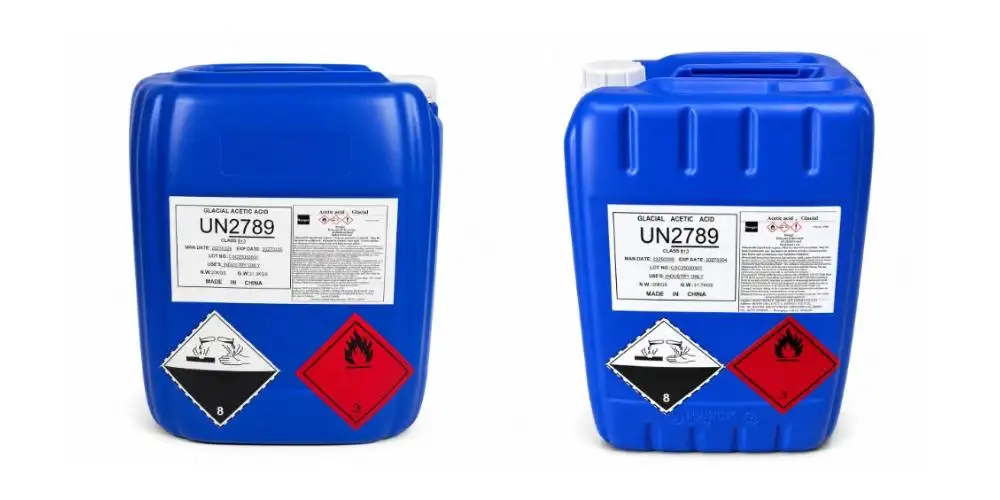
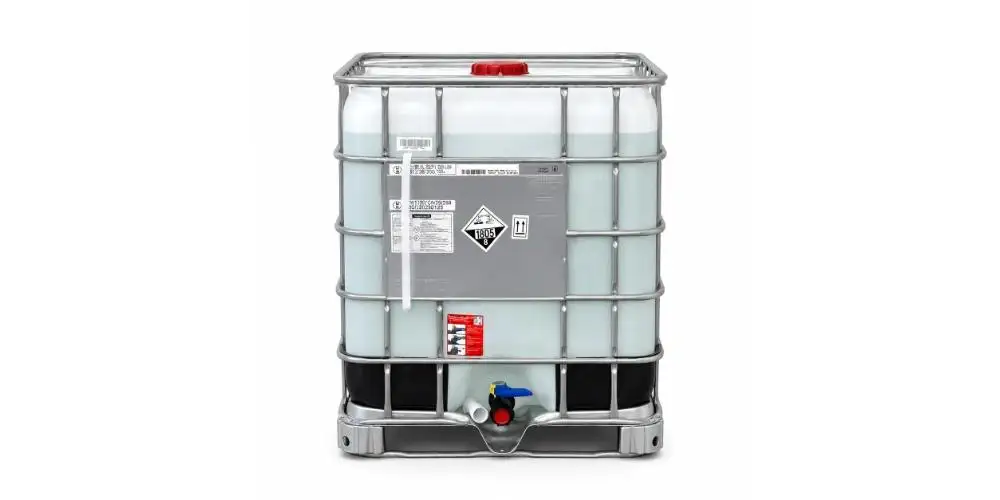
For different consumption volumes, Vanchor supports 220 kg drums, 1050 kg IBCs and 20–25 MT ISO tank shipments, allowing packaging to be matched to plant storage, unloading capacity and purchasing frequency.
Selecting Glacial Acetic Acid for the Process
The most important point when evaluating Glacial Acetic Acid Uses and Applications is to identify the chemical's actual role in the process. A textile mill may require controlled diluted acid for pH adjustment, while an ester producer may prioritize high active-acid content and low water input.
Purity, moisture, working concentration, packaging and logistics should therefore be specified together rather than independently.
To assess a new application or repeat bulk order, Vanchor supplies 99.5% Min Glacial Acetic Acid along with COA/SDS documentation and multiple packaging options. Customers can discuss their process specifications and consumption needs, as well as the maritime shipping conditions, with Vanchor to devise a workable supply and delivery arrangement.
FAQs
Q1. What purity of glacial acetic acid does Vanchor supply?
Vanchor provides Glacial Acetic Acid 99.5% Min for chemical and textile processing, as well as for manufacturing acetates and other industrial purposes.
Q2. What are the main Glacial Acetic Acid Uses and Applications supported by Vanchor?
Typical Uses and Applications of Glacial Acetic Acid include chemical synthesis and manufacture of acetates and esters, textile dyeing and finishing, as well as production of pharmaceutical intermediates, coatings, adhesives and resins.
Q3. Can Vanchor supply glacial acetic acid for acetate ester production?
Yes. Vanchor's 99.5% Min glacial acetic acid can be used as an industrial feedstock for the production of acetates and esters, for example, the ethyl acetate and butyl acetate processes.
Q4. Is Vanchor's glacial acetic acid suitable for textile processing?
Vanchor provides glacial acetic acid for textile processes such as dyeing, finishing, and pH adjustment. In such processes the concentrated acid is usually diluted to the working concentration prior to dosing.
Q5. Does Vanchor provide COA and SDS documentation?
Yes. Vanchor is able to provide COA (Certificate of Analysis) and SDS (Safety Data Sheet) documentation for quality verification and for the handling, storage, and chemical transportation of international shipments.


Contact Us
In This Article
Related Posts
Custom Packaging Solutions from an Anhydrous Sodium Acetate Supplier in China
2026-09-23
Application Trends in Anhydrous Sodium Acetate for Special Chemical Manufacturing
2026-09-23
Anhydrous Sodium Acetate for Leather Tanning: Improve Dyeing Uniformity
2026-09-22
Formic Acid 85% for Textile Dyeing: Industrial Applications, Technical Benefits and Future Trends
2026-09-22


