



What Determines the Quality of Sodium Formate White Crystalline Powder?
By vanchor
2026-08-14Related Posts
Custom Packaging Solutions from an Anhydrous Sodium Acetate Supplier in China
2026-09-23

Application Trends in Anhydrous Sodium Acetate for Special Chemical Manufacturing
2026-09-23

Anhydrous Sodium Acetate for Leather Tanning: Improve Dyeing Uniformity
2026-09-22

Formic Acid 85% for Textile Dyeing: Industrial Applications, Technical Benefits and Future Trends
2026-09-22
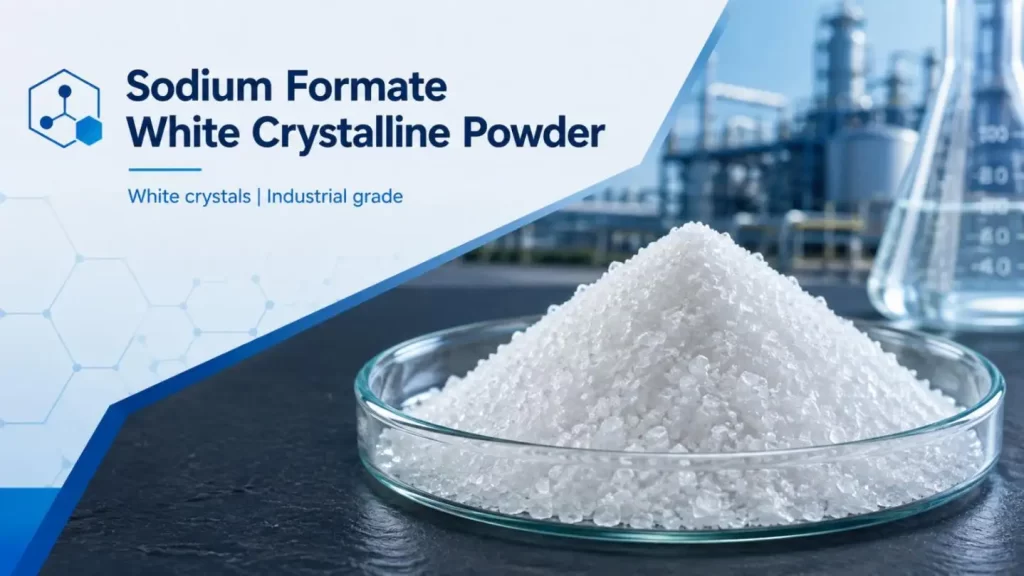
Judging the quality of Sodium Formate White Crystalline Powder by whiteness and purity is an insufficient method for industrial buyers. White crystals can appear clean, however, they can contain different characteristics due to differences in NaOH, Na₂CO₃, NaCl, Na₂S, moisture, behavior of dissolution, and batch consistency.
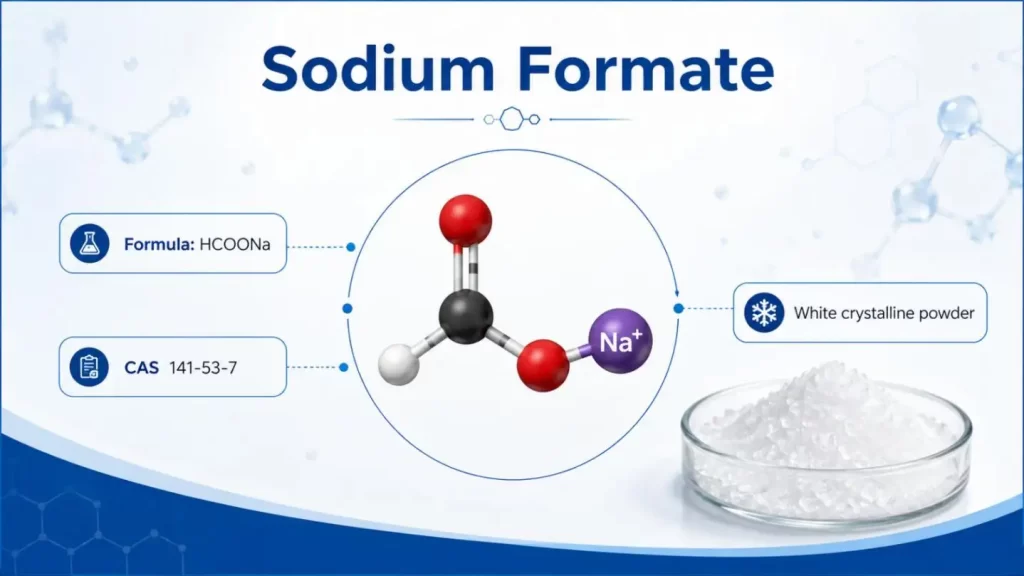
Sodium formate (HCOONa, CAS 141-53-7) is an ingredient that dissolves well in water, and it has multiple end uses in leather tanning, oilfield chemicals, as synergists in concrete admixtures, de-icing formulations, and chemical synthesis among many others. Sodium Formate White Crystalline Powder is offered in 92%, 95%, and 98% grades, and at Vanchor we produce Sodium Formate White Crystalline Powder to satisfy the requirements of the customer's process rather than limiting the customer's choice to the upper purity limit.
1. Purity Defines Active Content—but Not Total Quality
Purity indicates the proportion of sodium formate available for the intended process. Higher purity reduces the amount of non-formate material introduced into a formulation, but 98% is not automatically necessary for every application.
Vanchor controls three industrial grades:
| Quality Parameter | Super Grade | First Grade | Normal Grade |
| Sodium Formate Purity ≥ | 98.0% | 95.0% | 92.0% |
| NaOH ≤ | 0.05% | 0.50% | 1.00% |
| Na₂CO₃ ≤ | 1.30% | 1.50% | 2.00% |
| NaCl ≤ | 0.50% | 1.50% | 3.00% |
| Na₂S ≤ | 0.06% | 0.08% | 0.10% |
| Moisture ≤ | 0.50% | 1.00% | 1.50% |
The selection should be based on the process tolerances for impurities, accuracy of dosing, corrosion sensitivity, and consistency of the formulation.
Use 92% Sodium Formate White Crystalline Powder in a general industrial process, as that has shown reliable results. For formulations that call for greater control over chemical constituents, consider 95% or 98% Sodium Formate White Crystalline Powder.
2. Impurity Profile Is a Critical Quality Indicator
A meaningful sodium formate specification should evaluate individual impurities rather than treating them as one combined residual percentage.
Residual NaOH and Process Alkalinity
NaOH contributes directly to alkalinity. Excessive residual NaOH can shift process pH and change the quantity of acids or buffering agents required.
Low and controlled NaOH is particularly relevant when:
• pH windows are narrow;
• Sodium formate is used for buffering or acidity adjustment;
• Formulation recipes depend on repeatable acid-base balance.
Vanchor's Super Grade restricts NaOH to ≤0.05% for better quality and more control compared to the lower grades.
Na₂CO₃ and Active-Content Accuracy
Sodium carbonate forms part of the non-formate fraction. Variation in Na₂CO₃ can influence alkalinity and reduce the effective sodium formate concentration per kilogram.
For bulk chemical production, stable Na₂CO₃ control therefore supports:
• More predictable formulation calculations;
• Repeatable dosing;
• Better batch-to-batch chemical balance.
• NaCl and Chloride-Sensitive Systems
NaCl is especially relevant where corrosion or chloride loading matters.
For Sodium Formate White Crystalline Powder used in de-icing or process fluids, buyers should not simply compare "98% vs 95%." A more useful comparison includes the actual chloride specification.
Vanchor's NaCl limits range from ≤3.0% in Normal Grade to ≤0.5% in Super Grade, allowing the grade to be selected according to application sensitivity.
Na₂S as a Residual-Impurity Indicator
Na₂S is normally present at much lower concentrations, but its specification remains useful when assessing overall production control. Defined Na₂S limits provide another indication that residual components are being monitored rather than relying only on headline purity.
3. Moisture Directly Affects Usable Product Content
Moisture is usually overlooked when buying dry chemicals.
Increased moisture in chemicals can result in a loss of active component mass per tonne. It can also affect the nature of storage and handling.
Moisture can cause:
• Agglomeration or Caking
• Varied distribution of dry feedings
• Loss of active ingredient content
• Difficulty in obtaining a continuous flow of the blended or dispensed material.
Vanchor sets the moisture limit for Sodium Formate White Crystalline Powder at ≤0.5%, ≤1.0%, or ≤1.5% based on the chosen grade for the reason...
4. White Appearance Is Only an Incoming Inspection Check
A uniform white crystalline appearance is desirable, but color is not a substitute for chemical analysis.
Incoming inspection should check for:
• Abnormal discoloration;
• Visible contamination;
• Excessive lumps;
• Foreign particles;
• Moisture-damaged bags;
• Inconsistent crystal condition.
A visually clean material can still contain higher chloride, carbonate, moisture, or residual alkalinity. Industrial buyers should therefore use appearance together with the COA and agreed specification limits.
5. Water Solubility Affects Formulation and Dosing
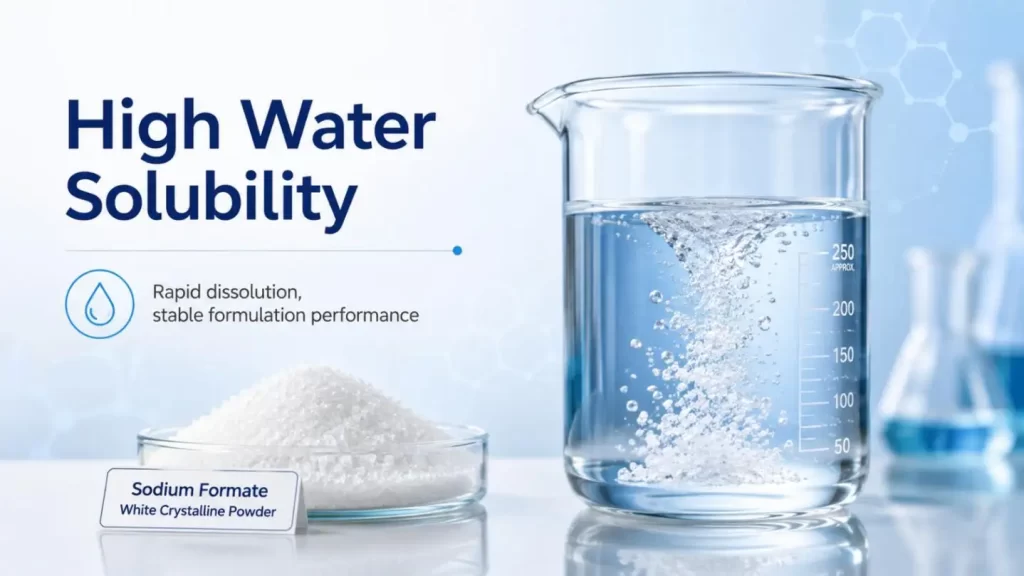
Sodium formate has excellent solubility in water, allowing its use in aqueous industrial systems. production-related issues include the consistency of the behavior of the powder in production.
The aim is to achieve:
• Easy and consistent preparation of solution;
• Uniformity of concentration after solution;
• Accurate and consistent dosing;
• Consistent dry blending;
• Low contamination of insoluble matter.
This is even more important for continuous manufacturing, where variation of material affects dosing systems and control of downstream processes.
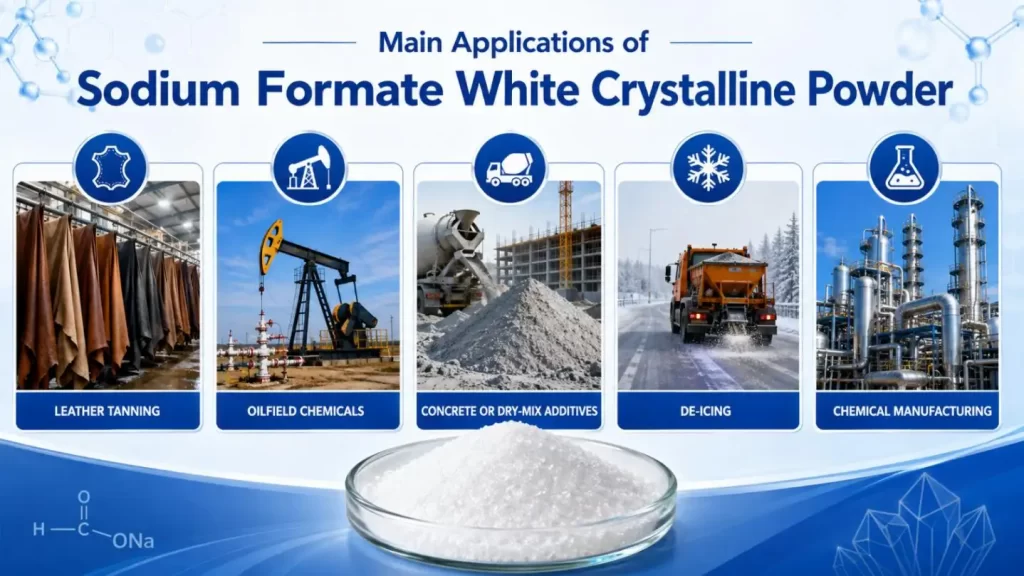
6. Quality Priorities Change by Application
The most important specification depends on where the sodium formate will be used.
| Application | Main Quality Factors | Why They Matter |
| Leather Tanning | Purity, NaOH, carbonate | Acid-bath and tanning-process control |
| Oilfield Fluids | Solubility, salt profile, impurities | Fluid formulation consistency |
| Concrete / Dry Mix | Purity, moisture, dosing stability | Repeatable accelerator performance |
| De-Icing | NaCl, solubility, purity | Chloride management and formulation control |
| Chemical Manufacturing | Purity, impurity profile | Downstream reaction consistency |
This is why we recommend defining the application first and then selecting the appropriate Vanchor grade rather than automatically specifying the highest purity.
7. Batch Consistency Counts More Than One Good Test Result
A single compliant COA does not guarantee long-term stability on supply.
For successive procurement of industrial goods, does Sodium Formate White Crystalline Powder keep up with the agreed specification from shipment to shipment, is the real key question.
Buyers should trend:
• Sodium formate assay;
• NaOH and Na₂CO₃;
• NaCl and Na₂S;
• Moisture;
• Physical condition;
• Packaging integrity.
At Vanchor, defined specifications for 92%, 95%, and 98% grades allow buyers to establish measurable acceptance limits for routine and bulk orders.
8. Packaging Completes the Quality-Control Chain
Chemical quality must also be maintained between production and end use. Poor sealing or storage can compromise an otherwise compliant dry product.
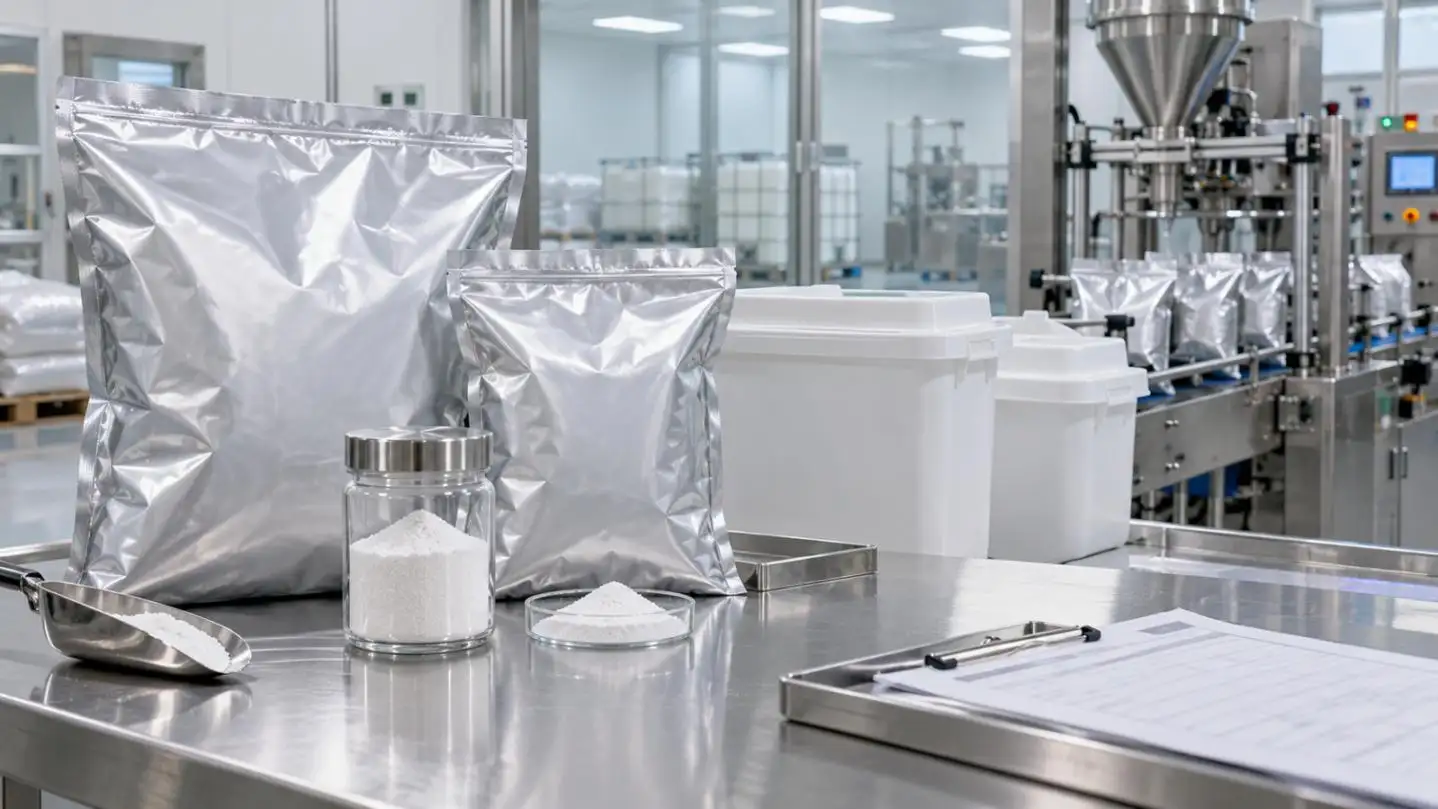
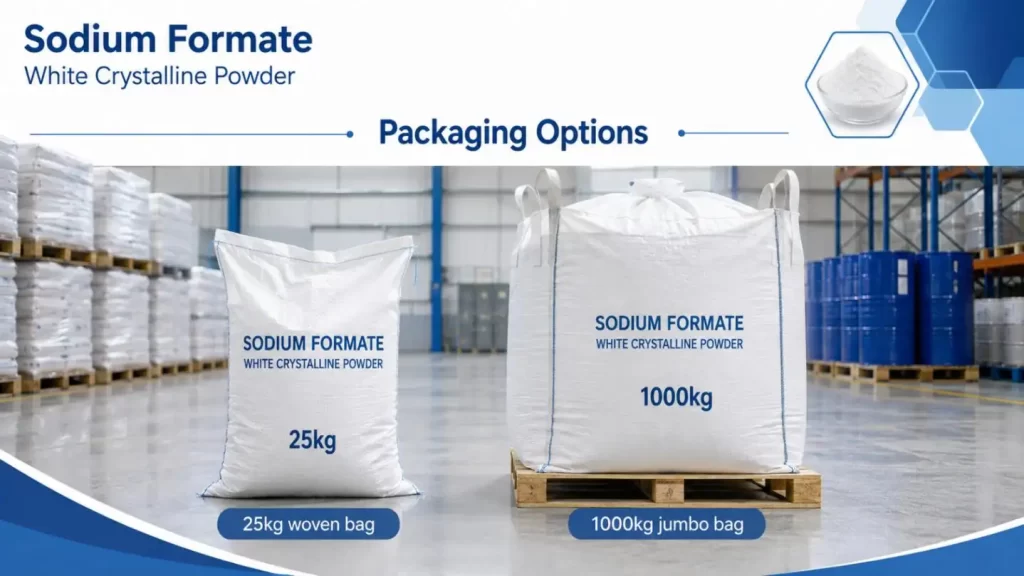
Vanchor offers both 25 kg woven bags and 1000 kg jumbo bags for different procurement and handling needs. Buyers should also confirm:
• Wet warehouse conditions;
• Bags with liners and seals;
• Batch identification;
• COA traceability;
• Protection from water during transport.
Sodium Formate Selection Without Regard to Appearance
An assessment of Sodium Formate White Crystalline Powder of good quality should be evaluated holistically through a complete quality profile:
Purity + NaOH + Na₂CO₃ + NaCl + solubility + moisture + batch consistency + packaging control.
For leather, oilfield, construction, de-icing, or chemical processing, the most economical grade can be procured at the specified process limit without overspecification.
Vanchor sells Sodium Formate White Crystalline Powder with an impurity specification and moisture control for industrial and bulk purchases in the range of 92%–98% to buyers. Buyers may share their requested purity, packaging requirements and expected volume with Vanchor to allow for a quotation of the most suitable specification.
FAQs
Q1. What purity grades of Sodium Formate White Crystalline Powder does Vanchor offer?
Vanchor offers Sodium Formate White Crystalline Powder in the purity grades of 92%, 95%, and 98%. Buyers can choose a specification that aligns with their process and level of impurity tolerance.
Q2. How do buyers choose between Vanchor's 92%, 95%, and 98% sodium formate grades?
Impurities like NaOH, Na₂CO₃, NaCl, Na₂S, and moisture should be considered, as well as the sensitivity of the formulation and the required accuracy of dosing.
Q3. Which impurities does Vanchor control in Sodium Formate White Crystalline Powder?
Vanchor controls sodium hydroxide, sodium carbonate, sodium chloride, sodium sulfide, and moisture levels in addition to sodium formate assay.
Q4. What is the maximum NaCl content in Vanchor's sodium formate?
The grade specifications are as follows: Super Grade has a limit of NaCl at 0.5%, First Grade has a limit at NaCl of 1.5%, and Normal Grade has a limit of NaCl at 3.0%.
Q5. How does Vanchor control moisture in Sodium Formate White Crystalline Powder?
Vanchor has Super Grade with a maximum of 0.5% moisture, First Grade with a maximum of 1% moisture, and Normal Grade with a maximum of 1.5% moisture.


Contact Us
In This Article
Related Posts
Custom Packaging Solutions from an Anhydrous Sodium Acetate Supplier in China
2026-09-23
Application Trends in Anhydrous Sodium Acetate for Special Chemical Manufacturing
2026-09-23
Anhydrous Sodium Acetate for Leather Tanning: Improve Dyeing Uniformity
2026-09-22
Formic Acid 85% for Textile Dyeing: Industrial Applications, Technical Benefits and Future Trends
2026-09-22


