



How to Choose a Reliable Bulk Chemical Supplier for Your Business
By vanchor
2026-07-15Related Posts
What Purity Is Required for Sodium Formate for De-Icing Applications?
2026-08-21
Calcium Formate for Tile Adhesive: How It Improves Early Strength and Setting Time
2026-08-20
Potassium Formate for Oilfield Completion Fluids: Density, Compatibility and Formation Protection
2026-08-19
High Density Potassium Formate Brine: Density Range, Properties and Oilfield Applications
2026-08-18
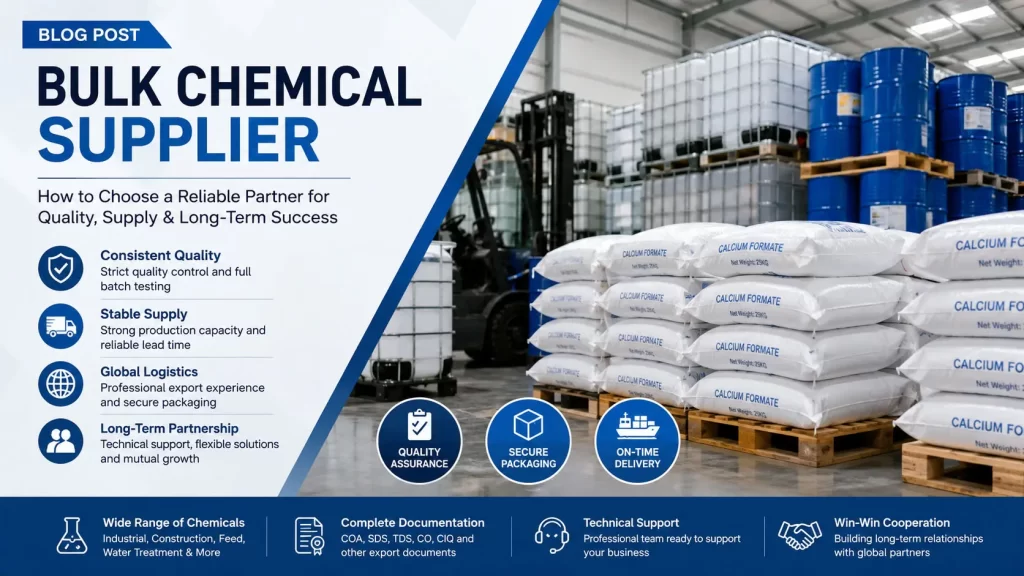
Selecting the right bulk chemical supplier can be a crucial choice for industrial processors, agricultural businesses, construction firms, and manufacturers. The chemical quality, stability of supplies, packaging, regulatory documentation, and performance in delivery can have a direct impact on production efficiency and product consistency.
A quality bulk chemical supplier brings more than just competitive price; they also offer materials that are reliable and of high quality. The supplier should also assist with quality control, communication, flexibility in packaging, international shipping and long term purchasing planning.
What Is a Bulk Chemical Supplier?
Bulk chemical supplier – supplier of industrial chemicals in bulk industrial quantities. These chemicals can be provided in bags, drums, intermediate bulk containers, tankers or customized packaging according to the nature of the product and the purchaser's application..
Common bulk chemicals include:
- Calcium formate
- Sodium formate
- Formic acid
- Calcium chloride
- Sodium gluconate
- Potassium formate
- Construction additives
- Feed additives
- Water treatment chemicals
- Industrial salts
- Organic and inorganic chemical intermediates
Bulk chemical suppliers may supply a variety of industries including construction, agricultural, animal nutrition, leather processing, oil and gas, coatings, detergents, and water treatment..
Why Supplier Reliability Matters
Chemical buyers typically require uniformity in the specification with each consignment. The purity, moisture content, particle size, pH value, and impurity content of a product can all cause a small change that can impact the performance of the final product.
For instance, the construction chemical companies depend on stable raw materials for maintaining a predictable setting time, strength development and formulation compatibility. Feed producers need to assure compliance with appropriate quality and safety standards for additives. It is also important that industrial processors can have a high level of control over the concentration and contamination of chemicals.
A good bulk chemical supplier should have a standardisation of its production, testing, storage and shipping activities. This can minimize production delays, material rejections and unexpected formulation issues.
Evaluate Product Quality and Specifications
The first thing to consider when choosing a supplier is the quality of their products. Please ask for a detailed specification sheet before ordering.
Important parameters may include:
- Chemical purity
- Moisture content
- Insoluble matter
- Heavy metal limits
- Particle size
- pH value
- Bulk density
- Appearance
- Solubility
- Storage stability
The required parameters will depend on the chemical and its intended use.
A professional supplier should provide a Certificate of Analysis for each production batch. The values listed on the certificate should match the agreed product specification. Buyers may also request samples for laboratory testing, formulation trials, or production line evaluation before confirming a bulk order.
Check Manufacturing and Quality Control Capabilities
For long-term supply, it is crucial to have a stable production system. Buyers have to know if the supplier is a manufacturer or an authorized distributor or trading company.
Direct manufacturers might have more control over production schedules, formulation changes, packaging and quality control. But there are also benefits to being a qualified distributor including wider product selection, regional warehousing and flexibility to smaller orders..
Key quality control capabilities may include:
- Raw material inspection
- In-process production monitoring
- Finished product testing
- Batch traceability
- Controlled storage conditions
- Packaging inspection
- Pre-shipment verification
- Retained sample management
A supplier with a clear quality management process can respond more effectively if a technical or quality issue occurs.
Review Documentation and Regulatory Support
There are times when a chemical purchase involves more than just a product invoice and packing list. There might be some documents that have to be submitted in order to get the product customs clear, workplace safe, product registered, customer approved and for the internal quality audit..
Common documents include:
- Safety Data Sheet
- Technical Data Sheet
- Certificate of Analysis
- Product specification
- Packing list
- Commercial invoice
- Certificate of Origin
- Inspection certificate
- Regulatory declaration
- Transportation classification information
Supplier should ensure that new documentation is supplied in the necessary language and format. The chemical name, classification, packaging, labeling and customs code should be carefully reviewed prior to shipment for international orders.
Compare Packaging Options
Packaging protects the chemical from being damaged during transport and storage. It also helps with the efficiencies of handling at the buyer's facility.
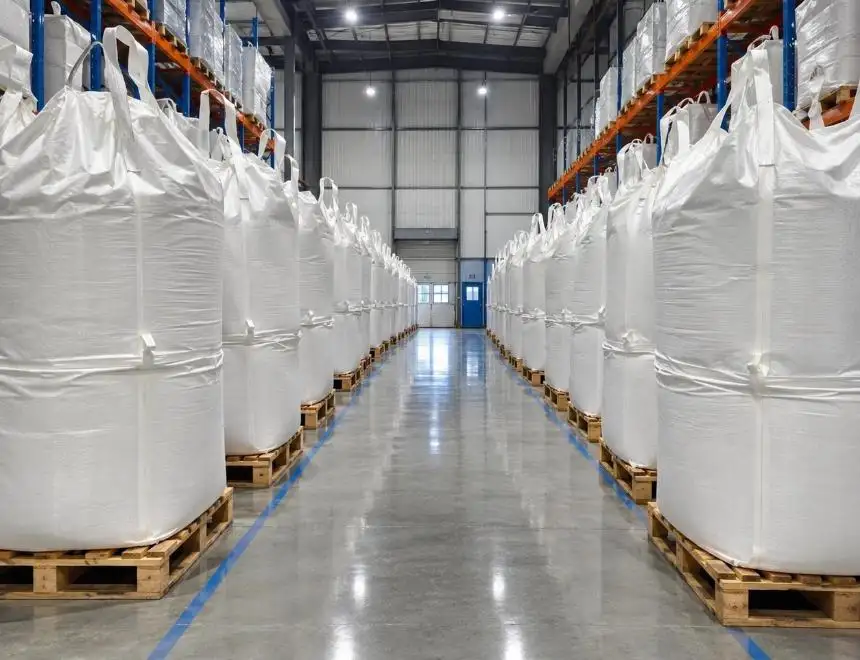
Powder chemicals are generally sold in 20 kg, 25 kg or 1000 kg bags. Liquid chemicals are available in drums, IBC tanks, flexitanks, or bulk tankers.
Packaging selection should consider:
To make ordering easier, a purchasing forecast should be given to the supplier for repeat orders. The supplier can plan the raw material, production plan, packaging material and shipping space beforehand.
A good supplier should be able to explain to you clearly when the market changes, transportation congestion, maintenance, holidays and raw material shortages can impact delivery time.
Consider International Logistics Experience
Careful planning is necessary for bulk chemical transportation. The supplier should be aware of the loading of the container, the weight limitation, protection from moisture, pallet requirements, dangerous goods classification, and procedures at the port of destination.
Experienced exporters can help buyers select suitable shipping methods and reduce avoidable delays.
Important logistics factors include:
- Full container or partial container shipment
- Maximum container weight
- Palletized or non-palletized loading
- Port of departure
- Estimated sailing schedule
- Customs documentation
- Cargo insurance
- Destination handling requirements
For moisture-sensitive chemicals, the supplier may use container liners, desiccants, waterproof bags, and reinforced outer packaging.
Evaluate Technical Communication
When chemical products are used in technical applications, good communication is very important. The buyer should be familiar with the supplier's industry, product needs and performance expectations.
Before recommending a grade, the supplier may ask about:
- End-use application
- Required purity
- Target dosage
- Production process
- Environmental conditions
- Packaging preference
- Annual demand
- Destination market
Clear technical communication helps prevent buyers from selecting an unsuitable grade based only on product name or price.
Avoid Choosing a Supplier Based Only on Price
Chemical prices can be altered because of raw material expenses, energy costs, purity specifications, packing, shipping, order quantity and market availability.
An unusually low quotation may involve lower purity, inconsistent quality, reduced packaging strength, incomplete documentation, or unreliable delivery.
The total procurement value (not unit value) should be compared between buyers and sellers. Long-term savings may be enhanced through product consistency, technical support, delivery reliability and reduced production risk.
Build a Long-Term Supplier Relationship
A A robust supply chain relationship can enhance purchasing efficiency and mitigate supply chain uncertainty. Long-term buyers may get more forecasting assistance, tailored packaging, production capacity booking, quicker sample development and flexible shipment planning.
Regular updating of communication also facilitates both parties in handling changes in demands, specifications, regulations and market conditions.
Conclusion
The key areas in determining reliable bulk chemical suppliers are product quality, manufacturing capacity, documentation, packaging, logistics, communication and supply stability.
The right supplier should be able to offer more than just chemicals. It should be a partner in the supply chain, ensuring reliable production, effective procurement, and sustained business development.
Buyers should ensure technical specifications, test samples, packaging, documentation and delivery requirements are all checked prior to placing a large order. An organized supplier evaluation process can mitigate risk and provide a safer chemical sourcing program.


Contact Us
In This Article
Related Posts
What Purity Is Required for Sodium Formate for De-Icing Applications?
2026-08-21
Calcium Formate for Tile Adhesive: How It Improves Early Strength and Setting Time
2026-08-20
Potassium Formate for Oilfield Completion Fluids: Density, Compatibility and Formation Protection
2026-08-19
High Density Potassium Formate Brine: Density Range, Properties and Oilfield Applications
2026-08-18


