"
Buying calcium formate in bulk affects cost , product performance , logistics, and supply stability.
—— Industrial buyer guide
If you source it for construction additives , animal feed, leather processing, drilling fluids, or industrial formulations, the way you buy it can make a real difference to your margins and day-to-day operations.
Buyers are paying closer attention to supplier transparency, assay consistency, moisture control, packaging quality, and delivery timing. Freight, energy costs, raw material availability, and regional demand can all move prices in the industrial chemicals market. That means the lowest quote is not always the best deal. A better purchase decision looks at specification, landed cost, paperwork, and supplier capability together.
This guide covers what calcium formate is, how it is used, what to check before buying in bulk, and how to source it with less risk.
01
BASICS
What is calcium formate?
Calcium formate is the calcium salt of formic acid . It is usually sold as a white or off-white crystalline powder or granule. Industrial and agricultural buyers use it because it has useful functional properties, stable chemistry, and broad compatibility in formulated products.
For bulk procurement, buyers usually check a few key properties:
• Purity or assay level
• Moisture content
• Particle size or granule distribution
• Insoluble matter
• pH behavior in solution
• Flowability and caking resistance
• Packaging and storage stability
These details matter because calcium formate is often used as a working ingredient , not just a filler. If quality shifts from batch to batch, it can affect setting behavior, feed intake, formulation performance, or process efficiency.
02
BULK VALUE
Why bulk purchasing makes sense
If your demand is steady, bulk buying usually brings clear advantages.
Lower unit cost
Large orders often bring a lower price per kilogram or ton than small packs. Suppliers can run production, packaging, and freight more efficiently, and some of that savings usually reaches the buyer.
Better supply continuity
If calcium formate is part of your production process, keeping larger stock can reduce the risk of shortages caused by shipping delays, seasonal spikes, or changes in the supplier's schedule.
Easier handling
Bulk formats such as 25 kg bags, 500 kg bags, or palletized shipments can simplify warehouse handling. That can save labor and reduce confusion in storage and loading.
More room to negotiate
Higher volumes often give buyers more leverage on payment terms, pricing windows, packaging, and documents such as COA , SDS, and batch traceability.
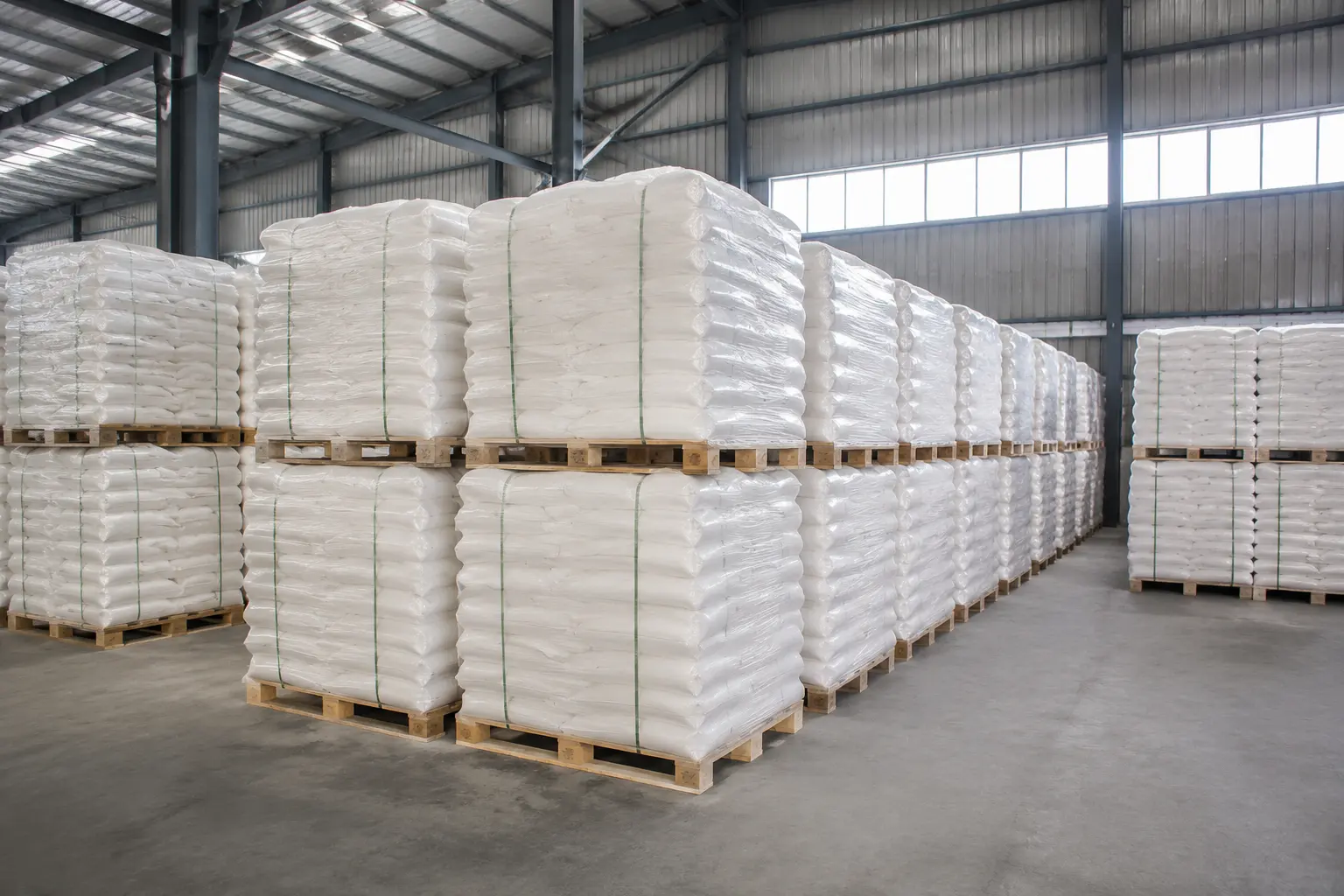
— Industrial pallet stacks of calcium formate bags in a clean warehouse, showing bulk packaging and export-ready storage; best size 1200 x 800 px
03
APPLICATIONS
Main industrial uses of calcium formate
Calcium formate is used in several industries, and each one puts different demands on the product.
Construction and cement additives
One of the most common uses is in construction materials, where it can act as an accelerator or performance additive in cement, mortar, tile adhesive, and dry mix products. In these applications, it may help early strength development and shorten setting time under certain conditions.
For construction buyers, consistency is important. Small changes in moisture or particle size can affect mixing and final performance, so batch uniformity matters.
Animal feed and nutrition
Calcium formate is also used in some feed formulations as a preservative or additive. Buyers in this area usually focus on feed-grade compliance, impurity control, and the right paperwork.
Because feed applications are sensitive to regulation and quality control, procurement teams should make sure the supplier can provide the correct grade and full specification documents.
Leather and tanning
In leather processing, calcium formate may be used in tanning and finishing steps. In this setting, solubility, purity, and consistency can affect process control.
Oilfield and drilling-related uses
In some regions, calcium formate is used in drilling fluids or completion fluids because of its density and compatibility. Suppliers that can give application-specific support are often useful in this market.
Other uses
Depending on the formulation and the region, calcium formate can also appear in specialty chemical blends, de-icing products, and other industrial processes. The intended use should decide the grade and packaging format.
04
MARKET
Market trends buyers should watch
The calcium formate market moves with broader industrial chemical conditions. Exact prices depend on the region and supplier, but a few trends matter to bulk buyers.
Raw material and energy costs still matter
Prices are affected by upstream inputs such as formic acid, calcium sources, and the energy needed for production. When energy costs move sharply, chemical production costs usually follow.
Freight and lead times are part of the total cost
Shipping is more stable than it was during peak disruption periods, but freight, port delays, and inland transport still affect final cost. For importers, the delivered price can be very different from the factory quote.
Buyers want better documentation
Industrial buyers now expect more from suppliers. That usually means COA, SDS, product specification sheets, batch numbers, and origin details where needed.
Demand depends on application
Construction demand can rise and fall with building activity, while feed demand follows agriculture and livestock cycles. Suppliers with several end markets often have more stable supply than niche-only producers.
Efficiency matters more
Many procurement teams now look at packaging waste, transport efficiency, and storage loss. Bulk bags, better pallet loading, and moisture-resistant packaging can all improve efficiency and reduce waste.
05
BUYING CHECKLIST
What to look for when buying calcium formate in bulk
A low price alone is not enough. Before placing a large order, check the supplier against these points.
01Product grade and specification
Confirm whether you need industrial grade, feed grade, or another grade for your application. Ask for a full specification that includes:
• Assay or purity
• Moisture content
• Particle size
• Insoluble matter
• Bulk density
• Shelf life
• Storage conditions
If your process is sensitive, ask for a sample and test it in your own production conditions before you commit to a full shipment.
02Batch consistency
For bulk buying, repeatability matters. The supplier should be able to deliver similar quality from batch to batch. If the product shifts too much, you can run into downtime, rejected lots, or complaints from your own customers.
03Packaging options
Common bulk packaging includes:
• 25 kg woven bags with inner liner
• 500 kg or 1000 kg bulk bags
• Palletized shrink-wrapped shipments
• Custom packaging for export or private label needs
The best option depends on your warehouse setup, lifting equipment, and production speed. If you use automated feeding systems, flowability and packaging integrity become even more important.
04Supplier documentation
A reliable supplier should be able to provide the documents you need for quality control and import clearance. Typical documents include:
• Certificate of Analysis
• Safety Data Sheet
• Product specification sheet
• Certificate of origin, if needed
• Packing list and commercial invoice
• Customs documents for international shipments
05Lead time and supply reliability
Ask whether the supplier keeps inventory or makes to order. If your demand repeats every month, a dependable replenishment schedule is often more useful than a slightly lower spot price.
06Export experience
If you buy internationally, choose a supplier that understands export packaging, labeling, and customs paperwork. Mistakes in export documents can delay shipments and add cost.
06
PRICING
How pricing is usually calculated
When buyers search for calcium formate price per ton or request a bulk quote, the final number usually depends on several factors.
Product grade
Higher purity or application-specific grades often cost more than standard industrial grades.
Order volume
Larger volumes usually bring better pricing, but the discount can change depending on packaging, destination, and contract length.
Packaging type
Bulk bags and palletized shipments can cost more than simple bagged products, but they may save labor and lower damage risk.
Destination and freight
Shipping distance, Incoterms, container space, and port fees all affect landed cost.
Market conditions
Upstream feedstocks, energy prices, and regional demand can change quote levels. In tighter markets, suppliers may shorten quote validity, so quick decisions can help secure pricing.
Procurement teams should compare more than just the unit price. It helps to look at:
• Packaging cost
• Inspection and testing cost
• Freight and insurance
• Import duties or taxes
• Storage and handling cost
• Waste or loss from poor packaging
A slightly higher factory price can still be the better choice if it reduces damage, delays, or rejection risk.
07
CHECKLIST
Bulk buying checklist for procurement teams
Use a simple checklist before placing an order.
TECHTechnical checklist
• Confirm the required grade
• Verify assay, moisture, and particle size
• Request a sample
• Test performance in your actual process
• Check shelf life and storage recommendations
COMMCommercial checklist
• Compare quotes using the same Incoterms
• Confirm minimum order quantity
• Review payment terms
• Ask about quote validity
• Check lead time and production schedule
LOGLogistics checklist
• Confirm packaging dimensions and pallet configuration
• Check container loading quantity
• Verify export labeling requirements
• Ask about moisture protection during transit
• Confirm warehouse handling compatibility
COMPCompliance checklist
• Request COA and SDS
• Confirm country of origin documents
• Check whether the grade meets local regulations
• Make sure feed or industrial use matches destination market rules
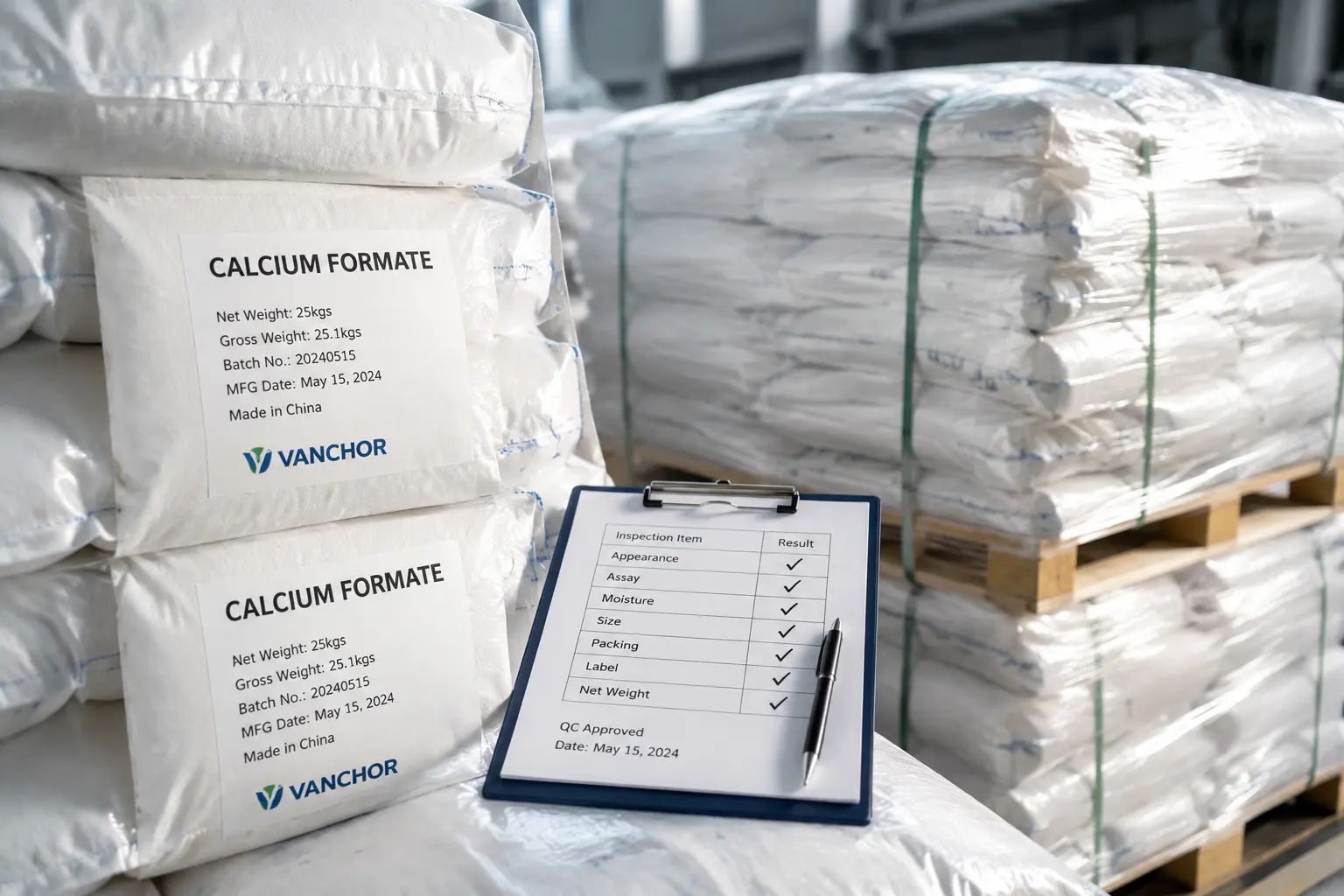
— Close-up of labeled calcium formate bags with a quality control checklist, moisture-protected packaging, and a shipping pallet; best size 1200 x 800 px
08
BUYERS
Who should buy calcium formate in bulk?
Bulk procurement makes the most sense for buyers with recurring or high-volume demand. Typical buyers include:
• Construction material manufacturers
• Feed additive formulators
• Chemical distributors
• Industrial traders
• Oilfield service suppliers
• Contract manufacturers
• Private-label importers
If your business uses calcium formate regularly and needs predictable supply, bulk buying can improve margin and make inventory planning easier.
09
MISTAKES
Common mistakes to avoid
A few simple checks can prevent most sourcing problems.
Choosing price without checking specification
A lower quote may hide higher moisture, uneven granule size, or weak packaging.
Ignoring the application
Construction, feed, and chemical formulation buyers do not always need the same grade. Match the product to the end use.
Skipping sample testing
Even if the COA looks fine, test the product in your own process if performance matters.
Overlooking storage conditions
Calcium formate should be stored in a dry, well-ventilated area away from moisture. Poor storage can lead to caking and handling problems.
Forgetting landed cost
Shipping, customs, and handling can change the total cost a lot. Always check landed cost, not just the factory price.
10
RELIABILITY
Why supplier reliability matters more than ever
In today's procurement environment, supplier reliability is a major advantage. Buyers usually prefer vendors that can provide:
• Stable production capacity
• Clear technical communication
• Transparent quality records
• Flexible packaging options
• Export-ready service
• Responsive after-sales support
For bulk buyers, the risk of one bad shipment can outweigh a small saving from an uncertain supplier. A well-run supply relationship often creates more value over time than a one-time discount.
11
EVALUATION
How to evaluate a calcium formate supplier
When you shortlist suppliers, ask questions like these:
01Can you provide the exact grade and specification we need?
Use this to confirm technical fit and avoid mismatch later.
02What is your usual lead time for bulk orders?
This helps you judge whether the supplier can support your replenishment cycle.
03Do you offer samples for testing?
A sample lets you validate performance before a full commitment.
04What packaging options do you support?
Packaging affects handling, storage, and damage risk.
05Can you provide COA, SDS, and export documents?
Document support is critical for compliance and customs clearance.
06How do you manage batch consistency?
This shows how well the supplier controls repeatability over time.
07What are your standard payment and delivery terms?
Commercial terms often matter as much as price in a bulk deal.
08Can you support recurring supply contracts?
This is important if you want stability beyond a one-off purchase.
The answers will help you see whether the supplier can support a long-term relationship or is only suited to spot buying.
12
FAQ
Frequently asked questions about buying calcium formate in bulk
What is the best packaging for bulk calcium formate?
For many industrial buyers, 25 kg bags or 500 kg to 1000 kg bulk bags are common. The best choice depends on warehouse equipment, internal handling, and moisture protection needs.
Is calcium formate suitable for export shipments?
Yes. Calcium formate is commonly exported in bulk packaging. Export success depends on correct labeling, documents, and moisture-resistant packaging.
How should calcium formate be stored?
Store it in a dry, cool, well-ventilated area away from moisture. Keep the packaging sealed until use to prevent caking and product damage.
How do I compare suppliers fairly?
Compare the same grade, packaging type, shipping terms, and document set. Otherwise, a lower quote may not be directly comparable.
Can I request a sample before a bulk order?
Yes, and for most industrial uses, that is a good idea. Sample testing lowers the risk of quality or performance problems after a large purchase.
∞
CONCLUSION
Conclusion: buy calcium formate in bulk with confidence
Buying calcium formate in bulk can lower unit cost, stabilize supply, and improve production efficiency, but only if the sourcing process is handled carefully. The best decisions go beyond price. They also account for product grade, batch consistency, packaging quality, logistics, and supplier reliability.
As market conditions continue to shift with raw material prices, freight costs, and demand for documentation, buyers who use a disciplined procurement process are better placed to secure reliable supply and protect margins.
If you are planning to buy calcium formate in bulk, start by defining your application, requesting technical documents, comparing landed cost, and testing a sample before placing a large order. That approach helps reduce risk and makes the buying process much more predictable.