



Calcium Formate for Construction for Fast-Setting Repair Mortar
By Vanchorsc
2026-09-19Related Posts

Custom Packaging Solutions from an Anhydrous Sodium Acetate Supplier in China
2026-09-23

Application Trends in Anhydrous Sodium Acetate for Special Chemical Manufacturing
2026-09-23

Anhydrous Sodium Acetate for Leather Tanning: Improve Dyeing Uniformity
2026-09-22

Formic Acid 85% for Textile Dyeing: Industrial Applications, Technical Benefits and Future Trends
2026-09-22
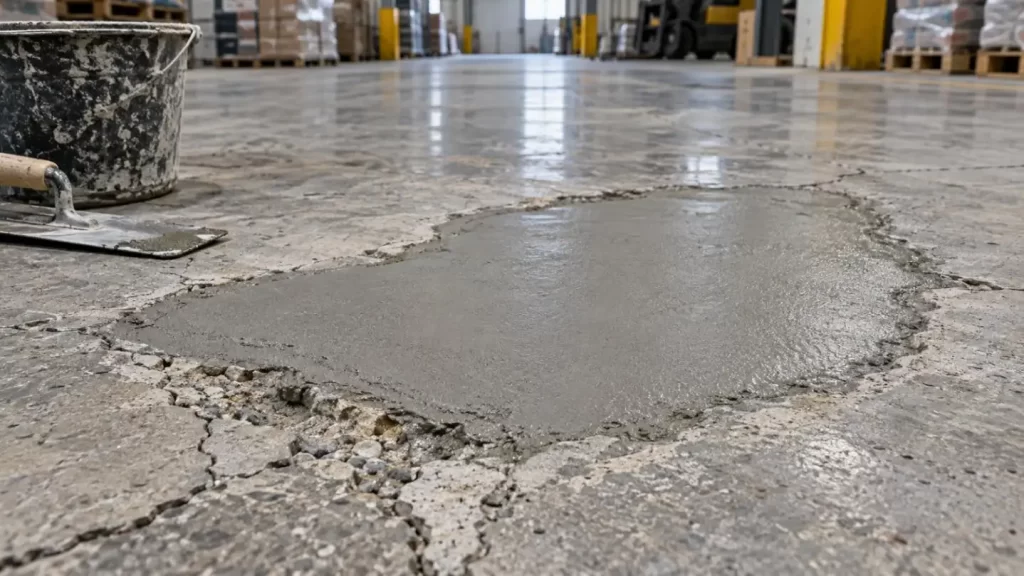
Repair mortar is often chosen because a damaged floor, pavement, precast element, or concrete structure must return to service quickly. But fast setting alone is not enough. A repair can gain early compressive strength and still fail through short working time, poor adhesion, shrinkage cracking, or incompatibility with the existing concrete.

This is where Calcium Formate for Construction becomes useful. In cement-based repair mortar, it supports faster setting and early strength development. The formulation goal is to reach the required reopening time without making the mortar too fast to mix, place, and finish. Vanchor lists construction-grade calcium formate for applications including dry-mix mortar, repair mortar, self-leveling compounds, and fast-setting cement systems.
When Faster Setting Creates a New Repair Problem
A slow repair mortar delays finishing and reopening, especially at lower temperatures. Increasing accelerator dosage may shorten setting time, but it can also reduce pot life and the practical finishing window.
The real target is a controlled balance among:
• Setting time and workable time
• 1–24 hour strength development
• Bond to existing concrete
• Shrinkage and dimensional stability
• Long-term durability
High early compressive strength is not proof of a complete repair system. Substrate preparation, moisture condition, polymer modification, and curing also determine whether the repair remains bonded in service.
How Calcium Formate for Construction Changes Early Cement Behavior
Calcium Formate for Construction, Ca(HCOO)₂, is used in cementitious formulations as a non-chloride accelerator. Vanchor describes it as a dry-powder additive for accelerating setting and supporting early strength in cement-based systems.
Its actual response, however, depends on the whole formulation:
• Cement mineralogy and binder type
• Water-to-binder ratio
• Ambient and curing temperature
• Accelerator dosage
• Polymer and cellulose additives
• Other admixtures
Setting time and early strength are related but are not identical. A mortar may lose plasticity quickly without developing load-bearing strength at the same rate.
Lower temperatures also slow cement hydration. Therefore, Calcium Formate for Construction can be valuable in cold-weather or fast-turnaround repair mortar, but a dosage optimized at laboratory room temperature should not automatically be copied to a colder jobsite.
Calcium Formate Is One Rapid-Repair Route, Not the Only One
Selecting an accelerator requires comparison rather than treating one chemistry as universally superior.
| Technical Route | Main Advantage | Main Limitation |
| Calcium Formate | Dry-powder compatible, non-chloride acceleration | Response depends on binder and dosage |
| Calcium Chloride | Strong accelerating effect | Chloride is a major concern around reinforcement |
| Calcium Nitrate-Based Accelerator | Alternative non-chloride approach | Cost and formulation response require testing |
| CSA/CAC Rapid-Hardening Binder | Very rapid early strength can be engineered | More complex binder and dimensional behavior |
The correct solution depends on reopening time, reinforcement exposure, ambient temperature, workability, and durability—not simply the fastest setting time.
For dry-mix production, Vanchor notes that calcium formate can be incorporated alongside cement, sand, cellulose ether, redispersible polymer powder, and other mortar additives.
The Correct Dosage Is a System-Matching Decision
More Calcium Formate for Construction is not always ideal. The ideal level of Calcium Formate should give early performance without losing workability.
The formulation should consider the following factors concurrently:
• Type of Cement: The response to OPC and blended cements can be vastly different.
• Temperature: More acceleration may be necessary at lower temperatures.
• Water binder ratio: Increased water results in higher workability, but also results in higher porosity and lower strength.
• HPMC: Highly affects water retention and the rheology of the mix.
• RDP: Influence adhesion and the viscoelastic character of the mix.
• PCE: Affects the rest of the parameters in this list.
• CSA/CAC, fibers, and shrinkage-control additives: Early Curing, and Dimensional Stability.
A useful development program measures setting time, flow, early compressive strength, bond strength, and length change instead of optimizing only one parameter.
Field Application Determines Whether Early Strength Becomes a Durable Repair
Calcium Formate for Construction cannot compensate for a poorly prepared substrate.
Loose concrete, laitance, dust, oil, or unsuitable substrate moisture can cause debonding even when the repair mortar itself develops high compressive strength.
Field controls should therefore include:
- Remove weak or unsound concrete and prepare the repair interface correctly.
- Use the specified mixing-water quantity rather than adding water to extend pot life.
- Match batch size to the available placement and finishing time.
- Follow the curing procedure specified for the complete repair system.
Fast hardening reduces waiting time, but it does not eliminate curing or inspection for cracking, edge failure, or delamination.
Validate the Finished Repair Mortar, Not Just the Accelerator
For European applications, BS EN 1504-3:2005 covers structural and non-structural concrete repair products and systems and remains listed by BSI as current and under review. BS EN 12190 provides a method for determining repair-mortar compressive strength.
For North American rapid repairs, ASTM C928/C928M-25 covers packaged dry rapid-hardening cementitious repair mortar and concrete. Its evaluation includes compressive strength, length change, scaling resistance, and slant-shear bond strength.
This distinction is important: these standards apply to the finished repair material or system, not to calcium formate raw material by itself.
What to Specify When Buying Calcium Formate for Construction
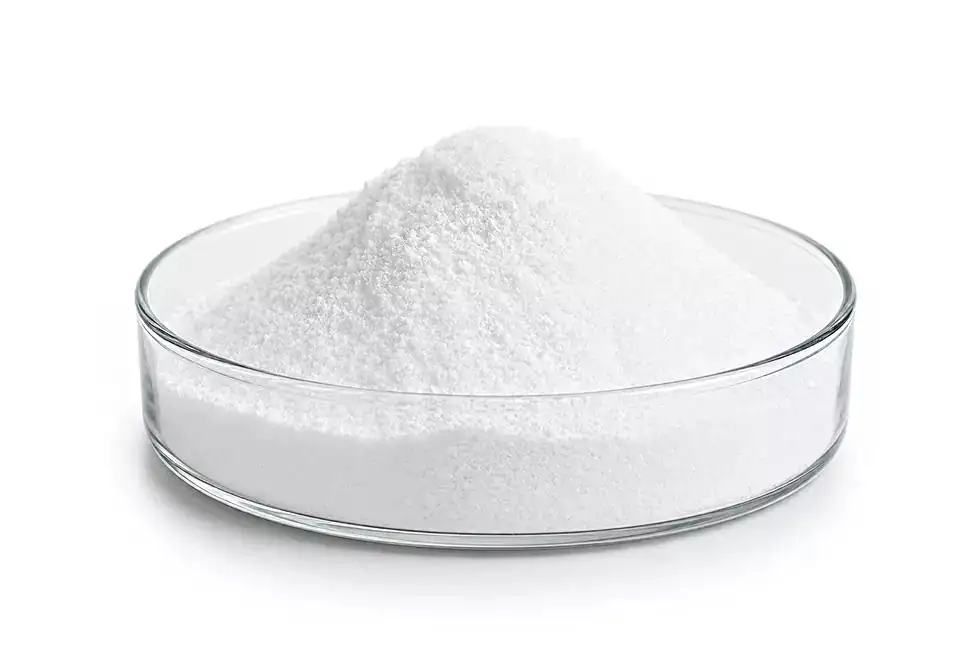
For industrial dry-mix production, batch consistency matters alongside nominal purity. Vanchor publishes the following industrial-grade specifications:
| Parameter | Vanchor Specification |
| Purity | ≥98% |
| Calcium Content | ≥30.1% |
| Insoluble Matter | ≤1% |
| Moisture Loss | ≤0.3% |
| pH, 10% Solution | 6–8 |
| Appearance | White or light-yellow powder |
A COA is available on request. Vanchor also lists 25 kg compound bags and 1000–1250 kg bulk bags, together with palletized shipment and qualified OEM/private-label packaging.
These specifications support purchasing and production control, but final repair performance should still be verified using the buyer's actual cement, polymers, aggregates, water ratio, and target application temperature.
Choose Calcium Formate Around the Repair Target
A sound purchasing decision starts with the required return-to-service time, then works backward through temperature, binder chemistry, workable time, bond requirement, shrinkage control, and durability target.
For manufacturers developing fast-setting repair mortar, Vanchor's industrial-grade Calcium Formate for Construction provides a defined raw-material specification and practical packaging options for formulation trials and scaled dry-mix production. Rather than selecting the highest accelerator dosage, manufacturers should establish the dosage window that provides both rapid early strength and reliable long-term repair performance.
FAQs
Q1. What Calcium Formate for Construction does Vanchor supply?
Vanchor supplies industrial-grade calcium formate designed for construction applications such as dry-mix mortar, repair mortar, tile adhesive, and other cement-based formulations.
Q2. What is the purity of Vanchor Calcium Formate for Construction?
Vanchor lists a calcium formate purity of ≥98% for its construction-grade product.
Q3. What is the calcium content of Vanchor calcium formate?
Vanchor specifies a calcium content of ≥30.1%, helping manufacturers maintain consistent raw-material control during mortar formulation.
Q4. What moisture level does Vanchor specify?
Vanchor lists moisture loss at ≤0.3%, an important parameter for storage stability, dosing consistency, and dry-mix processing.
Q5. Can Vanchor Calcium Formate be used in repair mortar?
Yes. Calcium Formate for Construction can be evaluated in cement-based repair mortar where faster setting and rapid early-strength development are required. Final dosage should be confirmed through formulation testing.


Contact Us
In This Article
Related Posts
Custom Packaging Solutions from an Anhydrous Sodium Acetate Supplier in China
2026-09-23
Application Trends in Anhydrous Sodium Acetate for Special Chemical Manufacturing
2026-09-23
Anhydrous Sodium Acetate for Leather Tanning: Improve Dyeing Uniformity
2026-09-22
Formic Acid 85% for Textile Dyeing: Industrial Applications, Technical Benefits and Future Trends
2026-09-22


