



Calcium Formate for Masonry Mortar: Setting Control, Strength, and Dosage Factors
By Tonmoy
2026-08-30Related Posts

Custom Packaging Solutions from an Anhydrous Sodium Acetate Supplier in China
2026-09-23

Application Trends in Anhydrous Sodium Acetate for Special Chemical Manufacturing
2026-09-23

Anhydrous Sodium Acetate for Leather Tanning: Improve Dyeing Uniformity
2026-09-22

Formic Acid 85% for Textile Dyeing: Industrial Applications, Technical Benefits and Future Trends
2026-09-22
Calcium formate can be used in cement-based masonry mortar as a setting and hydration accelerator. It may help mortar develop earlier setting and early-age strength, particularly when production or application conditions make hydration slower. However, calcium formate is not a universal mortar-strength solution or antifreeze treatment. Its suitable dosage depends on the cementitious system, temperature, water demand, workability target, and other admixtures.
For a reliable formulation decision, treat published dosage information as a starting point for controlled trials. The dosage basis must also be clear: a percentage calculated on cement weight is not directly equivalent to the same percentage calculated on total dry-mix weight.
What Calcium Formate Does in Masonry Mortar
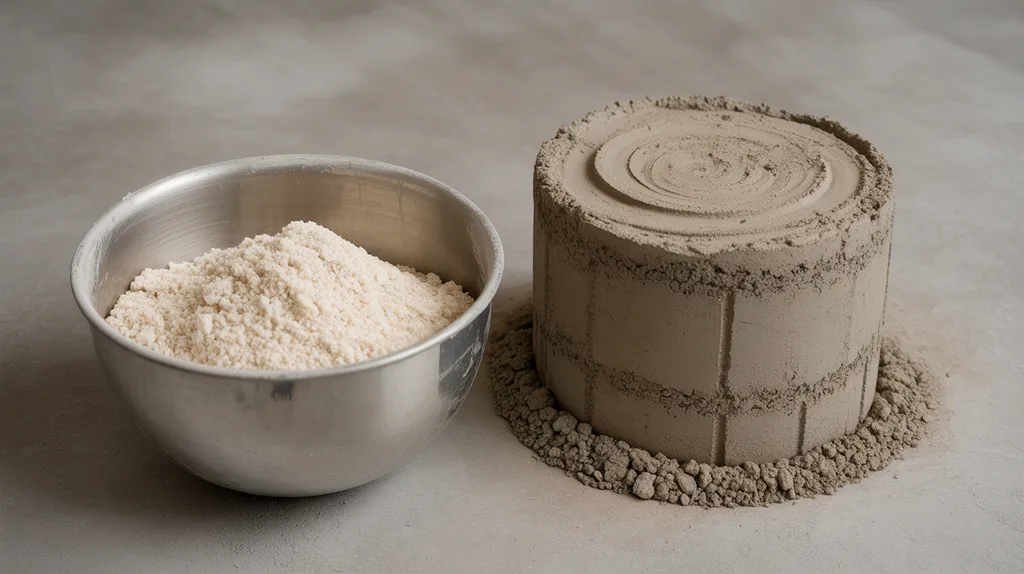
Calcium formate is a solid chemical additive used in cement-based systems to accelerate cement hydration and setting development. In masonry mortar, the intended process role is usually to shorten the time required to reach a defined setting condition or to support earlier strength development.
The relevant application is therefore not simply “more strength.” A mortar producer should first define the required outcome:
- Earlier initial or final setting
- Earlier handling or production turnover
- Improved early-age strength development
- Better setting consistency under lower-temperature conditions
- A practical balance between setting speed and usable open time
A broader overview of the chemical and its applications is available in Vanchor’s calcium formate resource.
The effect depends on the complete mortar formulation. Cement type, cement content, sand grading, water demand, ambient temperature, humidity, and other additives can all change the response. Calcium formate should therefore be evaluated as one formulation variable rather than treated as an independent replacement for mix-design control.
How It Can Change Setting Time and Early Strength
Calcium formate’s main relevance to masonry mortar is its potential to accelerate cement hydration and setting. Supplier application information describes its use for faster hydration, shorter setting, and earlier strength development in cement-based products. These effects should be understood as formulation-dependent outcomes rather than guaranteed results for every mortar.
Setting control
A faster-setting mortar may be useful when:
- The production cycle requires earlier handling
- Low temperatures are slowing hydration
- The mortar needs to reach a defined setting window sooner
- A dry-mix producer is adjusting the balance between workability and setting response
The objective should be a controlled setting window, not the shortest possible setting time. Excessive acceleration can reduce the time available for mixing, conveying, application, or adjustment at the job site.
Early-age strength
Calcium formate may support earlier strength development, but early strength and final strength are different performance measures. A formulation that reaches an early testing milestone sooner has not automatically demonstrated higher long-term strength or improved durability.
For this reason, trials should define the strength age and test objective in advance. For example, the relevant question may concern handling strength after a specified period rather than a general claim that the mortar is “stronger.”
Temperature is also important. Lower temperatures can slow cement hydration, making acceleration more relevant, but the result still depends on the cement and the rest of the formulation. Calcium formate should not be described as an antifreeze treatment or as a substitute for appropriate temperature and curing controls.
Dosage: Start With the Basis, Not a Universal Number
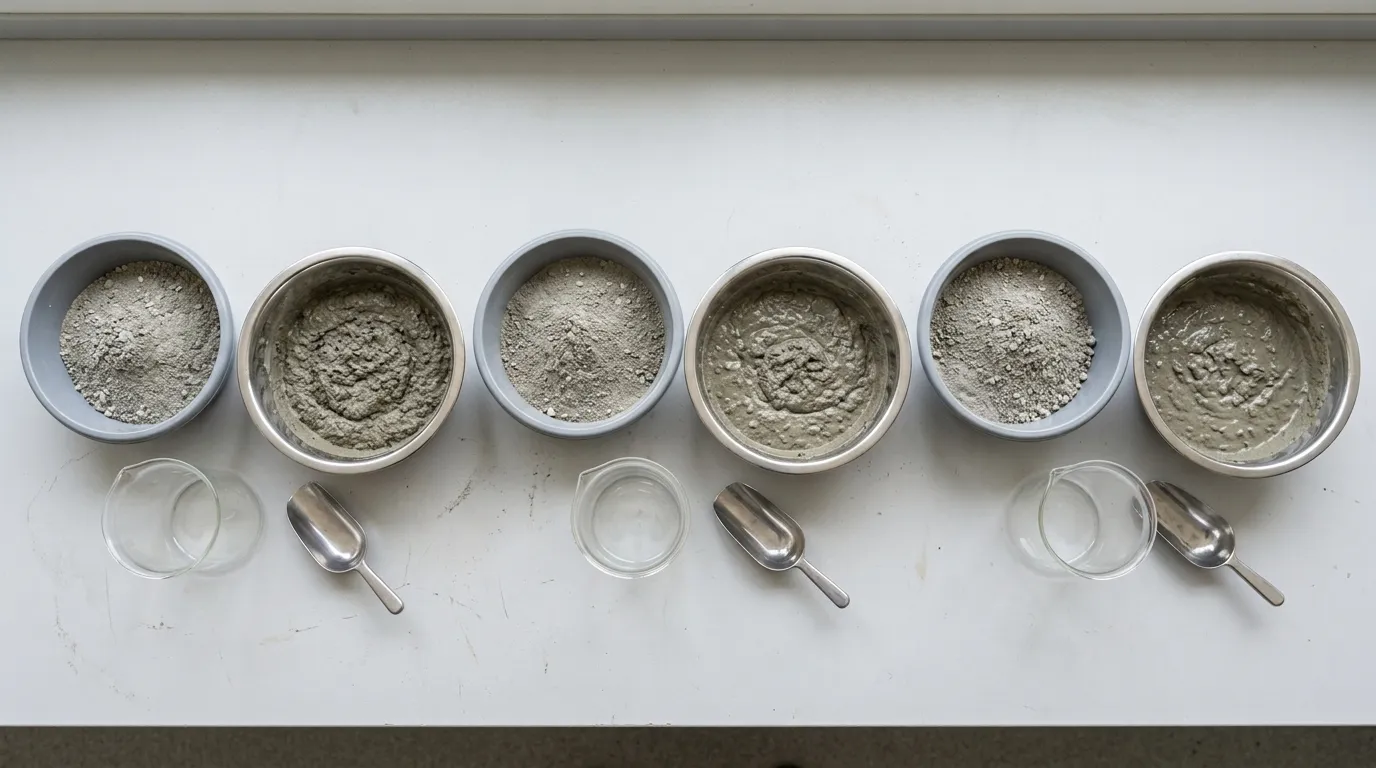
The first dosage question is not “What percentage should be used?” It is:
Percentage of what?
Calcium formate dosage may be expressed relative to cement weight, total cementitious material, total dry-mix weight, or a production quantity such as a tonne of dry mortar. These bases are not interchangeable.
| Dosage basis | Meaning | Why it matters |
|---|---|---|
| Percentage by cement weight | Calcium formate mass relative to cement mass | Common in cement-additive guidance; requires the cement mass to be known |
| Percentage by total dry-mix weight | Calcium formate mass relative to all dry ingredients | Includes sand and other solids, so the same numerical percentage may represent a different additive level |
| Amount per tonne of dry mortar | Calcium formate mass relative to a production quantity | Requires the cementitious fraction and complete formulation to be understood |
One supplier application source reports a typical calcium-formate range of approximately 0.2–0.8% by cement weight for dry-mix mortar applications and advises gradual adjustment based on the required performance. This is supplier guidance for an application context, not a universal recommendation for every calcium-formate product or mortar formulation. See the supplier’s calcium formate dry-mix mortar guidance for the stated scope.
Other published supplier recommendations use different ranges or different calculation bases. That variation is important: it shows why a number taken from one product page should not be transferred directly to another product, cement system, or dry-mix formulation.
When reviewing a dosage recommendation, confirm:
- Whether the percentage is based on cement or total dry mix
- Whether “cement” means Portland cement only or total cementitious material
- Whether the value is a minimum, maximum, typical, or trial range
- Which calcium-formate grade and assay were used
- The temperature and humidity during testing
- The target setting time and strength age
- The other additives present in the formulation
Do not equate chemical assay with dosage. A higher assay may change the mass of product required to deliver a defined active level, but it does not establish that the product is suitable for a particular mortar or that a particular dosage will produce a guaranteed result.
Which Mortar Variables Should Control the Trial?
A useful dosage trial changes the calcium-formate level while documenting the other variables that can affect setting and workability.
Cement and cementitious composition
Different cements can respond differently to an accelerator. Record the cement type, source, cement content, and any supplementary cementitious materials. If dosage is calculated by cement weight, use the same basis throughout the trial series.
Temperature and humidity
Temperature affects cement hydration and setting behavior. Record the temperature of the dry materials, mixing water, fresh mortar, and test environment where relevant. A dosage that performs acceptably under one temperature condition should not automatically be treated as validated under another.
Water demand and workability
Water content, water-to-cementitious ratio, sand grading, and mortar consistency affect both handling and setting. If calcium formate is introduced without controlling these variables, it may be difficult to determine whether a change in performance came from the accelerator or from the mix itself.
Target open time
Acceleration can be useful only if the mortar remains workable for its intended handling and application period. A shorter open time may be unacceptable even when setting is faster. Workability should therefore be measured alongside setting time rather than treated as a separate afterthought.
Other admixtures
Dry-mix mortar may contain cellulose ethers, redispersible polymer powders, retarders, water reducers, or other additives. Some supplier information describes calcium formate as compatible with HPMC and RDP, but that is an attributed formulation statement rather than proof of universal compatibility.
For a more focused review of this issue, see calcium formate HPMC RDP compatibility. The specific HPMC grade, RDP type, dosage, mixing sequence, and mortar composition still need to be evaluated in the actual formulation.
For broader dry-mix application context, refer to calcium formate for dry mix mortar.
A Practical QA Trial and Release Framework

A controlled trial should connect the additive level to defined production and performance targets. A practical sequence is:
- Define the target. Specify the required setting window, workability or open time, and early-strength testing age before selecting a dosage.
- Record the reference formulation. Document cement type, cementitious content, sand, water, additives, mixing procedure, and test conditions.
- Declare the dosage basis. State whether calcium formate is calculated by cement weight or total dry-mix weight.
- Compare a control and trial levels. Use an untreated reference and several calcium-formate levels within the qualified supplier guidance. These are trial points, not universal recommendations.
- Hold key conditions constant. Keep the materials, mixing method, temperature, and test procedure consistent while comparing the levels.
- Measure setting and workability together. Record setting behavior, fresh-mortar consistency, open time, and any handling problems.
- Measure early strength at the defined age. Report the test age and method rather than using an unqualified statement such as “higher strength.”
- Check additive interactions. Review the response when HPMC, RDP, or other admixtures are present.
- Repeat the selected condition. Confirm the preferred level with repeat batches before production release.
- Connect release to incoming-lot records. Compare the received material with the supplier’s current technical documentation and lot-specific quality records.
A QA checklist should include:
- Exact chemical identity and product name
- Supplier grade or application designation
- Assay or content specification
- Moisture specification
- pH specification and test method, where provided
- Lot number and certificate of analysis
- Declared dosage basis
- Setting result
- Workability or open-time result
- Early-strength result
- Storage and handling observations
A supplier product page may list values such as content, moisture, or pH for one specific product. Those values should be treated as product-specific examples, not as a Vanchor specification or a universal construction-grade requirement. Buyers evaluating construction-grade calcium formate should confirm the current technical documents for the exact material being considered.
What to Confirm Before Sourcing Construction Calcium Formate
Technical buyers should request documentation that allows the product to be compared on a like-for-like basis. At minimum, confirm:
- Chemical identity and solid form
- Product grade or intended application
- Assay or content basis
- Moisture limit and test method
- pH value and test conditions, if specified
- Particle-size or physical-form information where relevant to the dry-mix process
- Current technical data sheet
- Applicable safety data sheet
- Representative certificate of analysis
- Lot traceability
- Dosage basis used in any supplier application guidance
- Whether the supporting data relates to masonry mortar, dry-mix mortar, concrete, or another cement-based system
A catalog listing does not by itself establish current stock, manufacturing status, delivery capability, or product compliance. Similarly, a high assay does not prove suitability for a specific application. The product documentation must match the exact grade and use being evaluated.
Limits: When Calcium Formate Should Not Be Treated as the Only Control
Calcium formate should not be used to compensate for an uncontrolled mortar formulation. Setting and strength results can also be affected by:
- Cement selection and cementitious content
- Water level and water demand
- Sand grading and moisture
- Material and ambient temperature
- Mixing energy and mixing time
- HPMC, RDP, retarders, and other admixtures
- Curing and storage conditions
- The required workability and open time
Faster setting is not automatically better setting. If the mortar becomes difficult to mix, convey, spread, or adjust, the formulation may no longer meet its process or application requirements.
Likewise, low-temperature use still requires validation. Calcium formate may be relevant when slower hydration is a concern, but it should not be presented as a freezing-point control or guaranteed antifreeze solution. Long-term durability claims also require application-specific evidence and should not be inferred from an accelerator’s chemical identity or assay.
The practical decision is whether the selected calcium-formate product and dosage meet the defined setting, workability, and early-strength targets in the actual masonry-mortar formulation.
Recommended Next Step for Formulators and QA Teams
Before production adoption, define the target mortar and test conditions, obtain documentation for the exact calcium-formate grade, and run controlled trials using one clearly stated dosage basis. Compare setting, workability, and early-strength results against an untreated reference, then confirm the selected condition with repeat batches and incoming-lot checks.
For application-specific material selection, a technical discussion should focus on the mortar composition, dosage basis, target setting window, workability requirement, and documentation needed for QA release.


Contact Us
In This Article
Related Posts
Custom Packaging Solutions from an Anhydrous Sodium Acetate Supplier in China
2026-09-23
Application Trends in Anhydrous Sodium Acetate for Special Chemical Manufacturing
2026-09-23
Anhydrous Sodium Acetate for Leather Tanning: Improve Dyeing Uniformity
2026-09-22
Formic Acid 85% for Textile Dyeing: Industrial Applications, Technical Benefits and Future Trends
2026-09-22


