



Calcium Formate for Self-Leveling Compounds: Set Control and Early Strength
By Tonmoy
2026-08-28Related Posts

Custom Packaging Solutions from an Anhydrous Sodium Acetate Supplier in China
2026-09-23

Application Trends in Anhydrous Sodium Acetate for Special Chemical Manufacturing
2026-09-23

Anhydrous Sodium Acetate for Leather Tanning: Improve Dyeing Uniformity
2026-09-22

Formic Acid 85% for Textile Dyeing: Industrial Applications, Technical Benefits and Future Trends
2026-09-22
Calcium formate may be used in selected cementitious self-leveling compounds when the formulation requires a change in setting behavior or early-age strength development. It is not, however, a universal accelerator or a substitute for balancing the complete additive system.
Its effect depends on the cement chemistry, water demand, superplasticizer, cellulose ether, redispersible polymer powder, defoamer, calcium sulfate or other setting components, temperature, and required working time. A suitable result should therefore be established through controlled laboratory trials rather than transferred from a dosage used in another cement application.
What calcium formate does in a self-leveling compound
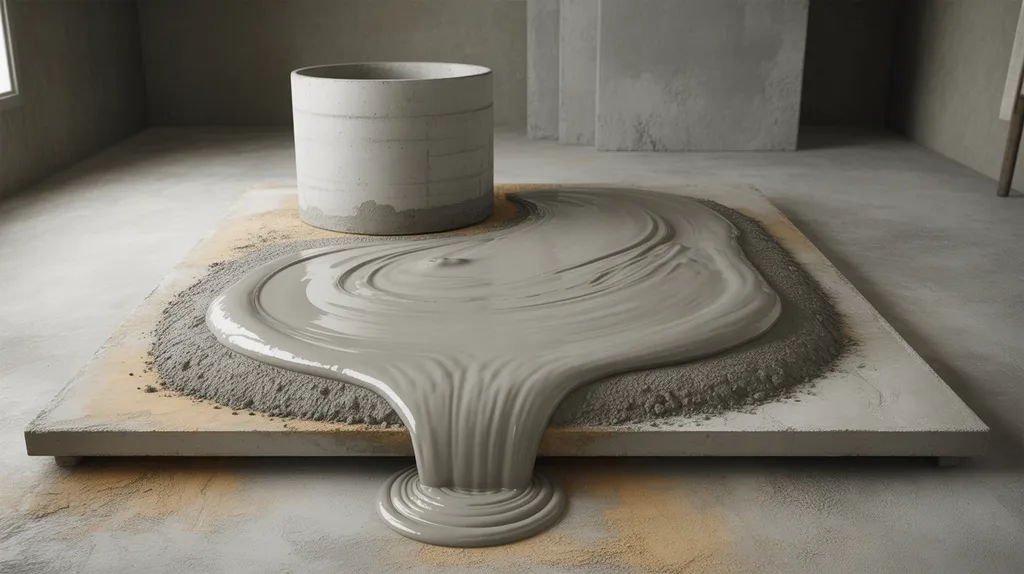
Calcium formate is a construction additive associated with setting control and early-strength development in selected cementitious systems. Vanchor’s construction product information associates calcium formate with self-leveling cementitious applications where faster early strength and controlled setting behavior are required. The broader calcium formate application page also lists self-leveling compounds among its construction uses.
In a self-leveling compound, the additive is evaluated as one part of a dry-mix formulation that must deliver several properties at the same time:
- Sufficient initial flow for placement and leveling
- Adequate flow retention during the working window
- Controlled stiffening and setting
- Low bleeding and segregation
- Acceptable air content and surface appearance
- Early strength appropriate to the application
- Stable performance from batch to batch
This combination makes self-leveling compounds more sensitive to formulation changes than a simple cement-and-water system. An additive that improves one property can affect another. For example, a change intended to accelerate setting may reduce working time or alter flow retention.
The relevant question is therefore not simply whether calcium formate is an accelerator. The more useful question is whether a specific calcium-formate product, at a validated level, helps the complete self-leveling formulation reach its fresh-state and hardened-state targets.
Setting behavior and early strength are often discussed together, but they are not the same measurement.
| Target | What it describes | Why it matters in self-leveling compounds | Evidence needed |
|---|---|---|---|
| Setting behavior | The transition from a workable mixture toward stiffening and loss of flow | Determines the available placement and leveling window | Defined setting-time method, temperature, formulation, and test conditions |
| Working time | How long the material remains usable for mixing, transport, and placement | Excessive acceleration can make application difficult | Time-dependent flow or workability data |
| Early strength | Mechanical performance at a defined early test age | May support earlier handling, covering, or subsequent construction steps | Strength test at a specified age, curing condition, and method |
| Flow retention | Ability to maintain required flow after mixing | Important when the material is not placed immediately | Time-based flow measurements |
| Surface quality | Visible finish after leveling and setting | Helps identify bleeding, air, segregation, or incompatibility | Controlled visual and physical assessment |
Supplier literature commonly presents calcium formate as a construction accelerator associated with setting and early-strength benefits. These statements should remain qualified because performance depends on the cementitious system and additive package. A faster setting result does not automatically establish a corresponding early compressive-strength result.
Conversely, an early-strength improvement does not necessarily mean that the material has the correct working time for production or field placement. A self-leveling compound that stiffens too quickly may lose flow before it has properly spread, while a formulation that remains workable for too long may not meet the project’s early-age requirements.
The available Vanchor information identifies self-leveling use and the need for controlled setting and early strength, but it does not provide a Vanchor-specific setting-time reduction or compressive-strength result. Any such result should be supported by a test report naming the product grade, cement system, additive package, test method, temperature, test age, and curing conditions. Related construction information may be reviewed through the calcium formate cement accelerator resource, but an accelerator description should not be treated as a universal performance guarantee.
Why the surrounding formulation controls the result
Calcium formate should be assessed within the complete self-leveling formulation. The main variables include:
- Cement type, composition, and reactivity
- Mineral fillers and aggregate grading
- Water-to-powder ratio or total mix water
- Calcium sulfate or other setting-control components
- Polycarboxylate ether (PCE) superplasticizer
- HPMC or HEMC cellulose ether
- Redispersible polymer powder (RDP)
- Defoamer
- Mixing equipment and mixing energy
- Material and ambient temperature
- Required working time and flow-retention period
These components do not act independently. PCE influences water reduction and flowability. Cellulose ether affects water management, rheology, and suspension. RDP can influence cohesion and film formation. Defoamer affects air control and surface appearance. Cement and calcium-sulfate chemistry influence setting and early hydration behavior.
For readers investigating the polymer side of the formulation, the dedicated calcium formate HPMC RDP compatibility resource can provide a separate compatibility pathway. It should not, however, be used as a substitute for testing the actual HPMC, RDP, PCE, cement, and calcium-formate combination in the intended self-leveling system.
A practical formulation review can be organized as follows:
| Formulation variable | Potential influence | Why it matters when evaluating calcium formate | Check during a trial |
|---|---|---|---|
| Cement chemistry | Setting and strength development | The same additive level may behave differently with different cements | Record cement type and maintain the same lot where possible |
| Water demand | Flow, stability, and strength | A change in water demand can mask or exaggerate the additive effect | Hold water conditions constant during comparison |
| PCE | Initial flow and flow retention | Calcium formate should not be judged without the selected superplasticizer | Monitor flow immediately and over the working period |
| HPMC/HEMC | Rheology, suspension, and water retention | Changes can affect leveling and segregation independently of calcium formate | Use the same grade and addition condition |
| RDP | Cohesion and hardened properties | Polymer changes may influence surface and strength results | Keep polymer type and level constant |
| Defoamer | Air and surface appearance | Changes in air content can affect both finish and strength | Record air or visible surface defects where applicable |
| Calcium sulfate or other setting components | Stiffening and setting response | Interaction may change working time and early development | Identify the component and its specification |
| Temperature | Reaction and workability | Results from one temperature cannot automatically be transferred to another | Record material and test temperature |
The formulation objective is balance. Increasing the accelerating contribution may shorten working time. A change in water demand or PCE response may affect flow retention. Poor overall balance can contribute to bleeding, segregation, pinholes, or other surface defects. These risks mean that calcium formate should not be optimized against early strength alone.
What to control before choosing a dosage
A dosage decision should begin with defined performance requirements, not with a generic percentage copied from another cement application.
Before evaluating calcium formate in a self-leveling compound, define:
- Required working or open time
- Initial flow target
- Flow-retention requirement
- Acceptable bleeding or segregation behavior
- Surface-quality requirements
- Early-strength test age and acceptance criterion
- Cement, filler, aggregate, and calcium-sulfate composition
- PCE, cellulose ether, RDP, and defoamer grades
- Test temperature and mixing conditions
- Whether dosage is expressed on an as-supplied product basis or by active calcium-formate content
No universal calcium-formate dosage is supported by the available Research Brief. Dosage ranges stated for general cement, mortar, or other construction applications should not automatically be transferred to self-leveling compounds. Even when two products use the same chemical name, differences in assay, moisture, particle-size distribution, impurities, and product form can affect the formulation response.
Purity is also not the same as dosage. A product assay describes composition against a specified basis; it does not establish how much product a particular self-leveling formulation requires. Likewise, a nominal percentage of product as supplied is not necessarily equivalent to the same percentage of active calcium formate if products differ in composition or moisture.
The selected dosage should therefore be treated as a trial variable. A useful comparison changes one variable at a time while keeping the cement, water, mineral components, auxiliary additives, mixing procedure, and test conditions controlled. This allows the formulator to distinguish the effect of calcium formate from normal formulation variation.
Detailed PCE response should be assessed separately where necessary. The calcium formate superplasticizer compatibility page is a relevant internal destination for that narrower topic, provided the page is used for compatibility context rather than as proof of a universal dosage or performance result.
A laboratory qualification workflow for self-leveling formulations

A responsible qualification program should evaluate fresh-state and hardened-state behavior together.
- Define the performance targets.
Establish the required working time, flow behavior, flow retention, surface quality, and early-strength requirement before changing the additive package.
- Document the baseline formulation.
Record the cement, fillers, aggregate, water, PCE, cellulose ether, RDP, defoamer, calcium sulfate or other setting components, mixing procedure, and test conditions.
- Compare calcium-formate trial levels or candidate products.
Use controlled comparative trials rather than assuming that a supplier range applies to the formulation. The exact product grade and form should be recorded for each trial.
- Measure fresh-state behavior.
Evaluate flow, flow retention, bleeding, segregation, air-related behavior, and visible surface defects. Flowability and additive distribution are central considerations in self-leveling systems; related research on additive distribution can be reviewed through this technical study, although the available access does not establish a calcium-formate-specific result.
- Measure setting behavior.
Use a defined internal or applicable test method and record the temperature, elapsed time, formulation, and test conditions. A statement that the material “sets faster” is not sufficiently precise without a test basis.
- Measure early strength.
Test at the age relevant to the application and identify the curing conditions and strength method. Do not present an illustrative calculation or supplier statement as measured product performance.
- Review tradeoffs.
Compare setting, working time, flow retention, surface quality, and early strength together. Reject a trial that achieves an early target but creates unacceptable flow loss, bleeding, segregation, or surface defects.
- Confirm product-document consistency.
Before production approval, compare the tested product with its current specification and representative batch documentation. A successful trial with one material should not automatically qualify a materially different grade or form.
This workflow is a qualification framework, not a universal formulation recipe. The actual test method, temperature, dosage, curing condition, and acceptance limits must come from the formulator’s product requirements, applicable standards, and validated internal procedures.
Product and procurement checks before approval

QA and procurement teams should request enough information to identify the exact material being evaluated. Relevant checks include:
- Chemical identity and product form
- Construction-grade designation, where applicable
- Assay basis
- Minimum, maximum, or typical specification values
- Moisture and insoluble limits
- Particle-size information where relevant to dry blending
- Current technical data sheet (TDS)
- Safety data sheet (SDS)
- Representative certificate of analysis (COA)
- Test methods used for specification values
- Specification version or revision date
- Packaging and storage information
- Application-specific test data supporting setting or early-strength claims
The available Vanchor research supports a limited site-stated application connection between its construction calcium-formate offering and selected self-leveling cementitious systems. It does not establish an exact grade, assay, moisture specification, particle-size range, application-specific test report, current stock position, minimum order quantity, lead time, in-house manufacturing status, or product certification.
For general product navigation, the calcium formate construction destination is the most relevant approved product link. Any product decision should still be based on the current documents and the exact material supplied for testing. A catalog listing alone does not replace a TDS, SDS, COA, or application-specific performance report.
When calcium formate should remain a trial candidate
Calcium formate is a reasonable trial candidate when a cementitious self-leveling formulation requires a controlled change in setting behavior or early-age performance. Approval should depend on the complete result:
- Working time remains adequate for the intended process.
- Initial flow and flow retention meet the formulation requirement.
- Bleeding and segregation remain controlled.
- Surface appearance is acceptable.
- Early strength is measured at a defined age and under defined conditions.
- The tested chemical identity, product form, and grade match the material proposed for production.
- Current product documentation supports consistent quality control.
The available evidence supports a qualified application discussion, not a universal claim that calcium formate will produce a specific setting time or strength increase in every self-leveling compound. The safest formulation decision is to define the target, control the surrounding variables, run comparative trials, and approve the product only after the complete system meets its technical requirements.


Contact Us
In This Article
Related Posts
Custom Packaging Solutions from an Anhydrous Sodium Acetate Supplier in China
2026-09-23
Application Trends in Anhydrous Sodium Acetate for Special Chemical Manufacturing
2026-09-23
Anhydrous Sodium Acetate for Leather Tanning: Improve Dyeing Uniformity
2026-09-22
Formic Acid 85% for Textile Dyeing: Industrial Applications, Technical Benefits and Future Trends
2026-09-22


