



Chemical Sample Approval Process: From Lab Sample to Bulk Purchase
By Tonmoy
2026-09-12Related Posts
Custom Packaging Solutions from an Anhydrous Sodium Acetate Supplier in China
2026-09-23

Application Trends in Anhydrous Sodium Acetate for Special Chemical Manufacturing
2026-09-23
Anhydrous Sodium Acetate for Leather Tanning: Improve Dyeing Uniformity
2026-09-22
Formic Acid 85% for Textile Dyeing: Industrial Applications, Technical Benefits and Future Trends
2026-09-22
A chemical sample should not be approved simply because it arrives with a familiar label or appears acceptable in a laboratory test. For an industrial buyer, approval is a controlled decision based on the intended use, written specification, relevant documentation, representative testing, and defined responsibilities.
A practical chemical sample approval process has four connected gates:
- Approve the required specification.
- Evaluate the sample under relevant process conditions.
- Complete technical, quality, safety, and purchasing reviews.
- Verify the first bulk shipment against the approved basis.
Approval of one sample is not a blanket guarantee that every future bulk batch will be identical or suitable for every application.
Set the approval basis before requesting or testing a sample
The first step is to define what the chemical must do and what evidence will be used to judge it. Without a written basis, different departments may evaluate the sample against different expectations.
Before requesting a sample, document the following where applicable:
- Exact chemical identity
- CAS number or other identity reference
- Grade and physical form
- Solid, solution, hydrate, or anhydrous status
- Assay or concentration basis
- Active-content basis
- Required minimum, maximum, or typical values
- Relevant physical or chemical properties
- Intended process application
- Test method and units
- Packaging or handling requirements
- Safety and storage requirements
- Acceptance criteria for technical performance
- Documents required before purchase
The specification should distinguish mandatory requirements from preferences. For example, a required assay limit should not be mixed with a preferred packaging format or an estimated delivery condition.
A supplier’s catalog description may help identify a candidate material, but it should not automatically become the buyer’s approved specification. The buyer should confirm the exact material identity, grade, form, and test basis before evaluating performance.
This is also the point to decide whether the sample represents the material that would actually be purchased. Vanchor’s procurement guidance recommends requesting a sample from a normal production batch and testing it under actual process conditions before placing a large order. This recommendation should be applied with the buyer’s own specification and test method, rather than treated as a universal test procedure.
Collect the sample and the documents needed for review
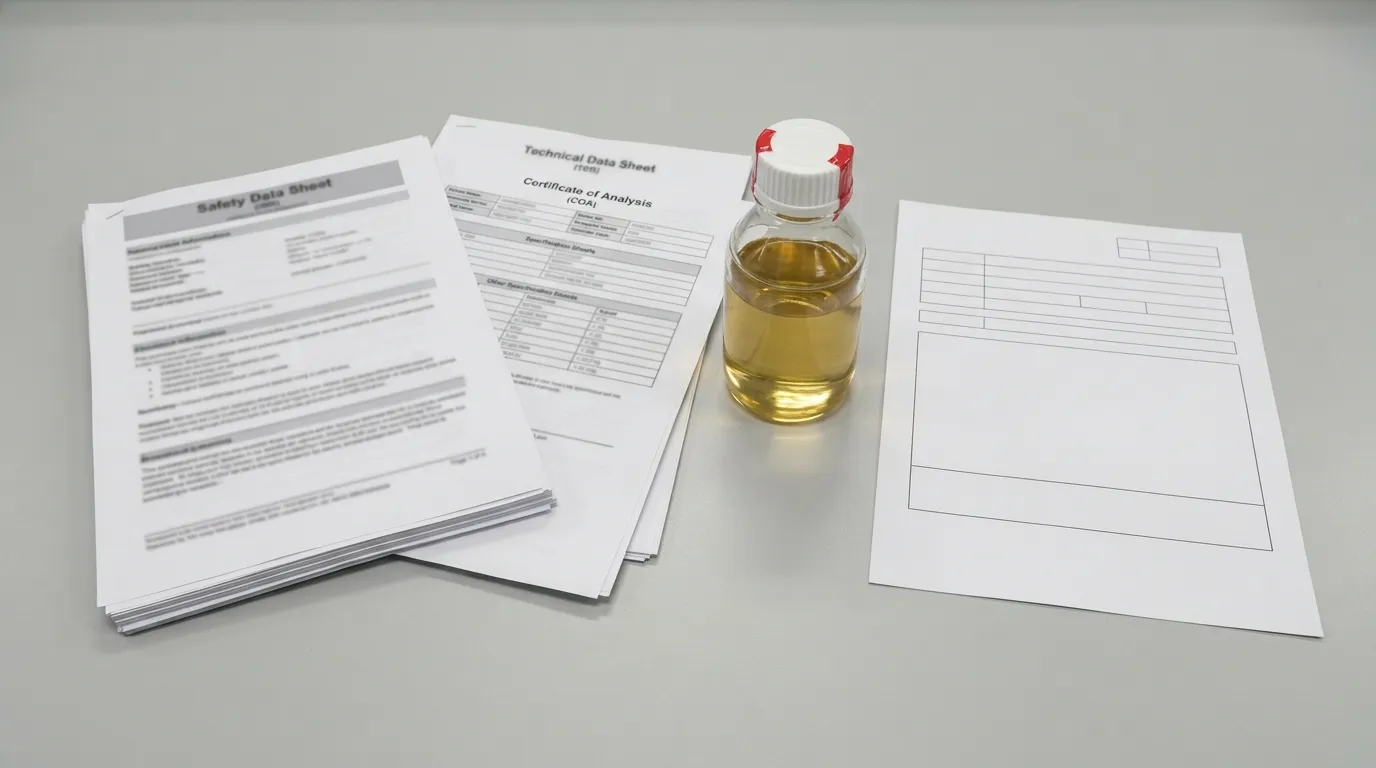
A physical sample is only one part of the approval package. The receiving team should record the sample identity and review the accompanying documentation before testing begins.
Depending on the chemical, application, facility, and jurisdiction, the package may include:
- Sample label and product identification
- Supplier or manufacturer name
- Batch or lot reference
- Sampling date or production date, where available
- Technical specification or TDS
- Safety Data Sheet (SDS)
- Certificate of Analysis (COA), where applicable
- Storage and handling information
- Packaging details
- Requested test method or quality standard
- Any application-specific declarations required by the buyer
An SDS is primarily a safety and handling document. It can support hazard, storage, exposure, and emergency-response reviews, but it is not by itself proof of technical performance, food or feed suitability, pharmaceutical suitability, drinking-water suitability, or regulatory approval. The Chemical Safety approval guidance describes the role of SDS information and documented approval workflows in chemical review.
A COA also needs careful interpretation. A batch-linked COA can provide results for the referenced lot when the test method, units, and specification are clear. It does not automatically establish universal approval of the product or prove that all future batches will have identical results.
The receiving team should check whether the label, documents, and physical sample describe the same chemical, grade, form, and lot. Any mismatch should be resolved before technical testing. If the sample cannot be identified or its documentation is incomplete, the appropriate disposition may be “more evidence required” rather than “approved” or “rejected.”
Test the sample under conditions that represent the intended process
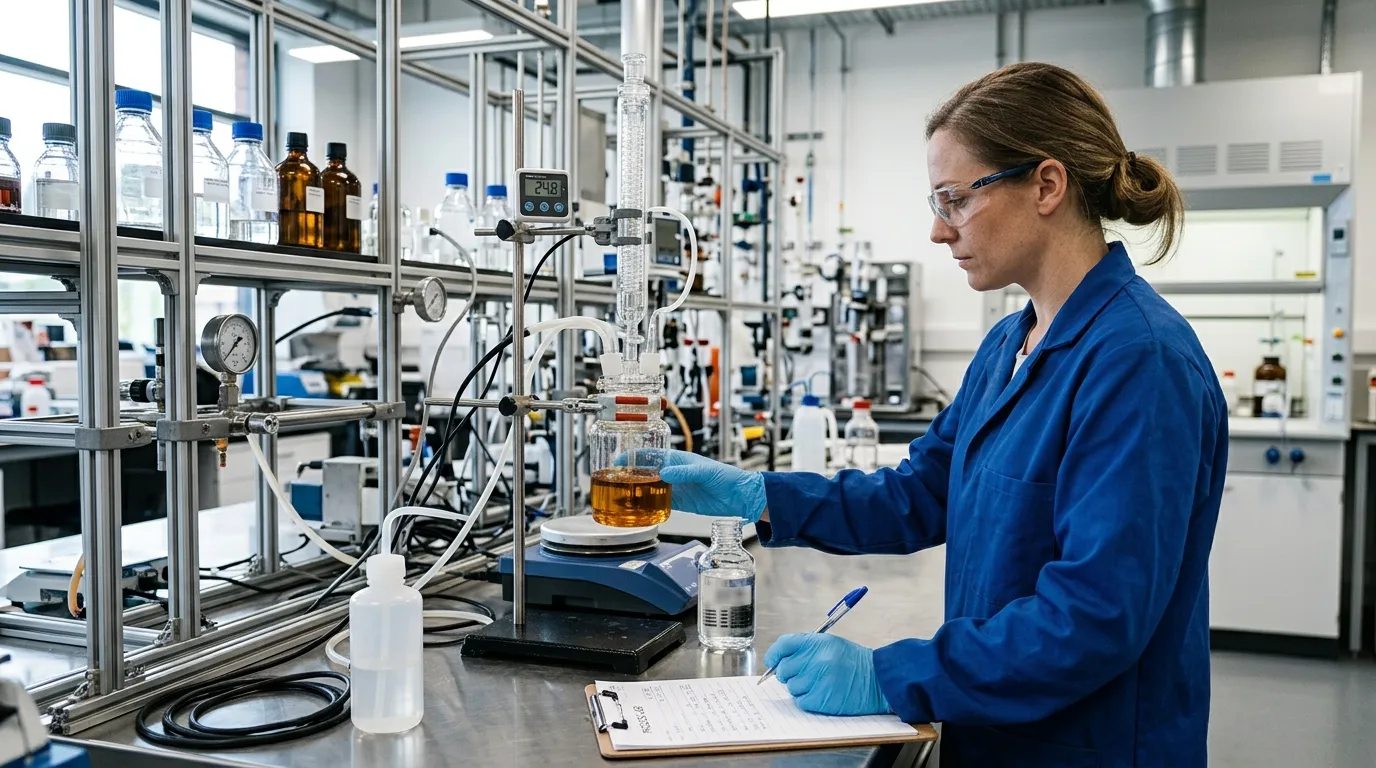
The central technical question is not whether the sample looks acceptable in isolation. It is whether the exact material is suitable for the intended process under relevant conditions.
A controlled sample evaluation normally follows this sequence:
- Confirm the test basis. Verify the chemical identity, grade or form, concentration basis, test method, units, and acceptance criteria.
- Define the comparison. Where appropriate, compare the candidate with the current approved material, an internal reference, or the performance requirement stated in the specification.
- Run the relevant test. Use a test that reflects the intended application and the buyer’s actual decision criteria.
- Record the results. Capture measured values, observations, deviations, test conditions, and any limitations.
- Review exceptions. Decide whether a deviation requires clarification, repeat testing, corrective action, conditional approval, or rejection.
The relevant test conditions depend on the chemical and process. This article therefore does not prescribe a universal dosage, dilution, temperature, pressure, testing duration, or pass/fail limit. Those details must come from the buyer’s application method, internal procedure, technical specification, or an appropriate product-specific test plan.
Testing under representative process conditions is particularly important when the chemical interacts with other raw materials, equipment, water quality, temperature, pressure, residence time, or formulation variables. A laboratory result obtained under an unrelated condition may not answer the production question.
The test record should keep the following information together:
- Exact material identity
- Grade and form
- Sample batch or lot
- Sample preparation basis
- Test method
- Test conditions
- Units of measurement
- Results and observations
- Comparison basis
- Acceptance decision
- Deviations or unresolved questions
The sample should not be approved solely because it has a high stated assay, acceptable appearance, or a complete SDS. Those factors may be relevant, but they do not replace application-specific evaluation.
For broader quality-system context, see chemical quality control.
Assign the right approval roles
Chemical sample approval usually involves more than one decision. Technical suitability, quality conformity, safe handling, and purchasing control are related but distinct questions.
| Function | Main question | Evidence typically reviewed |
|---|---|---|
| Technical or formulation team | Does the material meet the intended process requirement? | Test plan, results, comparison data, application observations |
| QA/QC | Was the sample evaluated against the approved specification and method? | Specification, test record, COA, deviations, retained sample information |
| Operations | Can the material be used practically in the process? | Handling considerations, equipment interaction, process observations |
| EHS or safety personnel | Can the facility receive, store, handle, and use it safely? | SDS, hazard information, storage requirements, exposure controls |
| Procurement | Can the material and supplier be purchased under controlled conditions? | Supplier information, approved specification, commercial documents, order requirements |
The exact responsibilities depend on the organization, chemical, facility, intended use, and jurisdiction. A smaller company may assign several roles to one person, but the decision responsibilities should still be identifiable.
This distinction matters because technical sample approval is not the same as workplace chemical approval. A sample may meet a process requirement but still require an additional facility safety review before it is received or used. Conversely, a chemical may be acceptable for workplace handling but fail the buyer’s performance requirements.
External chemical-approval workflows commonly include a request, SDS review, defined reviewers, and a recorded decision. For example, ERA Environmental’s chemical approval workflow guidance describes the importance of manufacturer information and cross-functional review. Such workflow guidance should be adapted to the buyer’s own procedures rather than treated as a universal legal sequence.
Record the decision as approved, conditional, rejected, or requiring more evidence
The result should be documented in a controlled approval record. A verbal confirmation or isolated email may not provide enough information for QA review, future purchasing, or investigation of a bulk-batch deviation.
An approval record should normally identify:
- Chemical name and exact identity
- Grade and physical form
- Supplier or manufacturer information
- Sample batch or lot
- Documents reviewed
- Specification used for evaluation
- Test method and conditions
- Results and observations
- Deviations or open actions
- Reviewers and approvers
- Decision date
- Approval status
- Required conditions for the next purchase
The decision can use four practical dispositions:
Approved
The sample met the defined requirements, the relevant documents were reviewed, and the responsible functions accepted the result within the stated scope.
Conditionally approved
The sample is acceptable for a limited or controlled next step, but a defined action remains open. Examples may include a missing document, additional confirmation, a restricted application, or mandatory verification of the first bulk batch.
A conditional approval should state exactly what remains unresolved and who must close it. It should not be used as a vague substitute for a failed evaluation.
Rejected
The sample did not meet an essential specification, technical requirement, documentation requirement, or safety condition. The record should identify the reason so that a replacement sample or corrective action can be evaluated consistently.
More evidence required
The available information is insufficient to make a reliable decision. This may apply when the sample identity is unclear, the test does not represent the intended process, the results are incomplete, or the supplier documentation does not support the required review.
Vanchor’s supplier-audit material describes a control approach that includes approving the written specification, testing the supplier sample, retaining an approved reference sample, and placing a controlled order. See the China chemical supplier audit checklist for related supplier-control context. These steps should remain connected to the buyer’s own specification and approval record.
Move from approved sample to controlled bulk purchase
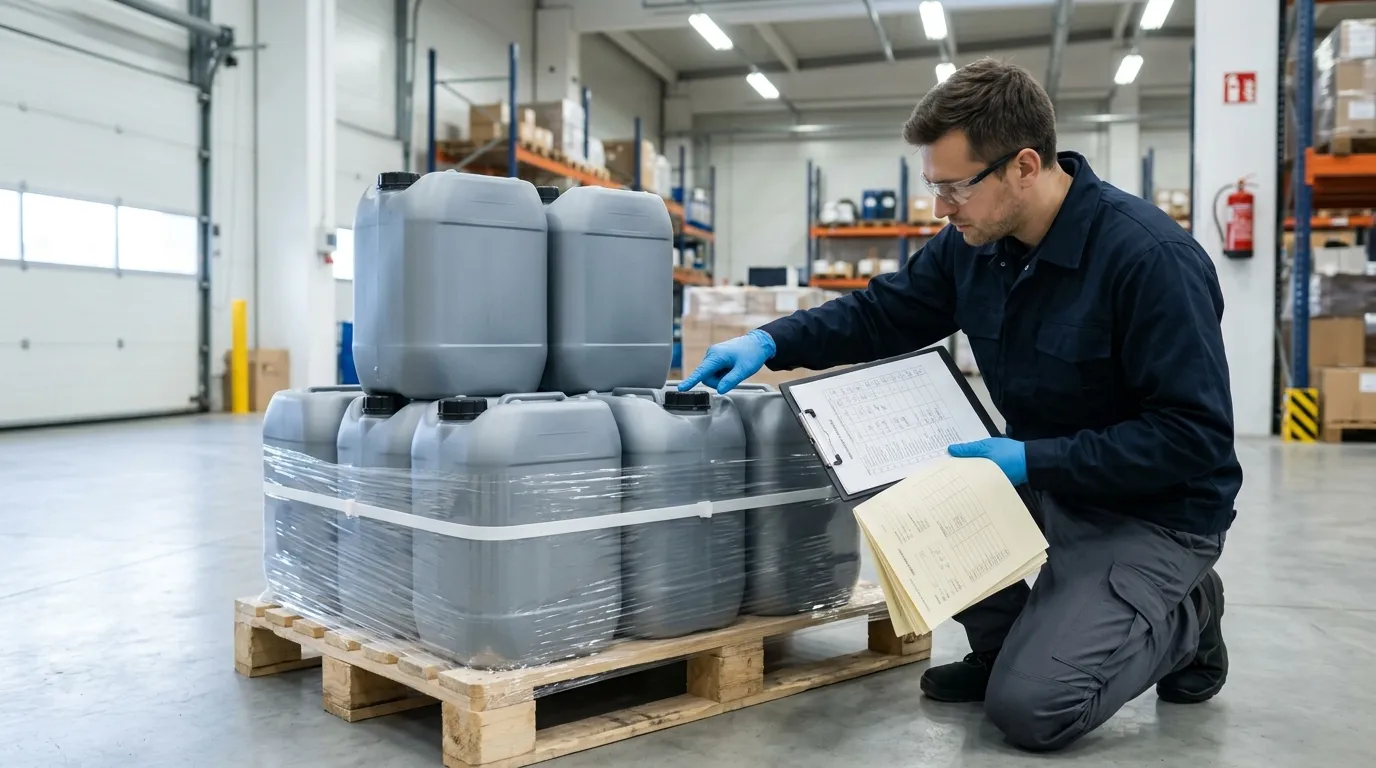
Technical approval should be transferred into the purchasing documents. Otherwise, the purchase order may omit the very requirements used to approve the sample.
Before placing a bulk order:
- Transfer the approved specification into the RFQ, purchase order, or supplier confirmation.
- Identify the approved chemical, grade, form, and concentration or assay basis.
- Confirm that the bulk material is intended to match the approved sample basis.
- Request the applicable batch or lot information and supporting documents.
- Retain the approval record and, where used, an approved reference sample.
- Define what happens if the delivered material differs from the approved basis.
The first bulk shipment should be treated as a verification point. The receiving team may need to compare the delivered material’s identity, lot information, documents, and applicable test results with the approved record before release. The exact checks depend on the buyer’s quality system and the chemical involved.
Sample approval does not guarantee that every later bulk batch will be identical. Changes in raw materials, manufacturing conditions, specifications, suppliers, packaging, or documentation can affect the basis on which the original sample was approved. This is why batch-specific evidence and traceability remain important after the purchasing decision. The related chemical batch traceability requirements resource can support the next stage of that control process.
If the first bulk batch does not match the approved basis, the buyer should have a defined hold, investigation, deviation, corrective-action, or rejection procedure. The batch should not be released solely because an earlier sample was approved.
Keep sample approval separate from workplace chemical approval
The phrase “chemical approval” can refer to different decisions.
| Sample or technical approval | Workplace or EHS approval |
|---|---|
| Determines whether the material meets the buyer’s technical and purchasing requirements | Determines whether the facility can safely receive, store, handle, and use the material |
| Focuses on specification, application fit, testing, and quality evidence | Focuses on hazards, exposure, storage, handling, and facility controls |
| Usually involves technical, QA, operations, and procurement personnel | Usually involves EHS or responsible safety personnel, operations, and management |
| Does not automatically establish regulatory or site-use authorization | Does not prove that the chemical will perform in the intended process |
These gates may be coordinated, but one should not be presented as satisfying the other. Requirements also vary according to the chemical, intended use, facility procedures, and jurisdiction.
Regulatory review of a new chemical is a separate matter again. For example, US new-chemical review under the Toxic Substances Control Act is not the same as a buyer’s sample approval process. A buyer should obtain current, jurisdiction-specific regulatory advice where such obligations apply rather than treating a sample approval record as regulatory authorization.
Final pre-bulk approval checklist
Before converting a chemical sample evaluation into a bulk purchase, confirm that:
- The written specification has been approved.
- The exact chemical identity is clear.
- The grade and physical form are recorded.
- The concentration, assay, or active-content basis is unambiguous.
- The intended application and test basis are defined.
- The sample label and batch or lot information are recorded.
- Required SDS and technical documents have been reviewed.
- The sample was tested using a relevant method and representative conditions.
- Results were compared with defined acceptance criteria.
- Deviations and unresolved questions were documented.
- Relevant technical, QA, operations, safety, and procurement reviews were completed.
- The approval status is recorded as approved, conditional, rejected, or requiring more evidence.
- The approved reference record or sample is retained where appropriate.
- The bulk order identifies the approved chemical and specification.
- The first bulk shipment will be checked against the approved basis.
- A hold, investigation, corrective-action, or rejection path exists for deviations.
A sound chemical sample approval process creates a documented link between the material tested in the laboratory and the material later purchased in bulk. It does not eliminate the need for batch control, safety review, or application-specific judgment, but it gives technical, QA, operations, and procurement teams a common basis for making and defending the purchase decision.


Contact Us
Related Posts
Custom Packaging Solutions from an Anhydrous Sodium Acetate Supplier in China
2026-09-23
Application Trends in Anhydrous Sodium Acetate for Special Chemical Manufacturing
2026-09-23
Anhydrous Sodium Acetate for Leather Tanning: Improve Dyeing Uniformity
2026-09-22
Formic Acid 85% for Textile Dyeing: Industrial Applications, Technical Benefits and Future Trends
2026-09-22


