



Formic Acid Feed Preservative: Benefits, Applications, Safety, and Supplier Guide
By vanchor
2026-07-21Related Posts
Custom Packaging Solutions from an Anhydrous Sodium Acetate Supplier in China
2026-09-23

Application Trends in Anhydrous Sodium Acetate for Special Chemical Manufacturing
2026-09-23

Anhydrous Sodium Acetate for Leather Tanning: Improve Dyeing Uniformity
2026-09-22

Formic Acid 85% for Textile Dyeing: Industrial Applications, Technical Benefits and Future Trends
2026-09-22
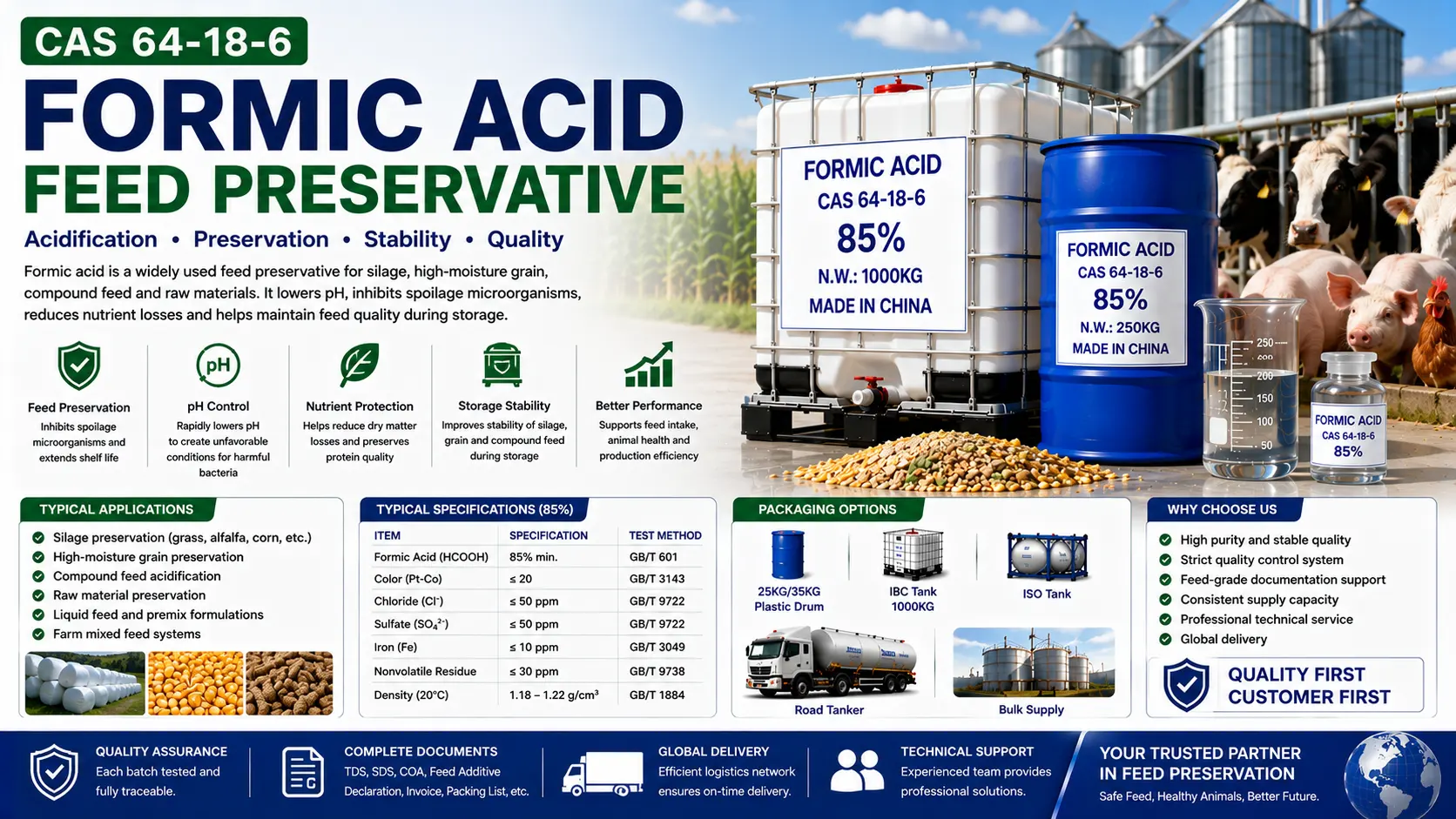
Formic Acid Feed Preservative is commonly used in animal feeds, silage, high moisture grain, forage and compound-feed production systems to aid in the acidification and storage stability of these feeds and to manage the preservation process. Formic acid decreases the pH which may help to establish a less favorable environment for selected spoilage microorganisms and undesirable fermentations.
The effectiveness of it relies on the acid itself but more. The final result is affected by the moisture content of the feed, quality of raw material, initial microbial load, storage temperature, application rate, mixing uniformity, equipment calibration, packaging and management of the storage.
However, feed mills, farms, silage manufacturers, livestock companies, distributors and procurement personnel need to carefully consider the product concentration, documentation for feed use, purity, impurity levels, dosing equipment, packaging suitability, batch consistency and supplier reliability before choosing the appropriate product.
What Is Formic Acid?
Formic acid is the simplest carboxylic acid. Its chemical formula is HCOOH, and its CAS number is 64-18-6.
Typical product information includes:
- Chemical name: Formic Acid
- CAS number: 64-18-6
- Molecular formula: HCOOH
- Molecular weight: approximately 46.03
- Appearance: Clear, colorless liquid
- Solubility: Miscible with water
- Common concentrations: 75%, 80%, 85%, 90%, 94%, 98%, and 99%
For feed-preservation applications, buyers should confirm that the product is intended, documented, labeled, and authorized for feed use in the destination market.
Industrial-grade formic acid should not automatically be treated as suitable for animal feed.
How Formic Acid Preserves Feed
Formic acid reduces the pH of feed materials. A lower pH can help limit the activity of selected bacteria, yeasts, molds, and other microorganisms under properly managed storage conditions.
Potential preservation functions include:
- Rapid acidification
- Reduced undesirable fermentation
- Lower spoilage risk
- Improved storage stability
- Reduced nutrient degradation
- Better dry-matter retention
- Control of selected feed-processing conditions
- Support for consistent feed quality
The actual preservation result depends on:
- Feed type
- Moisture content
- Acid concentration
- Application rate
- Mixing uniformity
- Storage duration
- Temperature
- Oxygen exposure
- Packaging or silo condition
Formic acid should be used as part of a complete feed-safety and storage-management program.
Main Applications
Silage Preservation
Formic acid may be applied to forage during harvesting or silo filling to accelerate pH reduction.
Potential benefits include:
- Faster initial acidification
- Reduced undesirable fermentation
- Lower protein breakdown
- Improved dry-matter preservation
- More stable silage storage
- Improved consistency between batches
Suitable forage materials may include:
- Grass
- Alfalfa
- Clover
- Corn forage
- Whole-crop cereals
- Sorghum
- Mixed forage
Silage performance still depends on correct chop length, rapid filling, strong compaction, oxygen exclusion, and immediate sealing.
High-Moisture Grain Preservation
Formic acid may be used in selected high-moisture grain systems where producers want to reduce spoilage risk without relying entirely on drying.
Potentially treated grains include:
- Corn
- Wheat
- Barley
- Oats
- Sorghum
- Other feed cereals
Possible benefits include:
- Reduced microbial activity
- Improved storage stability
- Lower mold risk
- Reduced heating
- Preservation of moist grain
- Flexible storage management
The required treatment level depends on grain moisture, temperature, storage duration, cleanliness, and intended use.
Compound Feed Preservation
Formic acid may be incorporated into compound feed or liquid acidifier blends.
Potential functions include:
- Feed pH adjustment
- Preservation of mixed feed
- Stabilization of selected raw materials
- Support for storage quality
- Reduction of spoilage during distribution
- Standardization of acidifier formulations
The final formula should be developed by qualified feed specialists.
Raw Material Preservation
Formic acid may also be used to preserve selected feed ingredients before they enter the final feed-production process.
Potential applications include:
- Moist grain
- Liquid feed ingredients
- Agricultural by-products
- Protein-rich materials
- Premix components
- Farm-mixed feed materials
The correct preservation program depends on ingredient composition, moisture, microbial condition, and storage time.
Liquid Feed Systems
Formic acid may be incorporated into selected liquid-feed and farm-mixing systems.
Potential benefits include:
- pH control
- Improved liquid-feed stability
- Reduced fermentation in tanks
- Better storage management
- More consistent feed delivery
Pumps, tanks, hoses, seals, and valves should be compatible with the acid concentration.
Feed Preservation vs. Feed Acidification
Feed preservation and feed acidification are related but not identical.
Preservation
The primary goal is to reduce spoilage and support storage stability.
Important considerations include:
- Microbial control
- Moisture
- storage duration
- Temperature
- Oxygen exposure
- Packaging integrity
Acidification
The primary goal is to lower the pH of the feed or formulation.
Potential objectives include:
- Process control
- Feed formulation
- Raw-material stabilization
- Preparation of acidifier blends
- Support for feed hygiene
The same formic acid product may perform both functions, depending on the approved use and formulation.
Formic Acid and Formate Salts
Feed preservative products may contain:
- Free formic acid
- Sodium formate
- Calcium formate
- Potassium formate
- Ammonium formate
- Buffered acid blends
- Combinations of organic acids
Buffered formic acid products may offer:
- Reduced volatility
- Easier handling
- Lower corrosiveness
- Improved flow properties
- Better equipment compatibility
- More convenient dosing
However, buyers should compare the active acid content rather than only the total product weight.
Benefits of Formic Acid Feed Preservative
Rapid pH Reduction
Formic acid can lower pH quickly when applied correctly.
Broad Feed Applications
It may be used in silage, grain, compound feed, liquid feed, and raw-material preservation.
Flexible Product Forms
It is available as concentrated acid, diluted liquid, buffered blend, or formate-based product.
Convenient Liquid Dosing
Liquid systems can be connected to automated metering equipment.
Reduced Nutrient Loss
Proper preservation may help reduce dry-matter and protein degradation.
Improved Storage Stability
Controlled acidification can help maintain feed quality during storage.
Scalable Supply
The product may be delivered in drums, IBC tanks, road tankers, or bulk systems.
Important Quality Specifications
A professional supplier should provide clear feed-use documentation and measurable specifications.
Important parameters may include:
- Formic acid concentration
- Water content
- Density
- Color
- Chloride
- Sulfate
- Iron
- Nonvolatile residue
- Heavy metals
- Appearance
- Product identity
- Feed-additive authorization
- Batch traceability
Concentration
Stable concentration is essential for accurate dosing.
Variation may result in:
- Underapplication
- Overapplication
- Inconsistent feed pH
- Variable preservation
- Higher operating cost
- Increased corrosion risk
- Unpredictable storage results
The actual concentration should appear on the batch-specific certificate of analysis.
Density
Density may be used as a supporting indicator of concentration.
Because density changes with temperature, the test temperature should be clearly stated.
Density should not replace direct concentration testing.
Color and Appearance
Formic acid is normally clear and colorless unless intentionally blended or colored.
Unexpected cloudiness, suspended solids, or discoloration may indicate:
- Contamination
- Metal impurities
- Packaging incompatibility
- Product degradation
- Cross-contamination
- Production inconsistency
Incoming shipments should be visually inspected before use.
Iron and Metal Impurities
Iron may influence:
- Product color
- Chemical stability
- Equipment deposits
- Dosing-line cleanliness
- Final feed appearance
- Batch consistency
Feed buyers should request actual test values instead of relying only on general purity claims.
Nonvolatile Residue
Nonvolatile residue represents the material remaining after acid and water evaporate.
Excessive residue may contribute to:
- Blocked nozzles
- Pump deposits
- Tank contamination
- Reduced product purity
- Increased maintenance
A suitable residue limit can help support reliable application.
Dosage Considerations
There is no universal dosage suitable for every feed material.
The correct application level depends on:
- Feed type
- Moisture content
- Target storage period
- Product concentration
- Initial microbial load
- Target pH
- Application method
- Animal category
- Local regulations
- Supplier instructions
Users should follow the approved product label and qualified technical recommendations.
General online dosage estimates should not replace product-specific guidance.
Application Uniformity
Uniform application is essential for consistent preservation.
Poor mixing may leave some feed untreated while exposing other areas to excessive acid.
Potential consequences include:
- Uneven preservation
- Local spoilage
- Mold growth
- Variable feed pH
- Reduced palatability
- Increased corrosion
- Inconsistent animal intake
Uniform treatment requires:
- Calibrated pumps
- Suitable nozzles
- Stable flow pressure
- Effective mixing
- Correct conveyor speed
- Regular equipment inspection
- Representative sampling
Dosing Equipment
Common dosing systems include:
- Metering pumps
- Spray nozzles
- Liquid manifolds
- Feed-mill dosing lines
- Grain-treatment systems
- Forage-harvester applicators
- Automated flow controls
All wetted parts should be compatible with the formic acid concentration.
Compatibility should be checked for:
- Tanks
- Pumps
- Hoses
- Valves
- Seals
- Gaskets
- Flow meters
- Nozzles
Corrosion Control
Formic acid is corrosive, especially in concentrated form.
Possible corrosion risks include:
- Storage tank damage
- Pump wear
- Hose deterioration
- Conveyor corrosion
- Mixer damage
- Floor damage
- Electrical-system exposure
Risk-reduction measures may include:
- Compatible equipment materials
- Closed-transfer systems
- Spill containment
- Regular equipment washing
- Preventive maintenance
- Suitable ventilation
- Worker training
- Buffered acid products
Storage Requirements
Formic acid feed preservative should be stored in a cool, secure, well-ventilated area.
The product should be protected from:
- Heat
- Direct sunlight
- Alkalis
- Strong oxidizing agents
- Incompatible metals
- Contamination
- Damaged packaging
- Unauthorized access
A suitable storage area should include:
- Clear labeling
- Secondary containment
- Leak inspection
- Spill-control equipment
- Emergency showers
- Eyewash stations
- Ventilation
- Restricted access
Worker Safety
Concentrated formic acid can cause severe skin and eye injury. Vapors may irritate the respiratory system.
Suitable protective equipment may include:
- Chemical-resistant gloves
- Safety goggles
- Face shield
- Protective clothing
- Chemical-resistant footwear
- Respiratory protection where required
Workers should follow the current safety data sheet and site procedures.
Closed pumping and automated dosing systems can reduce direct exposure.
Packaging Options
Common packaging options include:
- 25 kg plastic drums
- 35 kg plastic drums
- 250 kg HDPE drums
- IBC tanks
- ISO tanks
- Road tankers
- Bulk delivery
The right option depends on:
- Monthly consumption
- Dosing system
- Storage capacity
- Delivery access
- Transport regulations
- Worker-safety procedures
Drum Supply
Drums may be suitable for:
- Small farms
- Trial orders
- Low-volume feed mills
- Controlled batch use
- Customers without bulk tanks
Manual drum handling may increase exposure and spill risks, so closed-transfer equipment is preferred.
IBC Tank Supply
IBC tanks may provide:
- Easier forklift handling
- Medium-volume storage
- Direct pump connection
- Reduced manual transfer
- Better inventory control
The IBC body, valve, gasket, and seal should be compatible with the product.
Bulk Supply
Road tankers or ISO tanks may be suitable for large feed mills and distributors.
Bulk buyers should confirm:
- Tank compatibility
- Previous cargo
- Cleaning documentation
- Valve condition
- Unloading procedures
- Receiving-tank capacity
- Secondary containment
- Emergency arrangements
Bulk delivery may lower packaging costs but requires professional storage and transfer systems.
Feed-Use Documentation
A qualified supplier should be able to provide:
- Technical data sheet
- Safety data sheet
- Batch-specific certificate of analysis
- Feed-grade declaration
- Product label
- Authorization or registration details
- Traceability records
- Commercial invoice
- Packing list
- Transport documentation
The product identity, concentration, batch number, net weight, intended use, and packaging should remain consistent across documents.
Batch Traceability
Each shipment should be traceable through:
- Raw-material batch
- Production date
- Product batch number
- Laboratory results
- Storage tank
- Packaging record
- Retained sample
- Shipping documents
- Customer delivery
Strong traceability supports feed-safety management, complaint investigation, and product recall procedures.
How to Evaluate a Supplier
Confirm Feed-Use Suitability
The supplier should clearly confirm whether the product is intended and documented for feed use in the destination market.
Review the Full Specification
The specification should include measurable quality limits.
Request Batch-Specific COAs
The certificate should match the actual shipment batch.
Test a Representative Sample
Recommended evaluations may include:
- Concentration
- Density
- Color
- Iron
- Chloride
- Sulfate
- Residue
- Equipment compatibility
- Feed-preservation performance
Review Feed-Safety Controls
Buyers may assess:
- Raw-material control
- Production segregation
- Tank cleaning
- Packaging hygiene
- Batch traceability
- Laboratory capability
- Complaint management
- Product recall procedures
Confirm Supply Capacity
Buyers should ask about:
- Monthly output
- Seasonal inventory
- Normal lead time
- Emergency supply
- Bulk delivery capability
- Repeat-order support
How to Request an Accurate Quotation
A complete inquiry should include:
- Required concentration
- Intended feed application
- Destination market
- Feed-use documentation
- Required quantity
- Packaging
- Delivery destination
- Incoterm
- Delivery schedule
- Required certificates
For example:
“Please quote formic acid 85% for feed preservation, packed in IBC tanks, including TDS, SDS, feed-use declaration, and batch-specific COA.”
A detailed inquiry helps the supplier identify the correct grade and documentation.
Comparing Quotations
Buyers should compare quotations using the same:
- Product concentration
- Feed-use status
- Impurity limits
- Packaging
- Active acid content
- Quantity
- Incoterm
- Destination
- Documentation
- Delivery schedule
A lower-priced industrial product may not be equivalent to a properly documented feed preservative.
Total Procurement Cost
The total cost includes more than the product price.
Feed producers should consider:
- Active acid content
- Packaging
- Freight
- Storage tanks
- Dosing equipment
- Corrosion control
- Worker protection
- Equipment maintenance
- Quality testing
- Feed losses
- Documentation
- Delivery reliability
A consistent product may reduce dosing variation, spoilage, equipment problems, and feed-safety risks.
Common Purchasing Risks
Potential risks include:
- Incorrect concentration
- Industrial-grade product supplied for feed use
- Missing regulatory documents
- High impurity levels
- Poor batch consistency
- Incompatible packaging
- Leakage
- Corrosion damage
- Incorrect dosing
- Weak traceability
- Delayed delivery
These risks can be reduced through supplier qualification, sample approval, batch-specific documentation, clear contracts, and appropriate inspections.
Questions to Ask Before Ordering
Buyers should confirm:
- Is the product documented for animal-feed use?
- Which feed-preservative functions are approved?
- Which concentration grades are available?
- What are the impurity limits?
- Can recent batch COAs be provided?
- Is a representative sample available?
- What application equipment is recommended?
- What packaging options are offered?
- Can bulk tanker delivery be arranged?
- What is the monthly supply capacity?
- What is the standard lead time?
- Which feed-use documents are included?
- How is batch traceability managed?
- How are quality claims handled?
Conclusion
Formic Acid Feed Preservative can be used to acidify feed, stabilize silage, store high moisture grain, stabilize compound feed, and protect raw materials.
It is effective based on concentration, feed characteristics, moisture, dosage, uniformity of mixing, storage conditions, equipment compatibility, regulatory compliance, and batch consistency.
Prior to buying, feed producers are advised to check the status of the product for use in feed, read the full technical specification, demand a batch-specific certificate of analysis, as well as dose, storage, packing, safety, and documentation requirements.
A reliable supplier can offer traceability, secure packaging, a complete feed-use documentation, stable concentration, controlled impurities, responsive technical support and reliable delivery.


Contact Us
In This Article
Related Posts
Custom Packaging Solutions from an Anhydrous Sodium Acetate Supplier in China
2026-09-23
Application Trends in Anhydrous Sodium Acetate for Special Chemical Manufacturing
2026-09-23
Anhydrous Sodium Acetate for Leather Tanning: Improve Dyeing Uniformity
2026-09-22
Formic Acid 85% for Textile Dyeing: Industrial Applications, Technical Benefits and Future Trends
2026-09-22


