



Formic Acid for Animal Feed: Benefits, Applications, Safety, and Purchasing Guide
By vanchor
2026-07-21Related Posts
Custom Packaging Solutions from an Anhydrous Sodium Acetate Supplier in China
2026-09-23

Application Trends in Anhydrous Sodium Acetate for Special Chemical Manufacturing
2026-09-23

Anhydrous Sodium Acetate for Leather Tanning: Improve Dyeing Uniformity
2026-09-22

Formic Acid 85% for Textile Dyeing: Industrial Applications, Technical Benefits and Future Trends
2026-09-22
Formic Acid for Animal Feed is usually employed in feed preservation, silage treatment, grain storage, feed acidification and compound-feed manufacturing. It is useful to control the storage conditions and to ensure the stability of selected feed materials because of its acidity.
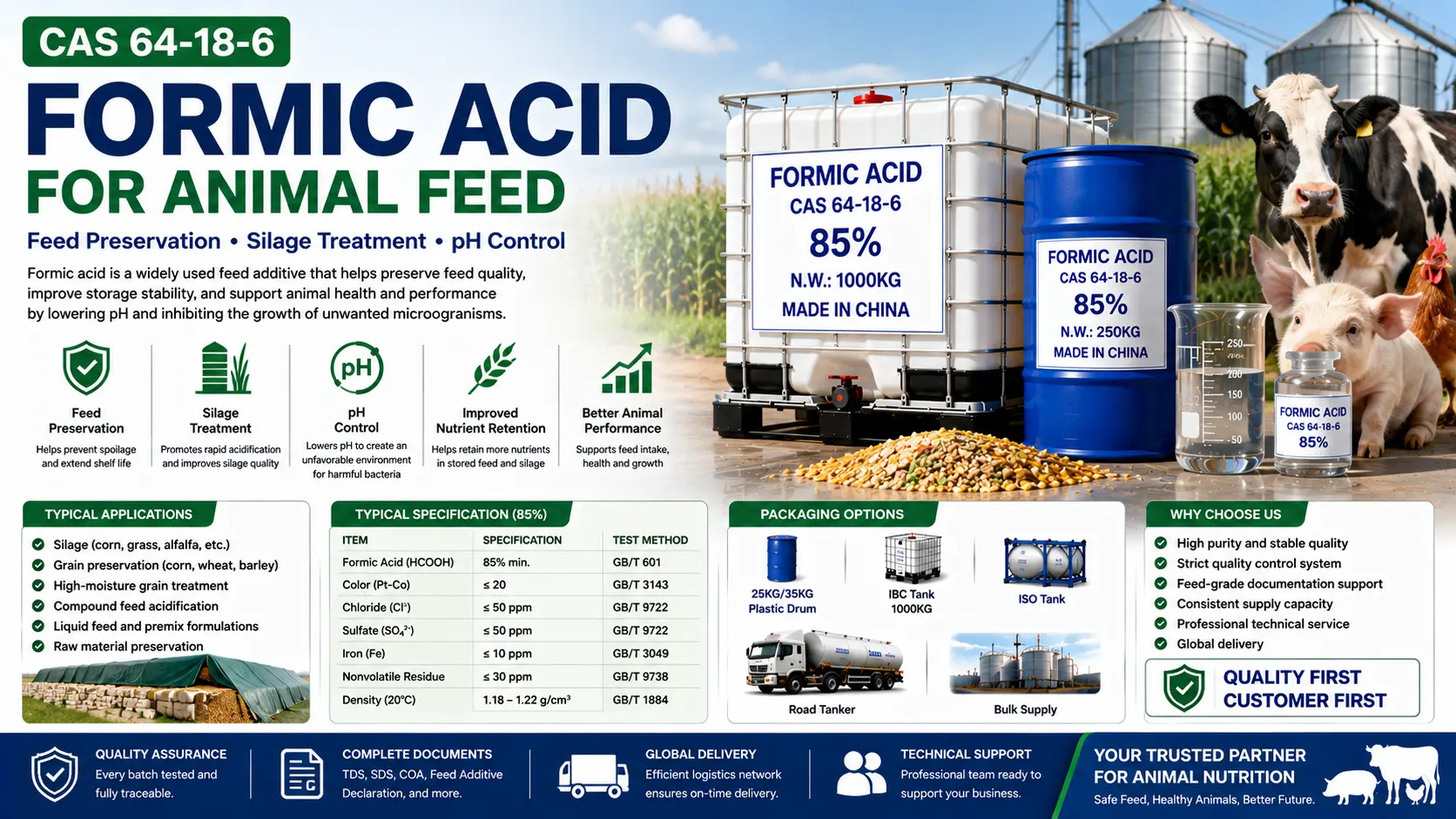
Formic acid is used legally in the European Union as a technological feed additive for all animal species, under certain use conditions. However, there are differences in permitted functions, concentrations, labelling and maximum levels depending on market, category of animals, product formulation and regulatory status. Manufacturers of feeds should then adhere to local regulations, manufacturer's instructions and competent animal nutrition advice.
When choosing formic acid for use at feed mills, livestock farms, silage makers, distributors and procurement teams must go beyond price and concentration. There are many factors that may impact safe and effective use such as product purity, limits of impurity, feed-grade documentation, packaging compatibility, dosing equipment, storage conditions, and batch consistency.
What Is Formic Acid?
Formic acid is the simplest carboxylic acid. Its chemical formula is HCOOH, and its CAS number is 64-18-6.
Typical product information includes:
- Chemical name: Formic Acid
- CAS number: 64-18-6
- Molecular formula: HCOOH
- Molecular weight: approximately 46.03
- Appearance: Clear, colorless liquid
- Solubility: Miscible with water
- EINECS number: 200-579-1
Commercial formic acid may be available in concentrations such as 75%, 80%, 85%, 90%, 94%, 98%, or 99%, depending on the manufacturer and intended market.
For animal-feed applications, buyers should verify that the product is manufactured, documented, labeled, transported, and supplied for the intended feed use. Industrial-grade material should not automatically be treated as feed-grade material.
Why Formic Acid Is Used in Animal Feed
Formic acid may be used as a technological additive to support feed preservation and acidity regulation. By reducing pH, it can help create conditions that are less favorable to certain spoilage organisms during properly managed storage.
Potential functions include:
- Feed preservation
- Silage acidification
- Grain treatment
- Compound-feed acidification
- Control of feed pH
- Support for storage stability
- Reduction of unwanted fermentation
- Preservation of selected feed ingredients
The results depend on the raw material, moisture level, initial microbial load, storage system, dosage, application uniformity, temperature, and total formulation.
Formic acid is not a substitute for good hygiene, correct moisture control, proper storage, or a complete feed-safety program.
Formic Acid in Silage Preservation
Silage is produced by storing forage under controlled anaerobic conditions. Successful silage production depends on rapid oxygen exclusion, suitable moisture, proper compaction, and stable fermentation.
Formic acid may be applied to forage to lower pH more quickly and influence the early fermentation process.
Potential advantages may include:
- Faster initial acidification
- Reduced undesirable fermentation
- Improved preservation of nutrients
- Lower risk of excessive protein breakdown
- More stable storage conditions
- Improved consistency between silage batches
Its actual effect depends on:
- Forage type
- Dry-matter content
- Sugar content
- Buffering capacity
- Chop length
- Compaction
- Application rate
- Storage temperature
- Silo sealing
Wet forage and high-protein crops may require different management from drier, sugar-rich materials.
Hay and High-Moisture Forage Treatment
Formic acid-based preservatives may be used in selected high-moisture hay or forage systems.
The objective is generally to reduce spoilage risk when harvested material contains more moisture than is ideal for conventional dry storage.
Potential applications include:
- High-moisture hay
- Baled forage
- Stored grass
- Legume forage
- Farm-mixed preservation systems
The product should be applied evenly because untreated areas may remain vulnerable to heating, mold development, or deterioration.
Operators should use calibrated equipment and follow the approved application rate for the specific product.
Grain Preservation
Formic acid may be used in selected grain-preservation systems, particularly where grain is stored with elevated moisture.
Potentially treated materials include:
- Corn
- Wheat
- Barley
- Oats
- Sorghum
- Other feed grains
Possible benefits include:
- Lower grain pH
- Improved storage stability
- Reduced spoilage risk
- Support for controlled storage of moist grain
- Reduced dependence on drying in selected systems
The required treatment depends on grain moisture, storage duration, temperature, cleanliness, and intended use.
Grain should be treated uniformly, and the storage structure should remain clean, dry, sealed where required, and protected from new contamination.
Compound Feed Acidification
Formic acid may be incorporated into compound feeds or acidifier blends.
Potential functions include:
- Feed pH adjustment
- Preservation of mixed feed
- Support for raw-material stability
- Standardization of acidifier formulations
- Control of selected feed-processing conditions
It may be used alone or as part of a blend containing other organic acids or their salts.
The final formulation should be developed by qualified feed specialists because acid combinations may differ in:
- Acidity
- Volatility
- Buffering behavior
- Palatability
- Corrosiveness
- Handling characteristics
- Regulatory status
Liquid Formic Acid and Buffered Products
Formic acid may be supplied as a concentrated liquid or incorporated into buffered, blended, or supported feed-additive products.
Concentrated Liquid Formic Acid
Potential advantages include:
- High active-acid content
- Efficient bulk transportation
- Flexible formulation
- Accurate dosing through automated equipment
Important considerations include:
- Corrosive handling
- Storage-tank compatibility
- Worker protection
- Pump and seal selection
- Accurate dilution
- Controlled application
Buffered or Formate-Based Products
Buffered products may contain formic acid combined with formate salts or other ingredients.
Potential advantages may include:
- Reduced volatility
- Easier handling
- Lower corrosiveness in selected formulations
- Improved flow or dosing properties
- More convenient feed-mill use
However, the active formic-acid equivalent and regulatory conditions should be clearly stated.
Feed-Grade Quality Requirements
A professional supplier should provide a specification designed for the intended feed application.
Important parameters may include:
- Formic acid concentration
- Water content
- Color
- Chloride
- Sulfate
- Iron
- Nonvolatile residue
- Heavy-metal limits
- Appearance
- Density
- Feed-additive authorization or registration details
- Traceability information
Exact limits depend on the market, specification, supplier, and product type.
Concentration
Stable concentration is important for accurate dosing.
Variation in actual acid content can lead to:
- Inconsistent feed pH
- Overapplication
- Underapplication
- Variable preservation
- Increased formulation cost
- Greater handling risk
The supplier should state:
- Guaranteed concentration
- Acceptable tolerance
- Test method
- Batch result
- Whether the value is expressed on an as-supplied basis
Color and Appearance
Feed-grade formic acid should normally appear clear and colorless unless the product is intentionally formulated with other ingredients.
Unexpected discoloration, cloudiness, or suspended matter may indicate:
- Contamination
- Storage degradation
- Metal impurities
- Packaging incompatibility
- Cross-contamination
- Production inconsistency
Incoming material should be visually inspected before use.
Iron and Other Impurities
Iron and other impurities may influence:
- Product color
- Chemical stability
- Equipment deposits
- Feed appearance
- Process consistency
- Storage behavior
Feed buyers should request actual batch results rather than relying only on broad marketing claims such as “high purity.”
Nonvolatile Residue
Nonvolatile residue represents material remaining after the volatile acid and water evaporate.
Excessive residue may contribute to:
- Deposits in dosing systems
- Blocked nozzles
- Product contamination
- Reduced purity
- Maintenance requirements
A suitable residue specification can help support reliable dosing and storage.
Dosage and Application
There is no single formic acid dosage suitable for every feed, forage, grain, or animal species.
The appropriate use level depends on:
- Product authorization
- Animal category
- Feed type
- Moisture content
- Storage duration
- Initial microbial condition
- Target pH
- Acid concentration
- Application method
- Other formulation ingredients
EFSA has assessed formic acid for feed use under defined proposed conditions, but practical use must follow the authorization, product label, and applicable national requirements.
Feed producers should not estimate dosage from general internet guidance. They should use an approved product specification and qualified formulation advice.
Importance of Uniform Application
Uneven acid distribution may leave sections of feed insufficiently treated while exposing other areas to excessive acidity.
Uniform application requires:
- Calibrated dosing pumps
- Correct nozzle selection
- Stable liquid pressure
- Effective mixing
- Suitable conveyor speed
- Regular equipment inspection
- Verified flow rate
- Representative sampling
For silage or forage, application should be coordinated with harvesting speed and forage flow.
For compound feed, the acid should be distributed throughout the mix without creating localized wet spots.
Dosing Equipment
Common application equipment may include:
- Metering pumps
- Spray nozzles
- Liquid manifolds
- Feed-mill dosing lines
- Forage-harvester applicators
- Grain-treatment systems
- Automated control units
All wetted components should be compatible with the formic acid concentration.
Potential equipment materials requiring evaluation include:
- Tanks
- Pumps
- Hoses
- Valves
- Seals
- Gaskets
- Nozzles
- Flow meters
The supplier or equipment manufacturer should confirm compatibility.
Corrosion Control
Formic acid is corrosive, especially in concentrated form.
Corrosion risks may affect:
- Storage tanks
- Feed mixers
- Conveyors
- Dosing lines
- Trucks
- Metal floors
- Electrical components
- Building structures
Risk reduction measures may include:
- Compatible construction materials
- Closed dosing systems
- Spill containment
- Regular equipment washing
- Preventive maintenance
- Inspection of seals and valves
- Appropriate ventilation
- Operator training
Buffered products may reduce corrosion in some systems, but their performance should still be verified.
Storage Requirements
Formic acid should be stored in a cool, well-ventilated area in compatible, tightly sealed containers.
It should be protected from:
- Heat
- Direct sunlight
- Alkalis
- Strong oxidizing agents
- Incompatible metals
- Contamination
- Damaged packaging
- Unauthorized access
A suitable storage area should include:
- Clear product labeling
- Secondary containment
- Spill-control materials
- Ventilation
- Emergency washing facilities
- Restricted access
- Regular leak inspection
- Updated safety documentation
Bulk storage tanks should be dedicated or cleaned according to approved procedures.
Worker Safety
Concentrated formic acid can cause serious skin and eye injury and may create irritating vapors.
Workers should follow the current safety data sheet and site procedures.
Suitable personal protective equipment may include:
- Chemical-resistant gloves
- Splash goggles
- Face shield
- Protective clothing
- Chemical-resistant footwear
- Respiratory protection where required
Facilities should provide:
- Eyewash stations
- Emergency showers
- Ventilation
- Spill-response equipment
- Trained personnel
- Written emergency procedures
Formic acid should only be handled by trained workers using suitable equipment.
Packaging Options
Common packaging options may include:
- Small chemical drums
- 25 kg or 35 kg plastic drums
- 250 kg HDPE drums
- IBC tanks
- ISO tanks
- Road tankers
- Bulk storage delivery
The correct option depends on:
- Monthly consumption
- Storage capacity
- Dosing system
- Transport regulations
- Destination
- Unloading equipment
- Feed-safety procedures
Packaging must be compatible with the acid concentration and clearly identified for the intended product.
Drum Supply
Drums may be suitable for:
- Trial orders
- Small feed mills
- Individual farms
- Controlled batch use
- Customers without bulk tanks
However, manual drum handling may increase exposure and spill risks.
Closed-transfer systems are preferable where practical.
IBC Tank Supply
IBC tanks may provide:
- Easier forklift handling
- Medium-volume storage
- Direct pump connection
- Reduced manual transfer
- Better inventory control
The IBC body, valve, seal, and gasket must be compatible with the product.
Bulk Delivery
Road tankers or ISO tanks may be appropriate for large feed mills and regional distributors.
Bulk buyers should confirm:
- Tank compatibility
- Previous cargo
- Cleaning documentation
- Valve condition
- Unloading procedures
- Receiving-tank capacity
- Secondary containment
- Emergency arrangements
Bulk supply can lower packaging costs but requires professional storage and handling systems.
Supplier Documentation
A dependable supplier should provide:
- Technical data sheet
- Safety data sheet
- Batch-specific certificate of analysis
- Feed-grade declaration where applicable
- Product label
- Authorization or registration information
- Commercial invoice
- Packing list
- Certificate of origin
- Transport documentation
- Traceability information
The product name, concentration, batch number, net weight, packaging, and intended use should be consistent across documents.
Batch Traceability
Each shipment should be traceable through:
- Raw-material records
- Production date
- Batch number
- Laboratory results
- Storage tank
- Packaging line
- Retained sample
- Shipment records
- Customer delivery
Traceability supports complaint investigation, recall management, and feed-safety control.
How to Evaluate a Supplier
Confirm Feed-Use Suitability
The supplier should clearly confirm whether the product is intended and documented for animal-feed use in the destination market.
Review the Technical Specification
The specification should contain measurable limits rather than only general claims.
Request Batch-Specific COAs
The certificate should correspond to the actual production or shipment batch.
Review Regulatory Documentation
Buyers should confirm the applicable:
- Additive authorization
- Functional category
- Animal species
- Conditions of use
- Labeling requirements
- Maximum or recommended levels
Test a Representative Sample
Testing may include:
- Concentration
- Density
- Color
- Iron
- Chloride
- Sulfate
- Residue
- Compatibility with dosing equipment
- Feed-application performance
Audit the Supply Chain
For regular or large-volume purchases, buyers may review:
- Production controls
- Feed-safety management
- Storage separation
- Cleaning procedures
- Batch traceability
- Packaging controls
- Transport arrangements
How to Request an Accurate Quotation
A complete inquiry should include:
- Required concentration
- Intended feed application
- Destination market
- Feed-grade documentation requirements
- Maximum impurity limits
- Required quantity
- Packaging
- Delivery destination
- Incoterm
- Delivery schedule
- Required certificates
For example:
“Please quote 20 metric tons of formic acid 85% intended for feed preservation, packed in 250 kg compatible drums, including TDS, SDS, feed-use documentation, and batch-specific COA.”
A detailed inquiry helps the supplier identify the correct grade and documentation.
Comparing Quotations
Buyers should compare quotations using the same:
- Concentration
- Feed-grade status
- Impurity limits
- Packaging
- Quantity
- Incoterm
- Destination
- Documentation
- Delivery schedule
- Inspection requirements
A lower-priced industrial product may not be equivalent to a properly documented feed additive.
Total Procurement Cost
The total cost includes more than the acid price.
Feed producers should consider:
- Active acid content
- Packaging
- Freight
- Storage tanks
- Dosing equipment
- Corrosion control
- Worker protection
- Equipment maintenance
- Quality testing
- Feed losses
- Documentation
- Delivery reliability
A consistent product with accurate documentation may reduce dosing variation, storage losses, equipment problems, and feed-safety risks.
Common Purchasing Risks
Potential risks include:
- Incorrect concentration
- Industrial-grade material sold for feed use
- Missing regulatory documents
- High impurity levels
- Inconsistent batches
- Incompatible packaging
- Leakage
- Corrosion damage
- Incorrect dosing
- Poor traceability
- Delayed delivery
These risks can be reduced through supplier qualification, sample testing, clear contracts, batch-specific COAs, and appropriate inspections.
Questions to Ask Before Ordering
Buyers should confirm:
- Is the product approved or documented for feed use in the destination market?
- Which functional category applies?
- For which animal species is it authorized?
- What concentration grades are available?
- What are the impurity limits?
- Can recent batch COAs be provided?
- Is a representative sample available?
- What packaging options are offered?
- Is the packaging compatible with concentrated formic acid?
- What is the monthly supply capacity?
- What is the standard lead time?
- Can bulk tanker delivery be arranged?
- Which feed-safety documents are included?
- How is batch traceability managed?
- How are quality complaints handled?
Conclusion
Formic Acid for Animal Feed may be applied to feeds, silages, grain, grain acidification, compound feeds, and may be used in a properly authorized feed preservation application. The primary technological contribution is from controlled acidification and providing appropriate storage conditions.
The effectiveness and safety of use rely on the concentration of the product in use, dosage, uniformity of application, feed characteristics, storage management, equipment compatibility, regulatory compliance and batch consistency.
Feed manufacturers and farms should check feed-use status, complete technical specification, obtain a certificate of analysis for the batch in question, and confirm the dosing, storage, safety and documentation requirements prior to purchase.
A reliable supplier should offer a stable concentration, low, controlled impurities, feed-use documentation, secure packaging, full traceability, responsive technical support, and reliable delivery.


Contact Us
In This Article
Related Posts
Custom Packaging Solutions from an Anhydrous Sodium Acetate Supplier in China
2026-09-23
Application Trends in Anhydrous Sodium Acetate for Special Chemical Manufacturing
2026-09-23
Anhydrous Sodium Acetate for Leather Tanning: Improve Dyeing Uniformity
2026-09-22
Formic Acid 85% for Textile Dyeing: Industrial Applications, Technical Benefits and Future Trends
2026-09-22


