



Industrial Water Treatment Chemicals: Types, Applications, Selection, and Purchasing Guide
By vanchor
2026-07-21Related Posts
Custom Packaging Solutions from an Anhydrous Sodium Acetate Supplier in China
2026-09-23
Application Trends in Anhydrous Sodium Acetate for Special Chemical Manufacturing
2026-09-23
Anhydrous Sodium Acetate for Leather Tanning: Improve Dyeing Uniformity
2026-09-22
Formic Acid 85% for Textile Dyeing: Industrial Applications, Technical Benefits and Future Trends
2026-09-22
Industrial Water Treatment Chemicals are used to enhance water quality, preserve process equipment integrity, maintain process stability, minimize wastewater discharge and maximize water re-use efficiency. They are used in chemical, power, oilfield, mining, paper, textile, food processing, metal finishing, cooling, boilers, membrane, and city or municipal/industrial wastewater facilities.
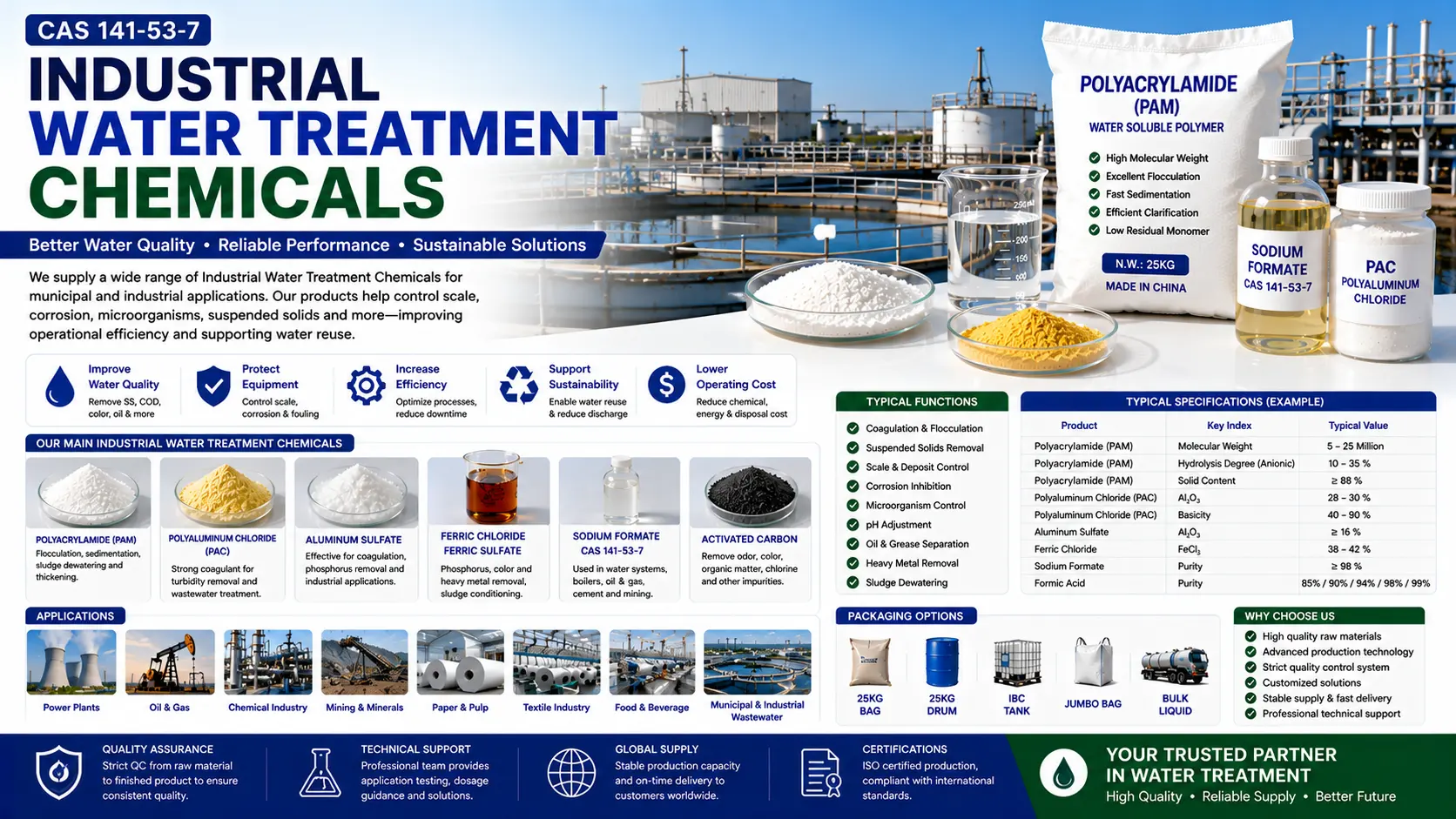
The industrial water can contain suspended solids, hardness ions, dissolved salts, oils, organic matter, microorganisms, heavy metals, dyes, fibers, silica, corrosion products and production residues. There is no one chemical solution to all water-quality issues. The number of products used in a successful treatment program is typically several and are chosen depending on the water source, the equipment used to operate the process, the treatment process conditions, and the required discharge or re-use standard.
Selecting the right chemical program is more than just a price comparison. The following are the factors that buyers should take into consideration: active content, dosage, compatibility, treatment efficiency, sludge production, equipment impact, technical support, packaging, documentation, and total operating cost.
What Are Industrial Water Treatment Chemicals?
Industrial water treatment chemicals are products used to modify the physical, chemical, or biological characteristics of water.
Their main functions include:
- Coagulation
- Flocculation
- Sedimentation
- Filtration
- Sludge thickening
- Sludge dewatering
- pH adjustment
- Scale prevention
- Corrosion control
- Microbial control
- Color removal
- Oil-water separation
- Heavy-metal precipitation
- Membrane protection
- Boiler-water conditioning
- Cooling-water treatment
The appropriate products depend on whether the water is used as process water, cooling water, boiler feedwater, cleaning water, wastewater, recycled water, or discharge effluent.
Why Industrial Water Treatment Is Important
Poorly treated industrial water can cause:
- Scale formation
- Corrosion
- Pipe blockage
- Heat-transfer loss
- Membrane fouling
- Biological growth
- Product contamination
- High sludge volume
- Reduced equipment life
- Increased energy consumption
- Unstable production
- Regulatory non-compliance
A properly designed treatment program may help:
- Improve water clarity
- Reduce suspended solids
- Protect equipment
- Increase heat-transfer efficiency
- Extend membrane life
- Reduce cleaning frequency
- Support water recycling
- Lower wastewater-disposal costs
- Maintain consistent production
Main Types of Industrial Water Treatment Chemicals
Polyacrylamide
Polyacrylamide, commonly abbreviated as PAM, is a water-soluble polymer used for flocculation, clarification, thickening, filtration, and sludge dewatering.
Its CAS number is 9003-05-8.
The main types include:
- Anionic polyacrylamide
- Cationic polyacrylamide
- Nonionic polyacrylamide
- Amphoteric polyacrylamide
Anionic PAM is commonly selected for mineral particles and inorganic suspended solids.
Cationic PAM is frequently used for biological sludge and organic wastewater.
Nonionic PAM may be suitable for acidic or low-charge systems.
The correct grade depends on molecular weight, charge density, hydrolysis level, water chemistry, and treatment equipment.
Polyaluminum Chloride
Polyaluminum chloride, or PAC, is an inorganic coagulant used to destabilize fine suspended particles.
It is widely used in:
- Industrial wastewater
- Municipal water treatment
- Paper mills
- Textile plants
- Mining water
- Food-processing wastewater
- Process-water clarification
Potential benefits include:
- Fast coagulation
- Broad pH adaptability
- Strong turbidity removal
- Reduced sludge in selected systems
- Improved sedimentation
- Compatibility with polymer flocculants
PAC may be supplied as powder or liquid with different aluminum contents and basicity levels.
Aluminum Sulfate
Aluminum sulfate is a traditional coagulant used for:
- Turbidity reduction
- Color removal
- Phosphorus control
- Suspended-solids removal
- Paper manufacturing
- Industrial clarification
Its performance is strongly affected by pH, alkalinity, water temperature, and dosage.
Ferric Chloride and Ferric Sulfate
Iron-based coagulants are used for:
- Phosphorus precipitation
- Heavy-metal removal
- Color reduction
- Industrial wastewater clarification
- Sludge conditioning
- Sulfide control
These products can perform over a broad pH range but may increase corrosion risk if storage and dosing equipment are not properly selected.
Activated Carbon
Activated carbon is used to remove:
- Odor
- Color
- Chlorine
- Organic contaminants
- Solvents
- Taste compounds
- Selected micropollutants
It may be supplied as:
- Powdered activated carbon
- Granular activated carbon
- Pelletized activated carbon
Performance depends on pore structure, surface area, particle size, contact time, and contaminant characteristics.
Antiscalants
Antiscalants help prevent mineral deposits in:
- Reverse-osmosis systems
- Cooling towers
- Boilers
- Desalination plants
- Heat exchangers
- Industrial circulation systems
Common scale-forming substances include:
- Calcium carbonate
- Calcium sulfate
- Barium sulfate
- Strontium sulfate
- Silica
- Iron compounds
The product should be selected according to feedwater analysis, concentration factor, temperature, recovery rate, and membrane type.
Corrosion Inhibitors
Corrosion inhibitors help protect:
- Carbon-steel pipelines
- Copper systems
- Heat exchangers
- Boilers
- Cooling towers
- Storage tanks
- Process equipment
The correct inhibitor depends on:
- Metal type
- Water pH
- Dissolved oxygen
- Chloride concentration
- Temperature
- Flow velocity
- Hardness
- Process chemistry
Biocides
Biocides control bacteria, algae, fungi, and biofilm.
They are commonly used in:
- Cooling-water systems
- Membrane plants
- Process-water loops
- Storage tanks
- Paper mills
- Oilfield systems
- Wastewater plants
Biocides may be oxidizing or non-oxidizing.
Selection should consider microorganism type, contact time, system materials, discharge limits, and compatibility with other chemicals.
Defoamers
Defoamers reduce or prevent foam in:
- Biological wastewater treatment
- Paper manufacturing
- Fermentation
- Chemical processing
- Food-processing wastewater
- Textile production
Excessive foam may reduce tank capacity, interfere with sensors, increase contamination risk, and create operational instability.
pH Adjusters
Acids and alkalis are used to control pH.
Common examples include:
- Sulfuric acid
- Hydrochloric acid
- Formic acid
- Sodium hydroxide
- Lime
- Sodium carbonate
pH adjustment may be required before:
- Coagulation
- Metal precipitation
- Biological treatment
- Membrane filtration
- Discharge
- Chemical oxidation
Heavy-Metal Precipitants
Industrial wastewater may contain:
- Copper
- Nickel
- Chromium
- Zinc
- Lead
- Cadmium
- Mercury
Treatment chemicals can convert dissolved metals into insoluble compounds that can be removed through sedimentation or filtration.
Potential products include:
- Lime
- Sulfide-based precipitants
- Organic metal precipitants
- Coagulants
- Polymer flocculants
The final program depends on metal type, oxidation state, chelating agents, pH, and discharge limits.
Coagulation and Flocculation
Coagulation and flocculation are among the most common industrial water-treatment processes.
Coagulation
Fine suspended particles often carry electrical charges that prevent them from combining.
Coagulants such as PAC, aluminum sulfate, or ferric salts reduce these charges and destabilize the suspension.
Flocculation
After coagulation, polyacrylamide connects the destabilized particles into larger flocs.
These flocs can be removed through:
- Sedimentation
- Dissolved-air flotation
- Filtration
- Centrifugation
- Sludge dewatering
The best coagulant and polymer combination should be confirmed through jar testing.
Industrial Wastewater Treatment
Industrial wastewater may contain:
- Suspended solids
- Oils
- Fibers
- Dyes
- Salts
- Organic chemicals
- Heavy metals
- Proteins
- Surfactants
- Acids and alkalis
Treatment programs may include:
- Screening
- pH adjustment
- Coagulation
- Flocculation
- Sedimentation or flotation
- Biological treatment
- Filtration
- Disinfection
- Sludge dewatering
The chemical program should be selected according to the actual wastewater rather than industry name alone.
Cooling-Water Treatment
Cooling systems are vulnerable to:
- Scaling
- Corrosion
- Biological growth
- Suspended-solids accumulation
- Heat-transfer loss
A typical cooling-water program may include:
- Antiscalants
- Corrosion inhibitors
- Oxidizing biocides
- Non-oxidizing biocides
- Dispersants
- pH-control chemicals
Important operating parameters include:
- Cycles of concentration
- Conductivity
- Calcium hardness
- Alkalinity
- Chloride
- Silica
- Temperature
- Flow rate
Boiler-Water Treatment
Boiler systems require careful control of feedwater and condensate quality.
Common treatment products include:
- Oxygen scavengers
- Phosphate treatments
- Alkalinity builders
- Scale inhibitors
- Sludge conditioners
- Condensate corrosion inhibitors
Poor boiler-water treatment may cause:
- Scale
- Tube overheating
- Corrosion
- Foaming
- Carryover
- Reduced steam quality
- Equipment failure
The treatment program should match boiler pressure, feedwater quality, condensate return, and operating conditions.
Reverse-Osmosis Water Treatment
Reverse-osmosis systems may require:
- Antiscalants
- Dechlorination chemicals
- pH adjustment
- Coagulants
- Biocides
- Membrane cleaners
- Dispersants
Feedwater should be analyzed for:
- Hardness
- Silica
- Sulfate
- Barium
- Strontium
- Iron
- Manganese
- Organic matter
- Suspended solids
- Microbial activity
Incorrect chemical dosing can cause membrane fouling or damage.
Mining and Mineral Processing
Mining operations use industrial water treatment chemicals for:
- Tailings thickening
- Slurry clarification
- Process-water recycling
- Coal washing
- Sand washing
- Heavy-metal removal
- Mine-water clarification
- Sludge dewatering
Anionic polyacrylamide is commonly used to improve settling and water recovery.
The polymer should be tested using actual slurry and recycled process water.
Paper and Pulp Industry
Paper mills may use chemicals for:
- Fiber retention
- Filler retention
- Drainage improvement
- White-water clarification
- Slime control
- Scale control
- Wastewater treatment
- Sludge dewatering
Common chemicals include:
- Polyacrylamide
- PAC
- Aluminum sulfate
- Biocides
- Defoamers
- Retention aids
- Dispersants
Compatibility with pulp, starch, fillers, dyes, and other wet-end chemicals is essential.
Textile Wastewater Treatment
Textile wastewater may contain dyes, fibers, salts, surfactants, starch, and organic auxiliaries.
A treatment program may use:
- pH adjusters
- Coagulants
- Decolorizing agents
- Polyacrylamide
- Oxidants
- Defoamers
- Sludge-dewatering polymers
The program should balance color removal, suspended-solids control, sludge production, and operating cost.
Food-Processing Wastewater
Food-processing wastewater may contain fats, proteins, carbohydrates, oils, and biodegradable solids.
Treatment chemicals may support:
- Dissolved-air flotation
- Grease separation
- Coagulation
- Flocculation
- Sludge thickening
- Sludge dewatering
- Odor control
Chemical dosage should be optimized to avoid excessive sludge or interference with biological treatment.
Metal-Processing Wastewater
Metal-finishing wastewater may contain acids, alkalis, oils, chromium, nickel, copper, zinc, and chelating agents.
Treatment may involve:
- pH adjustment
- Oxidation or reduction
- Metal precipitation
- Coagulation
- Flocculation
- Filtration
- Sludge dewatering
Chelating agents can make metal removal more difficult and may require specialized precipitants.
Sludge Dewatering
Industrial water treatment chemicals are commonly used before:
- Belt filter presses
- Screw presses
- Centrifuges
- Plate-and-frame filter presses
- Rotary drum thickeners
- Geotextile dewatering systems
A suitable polymer may improve:
- Floc strength
- Water release
- Solids capture
- Filtrate clarity
- Cake dryness
- Equipment throughput
- Sludge-volume reduction
Cationic PAM is frequently selected for organic sludge, while anionic PAM may be more suitable for mineral sludge.
Important Product Specifications
Depending on the chemical, buyers should review:
- Active content
- Molecular weight
- Charge density
- Degree of hydrolysis
- Basicity
- pH
- Density
- Moisture
- Insoluble matter
- Residual monomer
- Heavy metals
- Particle size
- Dissolution time
- Viscosity
- Shelf life
A product description without measurable specifications is not sufficient for industrial procurement.
Laboratory Testing
Testing should use actual industrial water, wastewater, sludge, or slurry.
Common tests include:
- Jar testing
- Sedimentation testing
- Filtration tests
- Sludge-dewatering trials
- Scale-potential evaluation
- Corrosion testing
- Membrane-compatibility testing
- Microbial testing
- Dosage optimization
Laboratory testing should be followed by a controlled plant trial.
Packaging Options
Industrial water treatment chemicals may be supplied in:
- 25 kg bags
- 200 kg drums
- 250 kg drums
- 500 kg bulk bags
- 1,000 kg jumbo bags
- IBC tanks
- ISO tanks
- Road tankers
- Customized export packaging
The correct packaging depends on chemical form, order volume, storage conditions, unloading equipment, and transportation requirements.
Storage and Safety
General storage precautions include:
- Keep powders dry.
- Protect liquids from freezing or excessive heat.
- Separate incompatible chemicals.
- Use corrosion-resistant containers where required.
- Maintain secondary containment.
- Keep labels visible.
- Follow the safety data sheet.
- Provide suitable protective equipment.
- Install eyewash and emergency-shower facilities where necessary.
Wet polyacrylamide can create extremely slippery surfaces and should be cleaned promptly.
How to Evaluate a Supplier
A professional supplier should provide:
- A broad product range
- Application-specific recommendations
- Representative samples
- Technical data sheets
- Safety data sheets
- Batch-specific certificates of analysis
- Flexible packaging
- Stable production capacity
- Batch traceability
- Export support
- Technical service
The supplier should understand the customer’s water conditions rather than recommending a universal product.
How to Request an Accurate Quotation
A complete inquiry should include:
- Water source
- Industrial application
- Current treatment process
- pH
- Hardness
- Conductivity
- Suspended solids
- Organic content
- Heavy metals
- Existing chemicals
- Treatment equipment
- Required product
- Monthly quantity
- Packaging
- Destination
- Incoterm
For example:
“Please recommend and quote coagulants and polyacrylamide for industrial wastewater clarification and sludge dewatering, including samples, TDS, SDS, batch-specific COA, and packaging options.”
Total Treatment Cost
The lowest chemical price does not always provide the lowest operating cost.
Buyers should consider:
- Effective dosage
- Water quality
- Sludge generation
- Chemical compatibility
- Energy consumption
- Equipment cleaning
- Membrane life
- Heat-transfer efficiency
- Waste disposal
- Water-reuse value
- Technical support
A higher-performing chemical may reduce dosage, sludge volume, downtime, and maintenance costs.
Common Purchasing Risks
Potential risks include:
- Selecting chemicals only by price
- Using the wrong product grade
- Ignoring active content
- Failing to test samples
- Inconsistent batch quality
- Excessive impurities
- Poor packaging
- Missing documentation
- Incompatible chemicals
- Delayed delivery
- Limited technical support
These risks can be reduced through application testing, clear specifications, supplier qualification, batch-specific COAs, and plant trials.
Conclusion
Industrial Water Treatment Chemicals play a vital role in the control of suspended solids, scale, corrosion, microorganisms, color, oil, heavy metals, sludge and other water-quality issues.
The complete treatment program can utilize polyacrylamide, polyaluminum chloride, ferric salts, antiscalants, corrosion inhibitors, biocides, activated carbon, pH adjusters, defoamers, and special precipitants.
Industrial users should take the time to send detailed water-quality and process data, review the technical specifications, request samples for production, and submit the samples for laboratory testing before buying, and then run controlled production trials.
A good supplier should be able to offer appropriate products, quality, clear specifications, custom packaging, full documentation, technical support, and timely delivery worldwide.


Contact Us
In This Article
Related Posts
Custom Packaging Solutions from an Anhydrous Sodium Acetate Supplier in China
2026-09-23
Application Trends in Anhydrous Sodium Acetate for Special Chemical Manufacturing
2026-09-23
Anhydrous Sodium Acetate for Leather Tanning: Improve Dyeing Uniformity
2026-09-22
Formic Acid 85% for Textile Dyeing: Industrial Applications, Technical Benefits and Future Trends
2026-09-22


