



Water Treatment Chemicals Manufacturer: Products, Applications, Quality Control, and Supplier Guide
By vanchor
2026-07-21Related Posts
Custom Packaging Solutions from an Anhydrous Sodium Acetate Supplier in China
2026-09-23
Application Trends in Anhydrous Sodium Acetate for Special Chemical Manufacturing
2026-09-23
Anhydrous Sodium Acetate for Leather Tanning: Improve Dyeing Uniformity
2026-09-22
Formic Acid 85% for Textile Dyeing: Industrial Applications, Technical Benefits and Future Trends
2026-09-22
A good Water Treatment Chemicals Manufacturer should be able to offer more than just a wide selection of products and a competitive price. Stable product quality, recommendations for each application, thorough documentation, flexible packaging, reliable production capacity, and dependable delivery are also required by municipal utilities, industrial wastewater plants, mining, paper, textiles, oilfield operators, and chemical distributors.
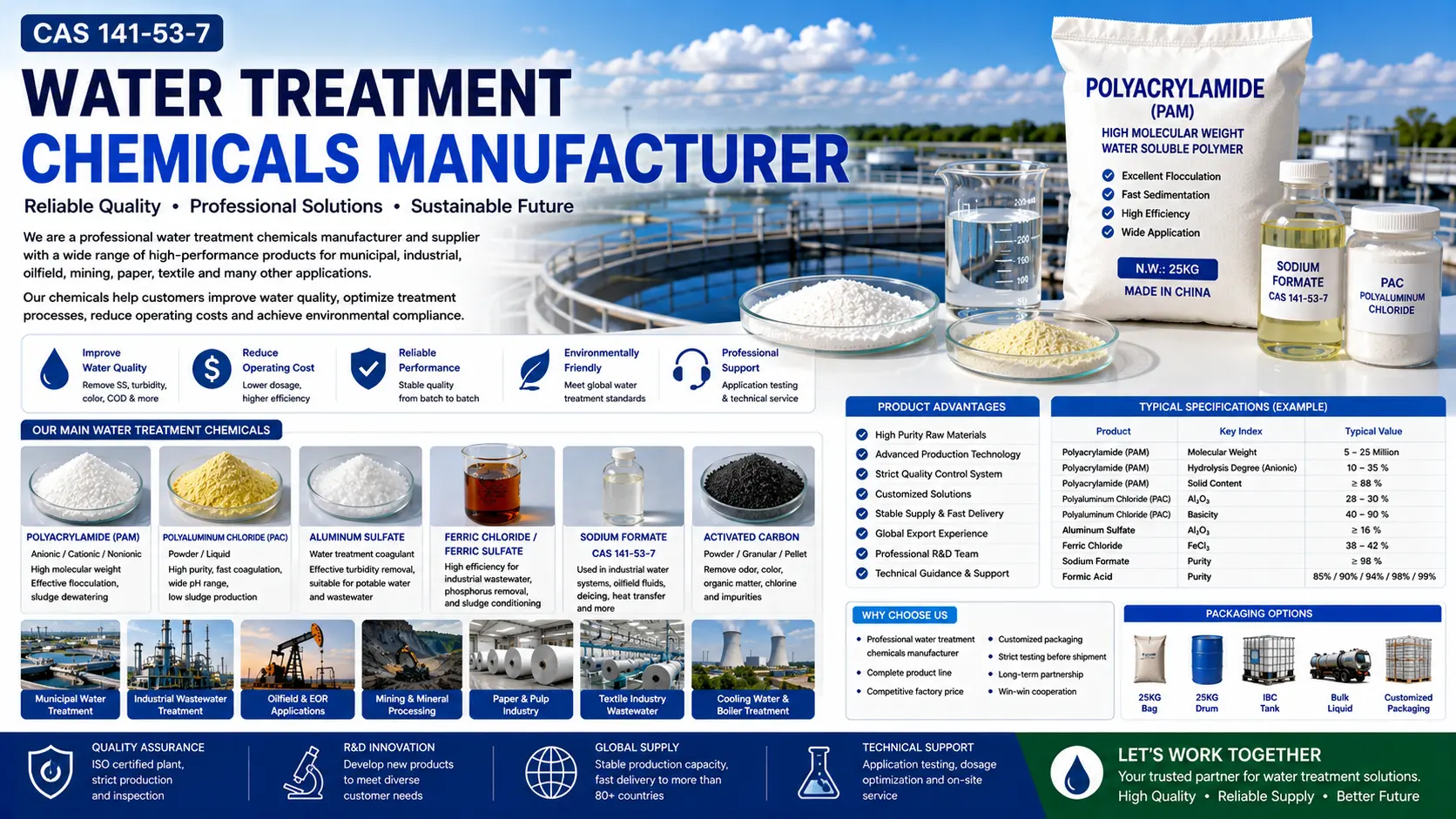
Water-treatment chemicals are employed to remove suspended solids, control pH, reduce turbidity, improve sedimentation, condition sludge, prevent scaling and corrosion, control microorganisms, remove color and to facilitate water re-use. The treatment conditions vary widely between plants and chemical selection should be based on the actual water quality, process design, equipment and the treatment goals.
It is important that customers have the right products and that they are tested to ensure they will be suitable for the job before they are bought, but this task should be done by a professional manufacturer who has the expertise to do so.
What Are Water Treatment Chemicals?
Water-treatment chemicals are substances used to improve the physical, chemical, or biological quality of water and wastewater.
They may be used for:
- Coagulation
- Flocculation
- Sedimentation
- Filtration
- Sludge thickening
- Sludge dewatering
- pH adjustment
- Disinfection
- Scale control
- Corrosion control
- Color removal
- Odor control
- Heavy-metal removal
- Process-water conditioning
The correct treatment program may use one chemical or a combination of several products.
Main Types of Water Treatment Chemicals
Polyacrylamide
Polyacrylamide, commonly abbreviated as PAM, is a water-soluble polymer used for flocculation, clarification, thickening, filtration, and sludge dewatering.
Its CAS number is 9003-05-8.
Main types include:
- Anionic polyacrylamide
- Cationic polyacrylamide
- Nonionic polyacrylamide
- Amphoteric polyacrylamide
Anionic PAM is commonly used for mineral particles and inorganic wastewater, while cationic PAM is frequently selected for biological and organic sludge.
Polyaluminum Chloride
Polyaluminum chloride, or PAC, is an inorganic coagulant widely used in drinking-water treatment, municipal wastewater, industrial clarification, papermaking, textile wastewater, and process-water treatment.
Potential benefits include:
- Rapid coagulation
- Strong turbidity removal
- Broad pH adaptability
- Reduced sludge generation
- Improved sedimentation
- Compatibility with polymer flocculants
PAC may be supplied in powder or liquid form with different aluminum contents and basicity levels.
Aluminum Sulfate
Aluminum sulfate is a traditional coagulant used to destabilize fine suspended particles.
Typical applications include:
- Drinking-water clarification
- Municipal wastewater
- Papermaking
- Industrial water treatment
- Phosphorus removal
Its performance depends on pH, alkalinity, temperature, dosage, and water composition.
Ferric Chloride and Ferric Sulfate
Iron-based coagulants may be used for:
- Turbidity removal
- Phosphorus precipitation
- Color reduction
- Heavy-metal treatment
- Sludge conditioning
- Industrial wastewater clarification
These products can perform well over a broad pH range but may increase corrosion risk or sludge production if improperly dosed.
Sodium Formate and Potassium Formate
Formate salts may be used in selected industrial water systems, oilfield fluids, deicing formulations, heat-transfer systems, and specialty chemical applications.
Sodium formate has CAS number 141-53-7.
Potassium formate has CAS number 590-29-4.
These products are not conventional flocculants but may be included in broader industrial chemical and fluid-treatment portfolios.
Calcium Formate
Calcium formate is used in construction chemicals, dry-mix mortar, cement systems, animal feed, leather processing, and selected industrial formulations.
Its CAS number is 544-17-2.
Formic Acid
Formic acid is used for pH adjustment, cleaning, chemical synthesis, leather processing, feed preservation, rubber coagulation, and industrial manufacturing.
Its correct CAS number is 64-18-6.
It is commonly supplied in concentrations such as:
- 85%
- 90%
- 94%
- 98%
- 99%
Activated Carbon
Activated carbon is used to remove:
- Odor
- Taste
- Color
- Chlorine
- Organic contaminants
- Selected micropollutants
It may be supplied as powder, granules, or pellets.
Antiscalants
Antiscalants help prevent mineral deposits in:
- Reverse-osmosis systems
- Cooling-water circuits
- Boilers
- Desalination plants
- Industrial filtration systems
Common scale-forming minerals include calcium carbonate, calcium sulfate, barium sulfate, silica, and metal oxides.
Corrosion Inhibitors
Corrosion inhibitors protect pipelines, heat exchangers, boilers, cooling towers, and process equipment.
Their selection depends on:
- Metallurgy
- Temperature
- pH
- Oxygen level
- Chloride concentration
- Flow velocity
- Water hardness
Biocides and Disinfectants
Biocides are used to control bacteria, algae, fungi, and biofilm.
Potential applications include:
- Cooling towers
- Process-water systems
- Membrane plants
- Industrial circulation systems
- Wastewater treatment
- Storage tanks
Oxidizing and non-oxidizing biocides should be selected according to the system and applicable regulations.
How Coagulation and Flocculation Work
Coagulation and flocculation are two related but different treatment stages.
Coagulation
Fine particles often carry electrical charges that prevent them from aggregating.
Coagulants such as PAC, aluminum sulfate, or ferric chloride reduce these charges and destabilize the suspension.
Flocculation
After coagulation, a polymer flocculant such as polyacrylamide connects small destabilized particles into larger flocs.
These flocs can then be removed through:
- Sedimentation
- Dissolved-air flotation
- Filtration
- Centrifugation
- Sludge dewatering
The combination of coagulant and flocculant should be optimized through jar testing.
Municipal Water Treatment
Municipal water plants may use treatment chemicals for:
- Raw-water clarification
- Turbidity reduction
- Color removal
- Filtration support
- Disinfection
- pH control
- Sludge treatment
Products used in drinking-water applications must comply with relevant regulatory requirements, particularly for residual monomers, heavy metals, and product purity.
A professional manufacturer should clearly distinguish between industrial-grade and potable-water-grade products.
Municipal Wastewater Treatment
Municipal wastewater facilities may use chemicals for:
- Primary clarification
- Phosphorus removal
- Biological-treatment support
- Secondary clarification
- Sludge thickening
- Sludge dewatering
- Odor control
- Final effluent polishing
Cationic polyacrylamide is commonly used for biological sludge dewatering because activated sludge often contains negatively charged organic matter.
Industrial Wastewater Treatment
Industrial wastewater varies significantly between industries.
Treatment chemicals may be used in wastewater generated by:
- Textile factories
- Paper mills
- Chemical plants
- Food-processing facilities
- Mining operations
- Metal-processing factories
- Leather plants
- Construction sites
- Oilfields
- Printing and dyeing facilities
The appropriate chemical program depends on:
- pH
- Turbidity
- Suspended solids
- Organic content
- Salinity
- Oil and grease
- Heavy metals
- Color
- Temperature
- Discharge requirements
Mining and Mineral Processing
Mining operations may use water-treatment chemicals for:
- Tailings thickening
- Mineral-slurry clarification
- Process-water recovery
- Sand washing
- Coal washing
- Filtration
- Mine-water treatment
- Heavy-metal precipitation
High-molecular-weight anionic polyacrylamide is widely used to improve settling and water recovery.
The product should be tested with actual slurry and recycled process water.
Paper Manufacturing
Paper mills use treatment chemicals for:
- Fiber retention
- Filler retention
- Drainage improvement
- Dry-strength enhancement
- White-water clarification
- Fiber recovery
- Wastewater treatment
- Sludge dewatering
Common products include polyacrylamide, PAC, aluminum sulfate, defoamers, biocides, sizing chemicals, and retention aids.
Compatibility with pulp, fillers, starches, and wet-end chemicals should be tested carefully.
Textile Wastewater Treatment
Textile wastewater may contain dyes, pigments, salts, fibers, surfactants, starch, and organic auxiliaries.
Treatment programs may include:
- pH adjustment
- Coagulation
- Flocculation
- Color removal
- Sedimentation
- Sludge dewatering
- Biological-treatment support
PAC, ferric salts, decolorizing agents, and polyacrylamide are commonly used in combination.
Sludge Thickening and Dewatering
Water-treatment chemicals are widely used to condition sludge before:
- Belt filter presses
- Screw presses
- Centrifuges
- Plate-and-frame filter presses
- Rotary drum thickeners
- Geotextile dewatering systems
A suitable polymer may improve:
- Floc strength
- Free-water release
- Filtrate clarity
- Solids capture
- Cake dryness
- Equipment throughput
- Sludge-volume reduction
The chemical should match the sludge source and equipment type.
Important Product Specifications
A professional manufacturer should provide measurable technical specifications.
Depending on the product, important parameters may include:
- Active content
- Molecular weight
- Charge density
- Degree of hydrolysis
- Basicity
- Aluminum or iron content
- pH
- Density
- Moisture
- Insoluble matter
- Residual monomer
- Chloride
- Sulfate
- Heavy metals
- Particle size
- Dissolution time
General claims such as “high quality” or “industrial grade” are not sufficient for technical purchasing.
Quality-Control Requirements
A reliable manufacturer should maintain quality control throughout production.
Typical stages include:
- Raw-material inspection
- In-process monitoring
- Reaction control
- Concentration adjustment
- Drying or filtration
- Particle-size classification
- Finished-product testing
- Packaging inspection
- Batch release
- Retained-sample management
Stable manufacturing helps reduce batch-to-batch variation and treatment disruptions.
Batch Traceability
Each shipment should be traceable through:
- Raw-material lot
- Production date
- Batch number
- Laboratory results
- Packaging records
- Warehouse records
- Retained samples
- Loading information
- Shipping documents
Traceability supports faster investigation if a quality issue occurs.
Laboratory and Application Testing
Product specifications alone cannot guarantee treatment performance.
A professional supplier may support:
- Jar testing
- Sedimentation testing
- Sludge-dewatering trials
- Filtration tests
- Scale-control tests
- Corrosion testing
- Membrane-compatibility evaluation
- Product comparison
- Dosage optimization
Testing should use actual water, wastewater, sludge, or slurry whenever possible.
Packaging Options
Water-treatment chemicals may be supplied in:
- 25 kg bags
- 250 kg drums
- 500 kg bulk bags
- 1,000 kg jumbo bags
- IBC tanks
- ISO tanks
- Road tankers
- Customized export packaging
The best option depends on product form, monthly consumption, warehouse equipment, transport regulations, and unloading facilities.
Packaging should protect the product from moisture, contamination, sunlight, leakage, and physical damage.
Storage and Handling
Storage requirements depend on the chemical.
General precautions include:
- Keep products in a cool, dry, ventilated area.
- Protect powder chemicals from moisture.
- Keep liquid chemicals in compatible containers.
- Avoid direct sunlight and excessive heat.
- Separate incompatible acids, alkalis, oxidizers, and reducing agents.
- Maintain secondary containment for liquids.
- Follow the current safety data sheet.
- Provide suitable personal protective equipment.
- Install eyewash and emergency-shower facilities where required.
Wet polymer powders can create extremely slippery surfaces and should be cleaned promptly.
How to Evaluate a Water Treatment Chemicals Manufacturer
Buyers should evaluate:
- Product range
- Manufacturing capability
- Laboratory facilities
- Production capacity
- Quality-management procedures
- Batch traceability
- Packaging options
- Technical support
- Export experience
- Complaint-handling procedures
A dependable manufacturer should be able to recommend products based on application data rather than offering a single universal grade.
Required Documents
A professional manufacturer should provide:
- Technical data sheet
- Safety data sheet
- Batch-specific certificate of analysis
- Product specification
- Commercial invoice
- Packing list
- Certificate of origin
- Bill of lading
- Inspection reports when required
All documents should use consistent product names, grades, concentrations, batch numbers, quantities, and packaging details.
How to Request an Accurate Quotation
A complete inquiry should include:
- Intended application
- Water or wastewater source
- Current treatment process
- pH
- Turbidity
- Suspended-solid concentration
- Organic content
- Existing chemicals
- Treatment equipment
- Required product type
- Monthly or annual quantity
- Packaging
- Destination
- Incoterm
- Delivery schedule
For example:
“Please recommend and quote polyacrylamide and polyaluminum chloride for textile wastewater clarification and sludge dewatering, including samples, TDS, SDS, batch-specific COA, packaging options, and CIF delivery terms.”
Detailed information helps the manufacturer recommend a more suitable and economical treatment program.
Comparing Supplier Quotations
Buyers should compare quotations based on:
- Product grade
- Active content
- Technical specifications
- Effective dosage
- Packaging
- Freight
- Documentation
- Technical support
- Batch consistency
- Delivery reliability
A lower price per kilogram may not provide a lower treatment cost if the product requires a higher dosage or creates more sludge.
Total Treatment Cost
The total treatment cost may include:
- Chemical price
- Effective dosage
- Solution-preparation water
- Labor
- Energy
- Sludge generation
- Sludge transport
- Waste disposal
- Equipment cleaning
- Filter performance
- Water-reuse value
- Technical support
The best chemical is the one that achieves the required treatment result at the lowest overall operating cost.
Common Purchasing Risks
Potential risks include:
- Selecting products only by price
- Using the wrong chemical grade
- Ignoring active content
- Accepting inconsistent batches
- Failing to test samples
- Using incompatible packaging
- Missing regulatory documents
- Poor dissolution
- Excessive impurities
- Delayed delivery
- Limited technical support
These risks can be reduced through clear specifications, application testing, supplier qualification, batch-specific COAs, and controlled plant trials.
Questions to Ask Before Ordering
Buyers should confirm:
- Are you a direct manufacturer?
- Which water-treatment chemicals are available?
- Can application-specific grades be supplied?
- Can representative samples be provided?
- Can jar-testing or sludge-testing support be offered?
- Can recent batch COAs be supplied?
- What is the monthly production capacity?
- What packaging options are available?
- Can customized concentrations or grades be produced?
- Which export documents are included?
- Can third-party inspection be arranged?
- How are quality claims handled?
- What is the normal lead time?
- Can long-term supply agreements be supported?
Conclusion
The key points to consider when choosing the best Water Treatment Chemicals Manufacturer are: Product range, technical specifications, manufacturing capacity, quality control, application support, product packaging, product documentation, manufacturing capacity and delivery reliability.
Water treatment chemicals are used in a variety of industrial, municipal drinking water, sewage treatment, sludge dewatering, mining, papermaking, textiles, oilfields, cooling, and boilers and membrane plants.
When purchasing water quality and process information, be sure to include all information prior to purchase, request samples, read batch specific documents, obtain lab testing on samples and conduct controlled plant tests.
The stable quality, chemical specification, documentation, packaging flexibility, technical support and global delivery of appropriate chemical products are the reliable manufacturer's advantages.


Contact Us
In This Article
Related Posts
Custom Packaging Solutions from an Anhydrous Sodium Acetate Supplier in China
2026-09-23
Application Trends in Anhydrous Sodium Acetate for Special Chemical Manufacturing
2026-09-23
Anhydrous Sodium Acetate for Leather Tanning: Improve Dyeing Uniformity
2026-09-22
Formic Acid 85% for Textile Dyeing: Industrial Applications, Technical Benefits and Future Trends
2026-09-22


