



How to Choose a Reliable Oilfield Chemicals Supplier
By vanchor
2026-07-15Related Posts
What Purity Is Required for Sodium Formate for De-Icing Applications?
2026-08-21
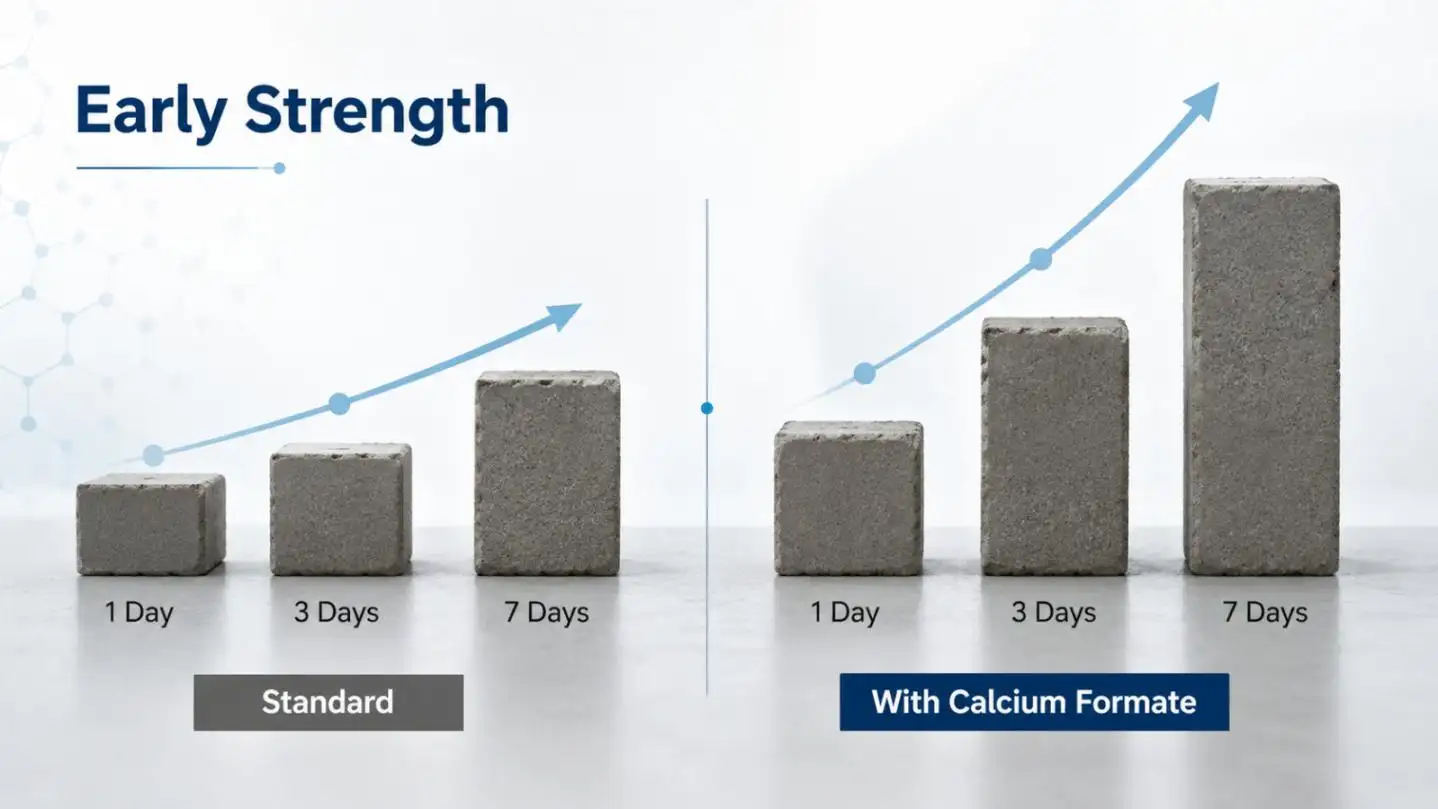
Calcium Formate for Tile Adhesive: How It Improves Early Strength and Setting Time
2026-08-20
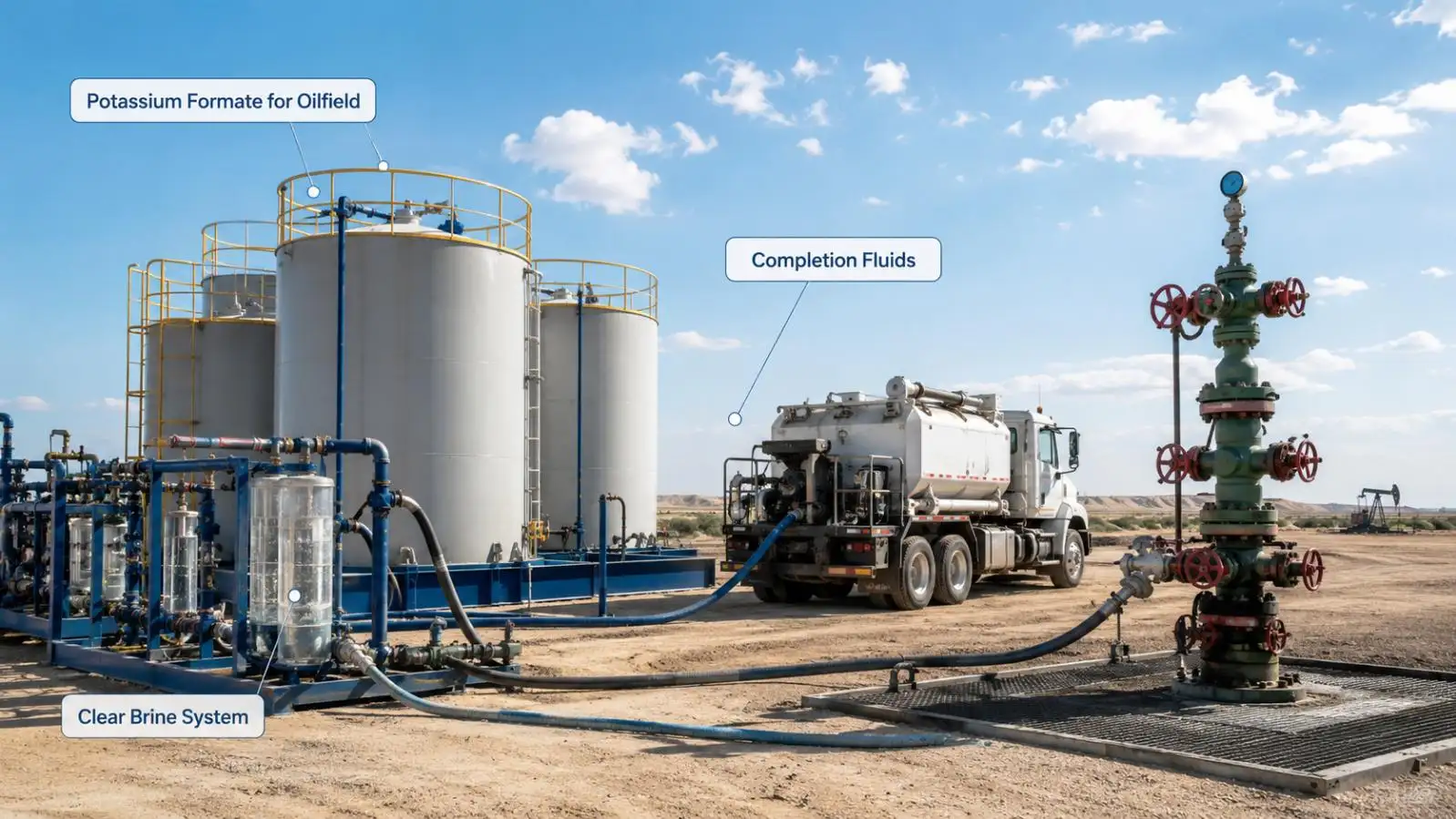
Potassium Formate for Oilfield Completion Fluids: Density, Compatibility and Formation Protection
2026-08-19
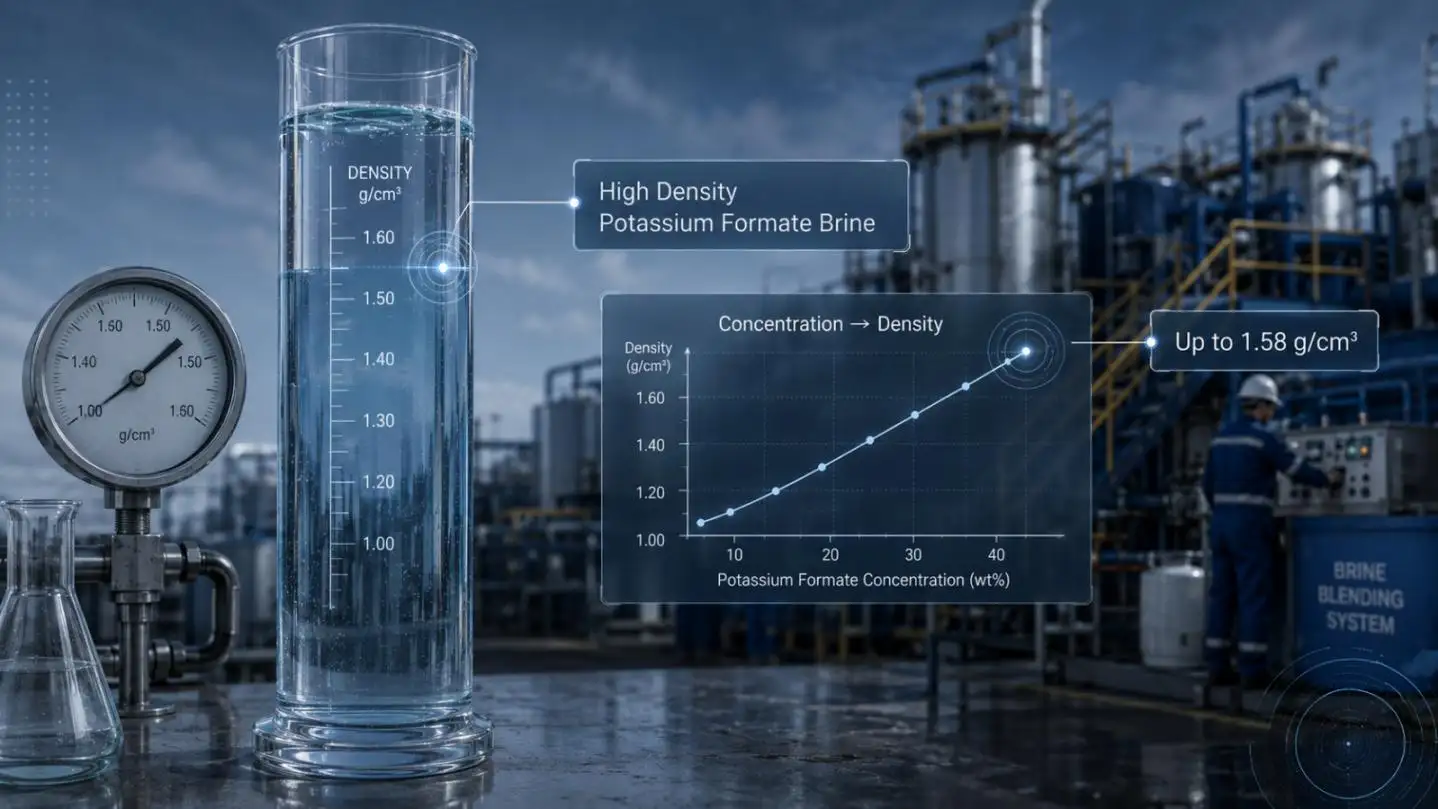
High Density Potassium Formate Brine: Density Range, Properties and Oilfield Applications
2026-08-18
Oilfield chemicals are essential for drilling, completion, production, stimulation, enhanced oil recovery, water treatment, and equipment protection. The performance of these chemicals can directly affect drilling efficiency, well stability, corrosion control, fluid behavior, production output, and operating costs.
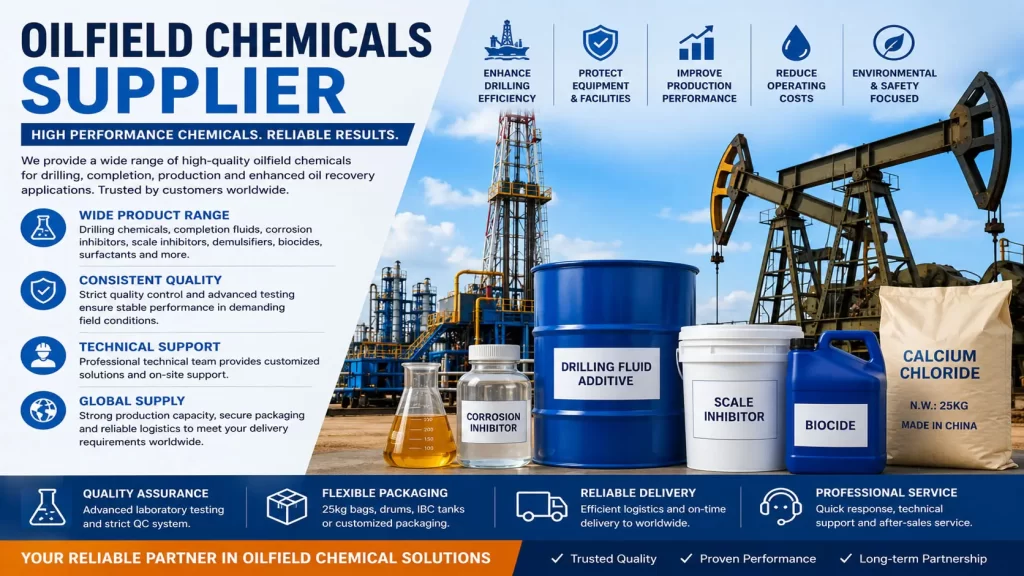
Choosing the right oilfield chemicals supplier is therefore a critical purchasing decision. Buyers should evaluate more than price. Product consistency, technical capability, manufacturing capacity, documentation, packaging, logistics, and application support are equally important.
A dependable supplier should provide stable chemical performance, complete technical information, flexible packaging, and reliable delivery for both routine and demanding oilfield operations.
What Does an Oilfield Chemicals Supplier Provide?
An oilfield chemicals supplier provides chemical products used throughout oil and gas exploration, drilling, completion, production, and maintenance.
Common product categories include:
- Drilling fluid additives
- Completion fluid chemicals
- Corrosion inhibitors
- Scale inhibitors
- Demulsifiers
- Defoamers
- Biocides
- Surfactants
- Friction reducers
- Fluid loss control agents
- Shale inhibitors
- Cement additives
- Pour point depressants
- Oxygen scavengers
- Hydrogen sulfide scavengers
- Water treatment chemicals
- Enhanced oil recovery chemicals
Different wells require different chemical systems. Product selection depends on formation conditions, temperature, pressure, salinity, drilling fluid type, reservoir characteristics, and production targets.
A professional supplier should understand the intended application before recommending a product.
Understand the Oilfield Application
Oilfield chemicals are not universal products. A chemical that performs well in one field may not provide the same result under different operating conditions.
Before purchasing, buyers should provide information such as:
- Well type
- Operating temperature
- Formation pressure
- Brine composition
- Water salinity
- Fluid pH
- Oil composition
- Drilling mud system
- Target dosage
- Equipment materials
- Treatment objective
- Environmental requirements
For example, corrosion inhibitors used in high-temperature sour gas environments require different performance characteristics from those used in low-temperature water injection systems.
The more complete the technical information, the more accurately the supplier can recommend a suitable product.
Common Oilfield Chemical Applications
Drilling Fluid Treatment
Drilling fluid chemicals help control viscosity, filtration, lubrication, shale stability, fluid loss, and wellbore cleaning.
Common drilling additives include:
- Viscosifiers
- Fluid loss reducers
- Lubricants
- Shale inhibitors
- Emulsifiers
- Weighting agents
- Thinners
- Defoamers
Stable drilling fluid performance helps maintain wellbore integrity and improve drilling efficiency.
Completion and Workover Fluids
Completion fluids are used during well completion, maintenance, and repair operations.
These fluids may require:
- Density control
- Low solids content
- High thermal stability
- Corrosion protection
- Formation compatibility
- Controlled filtration
Formate-based brines, including sodium formate and potassium formate, are commonly used in selected high-performance completion fluid systems.
Corrosion Control
Oilfield equipment is exposed to water, carbon dioxide, hydrogen sulfide, salts, and high temperatures.
Corrosion inhibitors help protect:
- Pipelines
- Tubing
- Valves
- Pumps
- Storage tanks
- Injection systems
- Production equipment
A reliable supplier should offer products suitable for the specific corrosion mechanism and operating environment.
Scale Prevention
Mineral scale may form when water chemistry, pressure, or temperature changes during production.
Common deposits include:
- Calcium carbonate
- Barium sulfate
- Calcium sulfate
- Strontium sulfate
- Iron compounds
Scale inhibitors help reduce deposits that can restrict flow and damage equipment.
Demulsification
Crude oil often contains water and stable emulsions.
Demulsifiers help separate oil and water during production and processing. The correct demulsifier depends on crude oil composition, temperature, water cut, and production conditions.
Laboratory bottle testing is often required before selecting a product.
Microbial Control
Bacteria can cause corrosion, sludge formation, souring, and operational problems.
Biocides may be used in:
- Water injection systems
- Pipelines
- Storage tanks
- Drilling fluids
- Produced water systems
- Hydraulic fracturing operations
The selected biocide should provide effective control while remaining compatible with the treatment system.
Review Product Specifications
Before placing an order, buyers should request complete product specifications and a Technical Data Sheet.
Important parameters may include:
- Active ingredient content
- Appearance
- Density
- pH value
- Viscosity
- Solubility
- Flash point
- Pour point
- Moisture content
- Thermal stability
- Salt tolerance
- Shelf life
- Recommended dosage
The required parameters depend on the product and application.
A professional oilfield chemicals supplier should clearly explain the standard grade, available concentration, and recommended storage conditions.
Request Samples and Conduct Performance Testing
Sample testing is essential before bulk purchasing.
Oilfield chemical evaluation may include:
- Corrosion coupon testing
- Scale inhibition testing
- Bottle testing
- Foam testing
- Compatibility testing
- Thermal aging
- Rheology testing
- Fluid loss testing
- Brine stability testing
- Interfacial tension testing
- Microbial testing
- Field simulation
Laboratory testing helps identify the best product and dosage range.
For critical applications, field trials may also be required. Small-scale trials allow buyers to measure actual performance before full implementation.
After approval, the product specification and test method should be recorded to maintain consistency in future orders.
Evaluate Manufacturing and Quality Control
A dependable supplier should maintain standardized production and quality management procedures.
Important controls include:
- Raw material inspection
- Formula verification
- Production process monitoring
- Batch sampling
- Laboratory testing
- Packaging inspection
- Batch traceability
- Retained sample management
- Pre-shipment verification
Each batch should be tested before release.
The supplier should provide a Certificate of Analysis showing actual test results. Buyers should compare the certificate with the agreed specification before accepting the shipment.
Consistent batch quality is especially important because changes in active ingredient concentration or physical properties can affect field performance.
Confirm Technical Documentation
Oilfield chemicals often require detailed safety, transportation, and technical documentation.
A professional supplier should provide:
- Safety Data Sheet
- Technical Data Sheet
- Certificate of Analysis
- Product specification
- Packing list
- Commercial invoice
- Certificate of Origin
- Transportation classification
- Product labels
- Regulatory declarations
Documents should clearly identify the product name, batch number, concentration, net weight, manufacturing date, and shelf life.
For hazardous materials, the supplier should also provide the correct transport classification, packaging group, and handling information.
Evaluate Technical Support
Strong technical support is one of the most important differences between a basic chemical seller and a professional oilfield chemicals supplier.
Technical service may include:
- Product selection
- Dosage recommendations
- Laboratory testing
- Formulation adjustment
- Compatibility analysis
- Field troubleshooting
- Performance optimization
- Storage guidance
- Treatment program development
A supplier should be able to explain why a product is suitable and how it should be applied.
When performance problems occur, the supplier should investigate fluid conditions, dosage, chemical interactions, and operating changes instead of simply recommending more product.
Review Packaging Options
Oilfield chemicals may be supplied as liquids, powders, granules, or concentrated formulations.
Common packaging includes:
- 25 kg bags
- 500 kg or 1,000 kg jumbo bags
- 25-liter containers
- 200-liter drums
- IBC tanks
- ISO tanks
- Bulk tankers
Packaging should be compatible with the chemical and suitable for transportation, storage, and site handling.
Buyers may also request:
- Palletized loading
- Private-label packaging
- Neutral packaging
- Customized drum labels
- Waterproof wrapping
- Reinforced export packaging
- Smaller trial packages
The supplier should confirm package material compatibility before shipment.
Assess Supply Capacity
Oilfield projects often require regular and time-sensitive chemical deliveries.
Buyers should review:
- Monthly production capacity
- Raw material availability
- Standard lead time
- Inventory levels
- Emergency order capability
- Warehouse capacity
- Multiple-site delivery support
- Production scheduling
For long-term projects, buyers should provide demand forecasts.
Forecasting allows suppliers to reserve raw materials, production capacity, packaging, and transportation resources.
This reduces the risk of supply interruptions during critical operations.
Check International Logistics Experience
Oilfield chemicals may be shipped to remote fields, ports, industrial zones, or offshore supply bases.
An experienced supplier should understand:
- Dangerous goods requirements
- Container loading
- Weight restrictions
- Export documentation
- Port regulations
- Labeling requirements
- Packaging compliance
- Cargo insurance
- Destination customs procedures
Before ordering, buyers should confirm the Incoterm, port of loading, shipment method, package type, delivery schedule, and required documents.
Reliable logistics planning helps reduce delays, damaged packaging, and customs clearance problems.
Compare Total Treatment Cost
The lowest unit price may not provide the best overall value.
Buyers should evaluate:
- Product activity
- Required dosage
- Treatment efficiency
- Equipment protection
- Production improvement
- Packaging quality
- Delivery reliability
- Technical support
- Complaint handling
- Product consistency
A more concentrated or effective chemical may reduce the total dosage and lower the actual treatment cost.
Poor-quality chemicals may increase consumption, create deposits, reduce production efficiency, or damage equipment.
The best supplier is the one that delivers stable field performance at a competitive total cost.
Build a Long-Term Supply Partnership
Long-term cooperation can improve both chemical performance and supply stability.
Regular customers may receive:
- Reserved production capacity
- Customized formulations
- Stable specifications
- Flexible packaging
- Faster laboratory support
- Better shipment planning
- Technical training
- Improved commercial terms
Buyers should communicate changes in operating conditions, fluid composition, annual demand, and treatment objectives.
The supplier should also provide advance notice of raw material changes, production adjustments, or delivery risks.
Conclusion
Choosing a reliable oilfield chemicals supplier requires careful evaluation of product quality, technical capability, testing support, manufacturing capacity, packaging, documentation, and logistics experience.
A dependable supplier should do more than provide chemicals. It should help buyers improve operational stability, protect equipment, control treatment costs, and maintain a reliable supply chain.
Before placing a large order, buyers should confirm technical requirements, test samples, review specifications, verify documentation, and evaluate the supplier’s support capability. A structured supplier selection process can reduce risk and support more efficient oil and gas operations.


Contact Us
In This Article
Related Posts
What Purity Is Required for Sodium Formate for De-Icing Applications?
2026-08-21
Calcium Formate for Tile Adhesive: How It Improves Early Strength and Setting Time
2026-08-20
Potassium Formate for Oilfield Completion Fluids: Density, Compatibility and Formation Protection
2026-08-19
High Density Potassium Formate Brine: Density Range, Properties and Oilfield Applications
2026-08-18


