



Phosphoric Acid Supplier for 75%, 85% and Custom Concentration Requirements
By vanchor
2026-08-10Related Posts
Custom Packaging Solutions from an Anhydrous Sodium Acetate Supplier in China
2026-09-23
Application Trends in Anhydrous Sodium Acetate for Special Chemical Manufacturing
2026-09-23
Anhydrous Sodium Acetate for Leather Tanning: Improve Dyeing Uniformity
2026-09-22
Formic Acid 85% for Textile Dyeing: Industrial Applications, Technical Benefits and Future Trends
2026-09-22
Selecting a Phosphoric Acid Supplier is not simply a question of finding H₃PO₄ at the lowest price. For industrial procurement, concentration affects active-acid input, viscosity, crystallization behavior, pumping, storage, process-water balance, freight efficiency and downstream formulation control.
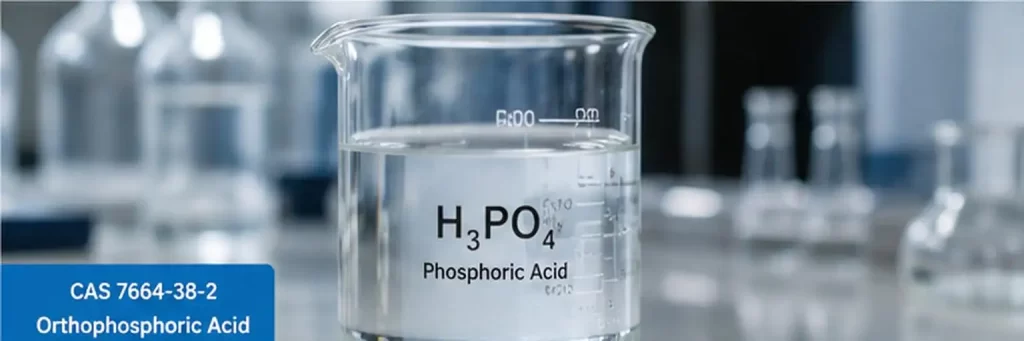
Vanchor supplies phosphoric acid based on the customer's process conditions, with 75%, 85% and application-specific concentration requirements evaluated together with grade, impurity limits, packaging and destination. This manufacturing-backed approach helps buyers select a specification around actual production conditions rather than concentration alone.
75% vs. 85%: The Main Procurement Difference
Commercial orthophosphoric acid, CAS 7664-38-2, is normally procured at concentration levels of 75% or 85%. Dilution levels of 10% exhibition the difference in the economics of the process and the operations in the supply chain.
| Technical Factor | Phosphoric Acid 75% | Phosphoric Acid 85% |
| H₃PO₄ assay | ≥75% | ≥85% |
| Active H₃PO₄ per 1,000 kg | Approx. 750 kg | Approx. 850 kg |
| Specific gravity at 25°C | Approx. 1.57 | Approx. 1.69 |
| Water content | Higher | Lower |
| Relative viscosity | Lower | Higher |
| Approx. freezing point | −17.5°C | 21.1°C |
| Pumping at lower temperature | Generally easier | Requires more temperature attention |
| Freight efficiency per kg H₃PO₄ | Lower | Higher |
| Typical purchasing priority | Handling flexibility | Concentrated acid input |
A professional Phosphoric Acid Supplier should therefore compare cost per unit of active H₃PO₄, not only the delivered price per metric ton.
For example, one metric ton of 85% phosphoric acid contains approximately 100 kg more active H₃PO₄ than the same tonnage of 75% material. For large-volume plants, this can reduce transportation volume, storage demand and handling frequency. However, the higher concentration also increases the importance of storage temperature and transfer-system design.
When Is 75% Phosphoric Acid the Better Process Choice?
Phosphoric Acid 75% is chosen when convenience of use and stability of transfer are of more value than active-acid density that is as high as possible.
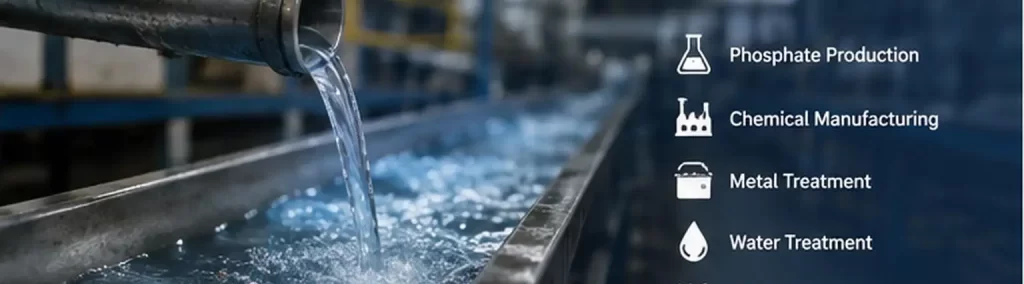
Approximately −17.5°C of freezing point is more flexible than the 85% grade in colder environments. A Phosphoric Acid Supplier may therefore recommend 75% for:
•Unheated or partially heated storage areas
•Winter transportation routes
•Metering systems operating near ambient temperature
•Metal cleaning and descaling formulations
•Water-treatment chemical preparation
•Phosphate surface-treatment formulations
•Processes where additional water is already required
Lower concentration also generally reduces viscosity, which may simplify pump selection, dosing and mixing. This matters particularly where plants do not use heated storage tanks or temperature-controlled transfer lines.
The decision should still consider piping material, pump compatibility, flow rate and the final formulation rather than relying on freezing point alone.
Why High-Volume Plants Often Specify 85%
Phosphoric Acid 85% is more concentrated and therefore introduces less process water for the same active H₃PO₄ requirement.
For chemical manufacturers, this can be important in:
•Sodium, potassium, ammonium and calcium phosphate production
•Concentrated industrial formulations
•Food-grade phosphate manufacturing
•Metal-treatment chemical production
•High-volume continuous processing
•Plants equipped for controlled on-site dilution
The principal advantage is material efficiency. If a process requires 850 kg of H₃PO₄, approximately 1,000 kg of 85% product supplies that active-acid quantity, whereas more 75% solution would be required.
However, the approximately 21.1°C freezing point of 85% phosphoric acid means crystallization risk must be included in tank, pipeline and transportation planning. Temperature control, insulation and operating procedures can therefore influence the true delivered cost.
At Vanchor, concentration is evaluated together with these operating conditions instead of treating 85% automatically as the lower-cost option.
When Should a Phosphoric Acid Supplier Evaluate a Custom Concentration?
Standard 75% or 85% grades do not fit every production line. A custom concentration may be technically useful when the customer needs to control the amount of water entering the process or wants to reduce an internal dilution step.
Typical reasons include:
Fixed Active-Acid Input
Batch formulation may necessitate a specific mass of H₃PO₄ within a finite total liquid volume.
Process-Water Restrictions
Additional water may affect reaction concentration, the demand for drying and the following downstream evaporation or the product solids.
Existing Dosing Equipment
Pump capacity, flowmeters and piping diameter, as well as the precision of dosing, may favor a smaller concentration range.
Direct-to-Process Feeding
A process-ready concentration may reduce dilution operations, operator handling and intermediate storage.
For custom supply, Vanchor uses a practical specification sequence:
Application → Required H₃PO₄ input → Water balance → Temperature range → Dosing system → Target concentration → Impurity specification
A capable Phosphoric Acid Supplier should verify whether the requested concentration can be produced, tested and maintained consistently across commercial batches.
Concentration Does Not Define the Complete Grade
Two products can both meet an 85% assay while having different impurity profiles. Buyers should therefore specify the parameters that affect their downstream chemistry.
| Specification | Procurement Significance |
| H₃PO₄ assay | Controls active-acid dosage |
| Specific gravity | Supports incoming QC and concentration verification |
| Iron | Important for color-sensitive formulations |
| Chloride | Relevant to corrosion and downstream reactions |
| Sulfate | May affect selected phosphate processes |
| Fluoride | Application-dependent control parameter |
| Heavy metals | Critical for sensitive grades |
| Arsenic | Controlled in selected food/high-purity specifications |
| Appearance | Useful for routine batch inspection |
Vanchor combines approximately 30 years of manufacturing experience with a 50,000 m² industrial base, allowing production control, laboratory testing and batch release to be connected to the agreed specification.
Technical grade, food grade and high-purity phosphoric acid should also be treated separately. Standard industrial 85% phosphoric acid should not automatically be considered suitable for semiconductor or electronic processing, where metallic and ionic impurity limits are substantially more stringent.
What Should Buyers Specify to a Phosphoric Acid Supplier?
A technically complete RFQ reduces specification changes and quotation errors. Before selecting a Phosphoric Acid Supplier, buyers should define:
•Required concentration and tolerance
•Technical, food or high-purity grade
•End-use application
•Minimum assay
•Critical impurity limits
•Monthly or annual consumption
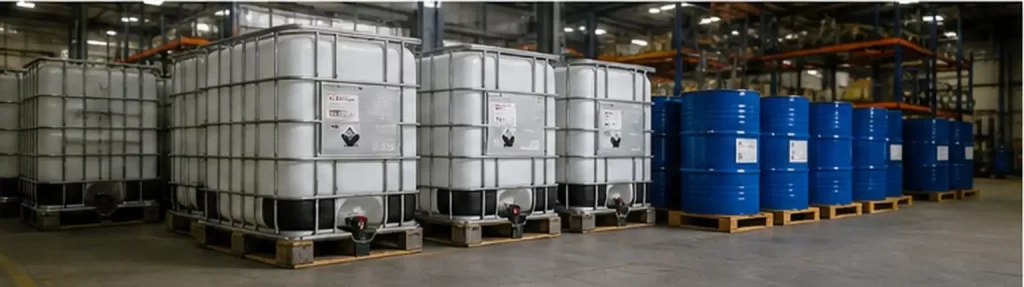
•Packaging requirement
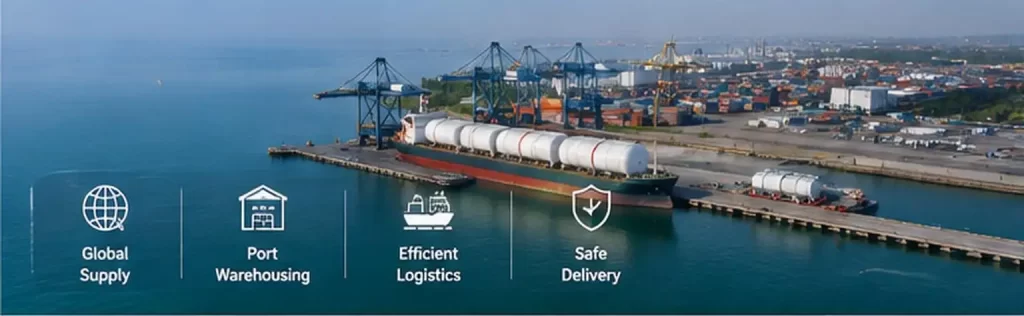
•Destination country or port
•Storage-temperature range
•Required COA, SDS and technical documentation
This information allows Vanchor to evaluate not only whether 75% or 85% is suitable, but also whether a customer-specific concentration or impurity specification should be considered.
Final Words
The concentration decision should follow the process, not the other way around:
•75% — consider when pumping flexibility, lower-temperature handling or reduced on-site dilution is important.
•85% — consider when active-acid density, freight efficiency and lower process-water input are priorities.
•Custom concentration — evaluate when equipment, formulation or water balance requires a defined intermediate strength.
For buyers evaluating a Phosphoric Acid Supplier, Vanchor can review the required concentration, grade, impurity limits, annual volume, storage conditions and destination before confirming the appropriate supply specification. This provides a more useful basis for commercial comparison than selecting phosphoric acid by concentration or price alone.
FAQs
Q1. What concentrations does Vanchor supply as a Phosphoric Acid Supplier?
Vanchor supplies commonly required 75% and 85% phosphoric acid and can evaluate application-specific concentration requirements based on the customer's formulation, process-water balance, storage conditions and dosing system.
Q2. How should buyers choose between 75% and 85% phosphoric acid?
The choice depends on more than assay. 75% phosphoric acid is generally easier to handle at lower temperatures, while 85% phosphoric acid provides more active H₃PO₄ per shipment and reduces process-water input. Vanchor can review the operating conditions before confirming the appropriate grade.
Q3. Can Vanchor provide custom-concentration phosphoric acid?
Yes. As a manufacturing-backed Phosphoric Acid Supplier, Vanchor can evaluate custom concentration requirements where standard 75% or 85% grades do not match the customer's formulation, dosing or water-balance requirements.
Q4. What grades of phosphoric acid can Vanchor supply?
Vanchor can supply phosphoric acid according to agreed specifications for technical, food-grade and high-purity applications. The required grade should be confirmed together with assay and critical impurity limits.
Q5. What technical information should I provide when requesting a quotation?
For a more accurate specification and quotation, buyers should provide:
•Required concentration
•Required grade
•End application
•Critical impurity limits
•Monthly or annual quantity
•Packaging preference
•Destination country or port
•Storage-temperature conditions


Contact Us
Related Posts
Custom Packaging Solutions from an Anhydrous Sodium Acetate Supplier in China
2026-09-23
Application Trends in Anhydrous Sodium Acetate for Special Chemical Manufacturing
2026-09-23
Anhydrous Sodium Acetate for Leather Tanning: Improve Dyeing Uniformity
2026-09-22
Formic Acid 85% for Textile Dyeing: Industrial Applications, Technical Benefits and Future Trends
2026-09-22


