



Potassium Formate Compatibility with Elastomers, Seals, and Oilfield Equipment
By Tonmoy
2026-09-09Related Posts
Custom Packaging Solutions from an Anhydrous Sodium Acetate Supplier in China
2026-09-23
Application Trends in Anhydrous Sodium Acetate for Special Chemical Manufacturing
2026-09-23
Anhydrous Sodium Acetate for Leather Tanning: Improve Dyeing Uniformity
2026-09-22
Formic Acid 85% for Textile Dyeing: Industrial Applications, Technical Benefits and Future Trends
2026-09-22
Potassium-formate brine compatibility with elastomers cannot be determined from the chemical name alone. The correct assessment depends on the exact brine formulation, elastomer compound, concentration or density, temperature, pressure, exposure duration, mechanical loading, and contact with additives or other fluids.
A generic chemical-resistance chart can help create a preliminary material shortlist, but it should not be treated as approval for an oilfield installation. Final selection requires compound-specific evidence under conditions that represent the intended service.
This distinction matters for O-rings, packer elements, valve seats, pump seals, hoses, and other nonmetallic components exposed to potassium-formate drilling or completion fluids.
What Determines Potassium Formate Elastomer Compatibility?
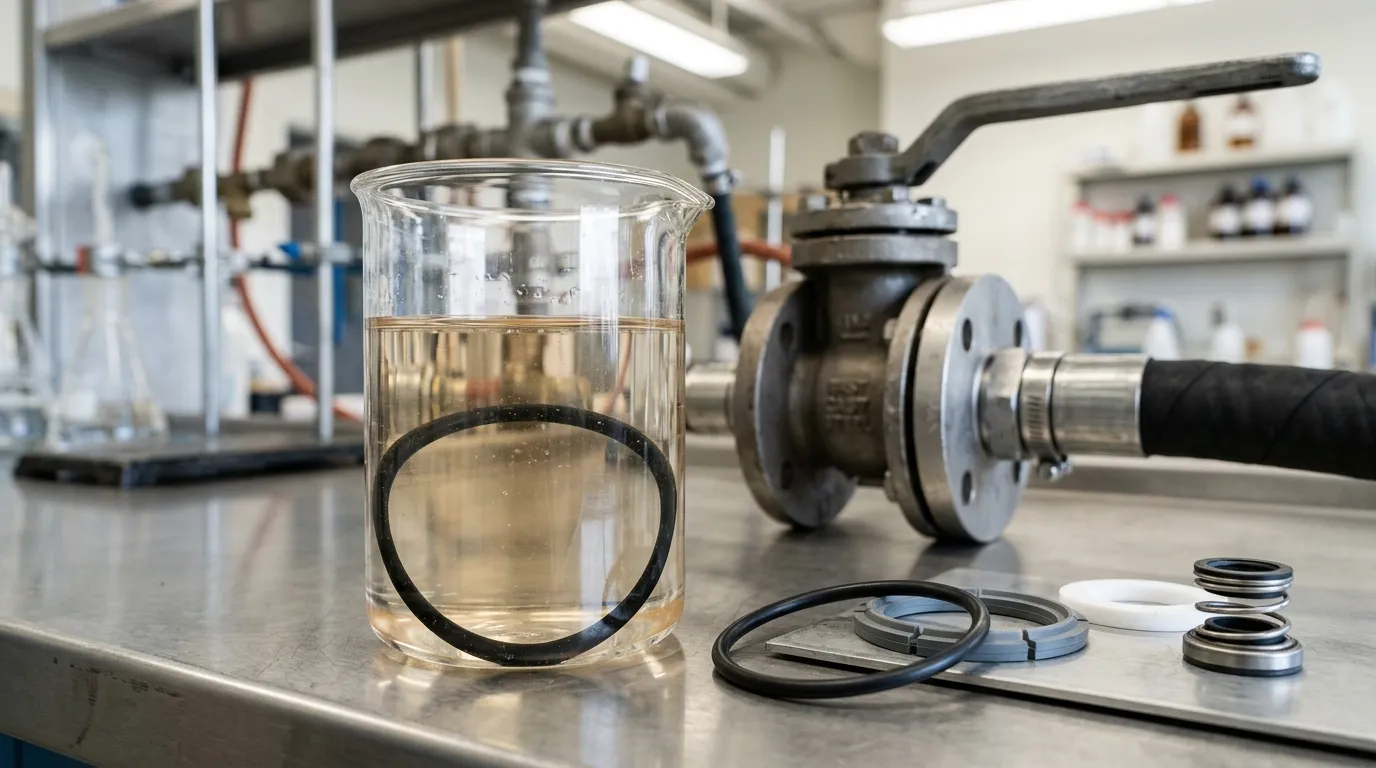
The first step is to identify the actual service fluid. “Potassium formate” may refer to the solid chemical, an aqueous solution, a high-density potassium-formate brine, or a mixed formate system. These forms should not be treated as interchangeable for compatibility decisions.
For an oilfield application, record at least:
- Potassium-formate concentration or brine density
- Whether the fluid is a solution, high-density brine, or mixed formate system
- Additives, contaminants, and other fluids that may contact the seal
- Operating temperature and pressure
- Exposure duration and cycling
- Static or dynamic sealing duty
- Compression, extrusion, and mechanical loading
- Exact elastomer compound, manufacturer, and grade
- Seal geometry and equipment design
A compatibility result is meaningful only when these variables are attached to it. A test on one compound in one brine concentration does not automatically apply to another compound, another product form, or a different equipment configuration.
For broader chemical and product context, see Vanchor’s potassium formate resource. Compatibility decisions, however, require more detail than chemical identity or general application information.
Screening Charts Versus Qualification Testing
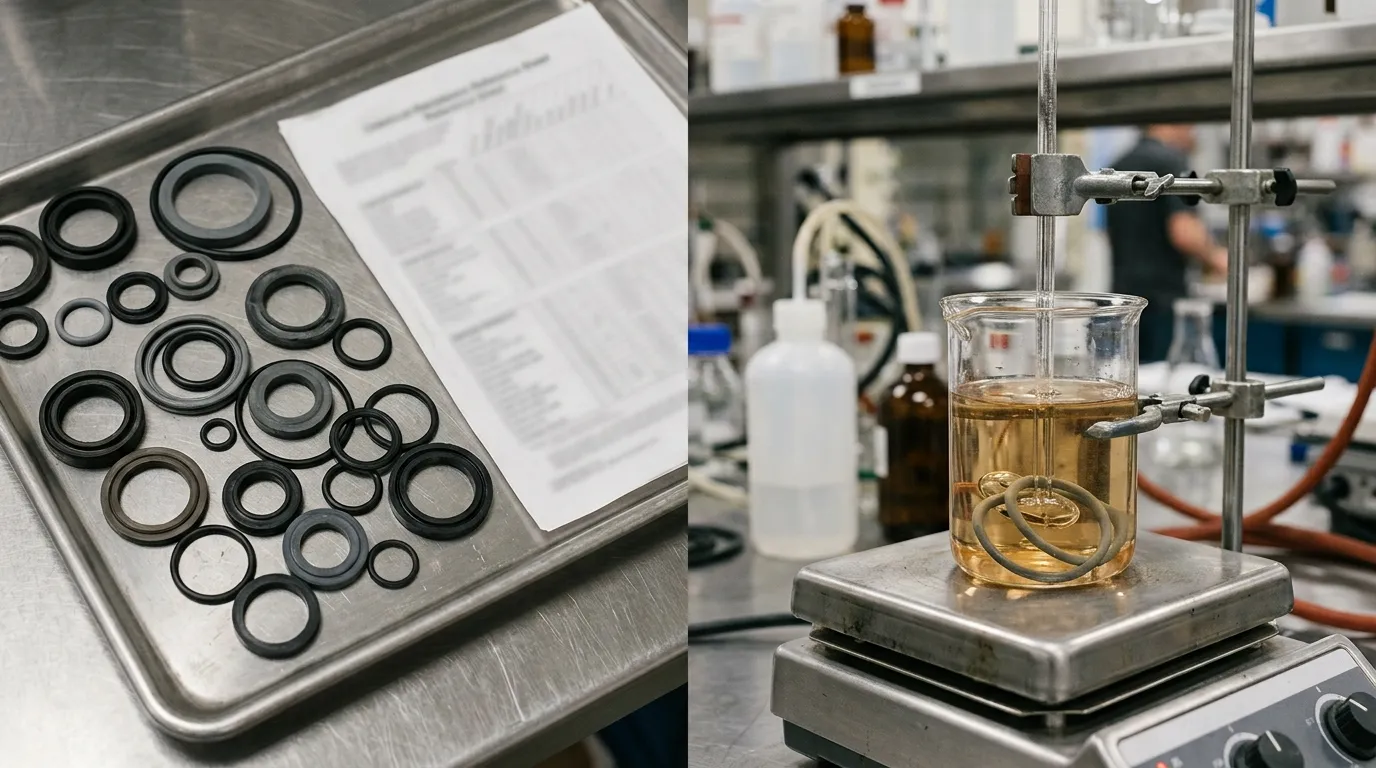
Chemical-resistance charts and online compatibility tools are useful for preliminary screening. They may help identify materials that warrant further review, but they generally do not provide all the information required for field-service qualification.
| Screening information may show | It does not establish |
|---|---|
| A preliminary material category for review | Approval for a specific oilfield installation |
| General resistance or volume-change behavior | Exact leakage performance |
| Potential material concerns | Maximum temperature or pressure |
| Whether further testing may be appropriate | Compatibility of a complete equipment assembly |
| A starting point for supplier discussions | Suitability of every compound within a material family |
Generic material names also have limitations. Two FKM, EPDM, NBR, or HNBR products may differ in formulation, fillers, cure system, hardness, reinforcement, and performance. A chart rating for one compound should not automatically be transferred to another.
The same caution applies to PTFE and other thermoplastics. They should be evaluated as a separate material class, with attention to design behavior such as creep, dimensional stability, sealing force, and mechanical loading.
For potassium-formate service, a compatibility chart should therefore be treated as a screening document. It is not a substitute for a test report, an equipment manufacturer’s approval, or a compound-specific engineering review.
How to Review Common Elastomer and Seal Materials
FKM or Viton, EPDM, NBR, HNBR, FFKM, and PTFE are commonly considered in industrial sealing discussions. Their presence on a compatibility chart does not by itself establish suitability for potassium-formate brine.
The correct question is not simply, “Is this elastomer compatible with potassium formate?” It is:
Has this exact compound been evaluated in the intended potassium-formate fluid under representative service conditions?
The following framework can be used during material screening.
| Material category | What can be screened initially | What still requires verification |
|---|---|---|
| FKM/Viton | General chemical-resistance information for the material family | Exact compound, brine composition, temperature, pressure, exposure duration, and sealing duty |
| EPDM | General material-category behavior | Compound formulation, mechanical loading, and actual fluid conditions |
| NBR/HNBR | Preliminary suitability for further review | Exact grade, fluid composition, temperature, pressure, and dynamic service |
| FFKM | Candidate material for high-consequence sealing reviews | Compound-specific evidence, design suitability, and application limits |
| PTFE and thermoplastics | Separate non-elastomer material review | Creep, sealing design, dimensional behavior, and service conditions |
This table is a decision framework, not a pass/fail compatibility rating. The available evidence does not support naming one of these material categories as universally preferred for potassium-formate brine.
For each candidate, request the exact material designation rather than relying only on a generic description such as “Viton seal” or “chemical-resistant rubber.” The review should identify:
- Compound manufacturer and grade
- Hardness
- Seal dimensions and design
- Static or dynamic service
- Exposure fluid and concentration basis
- Test temperature and pressure
- Exposure duration and cycling
- Dimensional change
- Hardness change
- Tensile strength and elongation change
- Compression-set or stress-relaxation behavior
- Visible cracking, softening, embrittlement, swelling, or surface damage
A material that shows limited dimensional change may still be unsuitable if its sealing force or mechanical properties deteriorate. Conversely, a generic chart cannot predict the performance of a complete seal assembly under pressure, extrusion risk, movement, and temperature cycling.
Failure Modes to Monitor in Seals and Elastomers
Potassium-formate compatibility should be assessed in terms of both chemical exposure and sealing performance. Relevant responses to evaluate may include:
- Swelling or shrinkage
- Hardness increase or decrease
- Softening or embrittlement
- Loss of tensile strength or elongation
- Compression-set changes
- Stress relaxation and loss of sealing force
- Surface cracking or degradation
- Tackiness, distortion, or permanent deformation
- Leakage after exposure or cycling
These are evaluation categories, not claims that every material will experience these failures in potassium-formate service.
Dimensional stability alone is not enough. A seal may retain an acceptable shape while losing the elasticity or compression recovery needed to maintain contact with the sealing surface. Similarly, a material that appears chemically stable in a static immersion test may require additional review for dynamic movement, pressure cycling, extrusion, or repeated installation.
The test method should therefore match the equipment duty. A laboratory exposure test can provide useful evidence, but its result must be interpreted against the actual service conditions and seal design.
How to Qualify Seals for Potassium-Formate Oilfield Service
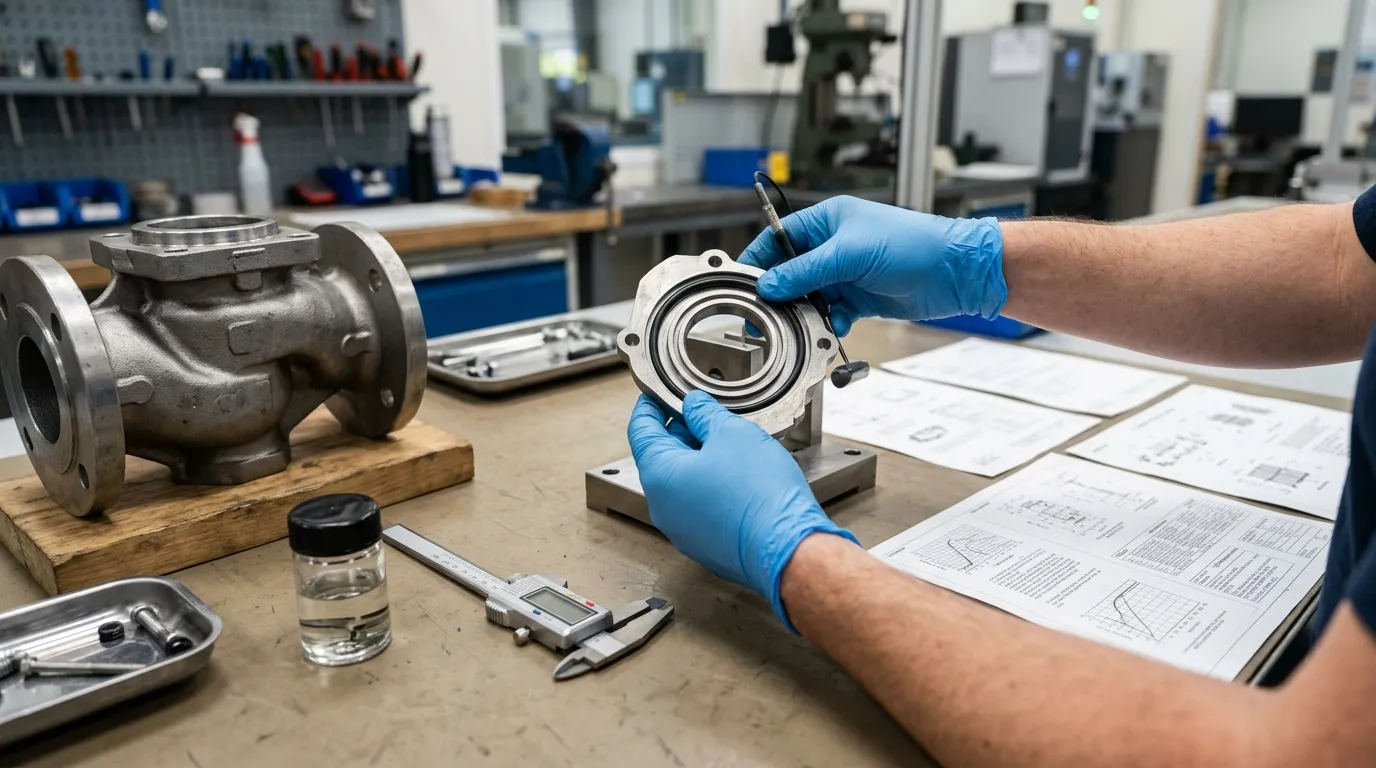
A practical qualification process should connect the fluid, component, test evidence, and equipment approval.
1. Define the actual fluid
Document:
- Chemical identity and product form
- Potassium-formate concentration or density
- Whether the fluid is a single-formate or mixed-formate system
- Additives and possible contaminants
- Any other fluids that may contact the seal during operation, cleaning, or storage
A high density potassium formate brine should not be evaluated as though it were an unspecified dilute solution. The product form and concentration basis belong in the compatibility record.
2. Define the equipment duty
Identify:
- Component type
- Static or dynamic sealing
- Operating temperature
- Operating pressure
- Exposure duration
- Pressure and temperature cycling
- Mechanical loading and movement
- Potential extrusion or gap conditions
- Whether the component is part of a larger downhole or surface assembly
The same elastomer may require different evidence for a static flange seal, a dynamic pump seal, a valve seat, or a downhole sealing element.
3. Identify the exact material
Obtain the compound manufacturer, grade, hardness, dimensions, and seal design. “EPDM,” “NBR,” or “FKM” is not a sufficiently precise material description for final approval.
If the supplier provides only a generic material family, request the exact compound designation and the scope of any compatibility data.
4. Request relevant test evidence
The documentation should identify:
- Test fluid and formulation
- Concentration or density basis
- Temperature and pressure
- Exposure duration
- Test method
- Sample condition and dimensions
- Dimensional change
- Hardness change
- Tensile strength and elongation
- Compression set or stress relaxation, where relevant
- Visual condition after exposure
- Any stated limitations or exclusions
A technical formate reference separates elastomer compatibility from compatibility with fluids, additives, metals, cement, and other materials. That separation is important because a result for one category does not establish performance in another. The Formate Technical Manual identifies a dedicated elastomer-compatibility section, but the existence of that section should not be interpreted as approval of a particular compound or installation.
5. Compare test conditions with the intended installation
The reviewer should ask whether the evidence actually matches:
- The same or sufficiently representative brine
- The same concentration or density basis
- Similar temperature and pressure
- Similar exposure time
- Similar static or dynamic duty
- Similar mechanical loading
- The same compound and seal design
If the test conditions are materially different, the result should be treated as supporting information rather than final qualification.
6. Obtain equipment-level acceptance
The seal manufacturer’s data and the equipment manufacturer’s requirements should be reviewed together. A material coupon test does not necessarily qualify the complete assembly.
Record the approval scope clearly. It should identify the fluid, compound, component, conditions, and limitations. Do not transfer the approval automatically to another brine formulation, another elastomer grade, or another equipment design.
For wider completion-fluid context, Vanchor’s potassium formate completion fluid page can be reviewed separately from this material-qualification task.
Review the Whole Oilfield Equipment Assembly
Elastomer compatibility is only one part of equipment compatibility. Any component that contacts the brine, may be exposed through leakage, or can interact with the sealing system should be included in the review.
Depending on the equipment, this may include:
- Static O-rings
- Dynamic seals
- Packing
- Valve seats
- Pump seals
- Hoses and flexible connections
- Packer or downhole sealing elements
- Backup rings
- Nonmetallic inserts
- Coatings, adhesives, and bonded components
- Other polymeric or thermoplastic parts
A formate-fluid compatibility review may separate elastomers from metals, cement, additives, and other materials. This means that a positive elastomer result does not establish metal compatibility, cement compatibility, additive compatibility, or complete equipment compatibility.
The review should also consider fluid changes during operation. A component may encounter the base potassium-formate brine, a mixed fluid, a treatment chemical, a cleaning fluid, or contamination from another part of the process. Each materially different exposure may require separate confirmation.
For general oilfield application context rather than detailed seal qualification, see potassium formate for oilfield.
Information to Request in a Seal or Equipment RFQ
A technical RFQ or supplier review should request enough information to connect the proposed material with the actual service conditions.
Include:
- Exact potassium-formate product identity and form
- Concentration or density basis
- Additives, contaminants, and mixed-fluid composition
- Operating temperature and pressure
- Exposure duration and duty cycle
- Static or dynamic service classification
- Exact seal compound, manufacturer, and grade
- Hardness, dimensions, and seal design
- Test method and test-fluid description
- Dimensional and physical-property results
- Compression-set or stress-relaxation results where relevant
- Documented limitations and exclusions
- Whether testing applies to a material sample or the complete assembly
- Equipment manufacturer or engineering review status
A catalog listing or generic chemical-resistance chart is not equivalent to product-specific qualification. An SDS may help identify handling and hazard information, but it does not by itself establish elastomer compatibility. Likewise, a COA may describe a batch property without proving that a seal or equipment assembly is suitable for the fluid.
The potassium formate brine mixing guide may be useful when defining the formulation and concentration information that should accompany a compatibility request. It should not replace the seal-material qualification itself.
Practical Takeaway
Potassium-formate elastomer compatibility is a condition-specific engineering decision. Use general compatibility charts to screen possible materials, but do not treat them as field-service approval.
Before selecting an O-ring, seal, hose, valve seat, pump seal, or downhole component, match the evidence to:
- The exact potassium-formate brine or fluid formulation
- The exact elastomer compound
- Concentration or density
- Temperature and pressure
- Exposure duration and cycling
- Static or dynamic mechanical duty
- The complete equipment design
The most defensible selection is the one supported by compound-specific evidence and equipment-level review under representative service conditions.


Contact Us
In This Article
Related Posts
Custom Packaging Solutions from an Anhydrous Sodium Acetate Supplier in China
2026-09-23
Application Trends in Anhydrous Sodium Acetate for Special Chemical Manufacturing
2026-09-23
Anhydrous Sodium Acetate for Leather Tanning: Improve Dyeing Uniformity
2026-09-22
Formic Acid 85% for Textile Dyeing: Industrial Applications, Technical Benefits and Future Trends
2026-09-22


