



Potassium Formate Factory: Production, Quality Control, and Global Supply Guide
By vanchor
2026-07-22Related Posts
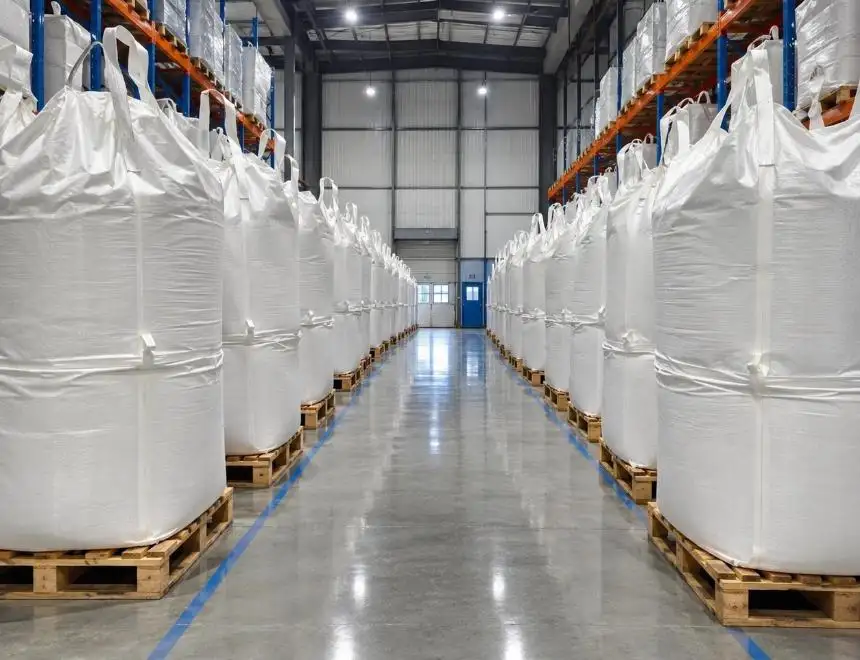
What Purity Is Required for Sodium Formate for De-Icing Applications?
2026-08-21
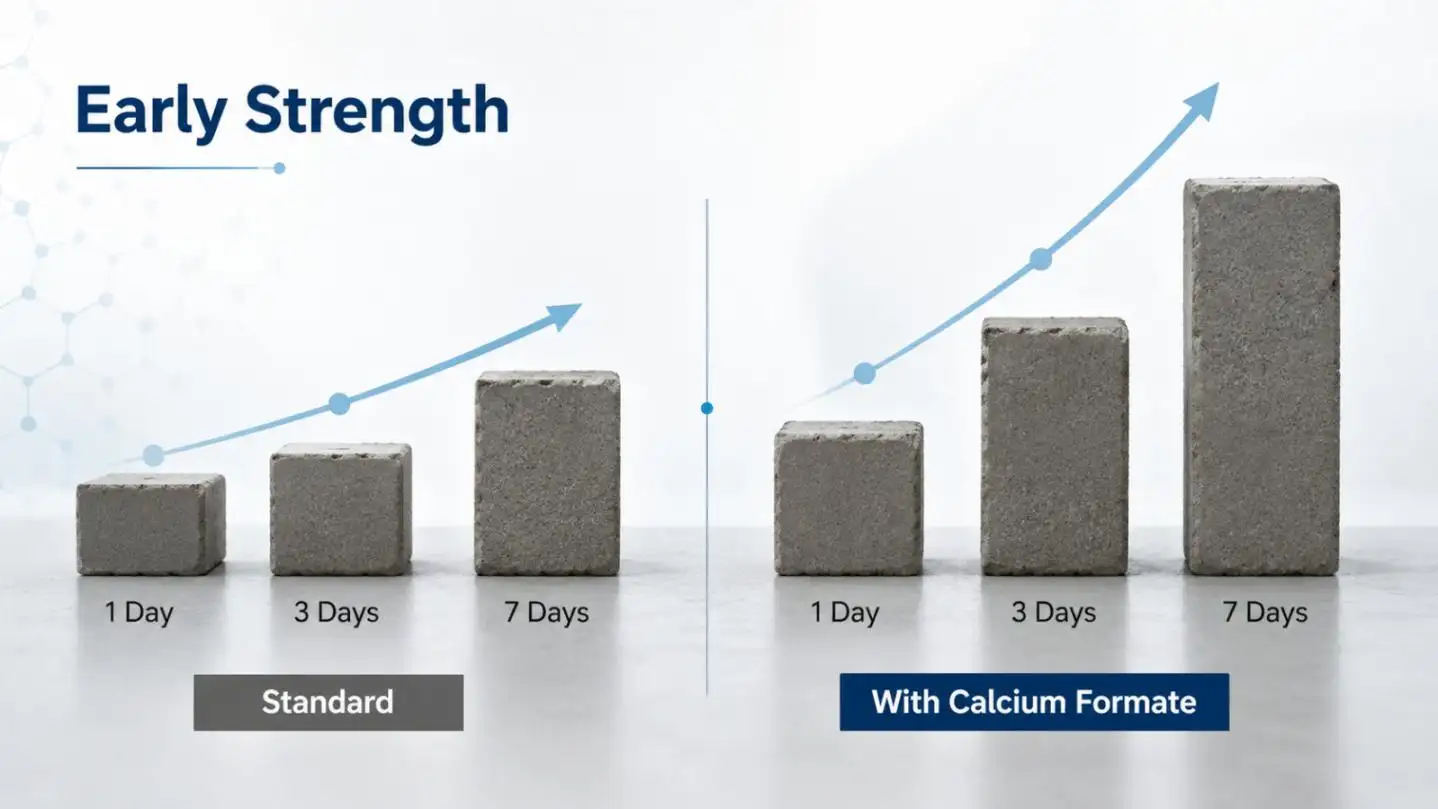
Calcium Formate for Tile Adhesive: How It Improves Early Strength and Setting Time
2026-08-20
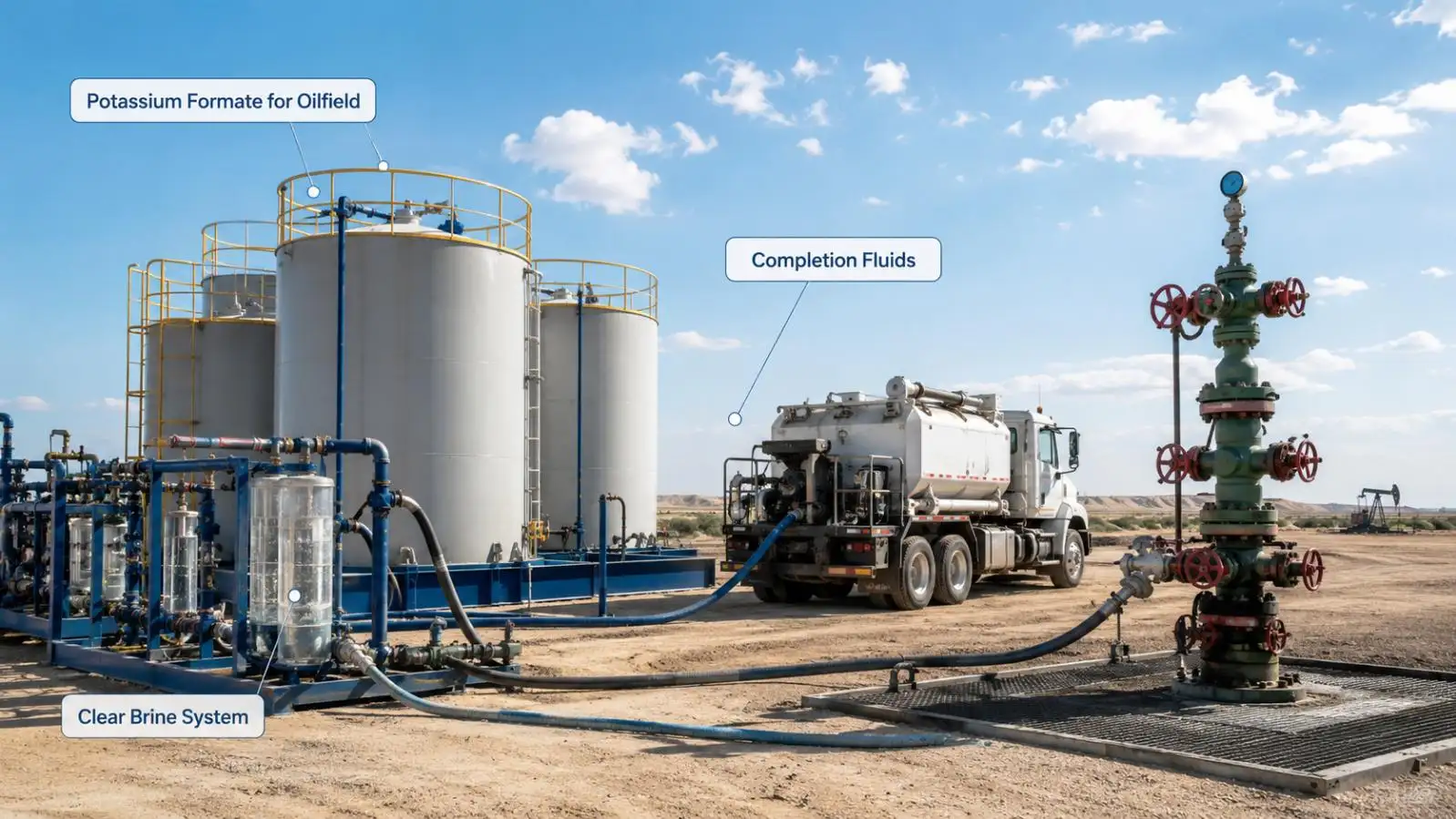
Potassium Formate for Oilfield Completion Fluids: Density, Compatibility and Formation Protection
2026-08-19
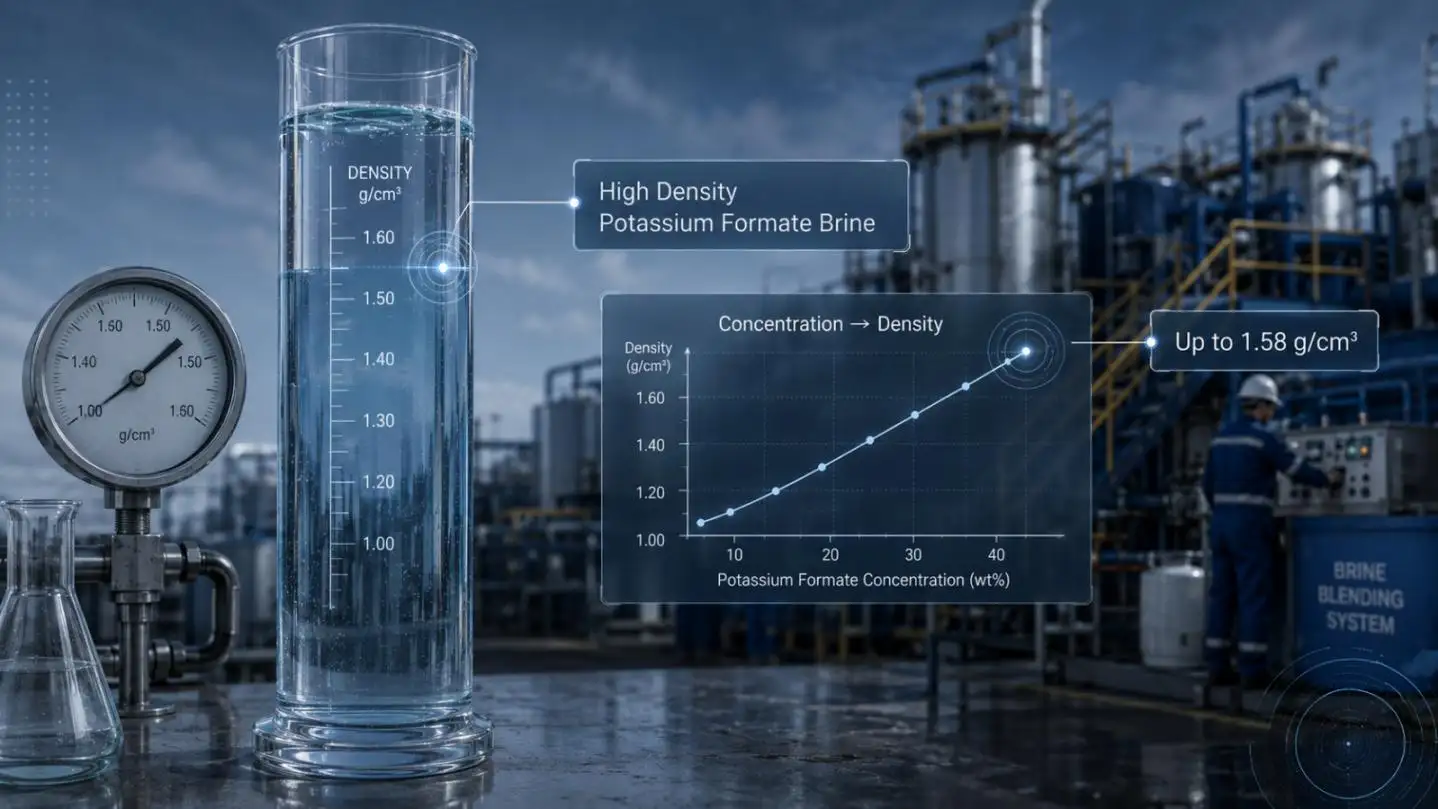
High Density Potassium Formate Brine: Density Range, Properties and Oilfield Applications
2026-08-18
A dependable Potassium Formate Factory should offer a steady manufacturing ability. Industrial buyers also require a consistent quality, controlled impurities, complete technical documentation, flexible packaging and reliable international delivery.
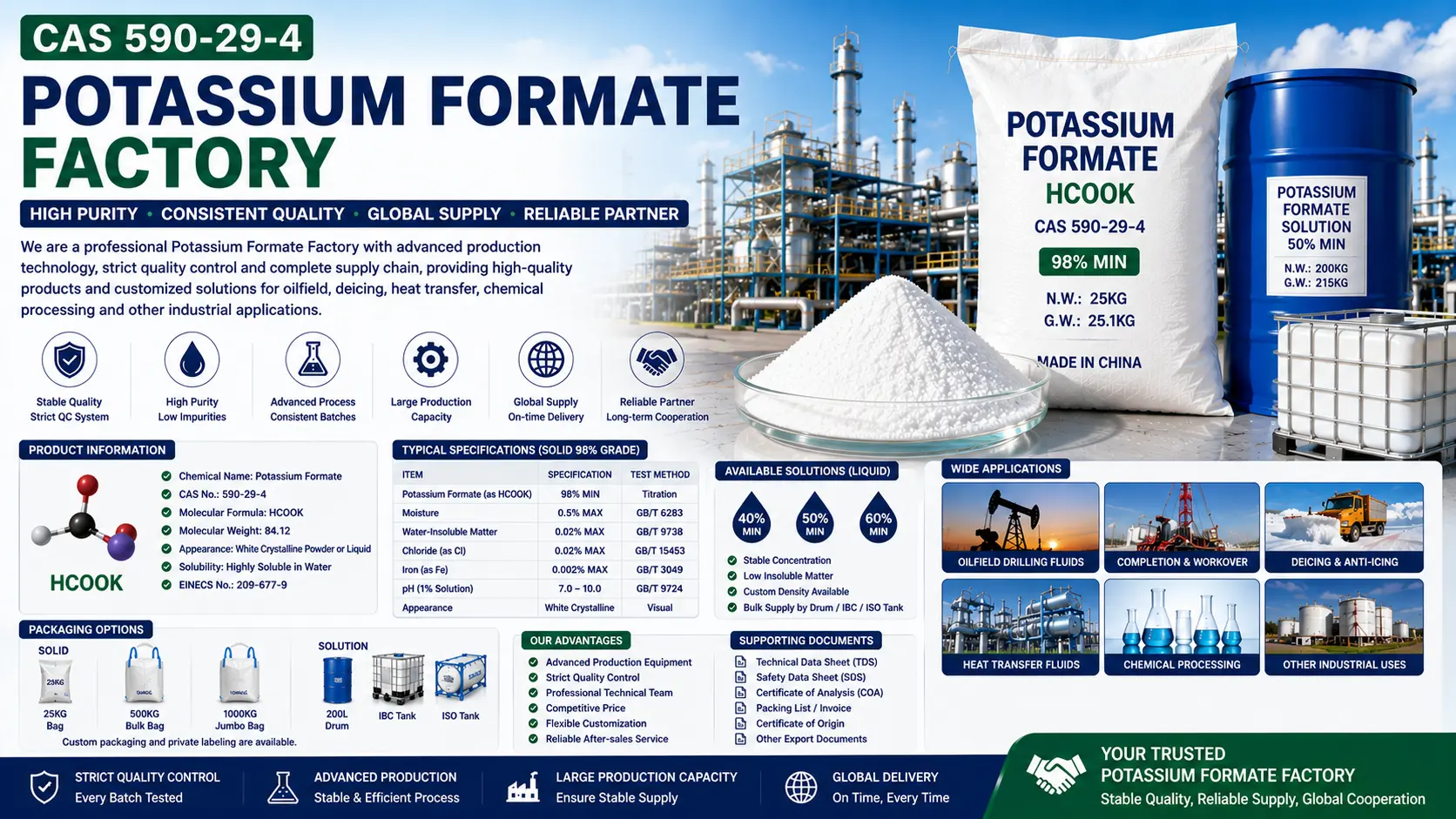
Potassium formate is used in oilfield drilling and completion fluids, de-icers, heat transfer systems, refrigeration and chemical processing. These industries need different technical requirements and the buyer needs to be careful in choosing the factory of the raw materials, production process, filtration system, laboratory testing, packaging ability and batch traceability.
What Is Potassium Formate?
Potassium formate is the potassium salt of formic acid. Its chemical formula is HCOOK, and its CAS number is 590-29-4. It may be supplied as a white crystalline solid or as a clear aqueous solution.
Typical product information includes:
- Chemical name: Potassium Formate
- CAS number: 590-29-4
- Molecular formula: HCOOK
- Molecular weight: approximately 84.12
- Appearance: White crystalline solid or clear liquid
- Solubility: Highly soluble in water
- EINECS number: 209-677-9
Commercial potassium formate may be supplied as solid material or in different solution concentrations. The most suitable form depends on the customer’s storage system, equipment, transportation method, and application requirements.
Why Factory Selection Matters
Products from different factories may carry similar concentration or purity claims but perform differently in actual industrial use.
These differences may result from:
- Raw material quality
- Production equipment
- Reaction control
- Filtration efficiency
- Concentration accuracy
- Chloride content
- Iron content
- Insoluble matter
- Storage conditions
- Packaging quality
- Laboratory testing
- Batch consistency
A professional factory should control both the active potassium formate content and the impurity profile.
Main Applications of Potassium Formate
Oilfield Drilling Fluids
Potassium formate is widely used in selected drilling-fluid systems because it can support high-density, low-solids brines.
Potential functions include:
- Increasing fluid density
- Supporting shale inhibition
- Reducing suspended solids
- Improving thermal stability
- Supporting fluid clarity
- Improving filtration
- Reducing formation damage
- Supporting compatibility with selected polymers
The final fluid system should be tested under expected well temperature, pressure, contamination, and formation conditions.
Completion and Workover Fluids
Completion and workover operations often require clear brines that provide hydrostatic pressure without introducing excessive suspended solids.
Potassium formate may provide:
- Adjustable density
- High water solubility
- Clean brine characteristics
- Low suspended-solids content
- Good thermal stability
- Compatibility with selected additives
Before field use, the complete fluid should be tested for corrosion, scale tendency, filtration, elastomer compatibility, and formation compatibility.
Deicing and Anti-Icing
Potassium formate may be incorporated into deicing and anti-icing formulations for:
- Airport runways
- Roads and highways
- Bridges
- Railway facilities
- Logistics terminals
- Industrial sites
Its good water solubility and low-temperature performance make it suitable for selected liquid deicing systems.
The final formulation should be evaluated for:
- Freezing point
- Ice-melting capacity
- Corrosion
- Concrete compatibility
- Metal compatibility
- Surface residue
- Environmental performance
- Storage stability
Heat-Transfer Fluids
Potassium formate can be used in selected secondary refrigeration and heat-transfer systems.
Potential applications include:
- Cold-storage warehouses
- Industrial cooling
- Food-processing facilities
- Ice rinks
- Refrigerated logistics
- Process temperature control
The complete fluid should be tested for viscosity, thermal conductivity, corrosion, pump compatibility, crystallization temperature, and long-term stability.
Chemical Processing
Potassium formate may also be used as a raw material or process component in chemical manufacturing.
Chemical processors require stable purity and impurity control because product variation may influence reaction efficiency, filtration, equipment cleanliness, and final quality.
Solid and Liquid Production
A capable Potassium Formate Factory may produce both solid and liquid products.
Solid Potassium Formate
Solid potassium formate is usually supplied as white crystals, powder, or granules.
Its advantages may include:
- High active-content transportation
- Lower water-shipping cost
- Flexible on-site concentration
- Convenient storage
- Suitability for dry raw-material handling
Customers using solid potassium formate need suitable dissolution and filtration equipment.
Liquid Potassium Formate
Liquid potassium formate is supplied as a ready-to-use aqueous solution.
Its advantages may include:
- Easier pumping
- Faster dosing
- No on-site dissolution
- Stable concentration
- Compatibility with automated feeding systems
Buyers should confirm the concentration, density, crystallization temperature, and recommended storage range.
Typical Production Process
The exact production method depends on the factory, equipment, product form, and target specification.
A general production route may include:
- Raw material inspection
- Controlled reaction
- Concentration adjustment
- Impurity removal
- Filtration
- Crystallization or solution preparation
- Drying for solid products
- Final concentration testing
- Finished-product inspection
- Packaging and batch release
The process should be managed by trained production and quality-control personnel.
Raw Material Control
Stable finished-product quality begins with raw material inspection.
A professional factory should evaluate incoming materials for:
- Purity
- Moisture
- Metal impurities
- Chloride
- Appearance
- Concentration
- Batch identity
- Supplier consistency
Poor raw materials may increase impurity levels and reduce final-product consistency.
Reaction and Concentration Control
Accurate reaction control helps maintain product purity and reduce unwanted by-products.
Important production variables may include:
- Raw material ratio
- Temperature
- Reaction time
- Mixing efficiency
- pH
- Water content
- Concentration
- Filtration sequence
For liquid potassium formate, concentration and density should be carefully controlled.
For solid products, crystallization and drying conditions may affect moisture, particle size, flowability, and storage stability.
Filtration and Impurity Removal
Filtration is especially important for oilfield, heat-transfer, and clear-brine applications.
An effective filtration system can help reduce:
- Water-insoluble matter
- Suspended solids
- Color impurities
- Tank deposits
- Pipeline contamination
- Filter blockage
Factories producing high-quality potassium formate should maintain filtration equipment and document filter performance.
Important Quality Specifications
A professional factory should define measurable technical limits.
Important quality indicators may include:
- Potassium formate content
- Solution concentration
- Density
- Chloride content
- Iron content
- Water-insoluble matter
- pH value
- Appearance
- Color
- Crystallization temperature
- Moisture for solid products
Chloride Control
Chloride is an important parameter in oilfield, deicing, and heat-transfer applications because it may influence corrosion.
Excessive chloride can contribute to:
- Increased corrosion
- Higher inhibitor demand
- Reduced equipment life
- Compatibility problems
- Maintenance costs
Buyers should define an acceptable chloride limit based on their system materials and operating conditions.
Iron Control
Iron may influence:
- Solution color
- Brine clarity
- Chemical stability
- Corrosion behavior
- Scale formation
- Final formulation appearance
Low iron content may be especially important for clear completion fluids and sensitive heat-transfer systems.
Insoluble Matter
Low insoluble matter helps reduce:
- Filter blockage
- Nozzle obstruction
- Tank deposits
- Pipeline contamination
- Equipment wear
- Formation damage
A factory should provide batch-specific test results for insoluble matter.
Density and Concentration Testing
Liquid potassium formate should be tested for both concentration and density.
The factory should clearly state:
- Concentration by weight
- Density
- Test temperature
- Testing method
- Crystallization temperature
- Recommended storage temperature
Density changes with temperature, so the measurement conditions must be consistent.
Laboratory Quality Control
A professional factory should maintain an equipped quality-control laboratory.
Common tests may include:
- Active content
- Density
- Chloride
- Iron
- Insoluble matter
- pH
- Moisture
- Appearance
- Color
- Crystallization temperature
Laboratory instruments should be calibrated and testing procedures documented.
Batch Traceability
Each shipment should be traceable by:
- Batch number
- Production date
- Raw material lot
- Test results
- Packaging date
- Retained sample
- Warehouse record
- Shipment information
Traceability allows the factory to investigate quality issues and implement corrective action.
Packaging Capability
A Potassium Formate Factory should provide packaging suitable for the product form and transportation method.
Solid Packaging
Common options include:
- 25 kg moisture-resistant bags
- 500 kg bulk bags
- 1,000 kg jumbo bags
- Palletized export packaging
- Customized printed bags
Liquid Packaging
Common options include:
- 200-liter drums
- IBC tanks
- ISO tanks
- Road tankers
- Customized bulk delivery
All packaging should be compatible with the product and secure during storage and transportation.
Packaging Inspection
Before release, the factory should check:
- Container cleanliness
- Bag integrity
- Drum or IBC sealing
- Label accuracy
- Net weight
- Batch number
- Pallet condition
- Wrapping quality
- Leakage risk
Weak packaging may cause contamination, moisture absorption, product loss, and customer complaints.
Production Capacity and Supply Stability
Industrial buyers should confirm whether the factory can support regular and urgent demand.
Important questions include:
- What is the monthly capacity?
- What inventory is normally available?
- What is the standard lead time?
- Are both solid and liquid products produced?
- Can the factory support multiple-container orders?
- Is emergency production available?
- Are backup raw material sources maintained?
- Can scheduled deliveries be arranged?
Stable capacity is especially important for oilfield and seasonal deicing projects.
How to Audit a Potassium Formate Factory
Review Production Equipment
The factory should have suitable reaction, concentration, filtration, drying, storage, and packaging equipment.
Inspect the Laboratory
Check whether the factory can test all important product parameters.
Review Quality Records
Request examples of:
- Raw material inspection records
- Production records
- Batch certificates
- Calibration records
- Complaint reports
- Corrective actions
- Retained sample logs
Compare Multiple COAs
Reviewing certificates from several batches helps determine whether the factory maintains consistent quality.
Test a Representative Sample
A sample should be evaluated for:
- Potassium formate content
- Density
- Chloride
- Iron
- Insoluble matter
- pH
- Color
- Application performance
Verify Export Experience
The factory should understand international packaging, documentation, container loading, customs requirements, and freight coordination.
Required Documents
A professional factory should be able to provide:
- Technical data sheet
- Safety data sheet
- Certificate of analysis
- Commercial invoice
- Packing list
- Certificate of origin
- Bill of lading
- Customs declaration documents
- Inspection reports when required
All documents should match the actual product form, concentration, packaging, and batch.
Storage and Handling
Solid potassium formate should be stored in a cool, dry, and ventilated warehouse.
It should be protected from:
- Rain
- Humidity
- Strong acids
- Contamination
- Torn packaging
- Direct water contact
- Improper stacking
Liquid potassium formate should be stored in compatible tanks and maintained above its recommended crystallization temperature.
Workers should follow the safety data sheet and use appropriate personal protective equipment.
Comparing Factory Quotations
Buyers should compare quotations using the same:
- Product form
- Concentration or purity
- Chloride limit
- Iron limit
- Insoluble-matter limit
- Packaging
- Quantity
- Incoterm
- Destination
- Documentation
- Delivery schedule
A low price may not provide better value if the factory offers weaker impurity control, lower concentration, poor packaging, or unreliable delivery.
Total Procurement Cost
The total cost may include:
- Product price
- Active-content value
- Packaging
- Inland transportation
- Freight
- Port charges
- Customs clearance
- Import duties
- Storage
- Dissolution or pumping
- Filtration
- Corrosion control
- Inspection
- Operational risk
Consistent factory quality can reduce mixing problems, corrosion, filtration expenses, and production interruptions.
Benefits of Direct Factory Cooperation
Working directly with a Potassium Formate Factory may provide:
- More stable specifications
- Better pricing transparency
- Faster technical communication
- Customized concentrations
- Flexible packaging
- Improved production planning
- Better batch traceability
- Faster complaint resolution
- Reliable repeat supply
Direct cooperation can be especially valuable for large-volume and long-term buyers.
Questions to Ask Before Ordering
Buyers should confirm:
- Is the product solid or liquid?
- Which concentrations are available?
- What are the chloride and iron limits?
- What filtration system is used?
- What is the crystallization temperature?
- Can recent batch COAs be provided?
- Is a sample available?
- What is the monthly production capacity?
- What packaging options are available?
- What is the normal lead time?
- Can private labeling be supported?
- Which export documents are included?
Conclusion
Choosing the right Potassium Formate Factory requires a complete evaluation of raw material control, production equipment, filtration, laboratory testing, impurity limits, packaging, capacity, and delivery reliability.
Potassium formate is widely used in oilfield fluids, deicing systems, heat-transfer formulations, and chemical processing. Its performance depends on concentration, density, chloride, iron, insoluble matter, crystallization behavior, and batch consistency.
Before purchasing, buyers should review the technical specification, request batch-specific certificates, test a representative sample, and verify the factory’s production and quality-control capabilities.
A dependable factory should provide consistent quality, flexible solid and liquid products, complete documents, secure packaging, stable production capacity, technical support, and reliable global delivery.


Contact Us
Related Posts
What Purity Is Required for Sodium Formate for De-Icing Applications?
2026-08-21
Calcium Formate for Tile Adhesive: How It Improves Early Strength and Setting Time
2026-08-20
Potassium Formate for Oilfield Completion Fluids: Density, Compatibility and Formation Protection
2026-08-19
High Density Potassium Formate Brine: Density Range, Properties and Oilfield Applications
2026-08-18


