



Potassium Formate Supplier Guide: SDS, Specs, Pricing, and What to Look For
By vanchor
2026-07-11Related Posts

Custom Packaging Solutions from an Anhydrous Sodium Acetate Supplier in China
2026-09-23

Application Trends in Anhydrous Sodium Acetate for Special Chemical Manufacturing
2026-09-23

Anhydrous Sodium Acetate for Leather Tanning: Improve Dyeing Uniformity
2026-09-22

Formic Acid 85% for Textile Dyeing: Industrial Applications, Technical Benefits and Future Trends
2026-09-22
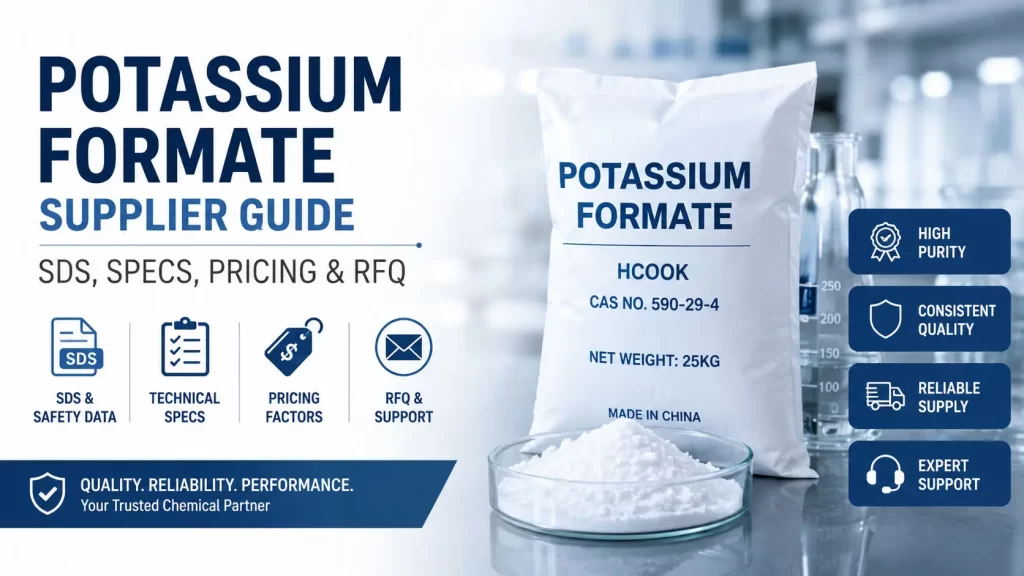
When sourcing potassium formate for industrial use, buyers usually need more than a product name and a quote form. They need confidence in the material, clarity on specifications, access to SDS documentation, and a supplier that can reliably meet application requirements.
This guide covers the basics of potassium formate, the key specs buyers look for, what influences pricing, and how to evaluate suppliers before requesting a quote.
What Is Potassium Formate?
Potassium formate is a chemical compound used in a range of industrial applications where performance, handling, and formulation consistency matter. Depending on the industry, buyers may look for potassium formate in solution form, specific purity levels, or application-ready formulations.
Because purchasing requirements vary by use case, the supplier’s documentation and technical support are often just as important as the product itself.
Why Buyers Search for SDS, Specs, and Pricing
Most searches around potassium formate fall into three practical categories:
1. SDS access
Buyers, procurement teams, lab managers, and compliance staff often need the Safety Data Sheet early in the evaluation process. Easy SDS access helps speed up internal review and reduces friction before purchase.
2. Product specifications
Technical teams want to confirm whether the material matches their process requirements. They may be looking for concentration, purity, appearance, density, packaging details, storage guidance, or other product-specific data.
3. Pricing and RFQ
Pricing is rarely one-size-fits-all. Buyers often need a custom quote based on order size, packaging, shipping destination, and product grade. That is why many suppliers use an RFQ process instead of publishing a flat rate.
What to Look for in a Potassium Formate Specification Sheet
A strong specification sheet should help a buyer determine fit quickly. While exact data points vary by product and application, most buyers expect to see:
- Product name and grade
- Concentration or purity
- Appearance
- Density or physical properties
- Packaging options
- Recommended storage conditions
- Typical applications
- Handling and safety references
- Quality or lot documentation, when available
A supplier that presents this information clearly usually makes the buying process easier for engineering, purchasing, and compliance teams alike.
What Affects Potassium Formate Pricing?
Pricing can vary significantly depending on the details of the order. Common factors include:
Order volume
Larger orders often receive better per-unit pricing. Small trial orders or rush purchases may cost more.
Grade or formulation
Application-specific requirements can affect price, especially when tighter quality standards or custom formulations are involved.
Packaging format
Bulk shipments, drums, totes, and smaller containers can each change the landed cost.
Shipping and destination
Freight, handling requirements, and distance to delivery location can materially impact the final quote.
Supply continuity
Some buyers are not just comparing today’s price. They are evaluating whether a supplier can support repeat orders and stable lead times over the long term.
How to Evaluate a Potassium Formate Supplier
Not every supplier offers the same level of documentation, support, or reliability. Before requesting a quote, it helps to evaluate suppliers using a few practical questions.
Is the SDS easy to access?
If a supplier makes safety documentation hard to find, that can slow internal approval and create unnecessary back-and-forth.
Are the specs clear and complete?
A thin product page with vague claims forces buyers to ask basic questions that should already be answered.
Do they understand the application?
A strong supplier should be able to discuss how the product is used, what grades are available, and what considerations may affect performance.
Can they support your order size?
Some suppliers are better suited for bulk industrial orders, while others are set up for smaller quantities or regional distribution.
Is the quote process straightforward?
A good RFQ process should be simple, fast, and specific. Buyers should be able to request the right quantity, packaging, and delivery details without friction.
What a Good Potassium Formate Product Page Should Include
If you are building or improving a product page for potassium formate, these elements typically help convert more qualified visitors:
- Clear overview of the product
- SDS and technical data access
- Application summaries
- Packaging and supply details
- Quote request form
- Contact information for technical questions
- Trust signals such as quality controls, experience, or service capabilities
The goal is to reduce uncertainty. Buyers should be able to understand what the product is, whether it fits their needs, and how to take the next step.
Questions Buyers Often Ask
Can I download the SDS before requesting a quote?
Many buyers prefer to review the SDS first so they can clear internal safety and compliance checks.
Are custom packaging options available?
This depends on the supplier, but packaging flexibility is often an important part of the purchasing decision.
Is pricing listed publicly?
Some suppliers publish starting prices, but many require an RFQ because pricing depends on volume, packaging, and shipping.
What should I send in an RFQ?
It helps to include quantity, packaging preference, delivery location, intended application, and any required spec details.
Final Thoughts
When buyers search for a potassium formate supplier, they are usually trying to reduce risk and move faster. They want a supplier that offers clear specs, accessible SDS documentation, responsive quoting, and confidence that the material will meet operational requirements.
If your company sells potassium formate, the best-performing content is rarely just a generic product description. It is a page or article that answers real buying questions, removes uncertainty, and makes the next step obvious.
A strong content strategy combines technical clarity with commercial intent. That means giving visitors the information they need while making it easy to request pricing, review documentation, and speak with your team.
If you are sourcing potassium formate, start with the basics: verify the specs, review the SDS, confirm supply capability, and request a quote that reflects your exact needs.


Contact Us
In This Article
Related Posts
Custom Packaging Solutions from an Anhydrous Sodium Acetate Supplier in China
2026-09-23
Application Trends in Anhydrous Sodium Acetate for Special Chemical Manufacturing
2026-09-23
Anhydrous Sodium Acetate for Leather Tanning: Improve Dyeing Uniformity
2026-09-22
Formic Acid 85% for Textile Dyeing: Industrial Applications, Technical Benefits and Future Trends
2026-09-22


