



Sodium Acetate Trihydrate Manufacturer: Quality, Applications, and Bulk Supply
By vanchor
2026-07-11Related Posts
What Purity Is Required for Sodium Formate for De-Icing Applications?
2026-08-21
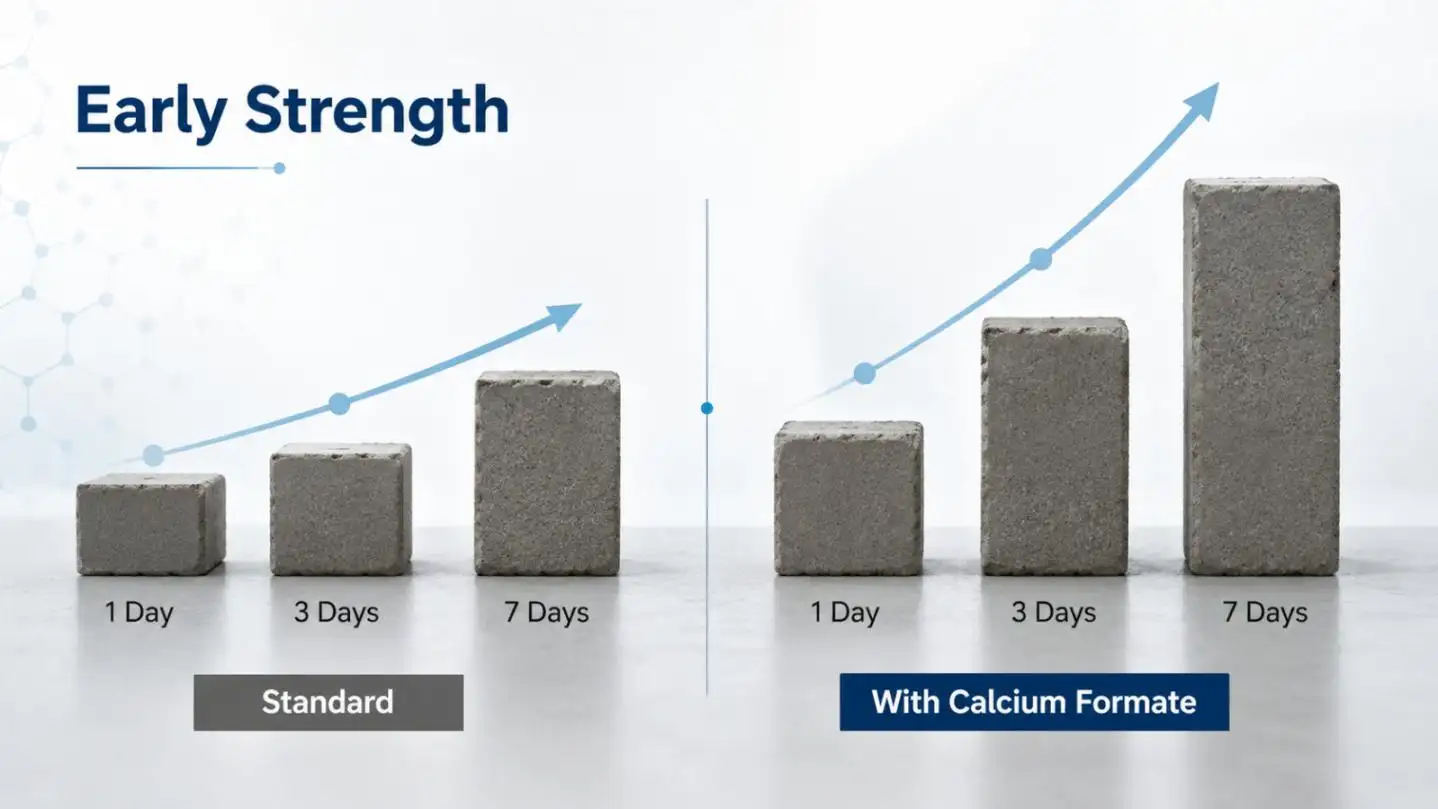
Calcium Formate for Tile Adhesive: How It Improves Early Strength and Setting Time
2026-08-20
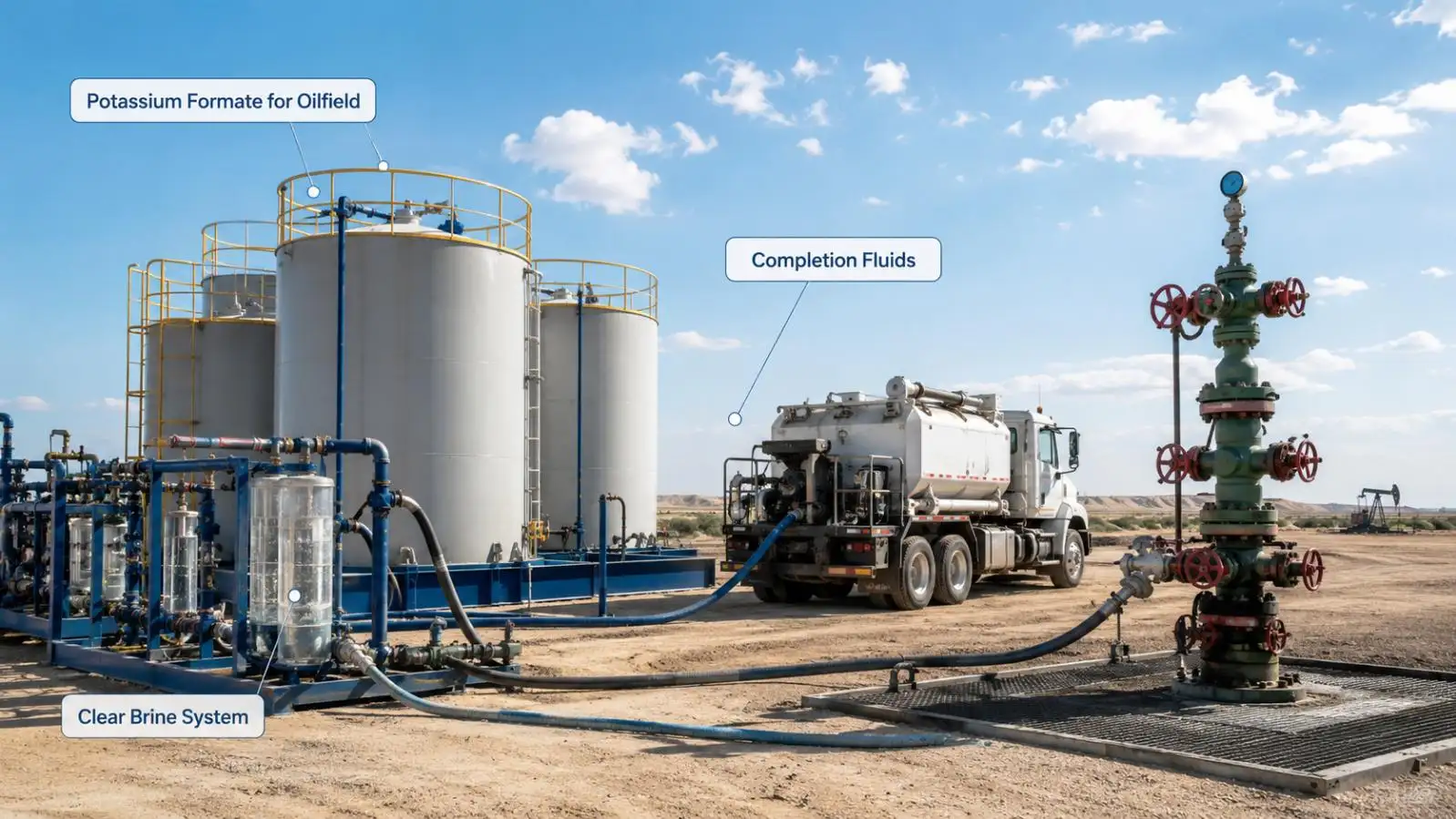
Potassium Formate for Oilfield Completion Fluids: Density, Compatibility and Formation Protection
2026-08-19
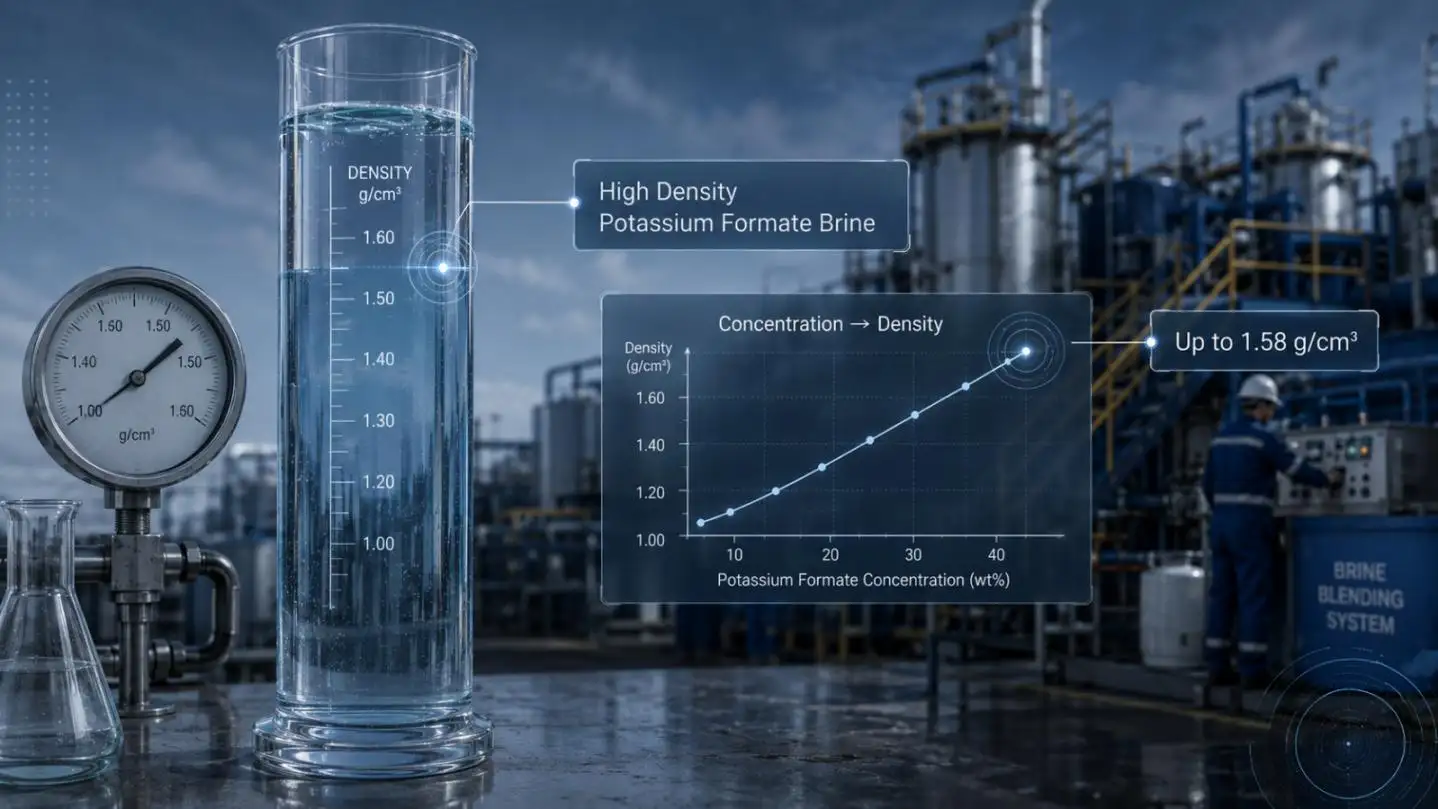
High Density Potassium Formate Brine: Density Range, Properties and Oilfield Applications
2026-08-18
Selecting a reliable Sodium Acetate Trihydrate Manufacturer requires more than comparing prices. International buyers need to evaluate product specifications, production consistency, impurity control, packaging, documentation, technical support, and export capabilities before placing a bulk order.
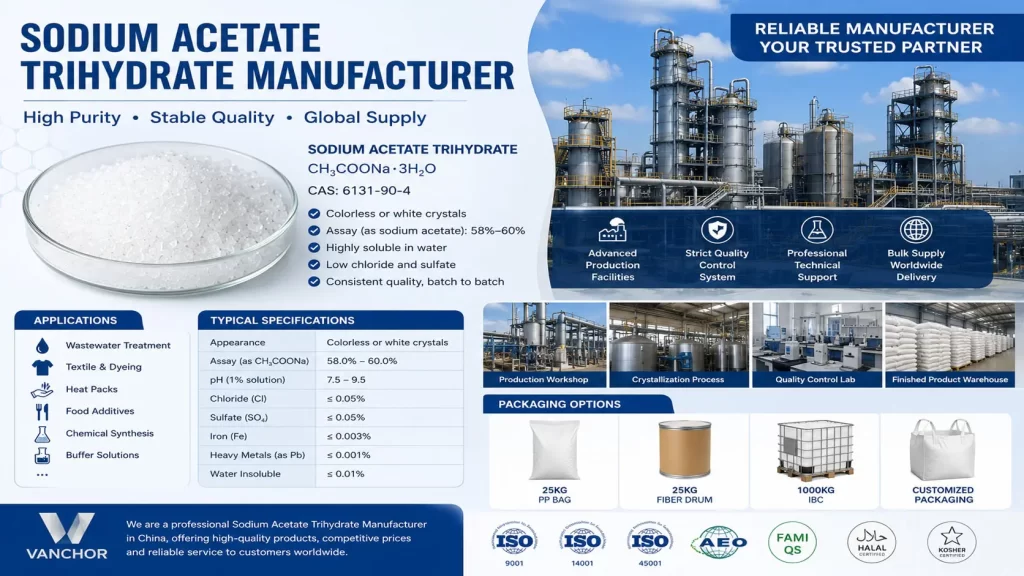
Sodium acetate trihydrate is widely used in wastewater treatment, textile processing, reusable heat packs, food-related formulations, chemical manufacturing, and laboratory applications. Although products from different manufacturers may carry the same chemical name, their purity, crystal size, moisture stability, impurity profile, and batch consistency can vary.
This guide explains what buyers should consider when evaluating a Sodium Acetate Trihydrate Manufacturer and how manufacturing quality affects downstream performance.
What Is Sodium Acetate Trihydrate?
Sodium acetate trihydrate is the hydrated form of sodium acetate. Its chemical formula is:
CH₃COONa·3H₂O
Its CAS number is 6131-90-4, and its molecular weight is approximately 136.08 g/mol.
The material generally appears as colorless or white crystals. Because it contains three molecules of water of crystallization, sodium acetate trihydrate has different physical and thermal properties from anhydrous sodium acetate.
Once dissolved in water, it separates into sodium and acetate ions. This makes it useful in processes requiring a readily available acetate source, pH control, buffering, biological carbon supplementation, or controlled crystallization.
Why Manufacturer Selection Matters
Sodium acetate trihydrate may appear to be a standardized commodity, but production quality can affect:
- Product purity
- Crystal appearance
- Dissolution speed
- Insoluble matter
- Chloride and sulfate levels
- Iron and heavy-metal content
- Batch-to-batch consistency
- Packaging stability
- Storage performance
- Suitability for regulated applications
A dependable Sodium Acetate Trihydrate Manufacturer should be able to explain how raw materials are selected, how crystallization is controlled, how impurities are monitored, and how each production batch is tested before shipment.
For industrial buyers, stable quality is especially important because variations can influence pH adjustment, formulation concentration, thermal cycling, color, filtration, and biological treatment performance.
Typical Sodium Acetate Trihydrate Specifications
Commercial specifications vary according to grade and intended application. A typical technical specification may include:
| Parameter | Typical Requirement |
|---|---|
| Product name | Sodium acetate trihydrate |
| Chemical formula | CH₃COONa·3H₂O |
| CAS number | 6131-90-4 |
| Appearance | Colorless or white crystals |
| Assay | Commonly expressed as 58%–60% sodium acetate |
| pH | Specified in an aqueous solution |
| Insoluble matter | Controlled according to grade |
| Chloride | Maximum limit specified |
| Sulfate | Maximum limit specified |
| Iron | Maximum limit specified |
| Heavy metals | Controlled for selected grades |
| Packaging | Bags, drums, or customized packaging |
The assay of sodium acetate trihydrate is often expressed differently from anhydrous sodium acetate because crystal water accounts for part of the molecular weight.
Buyers should therefore confirm whether the quoted percentage refers to:
- Sodium acetate content
- Sodium acetate trihydrate purity
- Dry-basis assay
- Active acetate content
- A specific national or customer standard
The test method should also be stated clearly so that results from different suppliers can be compared accurately.
Industrial and Regulated Grades
A Sodium Acetate Trihydrate Manufacturer may offer different product grades for different markets.
Industrial Grade
Industrial-grade sodium acetate trihydrate may be used in:
- Wastewater treatment
- Textile dyeing
- Chemical synthesis
- Leather processing
- Industrial buffering
- Construction-related formulations
- General manufacturing
The main purchasing priorities are usually assay, solubility, impurity limits, consistency, and delivered cost.
Food Grade
Food-grade material must comply with the relevant food-additive requirements of the destination market.
Buyers should verify:
- Applicable food standard
- Assay
- Acidity or alkalinity
- Heavy metals
- Lead limits
- Manufacturing controls
- Traceability
- Allergen statements
- Certificate of analysis
- Regulatory documentation
A product should not be treated as food grade simply because sodium acetate can be used in food applications. The actual production system, specification, documentation, and compliance status must support the intended use.
Reagent or High-Purity Grade
Laboratory and technical formulations may require tighter control of trace impurities, appearance, pH, or analytical performance.
These grades are generally purchased in smaller packaging and should be evaluated separately from standard bulk industrial products.
Sodium Acetate Trihydrate for Wastewater Treatment
Sodium acetate trihydrate can be used as an external carbon source in biological wastewater treatment systems.
Wastewater may contain insufficient readily biodegradable carbon to support effective denitrification. Sodium acetate provides a soluble acetate source that microorganisms can use in selected biological processes.
When purchasing material for wastewater treatment, buyers should evaluate:
- Active sodium acetate content
- Dissolution speed
- Insoluble matter
- Chloride and sulfate content
- Consistency between batches
- Storage conditions
- Cost per unit of active carbon
- Compatibility with dosing equipment
The appropriate dosage depends on wastewater composition, nitrate loading, treatment objectives, microbial activity, temperature, retention time, and plant operating conditions.
A Sodium Acetate Trihydrate Manufacturer should be able to provide a representative certificate of analysis and support customers in comparing trihydrate with anhydrous sodium acetate or liquid carbon-source alternatives.
Applications in Textile Processing
Sodium acetate trihydrate may be used in textile dyeing and finishing processes to support pH adjustment and buffering.
It can be used in selected formulations involving:
- Acetic acid buffering
- Dye-bath pH control
- Fiber processing
- Printing and finishing
- Neutralization steps
Textile customers may require additional control over:
- Iron content
- Insoluble matter
- Color
- Dissolution
- Crystal size
- Batch consistency
Trace metals and insoluble material can affect shade consistency, equipment cleanliness, and finished-product appearance. For this reason, textile buyers should compare actual quality data rather than relying only on the product name.
Reusable Heat Packs and Thermal Storage
Sodium acetate trihydrate is widely recognized for its use in reusable heat packs and low-temperature thermal energy storage.
The material can form a supersaturated liquid and release heat during controlled crystallization. This behavior makes it suitable for:
- Reusable hand warmers
- Heating pads
- Bottle warmers
- Portable thermal products
- Phase-change material systems
Manufacturers serving this market need to control more than basic assay.
Important factors may include:
- Crystal purity
- Nucleation behavior
- Phase-change consistency
- Thermal cycling stability
- Insoluble particles
- Color
- Compatibility with additives
- Long-term storage behavior
A conventional industrial grade may not automatically provide the cycling performance required for a finished thermal-storage product. Buyers should conduct application testing before commercial production.
Manufacturing and Quality-Control Process
A capable Sodium Acetate Trihydrate Manufacturer should maintain quality controls throughout production.
A typical process may involve:
- Raw-material inspection
- Reaction or neutralization control
- Solution purification
- Concentration
- Controlled crystallization
- Solid-liquid separation
- Crystal drying or surface-moisture control
- Screening
- Finished-product testing
- Packaging and batch release
Important manufacturing controls include temperature, concentration, pH, crystallization rate, filtration, drying conditions, and contamination prevention.
Quality-control laboratories should test both incoming materials and finished batches. Depending on the grade, testing may include:
- Assay
- pH
- Appearance
- Insoluble matter
- Chloride
- Sulfate
- Iron
- Heavy metals
- Moisture-related parameters
- Particle size
- Solution clarity
Retained samples should be stored for traceability and complaint investigation.
How to Verify a Manufacturer
Before selecting a Sodium Acetate Trihydrate Manufacturer, buyers should request evidence of manufacturing and supply capabilities.
Useful verification documents include:
- Business license
- Factory address
- Production-flow information
- Manufacturing photographs
- Quality-management certificates
- Product specification
- Technical data sheet
- Safety data sheet
- Recent certificates of analysis
- Packaging photographs
- Export documentation samples
- Production capacity information
- Customer references where available
A video audit, onsite factory audit, or third-party inspection can provide additional assurance.
Buyers should confirm whether the quoted company is the actual manufacturer, an affiliated export company, an authorized distributor, or an independent trader.
Packaging Options
Packaging should protect sodium acetate trihydrate from contamination, moisture exchange, physical damage, and unsuitable storage conditions.
Common packaging options may include:
- 25 kg lined woven bags
- Paper-plastic composite bags
- PE inner bags
- Fiber drums
- Plastic drums
- Jumbo bags
- Customized palletized packaging
Packaging selection depends on:
- Order quantity
- Destination climate
- Container-loading method
- Customer unloading equipment
- Required shelf life
- Food or industrial application
- Labeling requirements
- Moisture protection
Buyers should confirm the net weight, inner-liner material, sealing method, pallet type, number of bags per pallet, and container-loading quantity before shipment.
Storage and Handling
Sodium acetate trihydrate should be stored in tightly closed packaging in a clean, dry, and ventilated warehouse.
Recommended precautions include:
- Protect packaging from water and humidity
- Avoid direct sunlight and excessive heat
- Keep bags off the floor
- Prevent contact with incompatible materials
- Use first-in, first-out inventory management
- Reseal partially used packaging
- Avoid contamination during handling
Storage recommendations may vary according to packaging and local environmental conditions. Buyers should follow the supplier’s safety data sheet and technical guidance.
Export Documents for Bulk Orders
A manufacturer experienced in international trade should be able to coordinate the required export documents.
A typical shipment may require:
- Commercial invoice
- Packing list
- Bill of lading
- Certificate of analysis
- Safety data sheet
- Technical data sheet
- Certificate of origin
- Insurance certificate
- Inspection report
- Regulatory declarations
- Food or other grade-related documents, where applicable
The chemical name, CAS number, batch number, quantity, packaging, net weight, and consignee details should remain consistent across all documents.
Document inconsistencies can delay customs clearance or cause disputes at destination.
Comparing Supplier Quotations
The lowest quoted price does not always represent the lowest procurement cost.
When comparing quotations, consider:
- Product assay
- Grade
- Impurity profile
- Packaging
- Palletization
- Minimum order quantity
- Lead time
- Payment terms
- Incoterm
- Freight
- Inspection cost
- Documentation
- Claim handling
- Cost per unit of active sodium acetate
Because sodium acetate trihydrate contains crystal water, it should not be compared directly with anhydrous sodium acetate only by price per metric ton.
The active content and required process dosage must also be considered.
Questions to Ask a Sodium Acetate Trihydrate Manufacturer
Before placing an order, ask:
- Are you the direct manufacturer?
- What grades do you produce?
- Which specification and test methods do you use?
- Can you provide recent batch COAs?
- What is your production capacity?
- How do you control chloride, sulfate, iron, and insoluble matter?
- What packaging options are available?
- Can you provide samples for testing?
- What is the normal production lead time?
- Which export documents can you provide?
- Can you support third-party inspection?
- How are quality claims handled?
Clear answers to these questions help buyers distinguish between a basic product seller and a reliable long-term manufacturing partner.
Choosing the Right Manufacturing Partner
A qualified Sodium Acetate Trihydrate Manufacturer should combine production capability with consistent quality, technical documentation, suitable packaging, and dependable export support.
The right supplier should help buyers:
- Confirm the correct grade
- Review product specifications
- Evaluate samples
- Compare trihydrate and anhydrous forms
- Select packaging
- Prepare shipment documents
- Coordinate inspections
- Maintain batch traceability
- Resolve technical questions
Vanchor supplies sodium acetate trihydrate for industrial and commercial applications. Customers can request product specifications, certificates of analysis, packaging information, samples, and bulk quotations according to their application and destination requirements.
Conclusion
Choosing a Sodium Acetate Trihydrate Manufacturer is a technical and supply-chain decision rather than a price-only comparison.
Buyers should evaluate product assay, impurity control, production consistency, application suitability, packaging, storage, documentation, and export experience.
A manufacturer with transparent quality systems and stable batch control can help reduce operational variation, customs delays, formulation problems, and long-term procurement risk.
Before confirming a bulk order, request a representative sample, review the specification and certificate of analysis, and test the material under actual operating conditions.


Contact Us
In This Article
Related Posts
What Purity Is Required for Sodium Formate for De-Icing Applications?
2026-08-21
Calcium Formate for Tile Adhesive: How It Improves Early Strength and Setting Time
2026-08-20
Potassium Formate for Oilfield Completion Fluids: Density, Compatibility and Formation Protection
2026-08-19
High Density Potassium Formate Brine: Density Range, Properties and Oilfield Applications
2026-08-18


