



Polyacrylamide for Enhanced Oil Recovery: Performance, Selection, and Application Guide
By vanchor
2026-07-21Related Posts
What Purity Is Required for Sodium Formate for De-Icing Applications?
2026-08-21
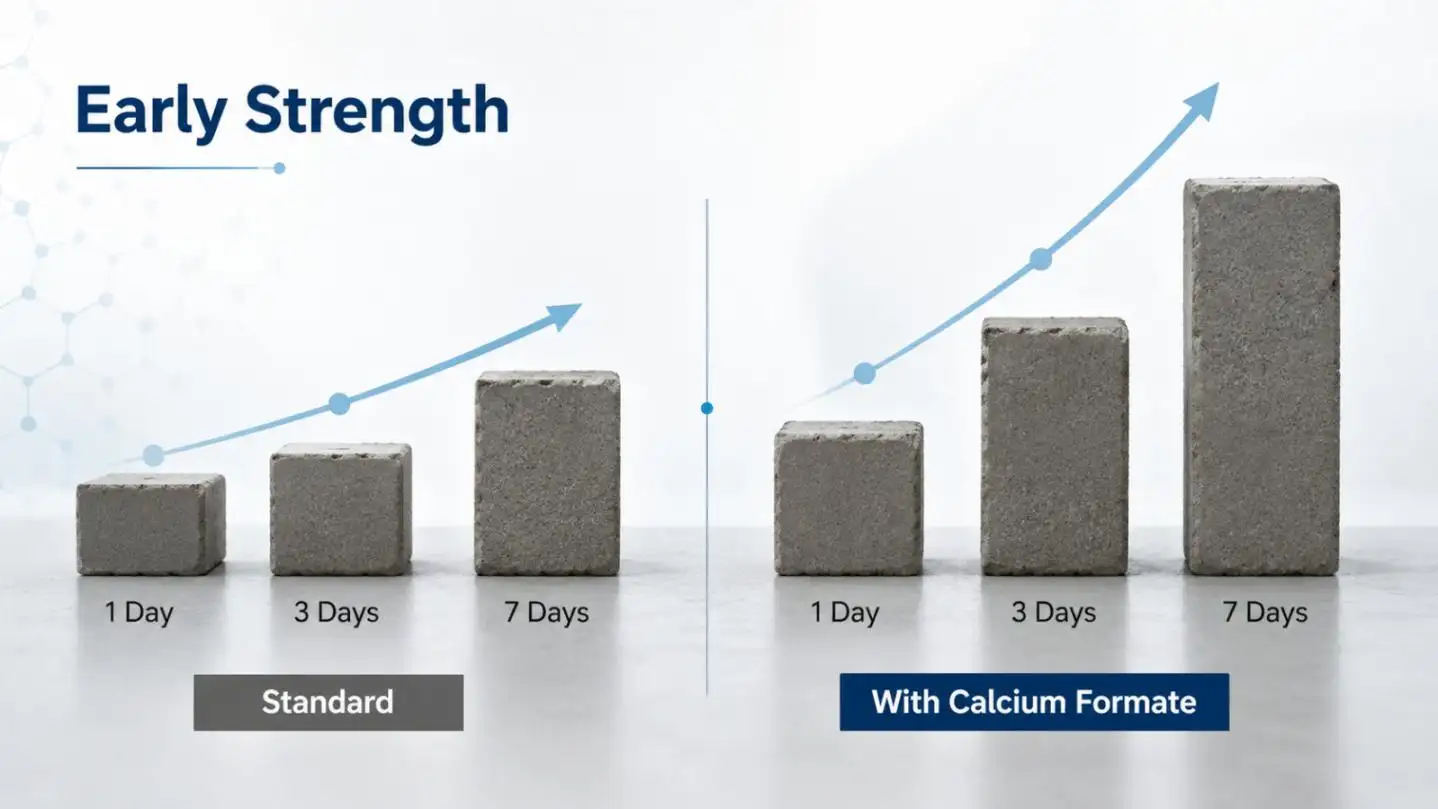
Calcium Formate for Tile Adhesive: How It Improves Early Strength and Setting Time
2026-08-20
Potassium Formate for Oilfield Completion Fluids: Density, Compatibility and Formation Protection
2026-08-19
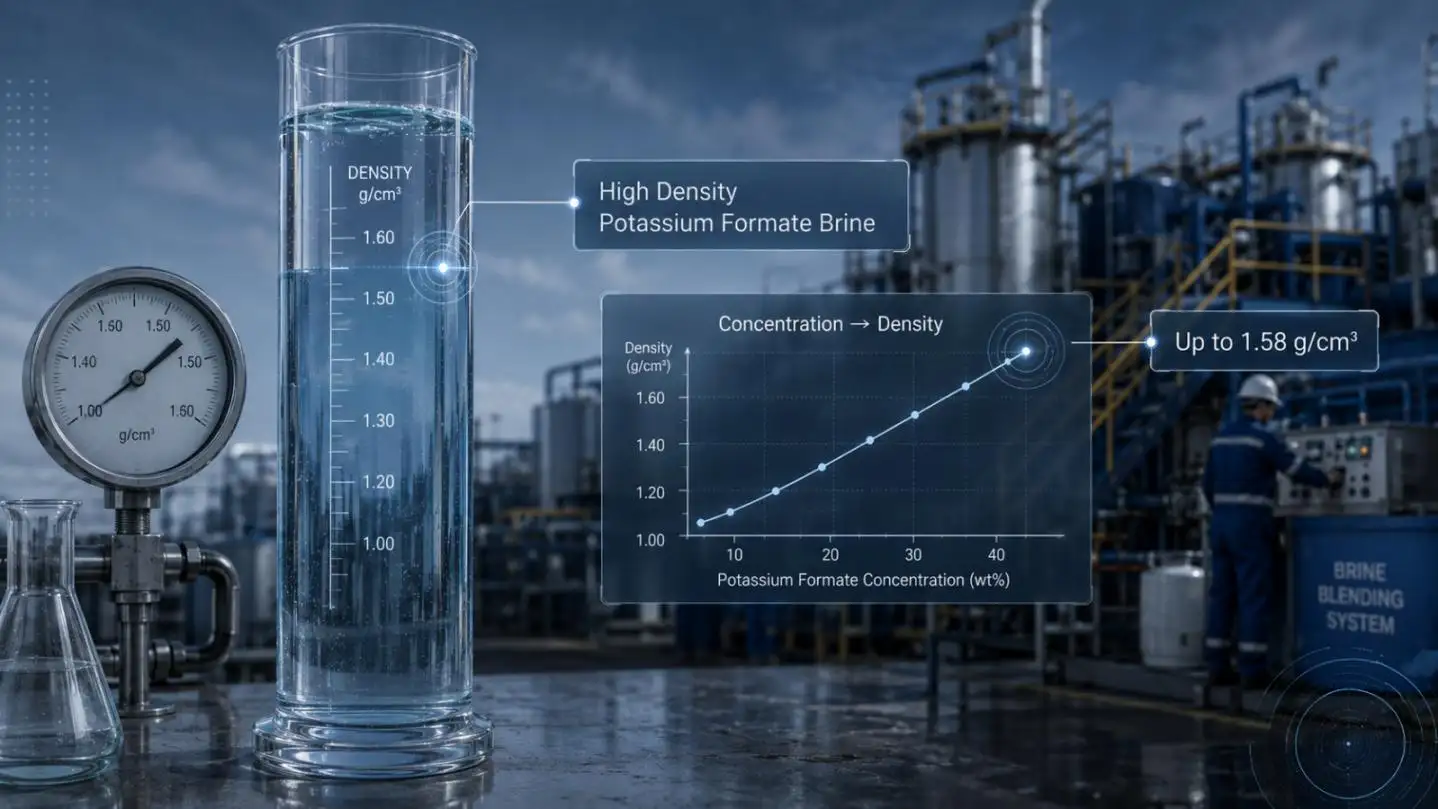
High Density Potassium Formate Brine: Density Range, Properties and Oilfield Applications
2026-08-18
PAM EOR is used extensively to increase injection-water viscosity, improve the mobility ratio between water and crude oil, decrease water channeling and increase the swept volume of an oil reservoir. Polymer flooding is effective in mobilizing extra oil and enhancing recovery from zones that are reached by water injection but remain unrecovered in traditional water flooded wells in mature oilfields where conventional water flooding is less effective.
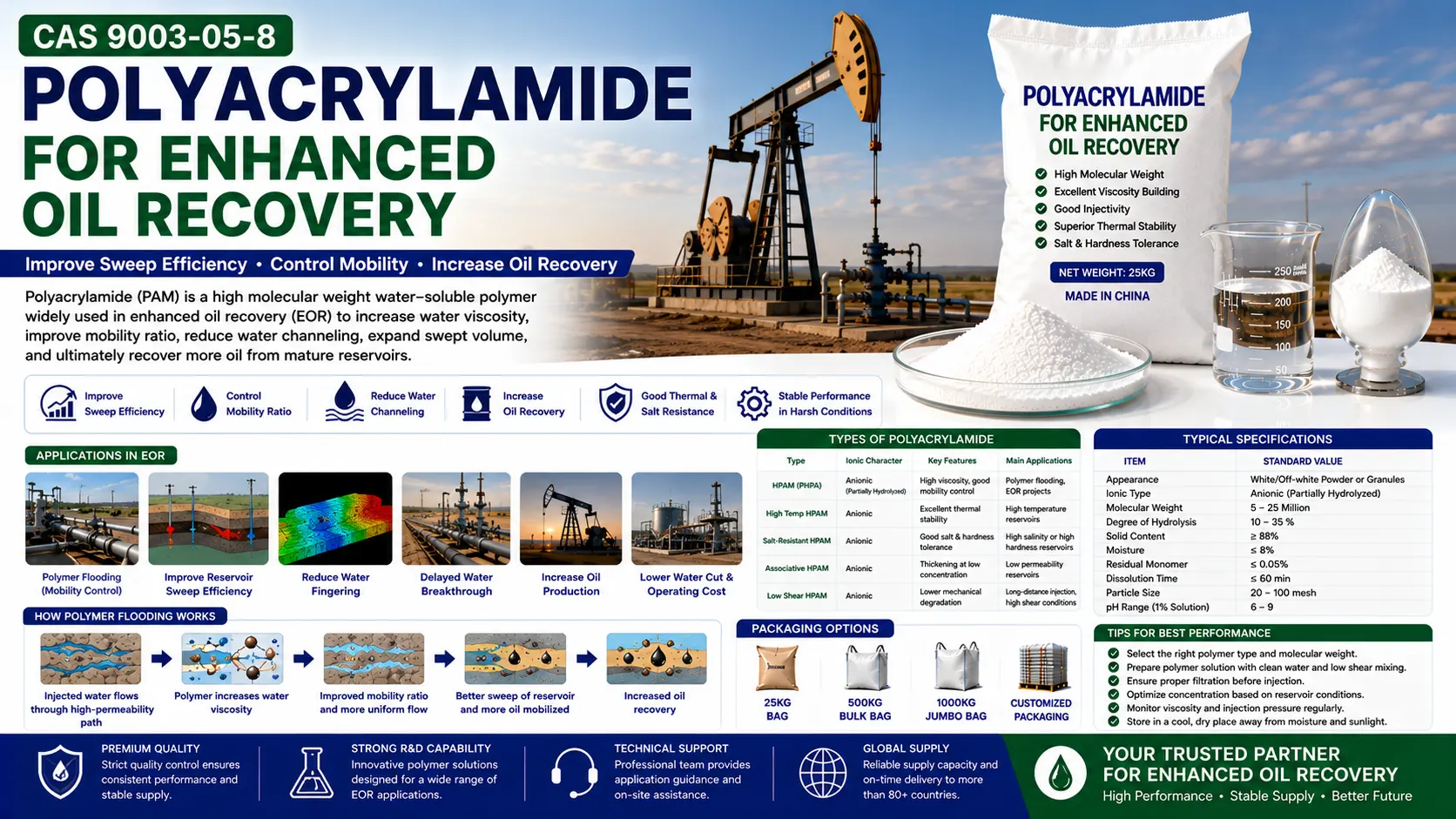
PAM is the name used for the polymer polyacrylamide. One of the most popular polymers used in enhanced oil recovery is partially hydrolyzed polyacrylamide or HPAM. In addition, depending on the reservoir temperature, salinity, hardness, permeability, shear conditions and properties of the crude oil, other grades of polyacrylamide that are salt resistant, temperature resistant, associative, and modified may be used by operators.
It is important to select the right polymer, since molecular weight, hydrolysis degree, viscosity retention, injectivity, thermal stability and mechanical degradation are all important factors that affect field performance.
What Is Enhanced Oil Recovery?
Enhanced oil recovery, commonly abbreviated as EOR, includes technologies used to extract additional oil after primary production and conventional water flooding become less effective.
Major EOR methods include:
- Polymer flooding
- Surfactant flooding
- Alkali-surfactant-polymer flooding
- Gas injection
- Thermal recovery
- Microbial recovery
- Foam flooding
Polymer flooding is one of the most established chemical EOR methods. It works by adding a water-soluble polymer to the injection water so that the water becomes more viscous.
The more viscous solution can move through the reservoir more uniformly and push oil toward production wells more effectively.
What Is Polyacrylamide?
Polyacrylamide is a synthetic water-soluble polymer produced mainly from acrylamide monomers.
Typical product information includes:
- Product name: Polyacrylamide
- Abbreviation: PAM
- CAS number: 9003-05-8
- Appearance: White or off-white powder or granules
- Solubility: Soluble in water
- Common EOR type: Partially hydrolyzed polyacrylamide
- Common abbreviation: HPAM
- Main functions: Mobility control, viscosity improvement, profile control, and sweep-efficiency enhancement
Dry polyacrylamide must be dissolved carefully before injection. Proper hydration and low-shear preparation help preserve polymer-chain length and solution viscosity.
How Polyacrylamide Improves Oil Recovery
During conventional water flooding, injected water may move through high-permeability zones faster than oil.
This can create:
- Water fingering
- Early water breakthrough
- Uneven reservoir sweep
- High water production
- Bypassed oil
- Reduced recovery efficiency
Polyacrylamide increases the viscosity of the injected water and improves the mobility ratio between the displacing fluid and the oil.
Potential benefits include:
- More uniform displacement
- Reduced water fingering
- Improved areal sweep
- Improved vertical sweep
- Lower water channeling
- Delayed water breakthrough
- Increased oil displacement
- Reduced produced-water ratio
The final recovery improvement depends on reservoir conditions, polymer quality, injection strategy, and field execution.
Why HPAM Is Commonly Used
Partially hydrolyzed polyacrylamide contains both amide groups and negatively charged carboxylate groups.
These functional groups help the polymer chains expand in water and develop viscosity.
HPAM is widely used because it offers:
- Good water solubility
- Strong viscosity-building ability
- Broad commercial availability
- Adjustable molecular weight
- Adjustable hydrolysis degree
- Established field experience
- Flexible formulation options
- Competitive cost for large-scale injection
However, standard HPAM can lose performance in high-temperature, high-salinity, or high-hardness reservoirs.
Modified polymers may be required for more demanding conditions.
Mobility-Ratio Control
Mobility ratio describes how easily the injected fluid moves compared with the crude oil.
When water is much more mobile than oil, it tends to bypass oil and travel through the easiest flow paths.
Polyacrylamide increases water viscosity, reducing its relative mobility.
A more favorable mobility ratio may provide:
- A more stable displacement front
- Less viscous fingering
- Better contact with oil-bearing zones
- Greater reservoir sweep
- Improved oil production
Polymer concentration should be optimized carefully. Excessive viscosity may reduce injectivity, while insufficient viscosity may provide limited sweep improvement.
Reservoir Sweep Efficiency
Reservoirs are rarely uniform.
They may contain:
- High-permeability channels
- Low-permeability zones
- Fractures
- Layered formations
- Variable porosity
- Uneven saturation
During water flooding, injected water preferentially enters high-permeability paths.
Polymer flooding can reduce this imbalance by increasing resistance in the more permeable zones and redirecting part of the injected fluid toward less-swept areas.
This may improve:
- Vertical sweep efficiency
- Areal sweep efficiency
- Oil contact
- Production stability
- Recovery from mature zones
Important Polymer Properties
A professional supplier should provide measurable specifications for polyacrylamide used in enhanced oil recovery.
Important properties include:
- Molecular weight
- Degree of hydrolysis
- Solid content
- Moisture
- Residual acrylamide monomer
- Solution viscosity
- Dissolution time
- Particle size
- Thermal stability
- Salinity tolerance
- Calcium and magnesium tolerance
- Shear resistance
- Filterability
- Injectivity
Molecular Weight
Molecular weight influences polymer-chain length, solution viscosity, and flow resistance.
Higher molecular weight may provide:
- Greater viscosity at lower dosage
- Better mobility control
- Stronger thickening
- Improved sweep efficiency
However, excessively high molecular weight may cause:
- Slow dissolution
- Poor injectivity
- Formation plugging
- Greater mechanical degradation
- Difficult pumping
- Higher filtration requirements
The polymer size should be compatible with reservoir-pore structure and permeability.
Degree of Hydrolysis
The degree of hydrolysis affects the number of anionic carboxylate groups in HPAM.
It influences:
- Polymer-chain expansion
- Solution viscosity
- Salt sensitivity
- Calcium sensitivity
- Adsorption
- Thermal stability
- Reservoir compatibility
A higher hydrolysis degree may improve viscosity in fresh water but can increase sensitivity to divalent ions such as calcium and magnesium.
The correct range depends on injection-water chemistry and reservoir temperature.
Salinity Tolerance
Reservoir and injection water may contain high levels of dissolved salts.
Salinity can compress polymer chains and reduce solution viscosity.
Important dissolved ions may include:
- Sodium
- Potassium
- Calcium
- Magnesium
- Chloride
- Sulfate
- Bicarbonate
Calcium and magnesium are particularly important because they can reduce polymer performance and may create compatibility problems.
Polymer testing should use actual or accurately simulated field brine.
Temperature Resistance
High reservoir temperature can accelerate polymer degradation.
Potential effects include:
- Molecular-chain breakdown
- Reduced viscosity
- Increased hydrolysis
- Precipitation
- Loss of mobility control
- Shorter solution life
For high-temperature reservoirs, modified polymers may be designed with:
- More stable molecular structures
- Salt-resistant functional groups
- Associative groups
- Sulfonated monomers
- Improved thermal resistance
Long-term aging tests should be conducted under oxygen-controlled reservoir conditions.
Shear Resistance
Polymer solutions can experience strong mechanical shear during:
- Mixing
- Pumping
- Valve passage
- Pipeline transport
- Injection
- Flow through perforations
- Flow through porous rock
Mechanical shear may break polymer chains and reduce viscosity.
A suitable EOR polymer should retain adequate viscosity after passing through the planned surface and downhole equipment.
Operators should also minimize unnecessary high-speed mixing and sharp pressure drops.
Polymer Adsorption and Retention
Polyacrylamide may adsorb onto mineral surfaces as it moves through the reservoir.
Excessive adsorption can:
- Reduce effective polymer concentration
- Increase chemical consumption
- Delay polymer propagation
- Change permeability
- Increase project cost
Adsorption depends on:
- Rock mineralogy
- Clay content
- Surface charge
- Salinity
- Polymer type
- Molecular weight
- Hydrolysis degree
- Temperature
Core-flood testing can help estimate polymer retention under representative conditions.
Injectivity and Formation Compatibility
The polymer solution must enter the reservoir without causing unacceptable pressure increases or formation damage.
Injectivity may be affected by:
- Polymer molecular size
- Undissolved particles
- Fish eyes
- Contaminants
- Poor filtration
- Biological growth
- Iron
- Suspended solids
- Reservoir permeability
A properly prepared polymer solution should have good filterability and low levels of insoluble material.
Low-permeability reservoirs may require lower-molecular-weight polymers or specially designed products.
Polymer Solution Preparation
Correct preparation is critical for maintaining polymer performance.
A typical process may include:
- Using clean and compatible preparation water.
- Starting gentle agitation.
- Adding polymer powder slowly and evenly.
- Avoiding rapid dumping into one location.
- Preventing fish-eye formation.
- Allowing sufficient hydration time.
- Using low-shear transfer pumps.
- Filtering the prepared solution.
- Adjusting concentration before injection.
- Monitoring viscosity and quality continuously.
Oxygen control may also be necessary because dissolved oxygen can accelerate polymer degradation, particularly at elevated temperatures.
Polymer Concentration
The correct injection concentration depends on:
- Target viscosity
- Crude-oil viscosity
- Injection-water salinity
- Reservoir temperature
- Permeability
- Polymer molecular weight
- Mechanical degradation
- Adsorption
- Project economics
A higher concentration can improve viscosity but also increases:
- Chemical cost
- Injection pressure
- Mixing requirements
- Risk of injectivity loss
- Surface-equipment load
Laboratory evaluation and reservoir simulation should be used to determine the most economical concentration.
Pre-Shearing and Mechanical Degradation
In some projects, operators intentionally pre-shear the polymer solution to improve injectivity.
Controlled pre-shearing may:
- Reduce molecular size
- Lower injection pressure
- Improve near-wellbore entry
- Reduce plugging risk
However, excessive shear may reduce viscosity below the target level.
The balance between injectivity and viscosity retention should be established through testing.
Laboratory Testing
Before field implementation, polymer candidates should be evaluated using representative reservoir conditions.
Common tests include:
- Dissolution time
- Solution viscosity
- Rheological behavior
- Salinity tolerance
- Hardness tolerance
- Thermal aging
- Mechanical degradation
- Filterability
- Injectivity
- Adsorption
- Core flooding
- Resistance factor
- Residual resistance factor
- Oil-displacement efficiency
Actual field brine, crude oil, and reservoir rock should be used whenever possible.
Core-Flood Testing
Core-flood testing helps evaluate how the polymer behaves inside porous rock.
It can provide information about:
- Injectivity
- Pressure response
- Polymer retention
- Mobility reduction
- Permeability changes
- Resistance factor
- Oil recovery
- Produced-polymer concentration
Core samples should represent the reservoir’s permeability, porosity, clay content, and mineralogy.
Polymer Flood Design
A polymer-flood project may include:
- Pre-flush
- Polymer slug
- Tapered polymer concentration
- Chase water
- Continuous polymer injection
- Profile-control treatment
- Surfactant-polymer formulation
The design depends on:
- Reservoir heterogeneity
- Remaining oil distribution
- Injection capacity
- Polymer cost
- Water chemistry
- Surface facilities
- Production strategy
Reservoir simulation is normally used to estimate injection volume, concentration, oil response, and economic performance.
Surface Equipment Requirements
Polymer-flood facilities may include:
- Dry-polymer feeders
- Wetting systems
- Hydration tanks
- Aging tanks
- Low-shear pumps
- Filtration systems
- Oxygen-removal equipment
- Viscosity meters
- Flow-control systems
- Injection pumps
Equipment should be designed to avoid polymer damage and ensure consistent concentration.
Poor equipment design can create:
- Incomplete dissolution
- Polymer lumps
- Viscosity loss
- Blocked filters
- Injection instability
- Uneven field performance
Produced-Water Considerations
Polymer may eventually appear in produced water.
Residual polymer can affect:
- Oil-water separation
- Produced-water treatment
- Flotation
- Filtration
- Reinjection
- Sludge handling
Produced-water facilities may need process adjustments to manage higher viscosity or residual polymer.
Compatibility with demulsifiers, coagulants, and water-treatment chemicals should be tested.
Modified Polyacrylamide for Harsh Reservoirs
Standard HPAM may not perform adequately in severe conditions.
Modified polymers may be designed for:
- High temperature
- High salinity
- High calcium
- High magnesium
- Low permeability
- Strong mechanical shear
- Long injection distances
Potential modified products include:
- Sulfonated polyacrylamide
- Hydrophobically associating polymers
- Thermally stable copolymers
- Salt-resistant polymers
- Low-molecular-weight injection grades
The product should be selected according to verified reservoir conditions rather than general marketing claims.
Packaging Options
Polyacrylamide for EOR is commonly supplied in:
- 25 kg PE-lined bags
- Moisture-resistant paper-plastic bags
- 500 kg bulk bags
- 1,000 kg jumbo bags
- Customized palletized packaging
- Emulsion drums
- IBC tanks for selected liquid products
Packaging should protect the polymer from moisture, heat, contamination, and physical damage.
Large projects may prefer jumbo bags and automated feeding systems.
Storage and Handling
Polyacrylamide should be stored in a cool, dry, and ventilated warehouse.
It should be protected from:
- Moisture
- Direct sunlight
- High temperature
- Damaged packaging
- Strong oxidizing agents
- Contamination
- Prolonged outdoor exposure
Opened bags should be tightly resealed.
Wet polyacrylamide creates very slippery surfaces and should be cleaned promptly.
Workers should follow the current safety data sheet and site procedures.
How to Evaluate a Supplier
A reliable EOR-polymer supplier should offer:
- Standard HPAM
- High-molecular-weight grades
- Salt-resistant polymers
- Temperature-resistant products
- Low-residual-monomer grades
- Customized hydrolysis levels
- Representative samples
- Reservoir-condition testing support
- Batch traceability
- Reliable production capacity
Buyers should request:
- Technical data sheet
- Safety data sheet
- Batch-specific certificate of analysis
- Rheology data
- Thermal-aging results
- Salinity-tolerance results
- Filterability data
- Sample-testing support
- Packaging information
- Export documentation
How to Request an Accurate Quotation
A complete inquiry should include:
- Reservoir temperature
- Reservoir permeability
- Injection-water salinity
- Calcium and magnesium concentration
- Crude-oil viscosity
- Required polymer viscosity
- Target injection concentration
- Planned injection rate
- Molecular-weight preference
- Hydrolysis requirement
- Order quantity
- Packaging
- Destination
- Incoterm
- Delivery schedule
For example:
“Please recommend and quote HPAM for polymer flooding in a reservoir with 85°C temperature, moderate permeability, and high-salinity injection water, packed in 25 kg bags, including samples, TDS, SDS, COA, and viscosity-retention data.”
Detailed reservoir information helps the supplier recommend a technically appropriate grade.
Total Project Cost
The lowest polymer price per kilogram may not produce the best project economics.
Operators should consider:
- Effective polymer concentration
- Viscosity retention
- Injectivity
- Mechanical degradation
- Adsorption
- Oil-production response
- Water reduction
- Surface-equipment requirements
- Mixing cost
- Produced-water treatment
- Technical support
A polymer with better reservoir compatibility may provide higher recovery and lower total cost even when its purchase price is higher.
Conclusion
Polyacrylamide for Enhanced Oil Recovery (EOR) is a key mobility-control polymer that is used to enhance the viscosity of injection water, sweep the reservoir, minimize water channeling and release additional oil from mature reservoirs.
Performance requires molecular weight, degree of hydrolysis, salinity tolerance, thermal stability, shear resistance, injectivity, adsorptive properties, dissolution properties, permeability of reservoir and water chemistry.
Operators should provide comprehensive reservoir and injection-water data, review all technical specifications, take sample submissions, run laboratory and core flood tests, and run controlled field tests before making a purchase.
A reliable supplier will offer acceptable HPAM and modified polyacrylamide grades, good batch uniformity, reservoir-condition test data, moisture-proof packaging, quick technical support, and dependable worldwide delivery.


Contact Us
In This Article
Related Posts
What Purity Is Required for Sodium Formate for De-Icing Applications?
2026-08-21
Calcium Formate for Tile Adhesive: How It Improves Early Strength and Setting Time
2026-08-20
Potassium Formate for Oilfield Completion Fluids: Density, Compatibility and Formation Protection
2026-08-19
High Density Potassium Formate Brine: Density Range, Properties and Oilfield Applications
2026-08-18


