



Anionic vs Cationic Polyacrylamide for Wastewater: How to Select the Right Charge
By Tonmoy
2026-09-10Related Posts
Custom Packaging Solutions from an Anhydrous Sodium Acetate Supplier in China
2026-09-23
Application Trends in Anhydrous Sodium Acetate for Special Chemical Manufacturing
2026-09-23
Anhydrous Sodium Acetate for Leather Tanning: Improve Dyeing Uniformity
2026-09-22
Formic Acid 85% for Textile Dyeing: Industrial Applications, Technical Benefits and Future Trends
2026-09-22
For many mineral, inorganic, or suspended-solids-rich wastewater streams, anionic polyacrylamide (APAM) is a logical starting candidate. For many organic-rich, negatively charged, or biological sludge streams, cationic polyacrylamide (CPAM) is often the more relevant starting candidate.
Neither charge is universally better. The correct choice depends on the wastewater chemistry, particle or sludge characteristics, treatment objective, polymer grade, mixing conditions, and separation equipment. A representative jar test or pilot comparison should confirm the selection before full-scale approval.
Anionic vs cationic PAM: the practical wastewater difference
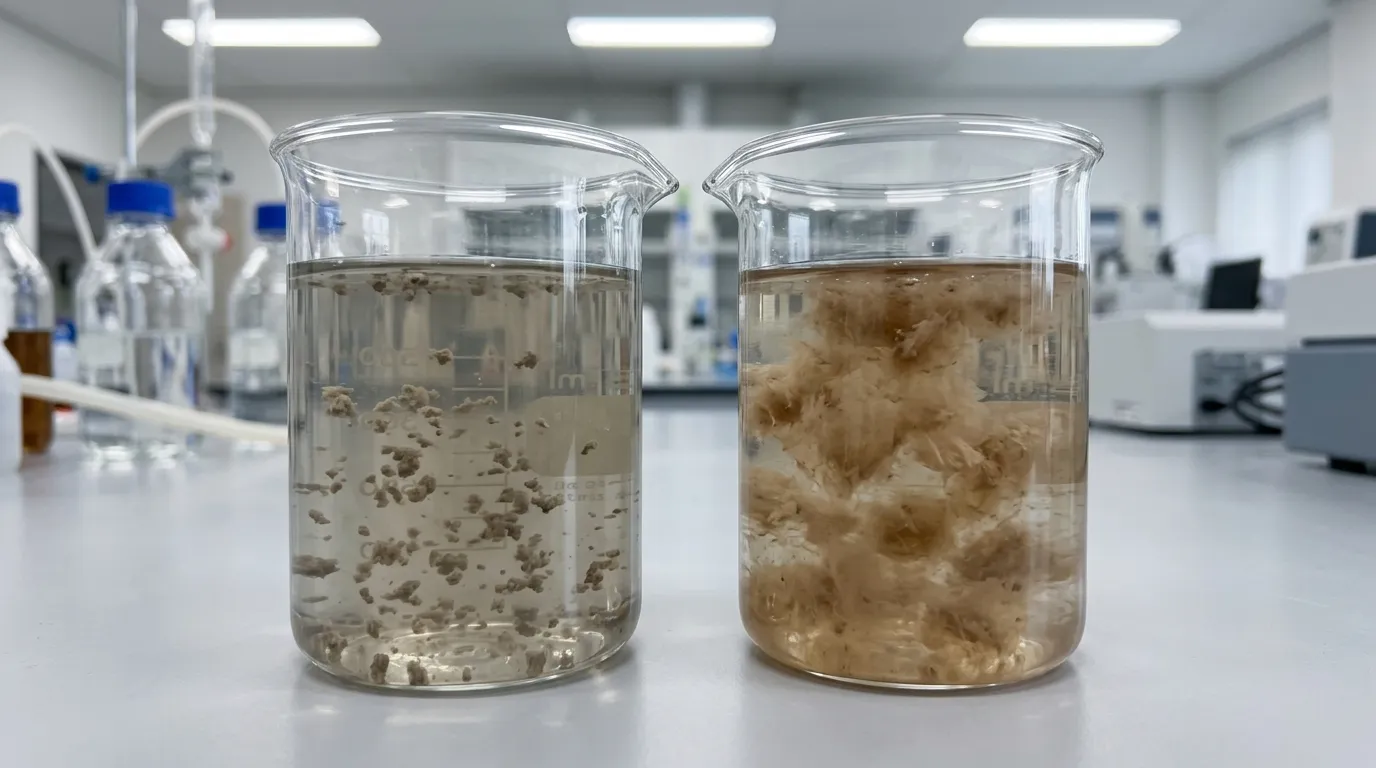
Polyacrylamide is used to promote flocculation and improve solid–liquid separation. Its polymer chains can interact with suspended particles or sludge solids and help form larger flocs that are easier to settle, filter, or dewater.
The principal difference between the two charge types is the electrical character of the polymer:
| Selection criterion | Anionic PAM | Cationic PAM |
|---|---|---|
| Polymer charge | Negative | Positive |
| Common initial screening context | Many mineral, inorganic, or suspended-solids-rich streams | Many organic-rich, negatively charged, or biological sludge streams |
| Typical process objectives | Clarification, sedimentation, and solids separation in suitable chemistry | Sludge conditioning and mechanical dewatering in suitable chemistry |
| Selection basis | Particle chemistry, solids characteristics, and process conditions | Sludge chemistry, solids characteristics, and process conditions |
| Confirmation method | Site-specific jar or pilot testing | Site-specific jar or pilot testing |
These are application associations, not universal product rules. The charge sign alone does not identify the best grade. Molecular weight, charge density, product form, pH, ionic conditions, mixing, shear, and the treatment objective must also be considered.
For broader background on polyacrylamide, the chemical’s process role should be considered together with the specific wastewater application rather than treated as a single-purpose product category.
Which charge is the better starting point for your wastewater?
The most useful first question is not “Which PAM is stronger?” It is:
What type of solids or sludge must be separated, and what is the treatment stage expected to achieve?
When anionic PAM may be the better starting candidate
Anionic PAM is commonly screened for wastewater containing:
- Mineral or inorganic suspended solids
- Soil, clay, or other solids-rich material
- Particles whose surface chemistry is compatible with an anionic polymer
- Streams where clarification, sedimentation, or solids capture is the main objective
This pattern is often relevant in industrial streams associated with mineral processing, sand washing, coal washing, and similar solids-separation operations. However, the industry label is only a starting point. Two wastewater streams from the same industry can require different polymer grades because their pH, dissolved salts, particle size, solids concentration, and upstream treatment conditions differ.
Anionic PAM may also be considered where the solids have been chemically conditioned before polymer addition. In that situation, the coagulant or pH adjustment may change the particle surface charge and alter which polymer performs best.
When cationic PAM may be the better starting candidate
Cationic PAM is commonly screened for:
- Organic-rich wastewater solids
- Negatively charged sludge
- Biological sludge
- Sludge-conditioning and mechanical-dewatering operations
The positive charge can be relevant when the solids or sludge particles present a predominantly negative surface character. Cationic grades are therefore frequently evaluated for biological or organic sludge dewatering, although the final selection still depends on the sludge source, upstream chemistry, equipment, and polymer grade.
Vanchor’s grade-selection guidance identifies cationic PAM as a candidate for biological sludge and many organic wastewater dewatering applications. This is application guidance, not a universal performance guarantee or a specification for every cationic grade.
A practical screening matrix
| Wastewater or sludge characteristic | Initial candidate to evaluate | What must still be confirmed |
|---|---|---|
| Mineral or inorganic solids | Anionic PAM | Particle charge, pH, solids concentration, floc behavior, and separation equipment |
| Organic-rich suspended solids | Anionic or cationic PAM depending on surface chemistry | Actual particle charge and treatment objective |
| Biological sludge | Cationic PAM is commonly screened | Sludge age, solids characteristics, dewatering equipment, and filtrate or cake requirements |
| Clarification of suspended solids | Often anionic or another suitable grade depending on chemistry | Settling behavior and supernatant clarity |
| Mechanical sludge dewatering | Often cationic for organic or biological sludge | Floc strength, filtrate quality, cake handling, and equipment response |
| Unclear or variable wastewater | Compare multiple charge types | Representative sampling and repeat testing under documented conditions |
The table is a screening tool, not a substitute for testing. A charge that works for one process stage may not be appropriate for another.
Why charge alone does not determine PAM selection
Charge is important, but it is only one part of grade selection. The following factors can change the result.
Particle and sludge surface characteristics
The interaction between polymer and solids depends on the surface chemistry of the particles. “Organic” and “inorganic” are useful first descriptions, but they do not fully identify the electrical behavior of a wastewater stream.
Mineral particles may carry different surface characteristics depending on their composition, pH, dissolved ions, and prior chemical treatment. Biological sludge may also vary with the treatment process, solids age, feed composition, and operating condition.
Molecular weight
Molecular weight affects the length and physical reach of the polymer chain. A higher- or lower-molecular-weight grade may produce different floc size, strength, settling behavior, or filter response.
Molecular weight should not be evaluated independently from charge density. A grade with the preferred charge sign may still be unsuitable if its other properties do not match the wastewater and equipment.
Charge density or degree of ionic character
Two anionic grades are not necessarily equivalent, and two cationic grades are not necessarily interchangeable. Their charge density or degree of ionic character can differ substantially.
For a closer look at this selection variable, see polyacrylamide charge density selection. The relevant comparison should remain grade-specific; general charge-class descriptions do not establish the specification of a particular Vanchor product.
pH and ionic conditions
pH can influence particle charge, polymer conformation, and the interaction between polymer and solids. Dissolved salts and other ions may also affect flocculation behavior.
For this reason, pH should be treated as a process variable rather than a standalone rule such as “low pH requires cationic PAM” or “high pH requires anionic PAM.” A reliable selection requires the actual wastewater conditions and a controlled comparison.
Mixing and shear
Polymer performance depends not only on chemical selection but also on how the polymer contacts the wastewater and how the resulting flocs are handled.
Insufficient mixing may prevent adequate polymer distribution. Excessive shear may damage formed flocs before clarification, filtration, or dewatering. The appropriate mixing conditions depend on the treatment equipment and process design, so a universal mixing setting should not be assumed.
Treatment objective and equipment
The preferred grade may differ depending on whether the main objective is:
- Clarification
- Sedimentation
- Dissolved-air flotation
- Filtration
- Belt-press dewatering
- Centrifugal dewatering
- Filter-press operation
The same wastewater can produce different practical results when tested for clarification versus sludge dewatering. Selection should therefore be tied to the process stage where the polymer will be used.
Clarification, sludge dewatering, and the charge decision
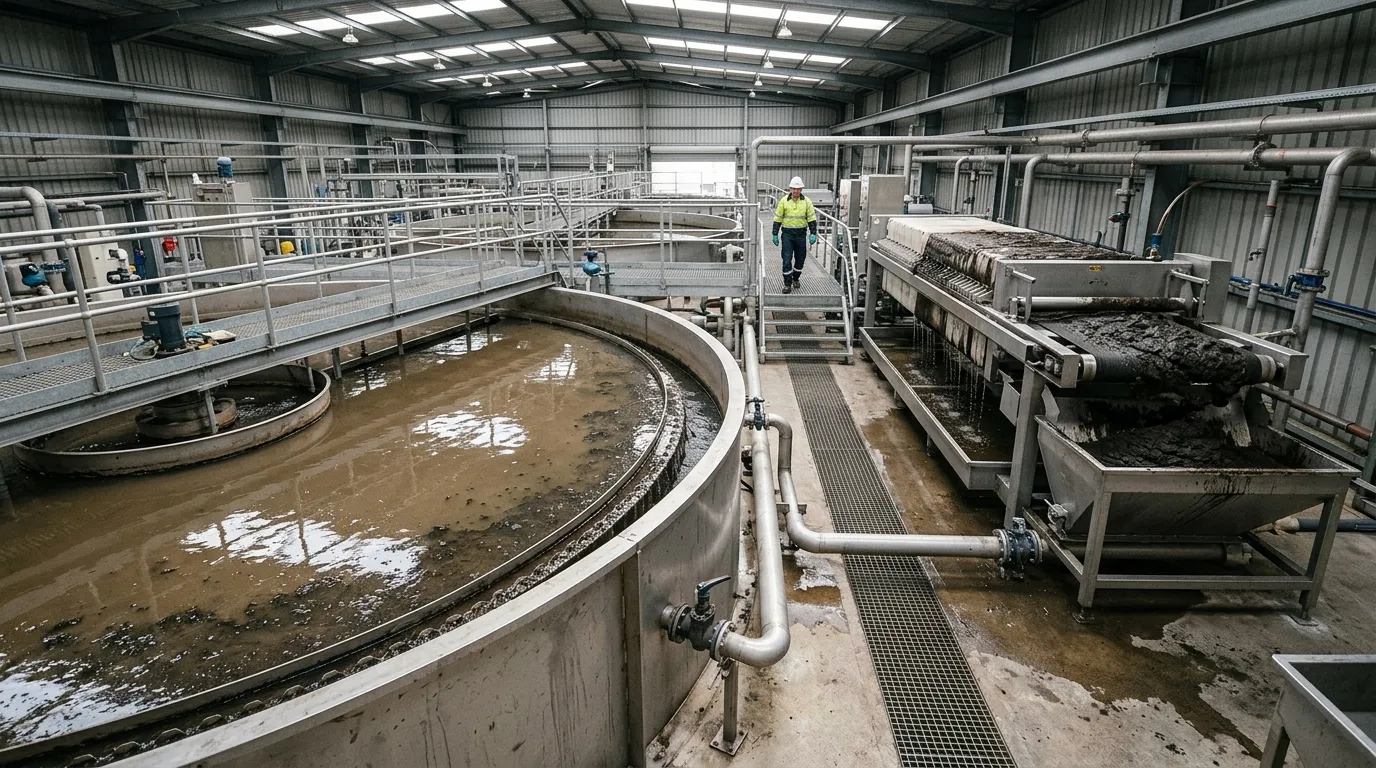
Anionic and cationic PAM should not be compared without defining the separation task.
When the main objective is clarification
For clarification, the key questions include:
- Can the polymer form a sufficiently large and stable floc?
- Does the floc settle or separate under the available equipment?
- Is the resulting supernatant clear enough for the next process stage?
- Does the polymer remain effective as solids concentration and wastewater composition change?
Anionic PAM may be a useful initial candidate for many mineral or inorganic solids, but the actual particle chemistry must be evaluated. Cationic PAM may also be relevant where the particles have a negative surface character or where upstream treatment changes the solids chemistry.
When the main objective is sludge dewatering
For sludge dewatering, the focus shifts toward:
- Floc formation and resistance to mechanical handling
- Filtrate or centrate clarity
- Cake release and handling behavior
- Compatibility with the dewatering equipment
- Stability as sludge characteristics vary
Cationic PAM is commonly screened for organic-rich and biological sludge dewatering. This does not mean every biological sludge requires the same cationic grade, or that anionic PAM is never suitable. The selected product must be tested against the actual sludge and equipment.
Detailed process guidance belongs in a dedicated polyacrylamide for sludge dewatering resource. For this comparison, the important boundary is that charge selection for dewatering should not be copied directly from a clarification application.
PAM is used in water-treatment processes including flocculation, clarification, coagulation assistance, and dewatering, but the relevant performance criteria depend on the process stage. A general technical overview is available from this water-treatment PAM resource.
Confirm the charge choice with a representative jar or pilot test
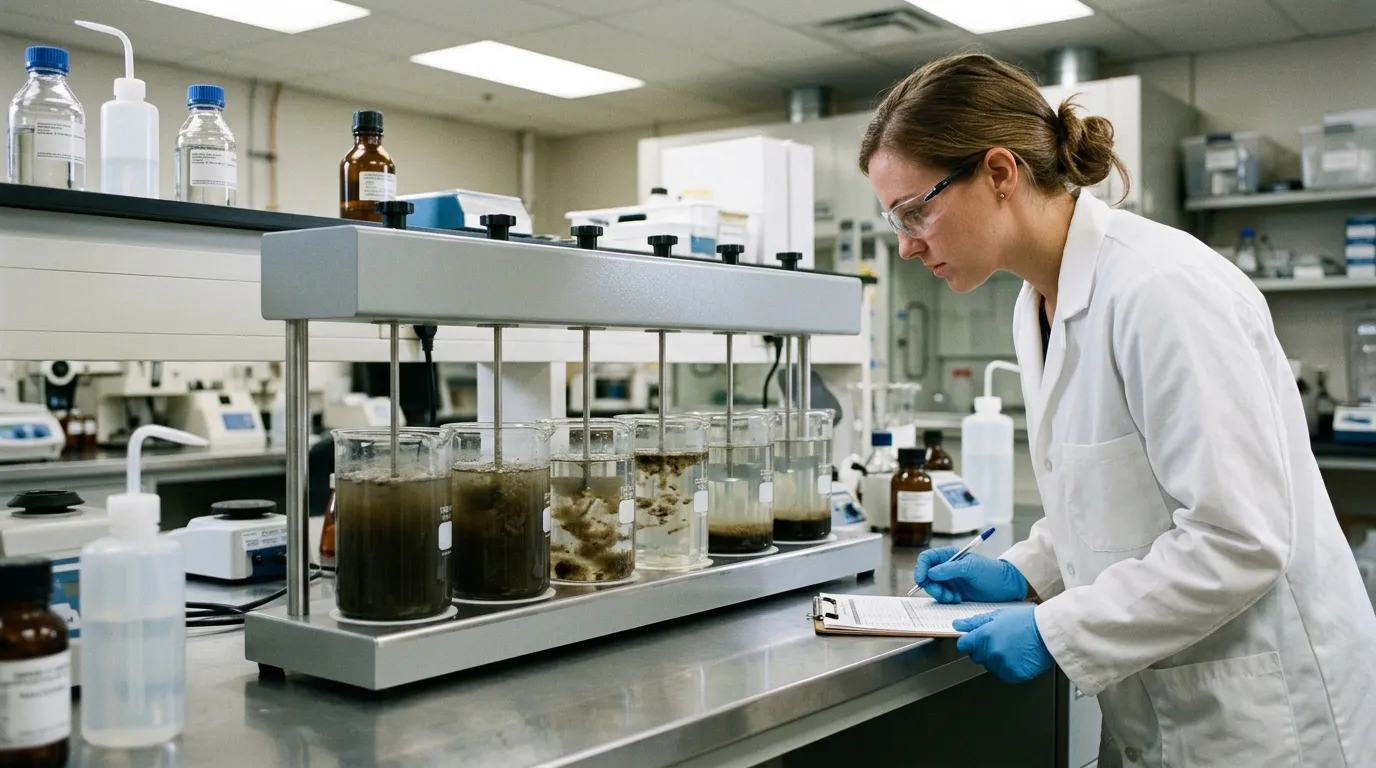
A jar test or pilot comparison is the most defensible way to confirm whether anionic or cationic PAM is appropriate for a particular wastewater stream.
A practical validation sequence is:
- Define the treatment objective. Identify whether the test concerns clarification, settling, flotation, filtration, sludge conditioning, or mechanical dewatering.
- Collect a representative sample. Record the wastewater or sludge source, process stage, solids characteristics, and relevant operating conditions. If the stream varies significantly, one sample may not represent all operating periods.
- Identify the candidate grades. Record the exact charge type, product grade, and physical form. Do not compare a powder, emulsion, or solution product without documenting the difference.
- Compare candidates under consistent conditions. Evaluate anionic and cationic candidates using the same sample and a documented test method. The test should account for the intended separation equipment or process stage.
- Assess process-relevant results. Depending on the application, examine floc formation, settling or filtration behavior, supernatant or filtrate clarity, and sludge-handling characteristics.
- Repeat when necessary. If wastewater chemistry or sludge properties vary, confirm the selection against additional representative samples or pilot-scale evidence.
The purpose of the test is not simply to find the largest visible floc. A large floc may settle poorly, break under shear, or produce an unsuitable filtrate. The selected grade should satisfy the actual process requirement.
Vanchor’s wastewater-treatment guidance states that jar testing can compare anionic, cationic, and nonionic grades as well as different molecular-weight options. A more detailed procedure can be reviewed through the polyacrylamide jar test procedure, subject to confirming that the procedure matches the product form and process conditions being evaluated.
No universal dosage, dilution method, mixing time, or test setting should be applied without grade-specific and process-specific evidence.
What to request before approving an anionic or cationic PAM grade
For technical approval and procurement, compare the actual grade documents rather than relying only on the charge name.
Request or verify, where applicable:
- Exact product name and charge type
- Exact grade and physical form
- Molecular-weight information
- Charge-density or ionic-character information
- Active-content or concentration basis
- Technical Data Sheet (TDS)
- Safety Data Sheet (SDS)
- Batch-specific Certificate of Analysis (COA), where available
- Recommended application context
- Test sample identity and test conditions
- Handling, preparation, and storage information appropriate to the documented product form
These documents serve different purposes. An SDS addresses hazards and handling information; it does not establish universal application approval. A COA reports results for a particular batch or lot; it does not prove that every batch will produce the same wastewater-treatment result under every condition. A catalog listing does not by itself establish manufacturing status, current stock, or guaranteed performance.
When requesting an anionic polyacrylamide supplier or cationic polyacrylamide supplier quotation or technical review, provide enough process information for the grade comparison to be meaningful:
- Wastewater or sludge source
- Main treatment objective
- Approximate solids type and variability
- Current separation equipment
- Relevant pH and ionic conditions
- Existing coagulants or treatment chemicals
- Required test observations or acceptance criteria
- Product form under consideration
A supplier page or product listing should be treated as a starting point for technical review. It should not be used as a substitute for a product-specific TDS, test data, or site-representative jar test.
When the anionic-versus-cationic comparison is not enough
Not every wastewater stream can be resolved by choosing between anionic and cationic PAM.
Nonionic PAM may be worth evaluating when neither charge type gives a clear result or when the particle chemistry does not support a confident charge-based selection. That is a separate grade-selection decision and should not be treated as an automatic third choice.
Directly mixing anionic and cationic PAM should also not be treated as a default process step. Retrieved supplier guidance generally discourages direct mixing because opposite charges can interact before the polymers perform their intended separation function. If different polymer types are considered at separate treatment stages, the arrangement requires a process-specific design and testing rather than an assumption that the products are automatically compatible.
If a test produces poor results, review more than dosage. Recheck:
- Whether the sample represented the actual wastewater
- Whether the treatment objective was defined correctly
- Whether the product form and grade were recorded
- Whether charge density and molecular weight were suitable
- Whether pH and dissolved ions changed the particle chemistry
- Whether mixing or shear disrupted the floc
- Whether the selected charge was being applied at the correct process stage
The practical decision is therefore not simply “anionic or cationic?” It is “which documented grade performs most consistently for this wastewater, this treatment objective, and this equipment under representative conditions?”


Contact Us
In This Article
Related Posts
Custom Packaging Solutions from an Anhydrous Sodium Acetate Supplier in China
2026-09-23
Application Trends in Anhydrous Sodium Acetate for Special Chemical Manufacturing
2026-09-23
Anhydrous Sodium Acetate for Leather Tanning: Improve Dyeing Uniformity
2026-09-22
Formic Acid 85% for Textile Dyeing: Industrial Applications, Technical Benefits and Future Trends
2026-09-22


