



Polyacrylamide Dissolution: Preparation Steps, Concentration, and Mixing
By vanchor
2026-07-13Related Posts
Custom Packaging Solutions from an Anhydrous Sodium Acetate Supplier in China
2026-09-23
Application Trends in Anhydrous Sodium Acetate for Special Chemical Manufacturing
2026-09-23
Anhydrous Sodium Acetate for Leather Tanning: Improve Dyeing Uniformity
2026-09-22
Formic Acid 85% for Textile Dyeing: Industrial Applications, Technical Benefits and Future Trends
2026-09-22
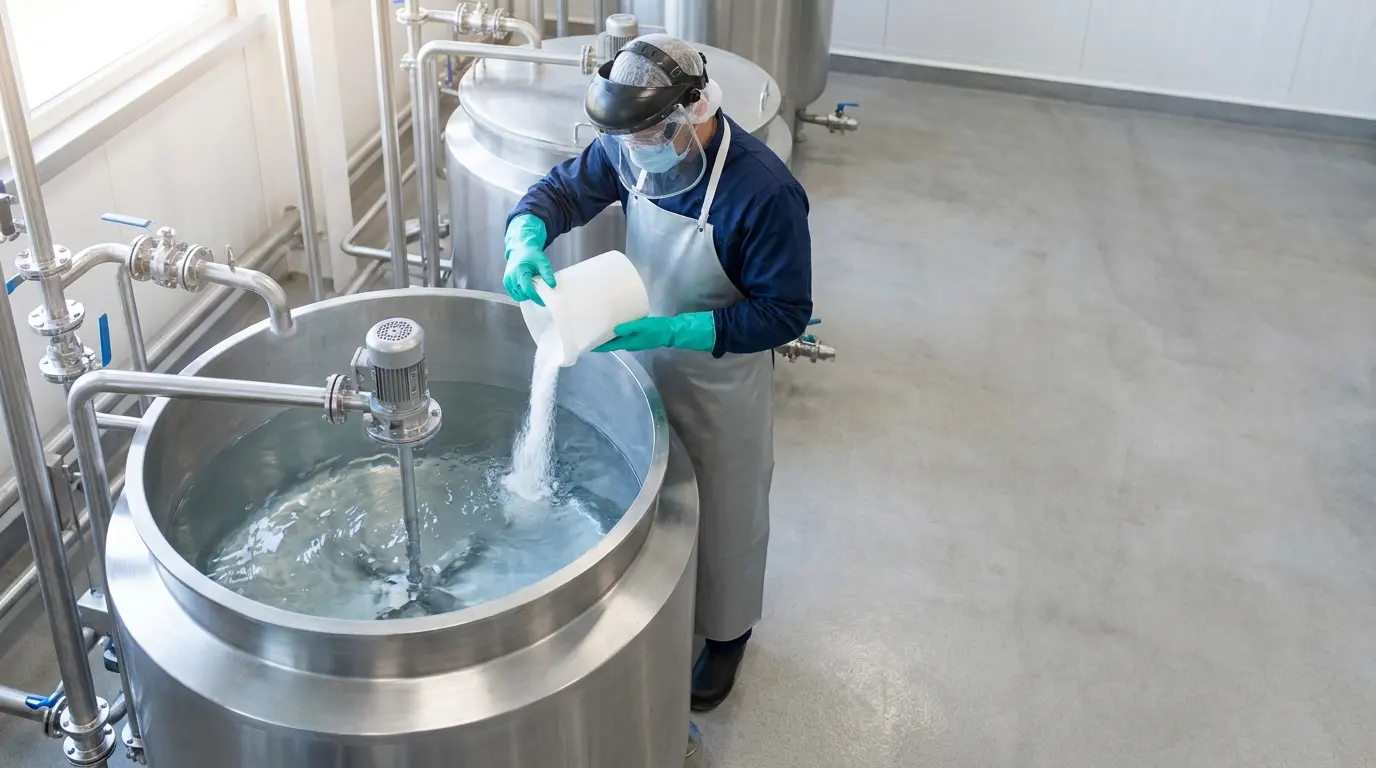
Polyacrylamide dissolution is the process of turning PAM into a usable solution without clumps, fish eyes, or hydration problems. The safest approach is to start with clean water, add the polymer slowly, mix it at a controlled speed, and give it enough time to fully hydrate before use.
For broader context on industrial polyacrylamide types and applications, see Industrial Polyacrylamide: Types, Applications, Performance, and Purchasing Guide (inferred).
What Proper Dissolution Needs
A good PAM solution starts with the right setup. The common thread across technical supplier guidance is simple: use suitable water, keep the concentration practical, and avoid aggressive agitation that can create clumps or damage the polymer chain.sinofloc+3
Why Water Quality Matters
Clean water gives polyacrylamide a better chance to hydrate evenly. Supplier guides repeatedly warn against poor water conditions, especially when the water is highly saline or otherwise unsuitable for polymer hydration.ecolink-environment+1
That does not mean the process has to be complicated. It means the water should be predictable and clean enough for the polymer to disperse uniformly, rather than fight against dissolved solids or unstable water chemistry.lvyuanchem+1
Step-by-Step Dissolution Process
The basic sequence is straightforward: prepare the water first, add polyacrylamide slowly, mix gently but consistently, and wait until the solution is fully hydrated before dosing.hnsecco+3
Fill the mixing tank with the required amount of clean water.
Start moderate agitation so the water moves, but does not whip into a harsh vortex.
Add polyacrylamide gradually instead of dumping it all at once.
Keep mixing at a controlled speed until the powder disperses.
Allow enough hydration time before use, since the solution may look mixed before it is truly ready.hydrochemix+2
Add Polyacrylamide Slowly
Slow addition is one of the most important habits in PAM preparation. If the powder is added too quickly, the outer layer can hydrate before the inside disperses, which leads to fish eyes and stubborn clumps.sinofloc+1
A steady feed rate gives the polymer time to spread through the water instead of forming compact gel-like pockets. That simple change often improves the result more than changing any other single variable.hydrochemix+1
Mix at Controlled Speed
Mixing needs to be strong enough to distribute the polymer, but not so aggressive that it causes shear or breaks up the hydration process. Several supplier guides stress moderate stirring rather than high-speed turbulence.lvyuanchem+2
A useful way to think about it is this: the mixer should help the polymer disperse, not beat it apart. If the solution looks foamy, splashy, or unstable, the agitation is probably too harsh for PAM preparation.lvyuanchem+1
Wait for Full Hydration
Polyacrylamide can look partially mixed before it is fully ready. Full hydration takes time, and supplier guidance consistently treats waiting time as part of the preparation step, not an optional extra.hydrochemix+1
If the solution is used too early, performance can drop because the polymer has not fully opened into a workable network. That is why a ready-looking liquid is not always a ready-to-use liquid.nbinno+1
Choosing the Right Concentration
Concentration is a major factor in dissolution quality. Technical guides commonly recommend working with a dilute solution because lower concentrations hydrate more evenly and reduce the risk of clumps or fish eyes.hnsecco+3
In practice, the right concentration depends on the intended use, but the preparation principle stays the same: thinner solutions are easier to manage, and very thick solutions are harder to hydrate cleanly. That is why many operators prepare a stock solution first and then adjust how it is used downstream.nbinno+3
Why Lower Concentrations Are Easier to Handle
Lower concentration gives water more room to reach each polymer particle. That improves hydration and makes the solution easier to mix without creating dense gel pockets.hnsecco+1
It also makes the process more forgiving. If the mix speed is slightly off or the feed rate is not perfect, a dilute solution is less likely to fail than a very thick one.nbinno+1
Common Mistakes and How to Fix Them
Most dissolution problems come from the same few mistakes: adding too much powder too quickly, using overly aggressive mixing, choosing poor water quality, or rushing the solution before it has fully hydrated.sinofloc+2
If the mix develops clumps, the usual fix is not more speed. It is usually slower addition, better water quality, and more time for hydration. If the solution seems unstable or stringy, the problem may be that the agitation is too severe for the polymer.sinofloc+2
Fish Eyes and Lumps
Fish eyes are the small gel-like nodules that form when the outside of the powder hydrates faster than the inside. They are one of the clearest signs that the dissolution process was rushed or poorly mixed.hydrochemix+1
The best prevention is simple:
Add the powder gradually.
Avoid dumping it into one spot.
Keep the mixer at a controlled speed.
Give the solution enough time to fully hydrate.lvyuanchem+2
Overmixing and Shear
Too much agitation can be just as harmful as too little. When the mixer is overly aggressive, it can create unstable flow, break down the polymer’s effective structure, and make hydration less reliable.lvyuanchem+1
The goal is not maximum turbulence. The goal is even dispersion with enough movement to separate particles and let water work into them.sinofloc+1
When Type Differences Matter
Polyacrylamide is not one identical material in every situation. Supplier guidance notes that anionic, cationic, and nonionic PAM can behave differently during preparation, so product-specific instructions should be followed when available.hnsecco+1
That does not change the basic process, but it can affect how cautious you need to be with concentration, mixing, and hydration time. If the grade or type is still undecided, it is better to confirm that first rather than guess at the dissolution method.hnsecco+1
For help choosing a suitable grade before preparation, see polyacrylamide grade selection.
Related Pages and Next Steps
If you need the broader product context after learning the preparation method, the parent guide is the right next step: Industrial Polyacrylamide: Types, Applications, Performance, and Purchasing Guide (inferred).
For storage and handling after preparation, see Polyacrylamide Storage. For a downstream use case, see polyacrylamide for wastewater treatment. If you are evaluating a supplier, polyacrylamide manufacturer is the relevant follow-up.
A correct polyacrylamide solution should be smooth, evenly hydrated, and free from visible clumps before it is used. If that is the result you need, the key is not complexity — it is patience, controlled mixing, and a dilute, well-prepared start.


Contact Us
In This Article
Related Posts
Custom Packaging Solutions from an Anhydrous Sodium Acetate Supplier in China
2026-09-23
Application Trends in Anhydrous Sodium Acetate for Special Chemical Manufacturing
2026-09-23
Anhydrous Sodium Acetate for Leather Tanning: Improve Dyeing Uniformity
2026-09-22
Formic Acid 85% for Textile Dyeing: Industrial Applications, Technical Benefits and Future Trends
2026-09-22


