



Polyacrylamide Make-Down Concentration: Mixing, Maturation, and Dosing Control
By Tonmoy
2026-09-11Related Posts
Custom Packaging Solutions from an Anhydrous Sodium Acetate Supplier in China
2026-09-23
Application Trends in Anhydrous Sodium Acetate for Special Chemical Manufacturing
2026-09-23
Anhydrous Sodium Acetate for Leather Tanning: Improve Dyeing Uniformity
2026-09-22
Formic Acid 85% for Textile Dyeing: Industrial Applications, Technical Benefits and Future Trends
2026-09-22
Polyacrylamide make-down concentration is the strength of the prepared polymer solution before it is fed into a process. It is not the same as the active polymer dose applied to wastewater, sludge, or another process stream.
There is no single make-down concentration that suits every polyacrylamide product. The workable range depends on the product form and grade, water quality, mixing equipment, solution viscosity, shear exposure, maturation requirements, dosing rate, and the application itself. A reliable operating concentration is therefore established from product documentation and representative testing—not selected from a universal percentage.
Make-Down Concentration Is Not the Same as PAM Dosage
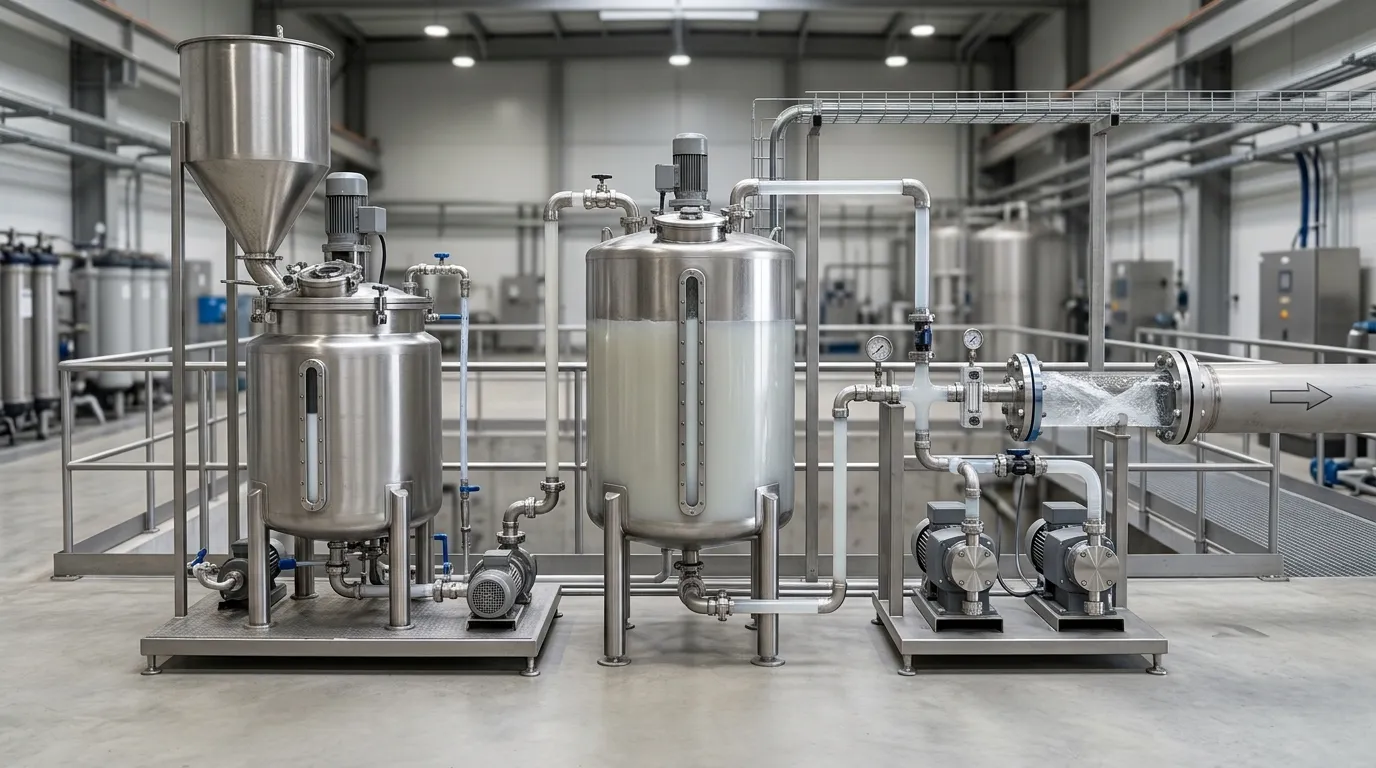
These terms describe different control points:
| Term | What it describes | Where it is controlled |
|---|---|---|
| Make-down concentration | Strength of the prepared polyacrylamide solution | Preparation tank |
| Active polymer dose | Quantity of polymer applied to the process stream | Treatment or process control |
| Solution feed rate | Volume of prepared solution delivered over time | Metering pump and flow control |
| Supplied-product rate | Quantity of commercial product consumed | Inventory and batch records |
For example, a preparation tank may contain a diluted polymer solution, while the treatment process requires a separately determined active-polymer dose. Changing the tank concentration changes the solution feed rate required to deliver that dose. It does not automatically change the treatment requirement.
This distinction matters in operations and QA work. A pump calibrated for one solution concentration cannot be assumed to deliver the same active-polymer rate after the preparation concentration changes. The product form, active-content basis, tank volume, and pump calibration must all remain clear.
Polyacrylamide is available in different forms and grades, each with its own preparation behavior. For broader chemical context, see polyacrylamide.
How to Choose a Workable Make-Down Concentration
The correct polyacrylamide make-down concentration should be selected as an operating window rather than treated as a fixed number. Start with the technical instructions for the exact product and then check whether the resulting solution can be mixed, matured, transferred, and metered reliably in the intended system.
Key factors include:
- Product form: Powder and emulsion products do not necessarily use the same preparation method or concentration basis.
- Polymer grade: Anionic, cationic, and nonionic products can differ in hydration behavior, viscosity, and application response.
- Water quality: Hardness, dissolved salts, metal ions, and other water characteristics may affect dispersion, hydration, or performance.
- Viscosity: A stronger solution may reduce preparation-tank volume but can become more difficult to pump or meter.
- Feed accuracy: A concentration that is difficult to reproduce can create more dosing variation than a theoretically more concentrated solution.
- Equipment capacity: Tank geometry, mixer design, pump type, pipework, and transfer distance can limit the practical concentration.
- Required solution volume: The preparation concentration must support the required feed rate without creating excessive tank turnover or storage time.
- Validation data: Jar testing and representative plant checks are needed before an operating value is standardized.
A stronger solution is not automatically more efficient. It may reduce tank volume, but increased viscosity can affect dispersion, transfer, pump calibration, and feed stability. A weaker solution may be easier to handle but require more preparation water and greater tank capacity.
A useful selection process is:
- Confirm the exact product form and grade.
- Identify the concentration basis specified by the supplier.
- Review the documented preparation range and any water-quality requirements.
- Check the expected viscosity and equipment limitations.
- Prepare a controlled batch.
- Confirm hydration and feed behavior.
- Validate application performance under representative conditions.
- Record the selected operating window and its conditions.
Grade choice is a separate decision from make-down control. Where necessary, consult polyacrylamide grade selection rather than using this article as a substitute for grade-selection guidance.
Mixing PAM: Wetting, Dispersion, and Shear Control
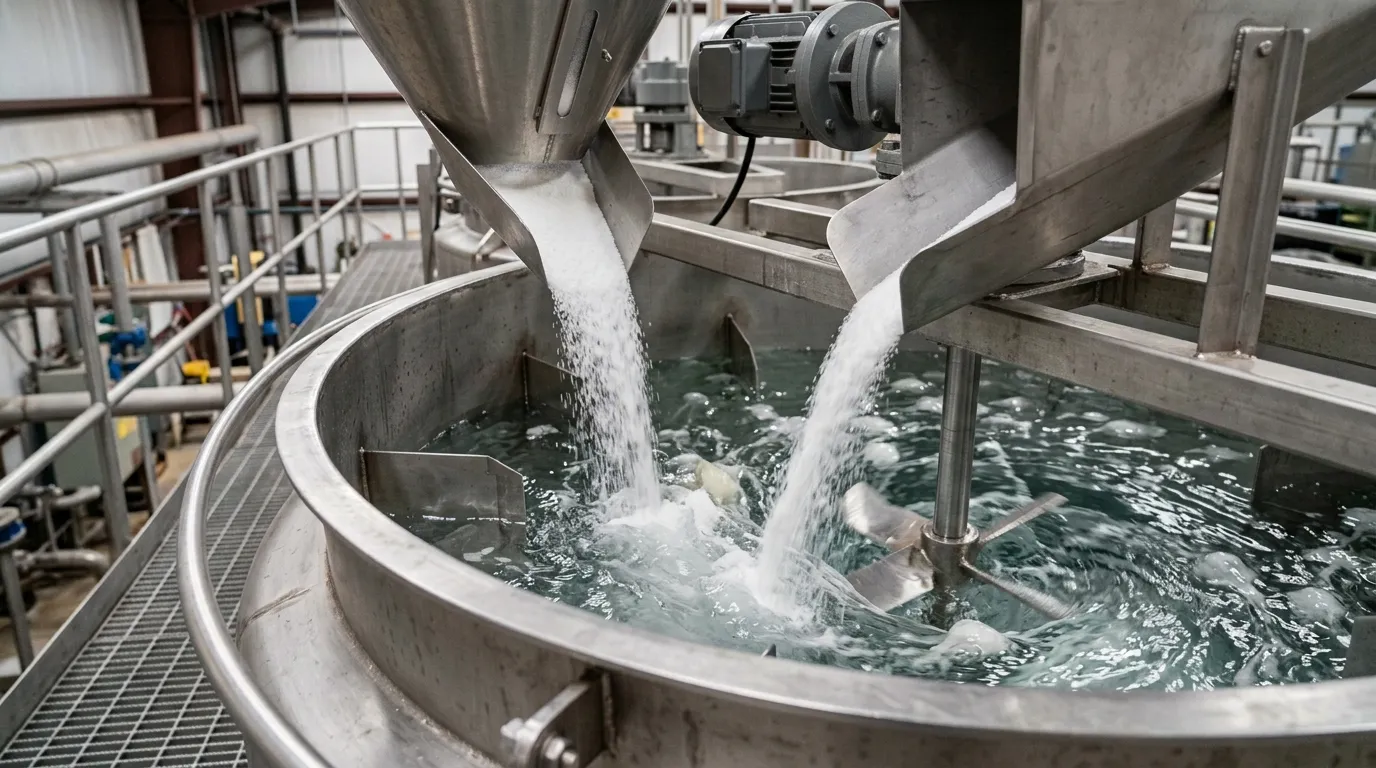
Preparation quality begins before the polymer is fully hydrated. The material must first be dispersed into the preparation water without forming concentrated lumps.
For powder polyacrylamide, uncontrolled addition can cause partially wetted particles to form clumps or “fish-eyes.” These may appear dissolved from the outside while remaining dry or underhydrated internally. The result can be uneven viscosity, unstable feeding, and inconsistent process performance.
The preparation system should therefore be evaluated using the following controls:
- Water condition: Use water that is consistent with the product’s technical instructions and record any relevant quality variables.
- Addition method: Introduce powder in a controlled manner that allows particles to separate and wet individually.
- Dispersion: Maintain enough circulation to distribute the material through the tank without creating excessive localized shear.
- Mixing intensity: Use sufficient mixing for uniformity, but do not assume that more agitation produces better polymer performance.
- Tank geometry: Avoid dead zones where polymer can accumulate or remain incompletely hydrated.
- Transfer path: Review pumps, valves, pipe restrictions, and recirculation loops that may expose the solution to unnecessary shear.
- Visual and process checks: Look for clumps, undissolved particles, uneven appearance, and changes in viscosity.
Powder and emulsion products should not be treated as interchangeable. Their addition, inversion, dilution, and feeding requirements may differ. A detailed form comparison is available in polyacrylamide emulsion vs powder.
The exact mixer speed, impeller design, addition rate, temperature, and shear limit must come from the technical information for the selected product or from controlled site validation. No universal equipment setting can be assigned to every polyacrylamide solution.
Maturation and Hydration Before Dosing
Maturation is the period allowed for the prepared polymer solution to hydrate and become suitable for consistent feeding. It should not be treated as a universal waiting time because hydration depends on the product form, grade, concentration, water conditions, temperature, and mixing system.
A solution that looks visually dispersed may still be unsuitable for stable dosing if hydration is incomplete. Operators should assess whether the prepared solution has reached a consistent condition before relying on the pump rate or comparing treatment results.
Useful readiness checks include:
- No visible fish-eyes or persistent undissolved particles.
- Consistent appearance throughout the tank.
- No obvious changes in viscosity between samples taken at different locations.
- Stable pump behavior during transfer or dosing.
- No evidence that material is collecting in tank corners, suction lines, or dead zones.
- Consistent process response during a controlled test.
If the solution is dosed before adequate hydration, the measured feed may not represent the intended polymer condition. If it is held too long, the operator must follow the product’s storage and hold-time guidance rather than assuming that the solution remains unchanged indefinitely.
A general dissolution discussion can be reviewed through polyacrylamide dissolution. The make-down concentration selected for a specific product should still be confirmed against that product’s own technical documentation.
Water Quality, Temperature, and Equipment Variables
The same nominal concentration can behave differently in different preparation systems. Water quality and equipment conditions should therefore be recorded as part of the make-down procedure.
Water quality
Hardness, dissolved salts, metal ions, and other dissolved materials may affect dispersion, hydration, viscosity, or subsequent application behavior. The significance of each variable depends on the exact polymer and process.
If a plant changes its water source, pretreatment system, recycled-water proportion, or seasonal operating conditions, the previous make-down setting should not automatically be assumed to remain valid.
Temperature
Temperature can influence hydration and solution behavior. The relevant operating limit must be obtained from product-specific documentation or testing. Avoid applying a general temperature rule from one product or application to another.
Mixing and transfer equipment
Equipment can influence both preparation uniformity and polymer integrity. Points to review include:
- Mixer type and mixing zone.
- Tank volume and turnover.
- Pump design and operating point.
- Transfer-line length and restrictions.
- Recirculation frequency.
- Pressure drop and throttling.
- Exposure to repeated high-intensity mixing.
Excessive shear can reduce polymer performance, while insufficient circulation can leave the tank nonuniform. The goal is not maximum agitation; it is consistent hydration and controlled transfer with the least unnecessary mechanical stress.
Converting Make-Down Control Into Reliable Dosing
Dosing equipment should be calibrated against the actual prepared solution and its stated concentration basis. A change in make-down concentration, product form, viscosity, or hydration condition can affect the relationship between pump speed and delivered active polymer.
A practical control sequence is:
- Identify the product: Record the exact product name, form, grade, and lot.
- Confirm the basis: State whether the preparation concentration refers to active polymer, supplied product, or prepared solution.
- Verify the batch: Record the water quantity, product quantity, mixing conditions, and preparation time.
- Check solution condition: Confirm that the solution is uniform and adequately hydrated before dosing.
- Verify the feed rate: Check the actual pump delivery rather than relying only on a nominal setting.
- Relate feed to process flow: Compare solution delivery with the treated-flow rate and the approved application target.
- Review performance: Use representative testing and plant observations before changing the operating window.
The application dose should be established through representative testing, such as a controlled jar-test program or other appropriate plant validation. It should not be inferred from the make-down concentration alone.
A supplier technical guide describes preparation and dosing variables for its own products and application context; those recommendations should not be generalized to all polyacrylamide grades or systems. See the polyacrylamide preparation and dosing guidance for an example of why product form, mixing, shear, and testing need to be considered together.
Troubleshooting Make-Down and Dosing Problems
| Observation | Possible preparation issue | What to inspect |
|---|---|---|
| Fish-eyes or visible particles | Poor wetting, uncontrolled powder addition, or incomplete hydration | Addition method, mixer circulation, preparation time, and product instructions |
| Uneven viscosity | Nonuniform tank mixing or incomplete hydration | Samples from different tank locations and mixing pattern |
| Unstable pump feed | Viscosity variation, air entry, blockage, or inconsistent solution condition | Suction line, pump behavior, tank uniformity, and transfer path |
| Increased difficulty during transfer | Solution concentration or viscosity may be too high for the equipment | Pump capacity, line restrictions, and documented concentration basis |
| Lower-than-expected process response | Incorrect dose conversion, incomplete hydration, grade mismatch, or process variation | Product identity, active-content basis, jar-test results, and plant conditions |
| Performance decline after recirculation | Excessive shear exposure or repeated mechanical handling | Pump type, recirculation route, pressure drop, and transfer frequency |
These observations should be treated as diagnostic starting points, not as proof of a single cause. Poor process performance may also result from raw-water changes, grade selection, pH, solids characteristics, mixing in the treatment stage, or other application variables.
When troubleshooting, change one controlled variable at a time where practical. Record the product, batch, preparation conditions, solution appearance, feed rate, process flow, and test result. This creates a basis for distinguishing a make-down problem from a broader process problem.
QA and Procurement Checks Before Standardizing a Concentration
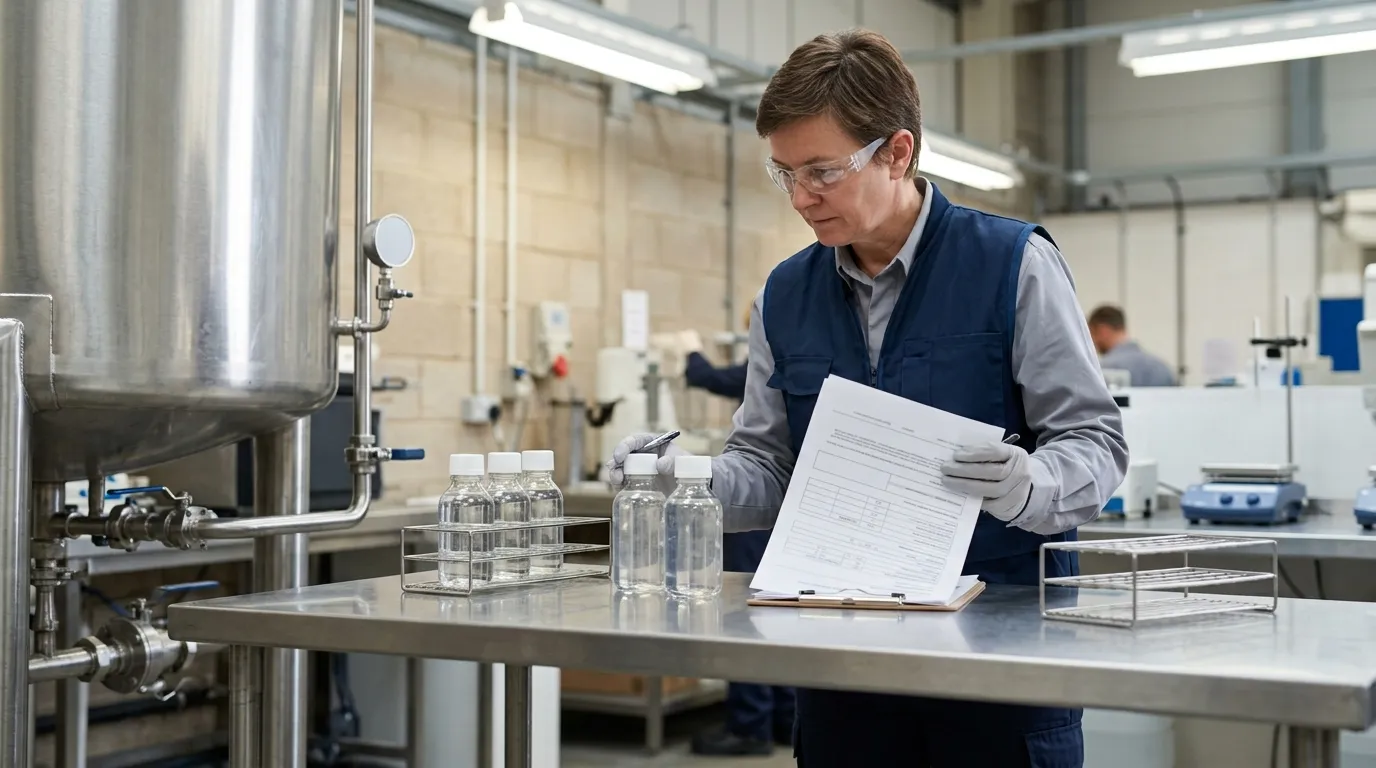
Before a polyacrylamide make-down concentration becomes a plant standard, QA and procurement teams should confirm that the operating instruction is tied to the exact product being purchased.
The technical file should address, where applicable:
- Exact product form and grade.
- Active-content or supplied-product basis.
- Recommended preparation concentration or operating range.
- Hydration or maturation guidance.
- Water-quality requirements.
- Mixing and shear limitations.
- Temperature or handling conditions.
- Storage or hold-time instructions.
- Test method used to verify preparation or application performance.
- Batch and lot-record requirements.
- Change-control requirements if the supplier, grade, form, or water source changes.
The operating document should also state the units clearly. “Percent concentration” is incomplete unless the basis is identified. The record should specify whether the value is mass/mass, mass/volume, active polymer basis, supplied-product basis, or another defined measure.
Residual acrylamide is a separate quality and regulatory consideration from the concentration of the prepared polyacrylamide solution. Older technical work has addressed analysis of residual acrylamide and polyacrylamide formulations, but that type of evidence does not by itself establish approval or suitability for a particular product, application, or jurisdiction. Any compliance statement must be tied to the exact product, application, authority, and current document.
For procurement, the most useful request is not simply “What is the PAM concentration?” Ask instead for the exact product-grade preparation instructions, concentration basis, hydration guidance, water-quality limits, shear considerations, and application documentation relevant to the intended process.
A controlled make-down specification should be revised when any of the following changes:
- Polymer form or grade.
- Supplier or product designation.
- Water source or recycled-water proportion.
- Mixing or pumping equipment.
- Preparation-tank volume.
- Treatment process or target flow.
- Application test results.
The practical standard is not the highest concentration or the lowest tank volume. It is a documented concentration window that produces a uniform, adequately hydrated solution and allows accurate, repeatable dosing under defined plant conditions. For product-specific decisions, compare the operating requirements with the supplier’s technical documentation before standardizing the procedure.


Contact Us
In This Article
Related Posts
Custom Packaging Solutions from an Anhydrous Sodium Acetate Supplier in China
2026-09-23
Application Trends in Anhydrous Sodium Acetate for Special Chemical Manufacturing
2026-09-23
Anhydrous Sodium Acetate for Leather Tanning: Improve Dyeing Uniformity
2026-09-22
Formic Acid 85% for Textile Dyeing: Industrial Applications, Technical Benefits and Future Trends
2026-09-22


