



Potassium Formate vs Calcium Chloride Brine: Oilfield Performance Compared
By vanchor
2026-07-29Related Posts

Custom Packaging Solutions from an Anhydrous Sodium Acetate Supplier in China
2026-09-23

Application Trends in Anhydrous Sodium Acetate for Special Chemical Manufacturing
2026-09-23

Anhydrous Sodium Acetate for Leather Tanning: Improve Dyeing Uniformity
2026-09-22

Formic Acid 85% for Textile Dyeing: Industrial Applications, Technical Benefits and Future Trends
2026-09-22
Potassium formate and calcium chloride brine are both used in oilfield completion-fluid systems, but they solve different problems and win under different well conditions. This comparison focuses on the factors that actually drive selection: corrosion control, shale inhibition, formation damage risk, density needs, stability, and cost trade-offs.
For broader potassium formate context, see the Potassium Formate Manufacturer: Quality, Applications, and Global Supply Guide (inferred).
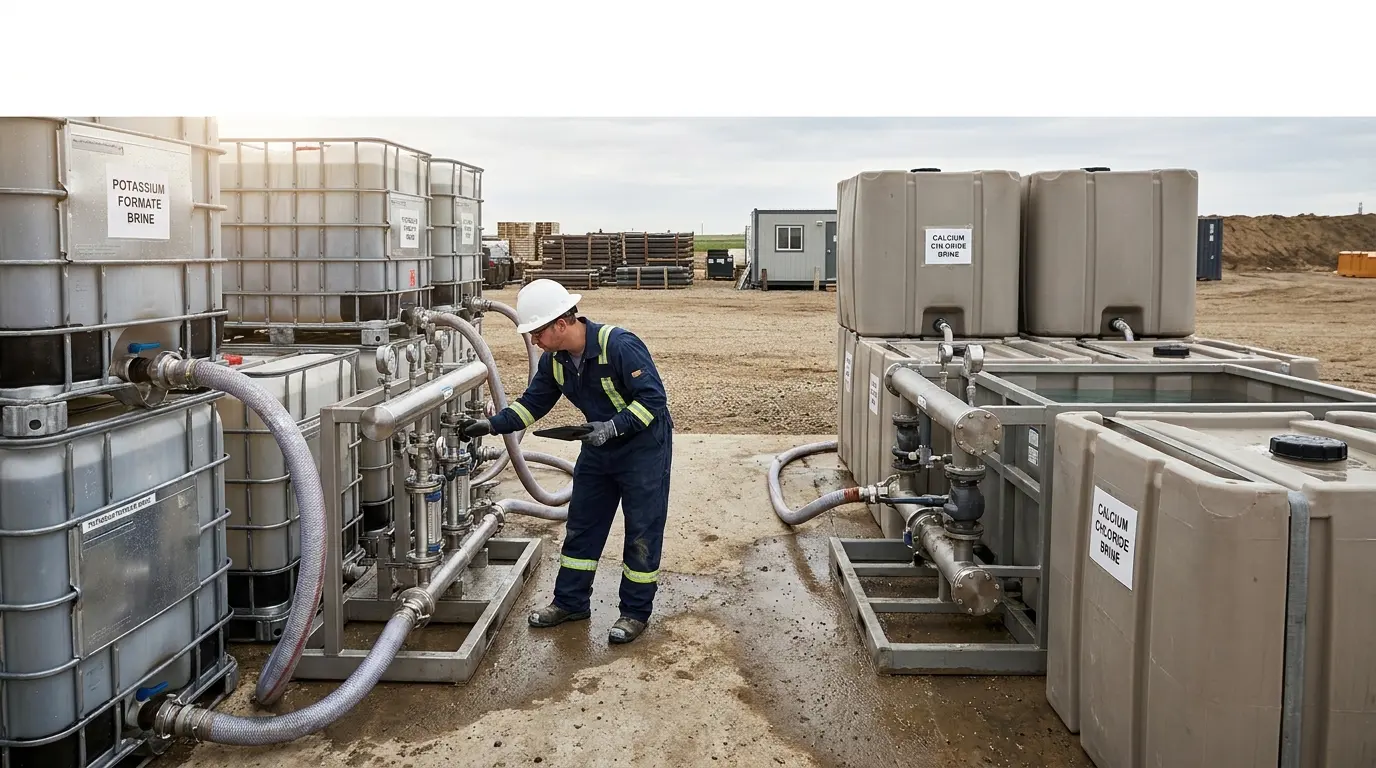
What This Comparison Really Decides
The real question is not which brine is “better” in the abstract, but which one fits the well, the metallurgy, and the reservoir sensitivity. In practice, the comparison usually comes down to whether you need stronger shale inhibition and lower formation risk, or whether a simpler calcium chloride system is enough for the job.pmc.ncbi.nlm.nih+1
A good comparison also has to respect the rest of the completion-fluid system. Density, cleanup behavior, temperature exposure, and compatibility with the formation all matter, so the right answer depends on the operating window rather than on chemistry alone.slb+1
Side-by-Side Oilfield Performance
| Factor | Potassium formate brine | Calcium chloride brine |
|---|---|---|
| Corrosion control | Often preferred when corrosion sensitivity matters more, especially in systems where protection of equipment is a concern. slb | Common and useful, but chloride-based systems can raise more corrosion concern depending on the well and metallurgy. slb |
| Shale inhibition | Strong fit for shale-sensitive wells because formate brines are used to help reduce hydration and swelling. slb+1 | Can be used in completion-fluid systems, but it is usually not the first choice when shale inhibition is the main priority. slb |
| Formation damage risk | Often favored where reservoir protection and low invasion risk are priorities. pmc.ncbi.nlm.nih+1 | Can be acceptable in less sensitive wells, but selection must account for formation compatibility and cleanup risk. pmc.ncbi.nlm.nih+1 |
| Density control | Can support completion-fluid density needs, but the exact suitability depends on the required operating window. slb+1 | Commonly used as a clear brine and valued for practical density control in many oilfield uses. slb+1 |
| Stability and handling | Useful where low-temperature or stable brine behavior matters, depending on formulation. pmc.ncbi.nlm.nih+1 | Practical and widely used, but performance must be checked against temperature and crystallization needs. slb+1 |
| Cost position | Usually the more premium option, so it makes sense when performance benefits justify the extra cost. offshore-mag | Usually the more economical choice, which makes it attractive when the well does not need the added performance of formate. slb |
Corrosion and Equipment Risk
Corrosion is one of the biggest reasons buyers separate these two brines. Calcium chloride is a familiar clear-brine option, but chloride chemistry can make corrosion control a more active part of the fluid design, especially when metallurgy is sensitive.slb
Potassium formate is often chosen when the operator wants a more protective fluid environment and a lower-risk path for equipment and completion hardware. That does not make it automatically superior in every case, but it does make it the stronger candidate when corrosion risk is one of the main concerns.slb
Shale Inhibition and Wellbore Stability
If the formation is shale-sensitive, potassium formate usually becomes much more attractive. Formate brines are commonly used in completion systems because they help reduce shale hydration and swelling, which supports wellbore stability.slb+1
Calcium chloride brine can still be useful in completion operations, but it is generally not the first fluid buyers reach for when shale inhibition is the main technical requirement. In wells where the formation is sensitive, the selection often comes down to whether the added protection of formate is worth the higher fluid cost.pmc.ncbi.nlm.nih+1
Formation Damage and Cleanup Risk
For reservoir-sensitive wells, the biggest concern is often not just pressure control but how the fluid interacts with the formation. Potassium formate is commonly favored when the buyer wants to reduce the chance of formation damage and preserve permeability during completion.pmc.ncbi.nlm.nih+1
That is why the formate option tends to appear in more demanding completion designs. Calcium chloride brine remains practical in many cases, but if the formation is easily damaged or the cleanup window is tight, the safer choice may be the fluid that better protects the reservoir.pmc.ncbi.nlm.nih+1
When Calcium Chloride Still Makes Sense
Calcium chloride brine still has a place in oilfield work because not every well needs the higher-cost formate option. If the formation is less sensitive, the metallurgy is manageable, and the completion design does not demand the strongest shale inhibition, calcium chloride can be the more efficient choice.slb+1
This is the practical reason it remains common: it can satisfy the job without overengineering the fluid system. For buyers watching budget and schedule, that matters, especially when performance requirements are ordinary rather than extreme.slb
When Potassium Formate Is the Better Choice
Potassium formate makes the most sense when the well conditions justify paying for more protection. That usually means shale-sensitive formations, higher concern over formation damage, or a completion design where compatibility and stability matter more than fluid cost alone.pmc.ncbi.nlm.nih+1
It is also the more logical option when the buyer wants to reduce the chance that fluid choice becomes the weak point in the completion plan. In those situations, the comparison is not just about chemistry; it is about whether the fluid can protect the reservoir and the equipment at the same time.slb
Selection Checklist for Buyers
Before choosing between the two brines, evaluate the well on a few simple questions:
Does the formation react badly to invasion or swelling?
Is corrosion control a major concern for the completion hardware?
What density range is required?
Will the fluid face challenging temperature conditions?
Is the budget better suited to a standard clear brine or a premium formate system?
Is reservoir protection more important than lowest-fluid cost?
If the answer to the first two or three questions is “yes,” potassium formate usually becomes easier to justify. If the well is more forgiving, calcium chloride may be enough and may offer the better commercial balance.slb+1
Practical Takeaway for Oilfield Selection
The simplest way to think about potassium formate vs calcium chloride brine is this: calcium chloride is the practical, lower-cost option for many ordinary completion jobs, while potassium formate is the stronger choice when the well is more sensitive and the fluid needs to do more.pmc.ncbi.nlm.nih+1
If you are still building out your potassium formate sourcing and application plan, the next useful step is the broader Potassium Formate Manufacturer: Quality, Applications, and Global Supply Guide (inferred), or the more specific potassium formate completion fluid and potassium formate drilling fluid pages.ijcaonline


Contact Us
In This Article
Related Posts
Custom Packaging Solutions from an Anhydrous Sodium Acetate Supplier in China
2026-09-23
Application Trends in Anhydrous Sodium Acetate for Special Chemical Manufacturing
2026-09-23
Anhydrous Sodium Acetate for Leather Tanning: Improve Dyeing Uniformity
2026-09-22
Formic Acid 85% for Textile Dyeing: Industrial Applications, Technical Benefits and Future Trends
2026-09-22


