



Acetic Acid for Leather Processing: Pickling, Dyeing, and pH Control
By vanchor
2026-07-29Related Posts
Custom Packaging Solutions from an Anhydrous Sodium Acetate Supplier in China
2026-09-23

Application Trends in Anhydrous Sodium Acetate for Special Chemical Manufacturing
2026-09-23
Anhydrous Sodium Acetate for Leather Tanning: Improve Dyeing Uniformity
2026-09-22

Formic Acid 85% for Textile Dyeing: Industrial Applications, Technical Benefits and Future Trends
2026-09-22
Acetic acid for leather processing is mainly about controlling acidity at the right stage of the workflow, especially during pickling and dyeing. In a broader acetic-acid cluster, this page focuses only on the leather use case, while the parent hub covers the wider supply and product context How a Verified Glacial Acetic Acid Exporter Supports Precision Formulation Work (inferred).
For tanneries and buyers, the key question is not just what acetic acid is, but how it affects pH, process stability, and dye behavior. The short version is that it helps lower pH in a controlled way, which can support pickling and improve conditions for dye fixation, but the exact choice still depends on the process and the acid being used.patents.
What Acetic Acid Does in Leather Processing
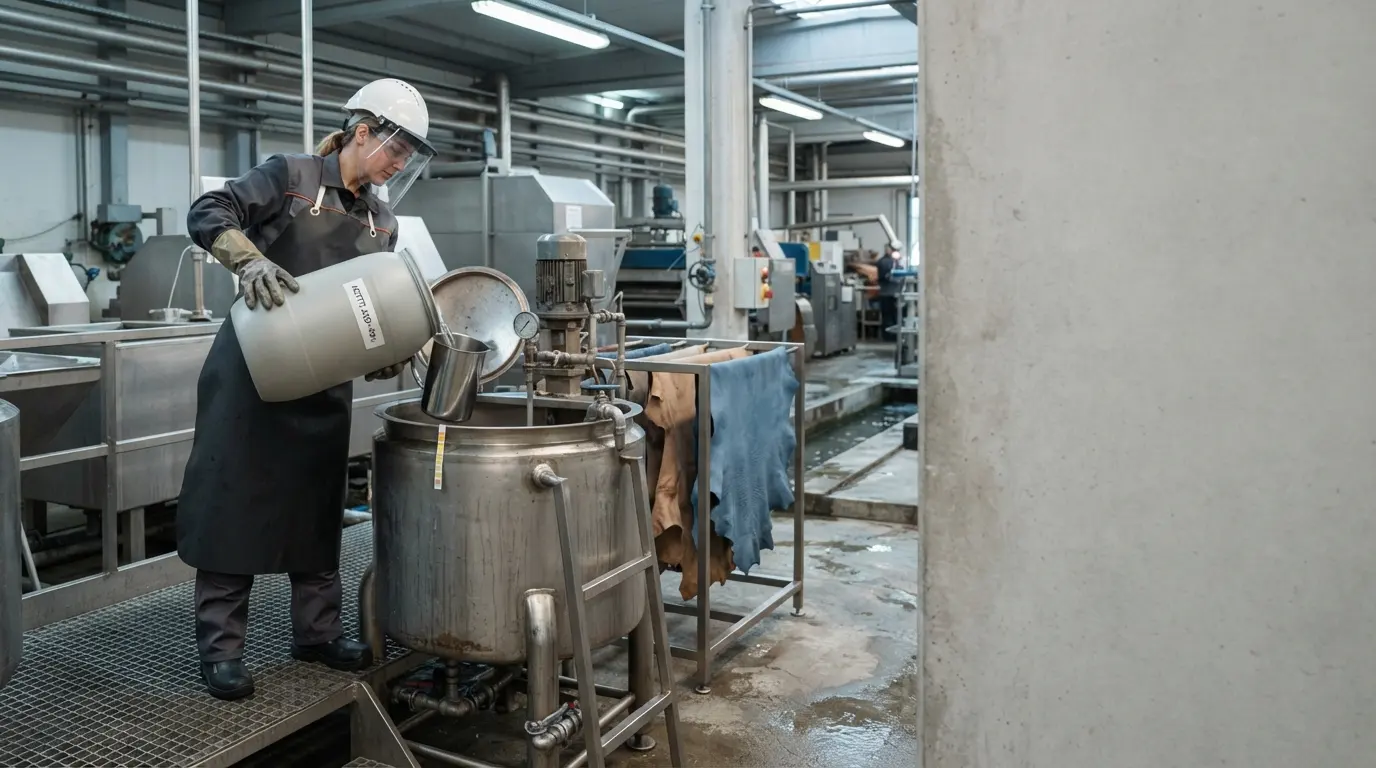
Acetic acid is used in leather processing as a pH-lowering aid that supports specific tannery stages rather than as a universal all-purpose chemical. In the Vanchor product context, the company states that its Acetic Acid 80% Min is used in leather processing for pH adjustment, pickling, dye fixing, and finishing support.
That matters because leather processing is very sensitive to acidity. If pH is not controlled properly, the hide or pelt can behave unpredictably during later steps, and the process can become less uniform.books.
Why pH control matters
pH is one of the most important control points in tannery work because it affects how the material absorbs chemicals and how stable the process stays. Technical leather sources describe pH measurement and pH control as a core quality-control activity, not a side issue.
When acidity is managed well, the process can support more consistent penetration and better downstream performance. When it is pushed too far, the risk shifts toward acid swelling and other process problems.
Acetic Acid in Pickling
Pickling is the leather stage where the pH is lowered further after earlier preparation so the hide is ready for tanning, especially chrome tanning. Acetic acid fits into that workflow as a controlled acid source that helps bring the system into the acidic range needed for stable processing.pmc.ncbi.nlm.nih+1
In practical terms, pickling is not just “adding acid.” It is a controlled step that prepares the hide for the next stage without damaging the structure. That is why processors care about how quickly the pH drops, how deep the acid penetrates, and whether the material stays stable during the change.books.rsc+1
A useful way to think about it is this:
The hide is prepared in earlier stages.
The acidification step lowers pH in a controlled way.
The material becomes ready for tanning without excessive swelling.
Later tannery steps can proceed more uniformly.books.rsc+1
What can go wrong if pH drops too far
If the system becomes too acidic too quickly, the leather can swell or behave unevenly. That is one reason pickling is treated as a process-control issue rather than a simple chemical-addition step.books.rsc
For that reason, acetic acid should be viewed as a tool for controlled acidification, not as a stand-alone fix for all leather-processing problems. Process conditions and target pH still matter more than the name of the acid itself.books.rsc+1
Acetic Acid in Dyeing
Acetic acid also matters in leather dyeing because dye behavior changes as pH changes. Technical sources show that low pH can help acid dyes fix more readily to leather, which is why pH adjustment is part of the dyeing discussion.patents.google+1
This does not mean acetic acid “dyes” the leather by itself. Instead, it helps create conditions where dye uptake and fixation can be more consistent. In a tannery, that can support better shade behavior and a more predictable result when the recipe and process are otherwise correct.patents.google+1
Vanchor’s product page also ties its acetic acid offering to dye fixing in leather use, which supports the relevance of this section for industrial buyers evaluating the product for that application.vanchorsc
Dyeing questions readers usually have
The most common practical question is whether acetic acid is used before, during, or after dye addition. In general, the answer depends on the dye system and the process target, but the common theme is the same: pH control influences how the dye behaves in the bath and how it interacts with the leather.patents.google+1
A second question is whether acetic acid is the only acid that can play this role. It is not. That is why a comparison with formic acid is important before a buyer treats any acid as interchangeable.pmc.ncbi.nlm.nih+1
Acetic Acid vs Formic Acid
Acetic acid and formic acid both appear in leather-processing discussions because both can be used in acidic workflows, including pickling-related contexts. The important difference is not that one is always “better,” but that process requirements decide which acid is more suitable.pmc.ncbi.nlm.nih+1
| Factor | Acetic Acid | Formic Acid |
|---|---|---|
| Main role | Controlled acidification and pH adjustment in leather workflows books.rsc+1 | Commonly discussed in leather pickling and related acidic processing pmc.ncbi.nlm.nih+1 |
| Process feel | More about steady pH control | Often discussed as a more direct pickling acid in technical leather content |
| Best use case | When the process needs controlled acidity and leather-specific pH support | When the workflow calls for a different acidification profile |
| Selection point | Evaluate process speed, acid strength, and formulation needs | Evaluate pickling behavior, penetration, and process compatibility |
The practical takeaway is simple: choose based on the workflow, not on a generic assumption that one acid fits every tannery situation. That is especially important if the goal is to avoid acid swelling while still reaching the pH range needed for the next step.pmc.ncbi.nlm.nih+2
Choosing an Industrial Grade
If you are sourcing acetic acid for leather use, industrial-grade consistency matters more than broad marketing language. In Vanchor’s case, the company confirms an Acetic Acid 80% Min product for textile, leather, cleaning, and industrial processing, and the page notes COA and SDS support.vanchorsc
For a buyer, the useful questions are straightforward:
Is the grade appropriate for industrial leather processing?
Is the concentration consistent enough for repeatable pH adjustment?
Are COA and SDS available for procurement and handling?
Does the supplier clearly state the intended application?vanchorsc
Those questions matter because leather processing depends on repeatability. If the acid strength or documentation is unclear, the process becomes harder to control and easier to misapply.scribd+1
What This Page Is Not
This page is not a full leather-chemicals handbook, and it is not a generic acetic-acid manufacturing page. The broader acetic-acid hub and related product pages handle those wider topics.vanchorsc+3
The value here is narrower: understand how acetic acid fits into leather processing, where it helps, where it can create risk, and how to judge whether it belongs in your workflow.
If you are evaluating acetic acid for a tannery use case, the next best step is to compare the process requirement with the supplier’s confirmed grade and documentation, then move outward to the broader acetic-acid supply hub when you need the wider product context How a Verified Glacial Acetic Acid Exporter Supports Precision Formulation Work (inferred).vanchorsc


Contact Us
In This Article
Related Posts
Custom Packaging Solutions from an Anhydrous Sodium Acetate Supplier in China
2026-09-23
Application Trends in Anhydrous Sodium Acetate for Special Chemical Manufacturing
2026-09-23
Anhydrous Sodium Acetate for Leather Tanning: Improve Dyeing Uniformity
2026-09-22
Formic Acid 85% for Textile Dyeing: Industrial Applications, Technical Benefits and Future Trends
2026-09-22


