



Soda Ash vs Sodium Bicarbonate: Alkalinity, pH, and Industrial Use Differences
By Tonmoy
2026-08-22Related Posts
Custom Packaging Solutions from an Anhydrous Sodium Acetate Supplier in China
2026-09-23
Application Trends in Anhydrous Sodium Acetate for Special Chemical Manufacturing
2026-09-23
Anhydrous Sodium Acetate for Leather Tanning: Improve Dyeing Uniformity
2026-09-22
Formic Acid 85% for Textile Dyeing: Industrial Applications, Technical Benefits and Future Trends
2026-09-22
Soda ash and sodium bicarbonate are different chemical compounds, even though both are alkaline sodium salts. Soda ash is commonly used to refer to sodium carbonate, Na₂CO₃. Sodium bicarbonate, NaHCO₃, is also known as baking soda.
The practical difference is significant: sodium carbonate generally produces a stronger alkaline response than sodium bicarbonate under comparable aqueous conditions, while sodium bicarbonate provides a different bicarbonate-based alkalinity profile. Neither material should be substituted for the other solely because both can raise pH.
For industrial selection, compare the required chemical function first, then verify the exact grade, form, concentration basis, process conditions, and technical documentation.
The chemical identity comes first
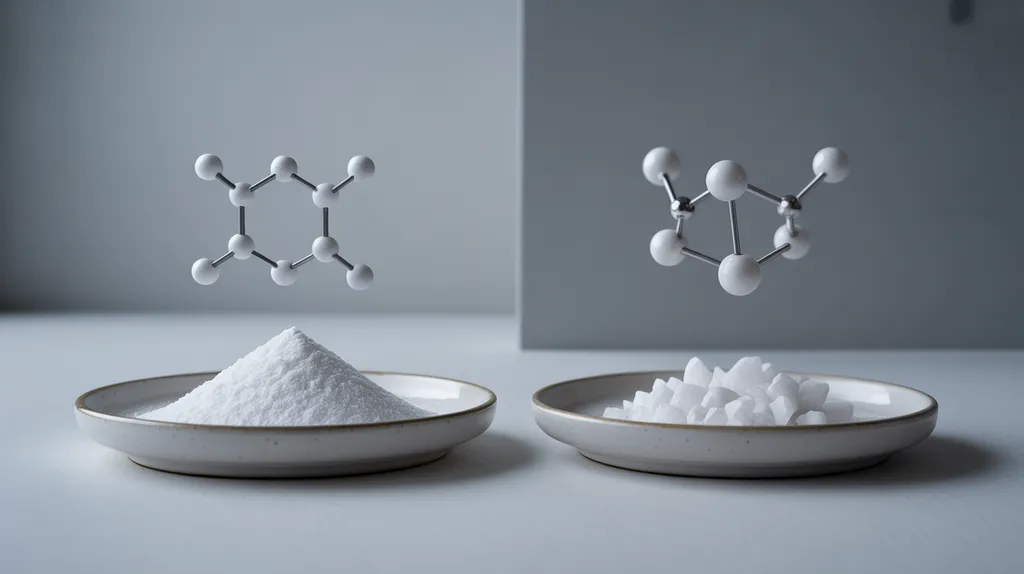
| Comparison point | Soda ash | Sodium bicarbonate |
|---|---|---|
| Common chemical name | Sodium carbonate | Sodium bicarbonate |
| Formula | Na₂CO₃ | NaHCO₃ |
| Common alternative name | Soda ash | Baking soda |
| Main chemical distinction | Carbonate salt | Bicarbonate salt |
| Interchangeability | Not automatically interchangeable | Not automatically interchangeable |
Soda ash is the common industrial name for sodium carbonate. However, buyers should still confirm the exact product form because commercial descriptions can also distinguish between physical forms such as light and dense soda ash. The relevant differences may include bulk density, particle characteristics, moisture, and handling behavior. A detailed form comparison should be kept separate from the basic chemical-identity comparison; see soda ash light vs dense when the purchasing decision involves physical form.
Sodium bicarbonate contains one hydrogen atom where sodium carbonate contains a second sodium-associated carbonate structure. That difference affects how each compound reacts in water and with acids. It also affects the resulting pH behavior, acid-neutralization profile, and suitability for particular formulations or process steps.
A product name alone does not establish assay, moisture, particle size, impurity limits, or application suitability. Those details must come from the specification for the exact grade being purchased.
How alkalinity and pH differ
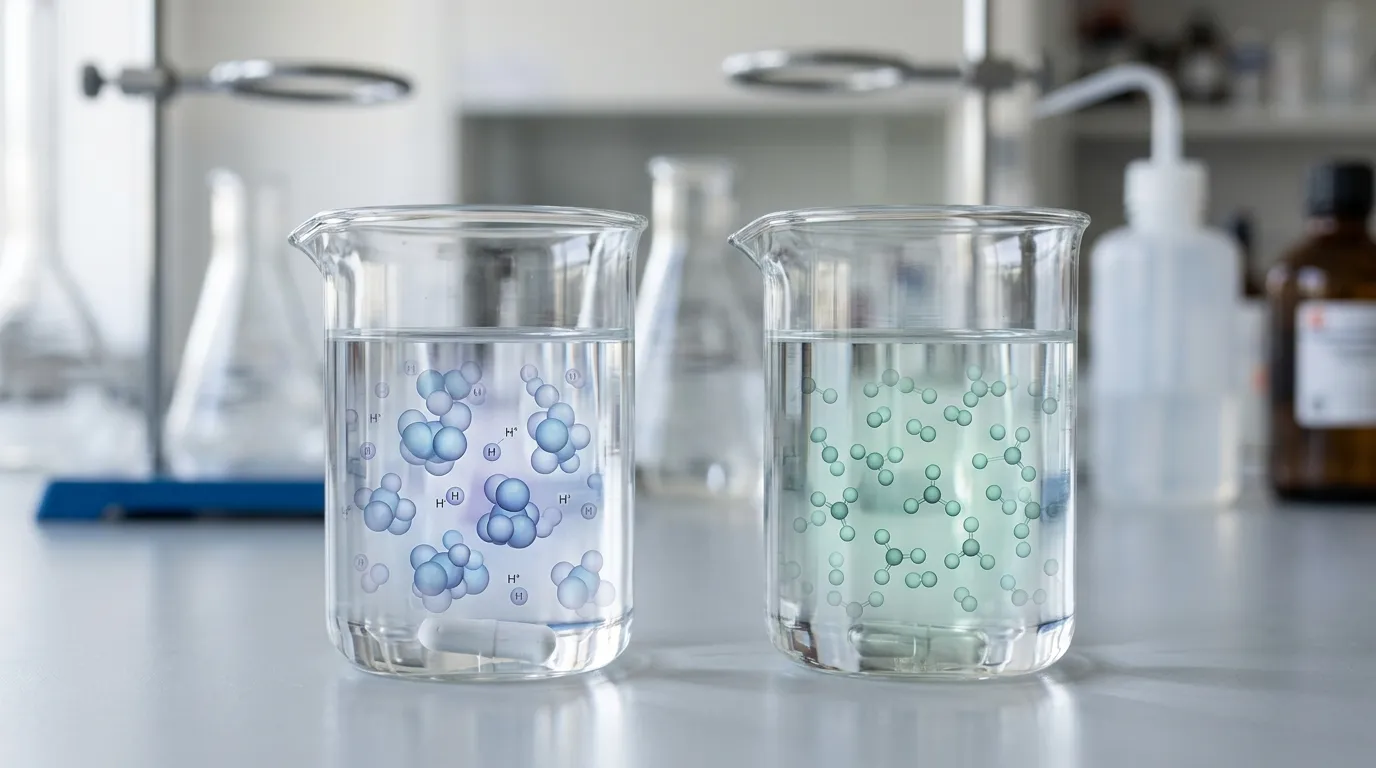
pH and alkalinity are related, but they are not the same measurement.
- pH describes the acidity or alkalinity of a particular solution under defined conditions.
- Alkalinity describes the capacity of a system to neutralize acid or resist a change in pH, according to the applicable measurement basis.
Sodium carbonate generally gives a stronger alkaline response than sodium bicarbonate in comparable aqueous use. That does not mean that one product has a universal pH value or that sodium carbonate is always the better choice. The measured pH depends on factors such as:
- Solution concentration
- Temperature
- Water composition
- Ionic strength
- Product form and purity
- Test method
- Measurement timing and equipment
For this reason, an unqualified statement such as “soda ash has a pH of X” is incomplete. The concentration, temperature, and test method must be stated before a pH value can be meaningfully compared.
| Technical criterion | Sodium carbonate / soda ash | Sodium bicarbonate | Industrial implication |
|---|---|---|---|
| Chemical species | Carbonate | Bicarbonate | The two materials follow different reaction pathways |
| General alkaline response | Generally stronger in comparable aqueous conditions | Generally milder in comparable aqueous conditions | The required pH adjustment must be defined before selection |
| pH interpretation | Depends on concentration and test conditions | Depends on concentration and test conditions | Unqualified pH figures should not be used for procurement decisions |
| Alkalinity role | Can provide carbonate alkalinity and stronger pH adjustment | Provides bicarbonate alkalinity and a different buffering response | Process requirements should specify the desired chemical function |
| Substitution risk | May over-adjust pH or change process chemistry if used in place of bicarbonate | May not provide the required alkaline strength if used in place of soda ash | Substitution requires application-specific validation |
Both compounds can affect pH and alkalinity, but the result depends on the starting solution and the process objective. A chemical selected to provide a particular acid-neutralization capacity may not be replaceable on a simple mass-for-mass basis.
Pool-water examples often appear in consumer search results, but their concentrations and operating assumptions are not industrial process specifications. They should not be transferred to chemical manufacturing, water-treatment operations, or formulation work without separate technical validation.
Industrial uses: where the two chemicals may fit differently
Sodium carbonate is widely associated with industrial applications such as glass, detergents, water treatment, paper, and other alkaline-process uses. The appropriate grade and process conditions still need to be confirmed for each application. Vanchor’s broader overview of sodium carbonate industrial uses can be used for application-specific background.
Sodium bicarbonate is a separate material with a different reaction profile. It may be selected where bicarbonate chemistry, a different buffering response, controlled acid reaction, or a milder alkaline effect is required. The fact that both chemicals appear in industrial or formulated products does not mean that they perform the same role within those products.
A practical application comparison looks like this:
| Process requirement | Chemical that may be relevant | Why the distinction matters | What to verify |
|---|---|---|---|
| A stronger alkaline adjustment is required | Sodium carbonate may be considered | Carbonate chemistry generally gives a stronger alkaline response than bicarbonate under comparable conditions | Required pH range, alkalinity basis, concentration, and grade |
| A bicarbonate-based function is required | Sodium bicarbonate may be considered | Replacing bicarbonate with carbonate changes the chemical species and reaction behavior | Formulation requirements, acid demand, and product specification |
| Glass or detergent process requires sodium carbonate chemistry | Sodium carbonate may be relevant | The process may depend on carbonate rather than bicarbonate behavior | Exact application grade and impurity limits |
| A formulation requires controlled alkalinity or reaction behavior | Either may be relevant, depending on the process | “Alkaline” does not identify the required carbonate species | Bench or process validation under defined conditions |
| A regulated application is involved | Only the specifically approved grade should be considered | Chemical identity alone does not establish regulatory suitability | Product, grade, jurisdiction, application, and current documentation |
For example, a detergent formulation may be designed around sodium carbonate’s alkalinity and builder function. A process using sodium bicarbonate may instead depend on bicarbonate behavior, controlled reaction with an acid component, or a specified product grade. The two materials should therefore be evaluated by function rather than by their shared ability to influence pH.
Detailed application pages such as soda ash detergent production should be consulted for process-specific context rather than treating this comparison as a complete application guide.
Can sodium bicarbonate replace soda ash?
Sometimes a process may be redesigned to use a different carbonate material, but substitution cannot be approved from the chemical names alone.
Replacing sodium carbonate with sodium bicarbonate can change:
- The alkaline response
- The carbonate-to-bicarbonate balance
- Acid-neutralization behavior
- The amount of sodium introduced
- Dissolution and handling characteristics
- Formulation stability
- Final product or process performance
The reverse substitution can also create problems. Sodium carbonate may produce a stronger alkaline response than the process was designed to tolerate. It may alter the target pH, reaction rate, material compatibility, or downstream quality characteristics.
Before approving substitution, a technical team should:
- Define the required chemical function. Determine whether the process needs carbonate alkalinity, bicarbonate alkalinity, pH adjustment, buffering, acid neutralization, or another specific role.
- Confirm the chemical basis. Check whether the formulation or process specification calls for sodium carbonate, sodium bicarbonate, carbonate equivalents, bicarbonate equivalents, or another defined basis.
- Compare the exact products. Review chemical identity, solid or solution form, assay basis, moisture, impurities, particle characteristics, and any other process-critical specification.
- Check operating conditions. Record concentration, temperature, water composition, equipment conditions, and the applicable pH or alkalinity test method.
- Validate against acceptance criteria. Confirm that the proposed material meets the process and final-product requirements before making a routine change.
There is no universal mass-for-mass replacement rule that can be applied safely across industrial processes. A supplier catalog listing also does not establish that a particular grade has been validated as a substitute. Exact product information for sodium carbonate and sodium bicarbonate should be reviewed separately when making a product-specific comparison.
What technical information should a buyer verify?
A procurement or QA review should identify the exact material required before requesting a quotation or approving an alternative. Important checks include:
- Chemical name and identity
- CAS number, where required by the purchasing specification
- Solid versus solution form
- Any hydrate or other form distinction
- Assay or purity basis
- Whether specification values are minimum, maximum, or typical
- Moisture content
- Insoluble matter and other process-critical impurities
- Particle size or bulk-density requirements, where relevant
- Solution-pH concentration, temperature, and test method
- Applicable TDS, SDS, and batch COA
- Product-specific regulatory documentation, if the application is regulated
- Consistency between the quotation, specification, label, and supplied product
A technical data sheet can describe product specifications, while a certificate of analysis generally describes the result for a particular batch. An SDS addresses hazard and handling information. These documents serve different purposes and should not be treated as interchangeable.
For example, an SDS does not establish food, feed, pharmaceutical, or drinking-water suitability. A high assay does not by itself establish approval for a regulated application. Similarly, a product listing does not prove in-house manufacture, current stock, or guaranteed availability.
If handling requirements are part of the purchasing decision, consult the applicable product SDS and the relevant soda ash storage handling guidance. Do not infer a transport classification or storage compatibility requirement without product- and jurisdiction-specific documentation.
Practical comparison: which one fits the process?
The better choice depends on the function required by the process:
- Consider soda ash/sodium carbonate when the documented process requirement is compatible with carbonate chemistry and a generally stronger alkaline response.
- Consider sodium bicarbonate when the process specifically requires bicarbonate chemistry or a different alkalinity and reaction profile.
- Do not substitute either material based only on the fact that both are alkaline.
- Verify the exact grade and form before comparing specifications or performance.
- Confirm concentration and test conditions before comparing pH or alkalinity data.
- Request product-specific documentation before approving a formulation or process change.
Soda ash and sodium bicarbonate are related materials, but they are not equivalent industrial inputs. The correct selection is the one that matches the required chemical species, process conditions, grade, and acceptance criteria—not simply the product with the more familiar name or the lower apparent unit cost.


Contact Us
In This Article
Related Posts
Custom Packaging Solutions from an Anhydrous Sodium Acetate Supplier in China
2026-09-23
Application Trends in Anhydrous Sodium Acetate for Special Chemical Manufacturing
2026-09-23
Anhydrous Sodium Acetate for Leather Tanning: Improve Dyeing Uniformity
2026-09-22
Formic Acid 85% for Textile Dyeing: Industrial Applications, Technical Benefits and Future Trends
2026-09-22


