



How to Choose a Reliable Sodium Formate Manufacturer
By vanchor
2026-07-15Related Posts
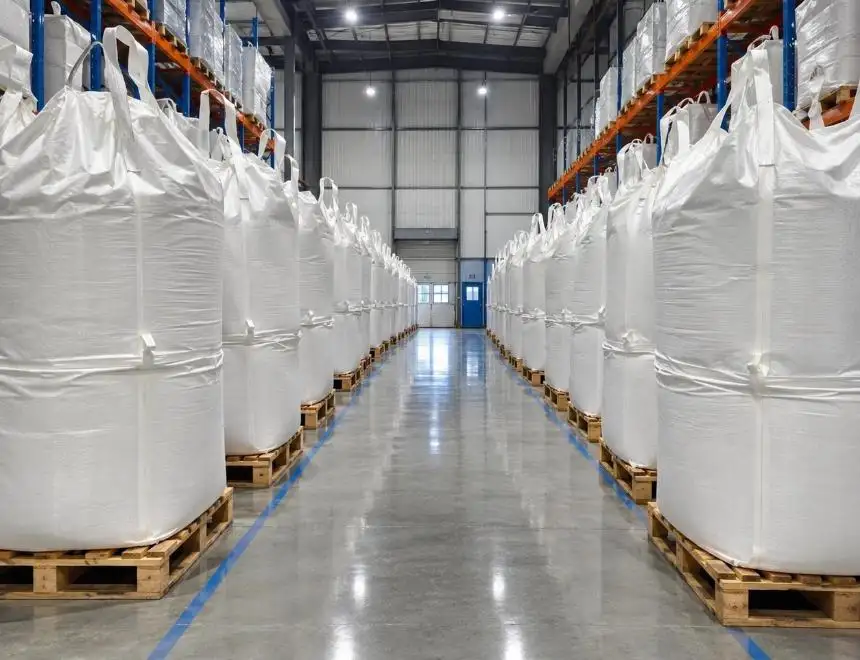
What Purity Is Required for Sodium Formate for De-Icing Applications?
2026-08-21
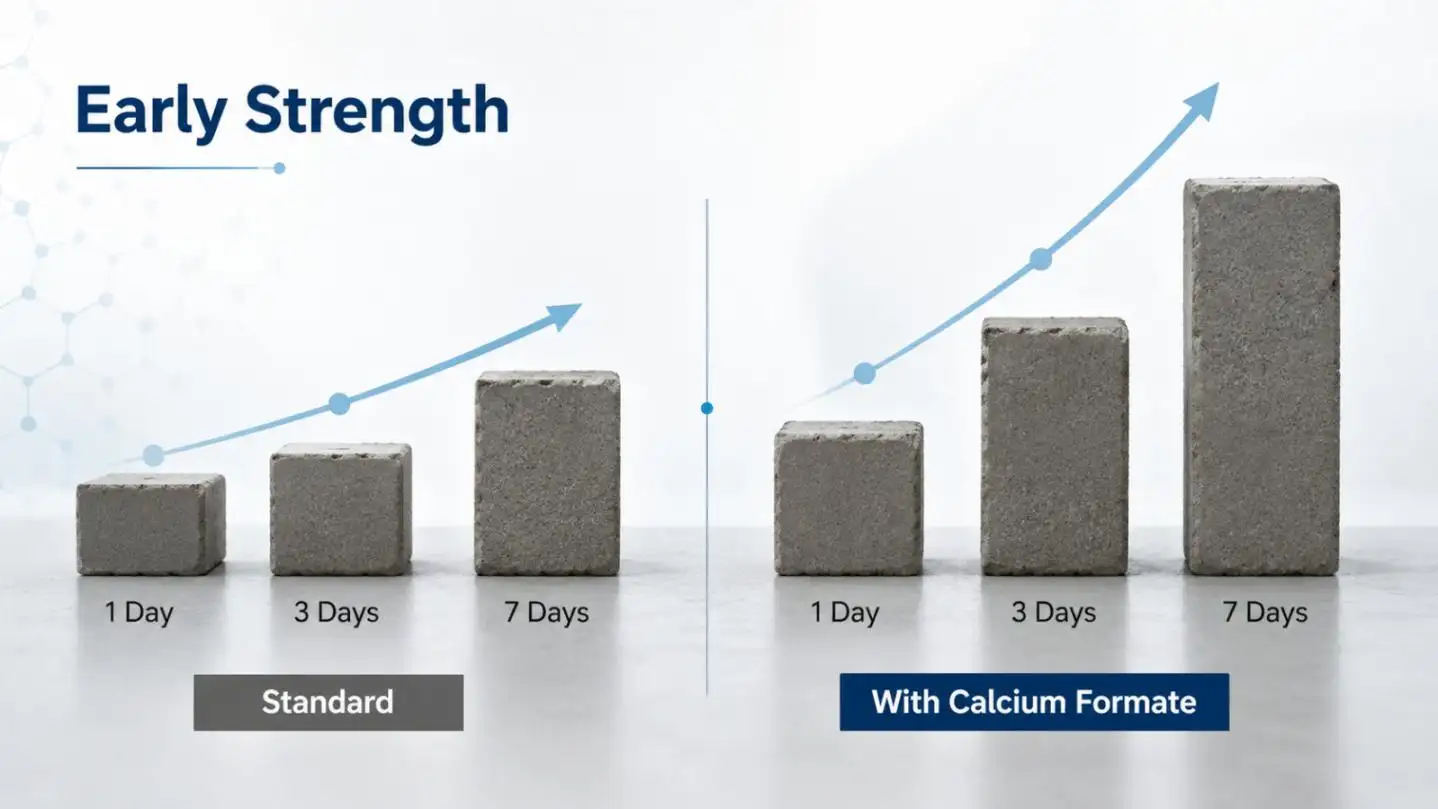
Calcium Formate for Tile Adhesive: How It Improves Early Strength and Setting Time
2026-08-20
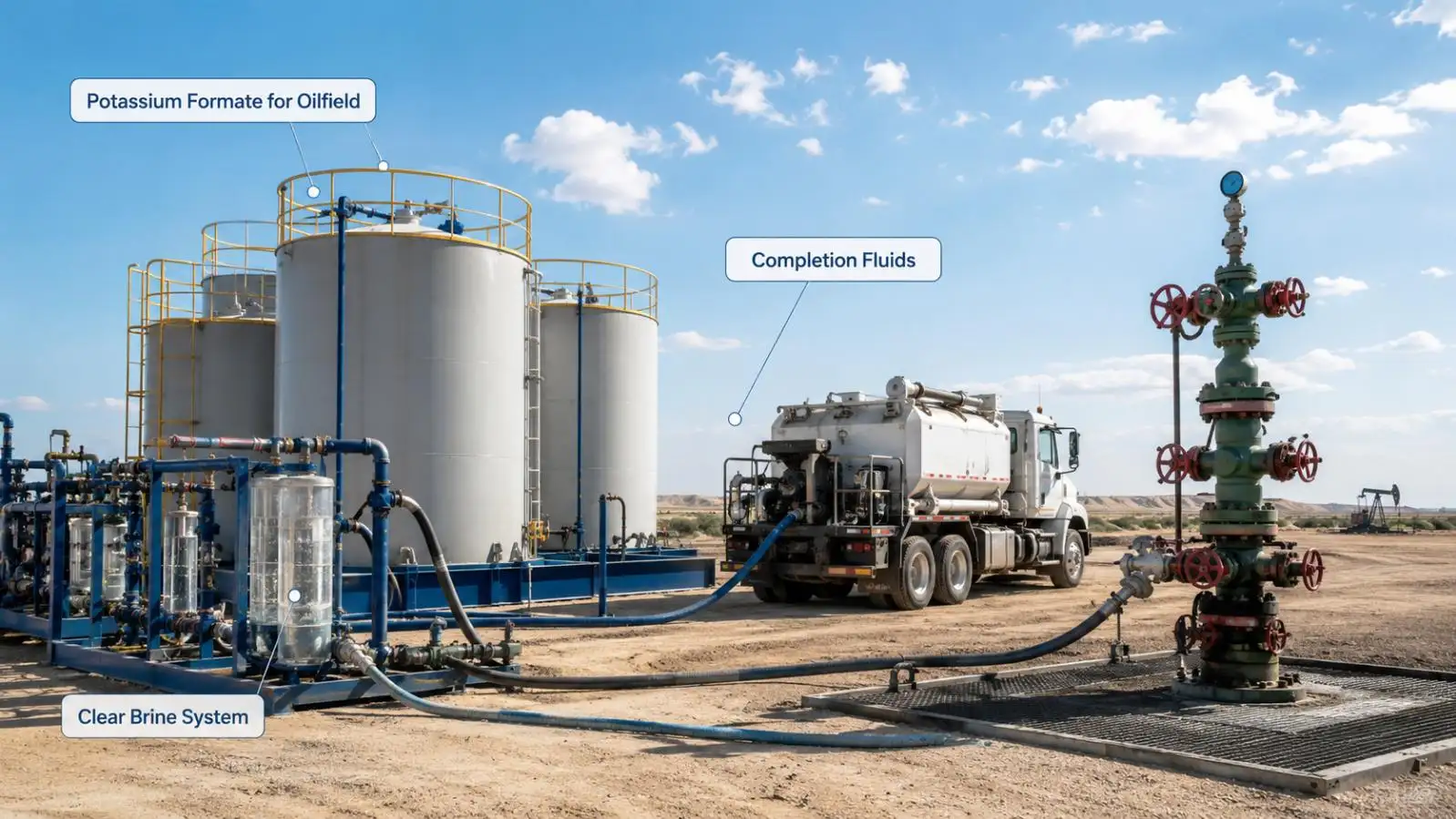
Potassium Formate for Oilfield Completion Fluids: Density, Compatibility and Formation Protection
2026-08-19
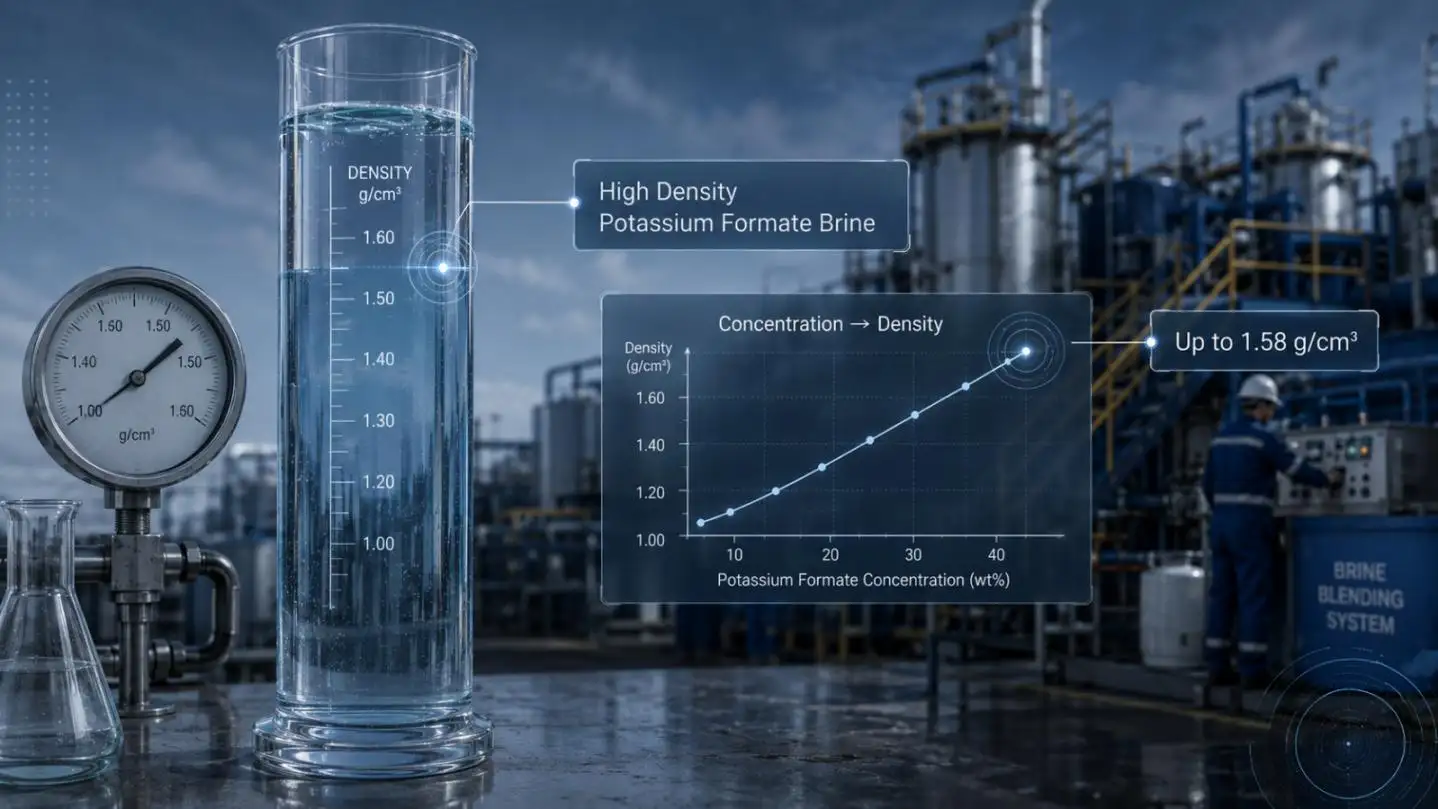
High Density Potassium Formate Brine: Density Range, Properties and Oilfield Applications
2026-08-18
Sodium formate is an important chemical for leather, construction, oilfield, de-icing formulations, textile and chemical manufacturing. The quality of the sodium formate depends on the purity, moisture content, consistency of the particles and the control of the impurities; therefore, selecting the right sodium formate manufacturer is crucial to ensure stable production and product quality.
A professional manufacturer should offer better than competitive pricing. In addition, the buyer should consider production capacity, quality control procedures, technical documentation, packaging, experience exporting to their market, and long-term supply stability.
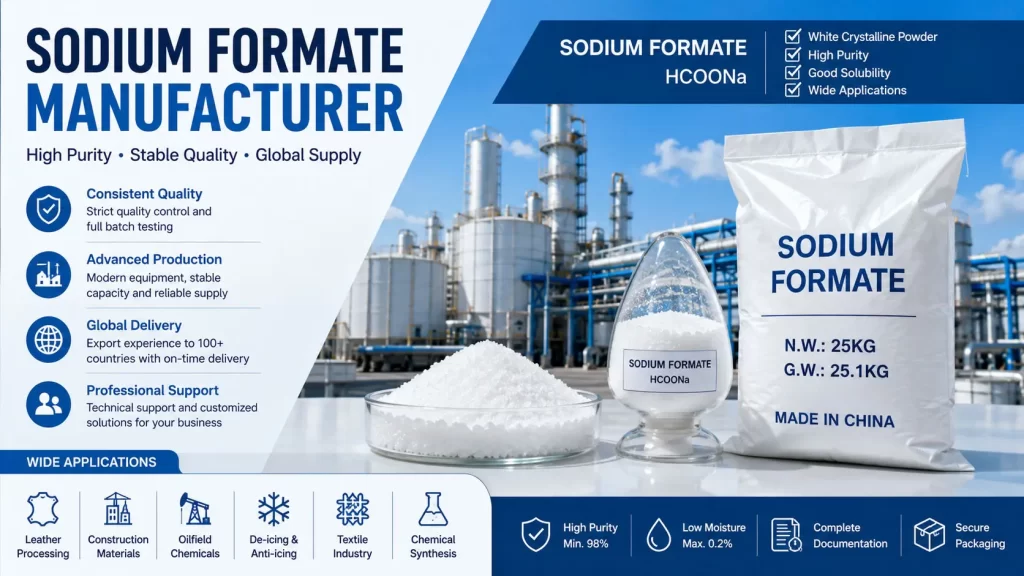
What Is Sodium Formate?
Sodium formate is the sodium salt of formic acid. Its chemical formula is HCOONa. It is generally supplied as a white crystalline powder or granule with good water solubility.
The product is widely used because it is easy to handle, relatively stable during storage, and suitable for various industrial formulations.
Depending on the application, sodium formate may be supplied in different purity grades and particle sizes. Industrial buyers should confirm the required specification before placing an order.
Common Applications of Sodium Formate
Sodium formate is used across several industries.
Leather Processing
In leather manufacturing, sodium formate is commonly used during tanning and dyeing processes. It can help regulate acidity and improve the penetration of chemicals into hides.
Consistent purity is important because excessive impurities may affect leather color, softness, and processing stability.
Construction Materials
Sodium formate may be used in selected cement, concrete, and dry-mix formulations. It can support low-temperature performance and help adjust setting behavior depending on the formulation.
Construction chemical producers should test compatibility with cement, binders, and other additives before mass production.
Oilfield Operations
In oil and gas applications, sodium formate can be used in completion fluids, drilling fluids, and other technical formulations.
Its high solubility and low crystallization tendency make it useful in certain high-density brine systems. Oilfield buyers usually require strict control over chloride, sulfate, insoluble matter, and heavy metals.
De-Icing and Anti-Icing Products
Sodium formate can be used in de-icing products for roads, airport runways, and industrial surfaces.
It is often selected for formulations that require effective low-temperature performance and reduced corrosion compared with some traditional chloride-based materials.
Textile and Dyeing Processes
In textile processing, sodium formate may be used as a buffering or auxiliary chemical. Stable purity and good solubility help ensure predictable results during production.
Chemical Manufacturing
Sodium formate can also serve as a raw material or process additive in chemical synthesis, reduction reactions, and specialty chemical production.
Important Sodium Formate Specifications
Before purchasing, buyers should request a complete technical specification.
Common quality parameters include:
- Sodium formate content
- Moisture content
- Sodium chloride level
- Sodium hydroxide content
- Insoluble matter
- Iron content
- pH value
- Particle size
- Appearance
- Bulk density
The exact requirements depend on the application.
For leather and construction use, standard industrial-grade material may be sufficient. Oilfield and specialty chemical applications may require stricter impurity control and higher purity.
A reliable sodium formate manufacturer should clearly state the standard specification and confirm whether customized grades are available.
Why Product Purity Matters
Purity affects both processing efficiency and final product performance.
Low-purity sodium formate may contain excessive moisture, chloride, insoluble material, or other impurities. These substances can create problems such as:
- Unstable chemical reactions
- Reduced solubility
- Equipment deposits
- Product discoloration
- Lower formulation efficiency
- Higher dosage requirements
- Inconsistent production results
Buyers should not evaluate sodium formate only by price. A slightly cheaper product may create higher processing costs if the purity is unstable.
Evaluate Manufacturing Capability
A dependable sodium formate manufacturer should have stable production equipment, reliable raw material sources, and standardized operating procedures.
Buyers may evaluate:
- Annual production capacity
- Monthly output
- Raw material supply
- Production automation
- Storage capacity
- Quality management procedures
- Batch traceability
- Maintenance planning
Strong production capacity is especially important for customers who require regular shipments or large annual volumes.
A manufacturer should also be able to explain how it manages peak demand, equipment maintenance, and raw material fluctuations.
Review Quality Control Procedures
Quality control should cover the entire manufacturing process.
A professional system may include:
- Raw material inspection
- In-process monitoring
- Batch sampling
- Laboratory testing
- Finished product inspection
- Packaging verification
- Retained sample management
- Pre-shipment inspection
Each batch should be tested before release.
The manufacturer should provide a Certificate of Analysis showing actual test results. Buyers should compare the certificate with the agreed specification before accepting the shipment.
For critical applications, third-party inspection or independent laboratory testing may also be arranged.
Request Samples Before Ordering
A sample allows buyers to confirm whether the sodium formate is suitable for their formulation and production process.
Sample evaluation may include:
- Purity testing
- Moisture analysis
- Solubility testing
- Particle size evaluation
- pH testing
- Compatibility trials
- Production line testing
- Storage stability testing
After sample approval, the buyer should record the final specification and ensure that bulk orders follow the same standard.
Check Documentation Support
International chemical sourcing requires accurate documentation.
A sodium formate manufacturer should normally provide:
- Safety Data Sheet
- Technical Data Sheet
- Certificate of Analysis
- Product specification
- Commercial invoice
- Packing list
- Certificate of Origin
- Export declaration documents
- Transportation information
The product name, chemical formula, package weight, batch number, and country of origin should remain consistent across all documents.
Complete documentation helps buyers manage customs clearance, workplace safety, customer approval, and quality audits.
Select Suitable Packaging
Sodium formate is commonly supplied in:
- 25 kg woven bags
- 25 kg paper bags
- Plastic-lined bags
- 500 kg jumbo bags
- 1,000 kg bulk bags
- Customized private-label packaging
Because sodium formate can absorb moisture, the packaging should have a reliable inner barrier and secure sealing.
For international transportation, buyers may also request:
- Palletized loading
- Waterproof wrapping
- Container desiccants
- Reinforced bags
- Neutral packaging
- Customized labels
The manufacturer should recommend packaging based on shipment distance, storage conditions, and local handling requirements.
Assess Export and Logistics Experience
An experienced sodium formate exporter should understand container loading, weight limits, customs documentation, port requirements, and moisture protection.
Before shipment, buyers should confirm:
- Port of loading
- Incoterm
- Container quantity
- Net and gross weight
- Pallet requirements
- Estimated sailing schedule
- Delivery lead time
- Cargo insurance
- Destination documentation
Good logistics planning reduces the risk of damaged packaging, customs delays, and moisture exposure.
Compare Total Procurement Value
The lowest price is not always the best option.
Buyers should compare:
- Product purity
- Batch consistency
- Packaging quality
- Documentation
- Delivery reliability
- Technical support
- Communication efficiency
- Complaint handling
Stable quality can reduce production interruptions, rejected materials, and formulation adjustments.
A dependable supplier may provide greater long-term value even if the initial quotation is slightly higher.
Build a Long-Term Supply Partnership
Long-term cooperation helps both buyers and manufacturers improve planning.
Regular customers may benefit from:
- Reserved production capacity
- Stable specifications
- Customized packaging
- Flexible shipment schedules
- Faster sample preparation
- Improved forecasting
- Technical support
- More efficient communication
Buyers should share annual demand, destination markets, preferred packaging, and expected order frequency.
Manufacturers should communicate changes in raw material prices, production schedules, and delivery conditions in advance.
Conclusion
Choosing the right sodium formate manufacturer requires careful evaluation of purity, production capability, quality control, packaging, documentation, and export experience.
A reliable manufacturer should provide stable product quality, transparent technical information, complete batch records, and dependable global delivery.
Before placing a large order, buyers should test samples, confirm specifications, review packaging, and verify the supplier’s quality management system. A structured sourcing process can reduce risk and support a more stable long-term chemical supply chain.
Share on Social:


Contact Us
In This Article
Related Posts
What Purity Is Required for Sodium Formate for De-Icing Applications?
2026-08-21
Calcium Formate for Tile Adhesive: How It Improves Early Strength and Setting Time
2026-08-20
Potassium Formate for Oilfield Completion Fluids: Density, Compatibility and Formation Protection
2026-08-19
High Density Potassium Formate Brine: Density Range, Properties and Oilfield Applications
2026-08-18


