



Acetic Acid for Acetate Ester Production: Purity, Water Balance, and Feedstock Selection
By Tonmoy
2026-09-06Related Posts
Custom Packaging Solutions from an Anhydrous Sodium Acetate Supplier in China
2026-09-23
Application Trends in Anhydrous Sodium Acetate for Special Chemical Manufacturing
2026-09-23
Anhydrous Sodium Acetate for Leather Tanning: Improve Dyeing Uniformity
2026-09-22
Formic Acid 85% for Textile Dyeing: Industrial Applications, Technical Benefits and Future Trends
2026-09-22
Acetic acid is used as a carboxylic-acid feedstock for producing acetate esters through reaction with an alcohol. The reaction forms an acetate ester and water, so feedstock selection involves more than choosing the highest assay available.
For industrial acetate ester production, the relevant questions are:
- What concentration of acetic acid does the process require?
- How much water enters with the supplied feedstock?
- Which impurities could affect the catalyst, separation system, or ester specification?
- Does the supplier provide the documentation needed for QA approval?
- Is the selected grade qualified for the specific esterification process?
Glacial acetic acid may reduce the amount of water introduced with the feed compared with a lower-concentration aqueous solution. However, it is not automatically the best choice for every process. The correct selection depends on the ester route, alcohol feedstock, catalyst system, separation design, recycle strategy, and final product requirements.
How Acetic Acid Functions in Acetate Ester Production
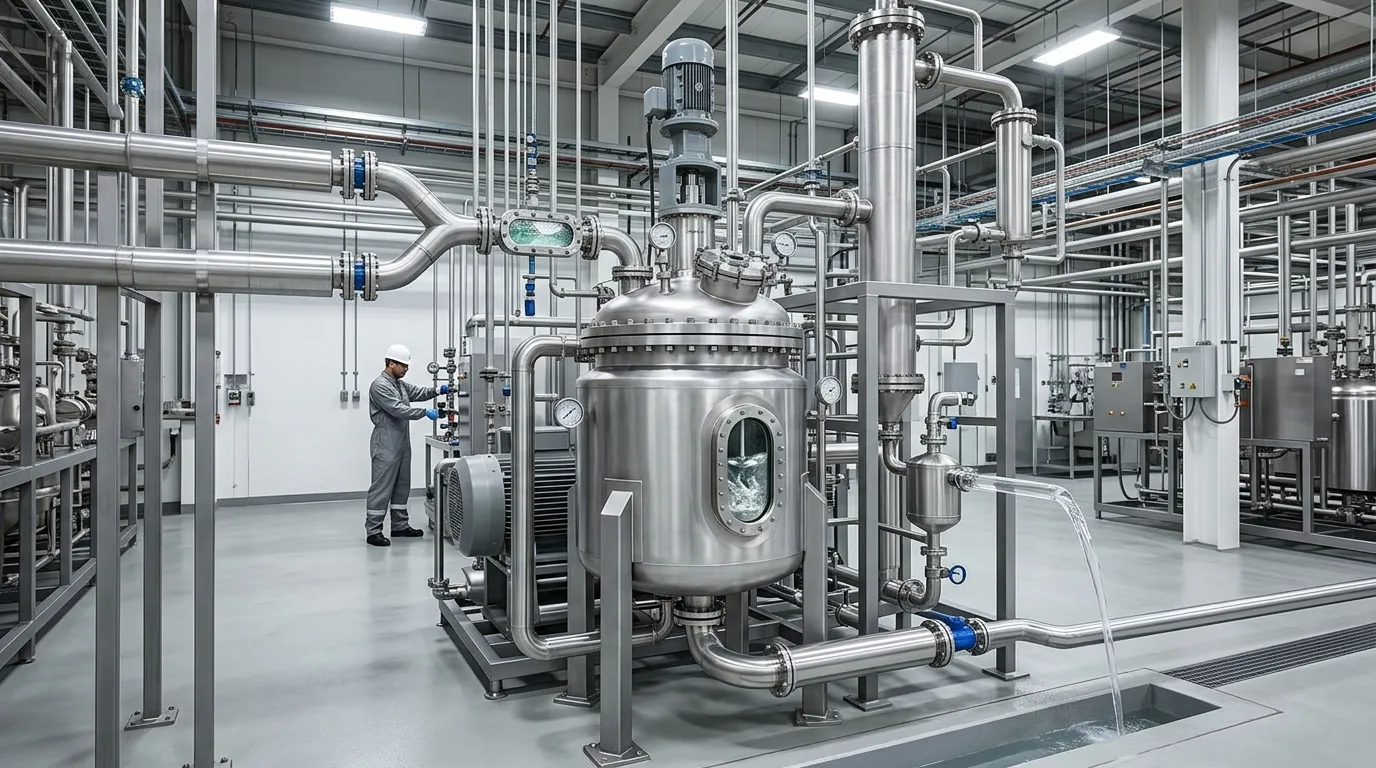
Direct esterification combines acetic acid with an alcohol:
Acetic acid + alcohol ⇌ acetate ester + water
The alcohol determines the ester produced. Examples associated with acetic-acid esterification include methyl acetate, ethyl acetate, butyl acetate, and isopropyl acetate. These examples should not be treated as identical processes: each ester may require different raw-material specifications, catalysts, process configurations, and separation conditions.
Acetic acid supplies the acetate portion of the ester molecule. The alcohol supplies the remaining organic group. The process therefore needs two compatible feedstocks, not acetic acid alone.
This distinction is important for procurement and formulation teams. Acetic acid for acetate ester production is not the same application as producing sodium acetate or another acetate salt. It is also different from biological acetate ester formation, where microorganisms generate esters through a separate metabolic route.
The supplied acetic acid may be used in a direct esterification process or, depending on the product and plant design, an alternative route using an activated acyl donor may be selected. The route should therefore be confirmed before setting the acetic-acid specification.
For broader background on the chemical’s industrial roles, see Vanchor’s glacial acetic acid uses and applications.
Why Water Balance Matters More Than Assay Alone
Water matters in acetate ester production for two separate reasons:
- Water is generated by the esterification reaction.
- Water may already be present in the incoming acetic-acid feedstock.
Because direct esterification is reversible, reaction and separation design must be considered together. A process may use distillation, phase separation, recycle, or another water-management arrangement to support conversion and meet the required ester specification. A documented methyl acetate process, for example, integrates reaction, distillation, decantation, and water control rather than treating the reaction as an isolated step (process patent).
A lower-concentration acetic-acid solution generally introduces more water on an as-supplied mass basis than a higher-concentration feed. That additional water can affect:
- The total material balance entering the reactor.
- The amount of water that must be removed or separated.
- The composition of recycle streams.
- The separation duty required downstream.
- The ability to meet residual-water or product-purity requirements.
These effects are process-dependent. Aqueous acetic acid is not automatically unsuitable, and concentrated acetic acid is not automatically suitable. The plant’s catalyst, reaction configuration, separation equipment, recycle strategy, and product specification determine whether the additional water is acceptable.
The concentration basis must also be clear. Mass percent, volume percent, and other concentration descriptions are not interchangeable. Density may be needed when converting between mass- and volume-based quantities, so readers working with supplied concentration data should consult an appropriate acetic acid density concentration chart rather than applying an unverified conversion.
How to Compare Glacial and Aqueous Acetic-Acid Feedstocks
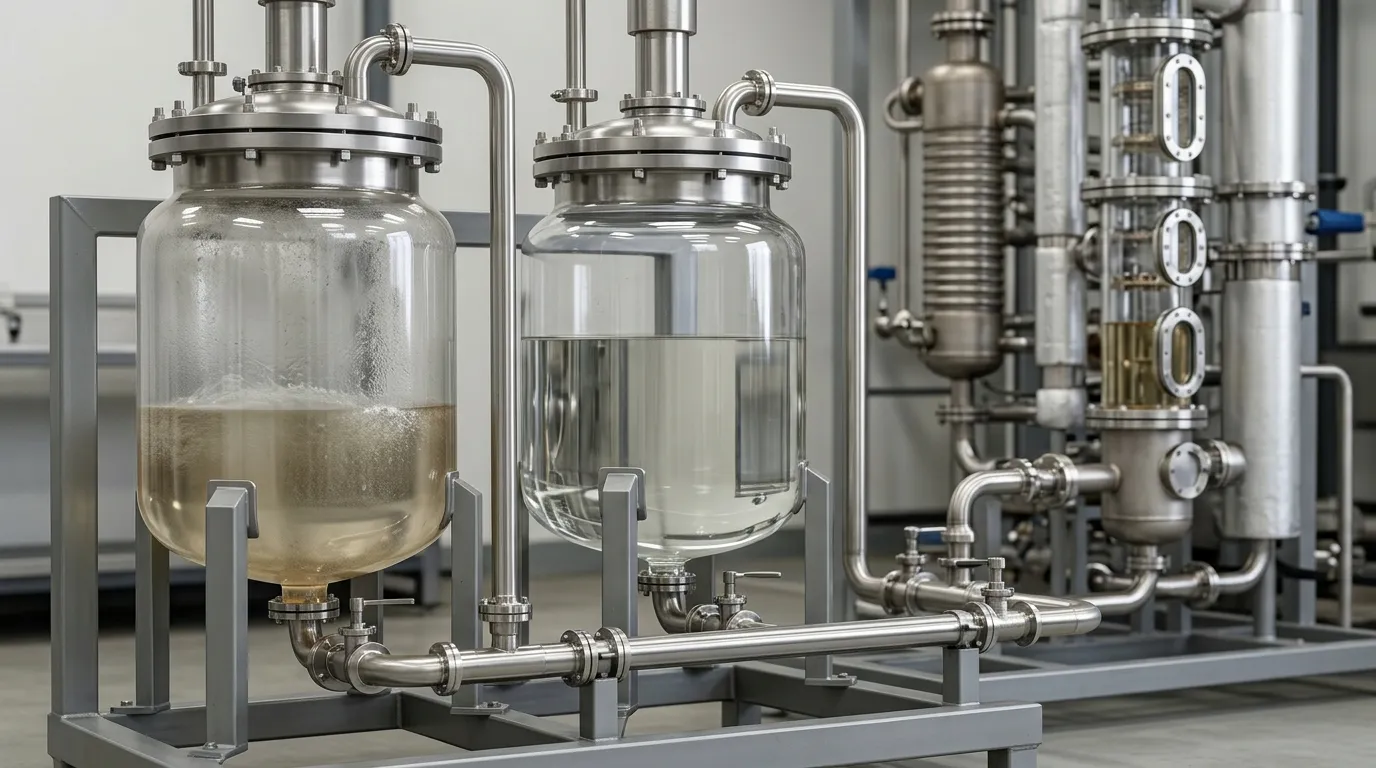
The central feedstock comparison is not simply “high purity versus low purity.” It is a comparison of concentration, water contribution, impurity profile, process compatibility, and documentation.
| Decision criterion | Glacial or higher-concentration feed | Aqueous or lower-concentration feed | What must be verified |
|---|---|---|---|
| Acetic-acid concentration | Higher concentration may reduce water introduced with the feed | Lower concentration introduces more water on an as-supplied basis | Concentration basis and analytical method |
| Water contribution | Usually lower at an equivalent supplied mass, subject to the actual specification | Usually higher at an equivalent supplied mass | Water content and material balance |
| Separation implications | May reduce incoming water load, but process benefit is configuration-dependent | May increase the water load that the process must manage | Reactor and separation design |
| Impurities | Must be controlled according to the ester process and product specification | Must be controlled according to the same criteria | TDS, COA, and impurity limits |
| Qualification status | Assay alone does not establish suitability | Lower concentration does not automatically establish unsuitability | Process-specific technical approval |
Vanchor’s available product information identifies a glacial acetic acid product with a stated minimum assay of 99.5% and associates it with acetate derivatives and esters. This is a site-stated product description, not independent proof that the product is qualified for every acetate ester process. The exact water specification, impurity limits, analytical methods, COA data, packaging, and current availability should be confirmed from current product documentation. The product reference is available at glacial acetic acid 99 5 min.
An 80% or other aqueous acetic-acid feed may be technically considered where the process can accept its additional water and the separation system is designed accordingly. It should not be accepted or rejected solely from the concentration label. The decision should be based on the complete process mass balance and the final ester specification.
A concentration guide can help teams distinguish assay and concentration terminology before comparing offers: acetic acid concentration guide.
Which Purity and Impurity Data Should QA Review?
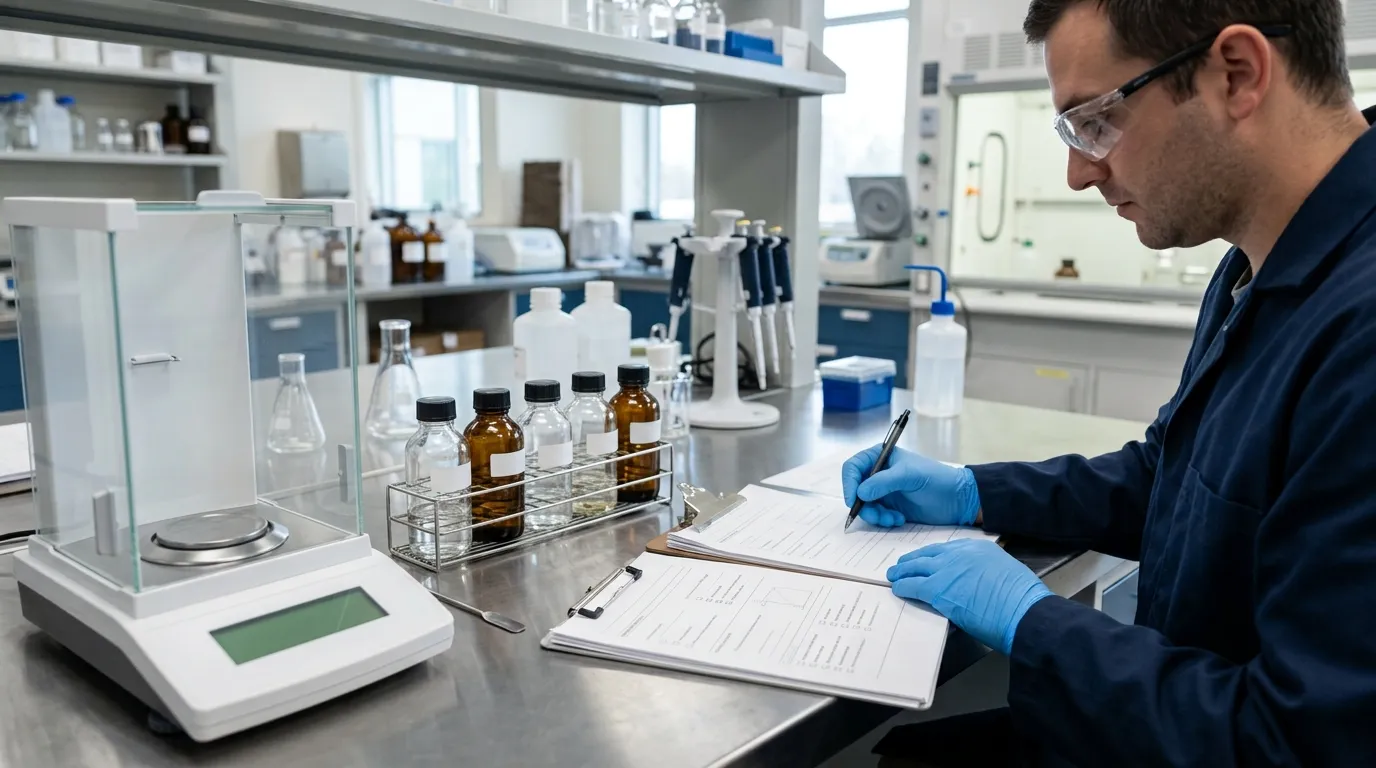
For acetate ester production, “purity” should be treated as a group of specification requirements rather than a single assay number.
QA and procurement teams should request and review the following information for the exact acetic-acid form being considered:
- Acetic-acid assay or concentration.
- Water content and analytical method.
- Relevant organic impurity limits.
- Relevant inorganic or trace-metal limits where they affect the catalyst, equipment, or ester specification.
- Appearance or color requirements where relevant to the product.
- Batch number and traceability information.
- Minimum, maximum, or typical values, clearly identified.
- Units and test methods for every reported parameter.
- A current technical data sheet.
- A current safety data sheet.
- A representative certificate of analysis.
The required impurity profile depends on the process. A trace component that is insignificant in one esterification route may affect catalyst behavior, corrosion risk, color, odor, downstream purification, or the final product specification in another.
A certificate of analysis describes a particular batch or shipment; it does not by itself establish universal product approval. Similarly, a safety data sheet provides hazard and handling information, but it does not prove food, feed, pharmaceutical, or drinking-water suitability.
The exact Vanchor product specification was not verified in the available evidence. Therefore, the following items should not be assumed from the stated 99.5% minimum assay:
- Maximum water content.
- Limits for specific organic impurities.
- Limits for inorganic contaminants or metals.
- Test methods.
- Product-as-supplied density.
- Current batch performance.
- Application-specific regulatory status.
Storage and safety requirements should be handled separately from esterification selection. The relevant Vanchor resource is acetic acid storage handling.
A Practical Feedstock-Selection Decision Path
A structured qualification sequence can reduce the risk of selecting a feedstock on assay alone.
- Define the ester target and route.
Identify the acetate ester, alcohol feedstock, target product specification, and whether the intended route is direct esterification or another acylation process.
- Specify the acceptable acetic-acid form.
Decide whether the process is designed for glacial acetic acid, an aqueous solution, or either form. Keep the concentration basis explicit.
- Establish the water contribution.
Determine how much water accompanies the selected acetic-acid feed. This should be calculated using the actual concentration basis and supplied-product quantity.
- Review reaction and separation constraints.
Consider how incoming water and reaction-generated water are managed by the catalyst system, reactor configuration, distillation, phase separation, recycle, or other unit operations.
- Compare the complete specifications.
Review assay, water, impurities, test methods, batch consistency, and traceability. Do not compare one supplier’s typical value with another supplier’s guaranteed minimum without labeling the difference.
- Request the supporting documents.
Obtain the current TDS, SDS, COA, specification limits, analytical methods, and relevant product-identification information.
- Obtain process and QA approval.
A feedstock should be treated as qualified only after the responsible technical and quality teams confirm that it fits the intended process and product requirements.
For procurement teams, an RFQ should identify the intended acetate ester application and request the exact concentration basis, water specification, impurity profile, documentation, packaging format, and batch-traceability requirements. Vanchor also provides a page describing custom acetic acid concentration, but the available evidence does not establish that every concentration is currently offered or qualified for esterification.
What the Available Vanchor Product Evidence Confirms
The available Vanchor product evidence supports a limited statement: Vanchor identifies a glacial acetic acid product with a minimum assay of 99.5% and positions it for acetate derivatives and esters.
That information can justify an initial product inquiry, but it does not replace technical qualification. The following points remain to be confirmed for a specific purchase or process:
- Exact water limit.
- Impurity specifications.
- Analytical methods.
- Current COA or batch data.
- Product form and packaging.
- Current availability and delivery scope.
- Manufacturing or supply-chain status.
- Suitability for the intended acetate ester process.
- Application-specific regulatory requirements.
A higher assay can be valuable when the process is sensitive to incoming water, but assay is only one part of the decision. The final feedstock choice should align with the ester route, water balance, separation system, impurity requirements, and QA documentation.
Final Selection Check Before Acetic-Acid Qualification
Before approving acetic acid for acetate ester production, confirm that the selected feedstock fits all of the following:
- The intended acetate ester route and alcohol feedstock.
- The required acetic-acid form and concentration basis.
- The water entering with the feed and the water generated by reaction.
- The catalyst and separation configuration.
- The assay and impurity requirements.
- The required TDS, SDS, COA, test methods, and traceability.
- The exact product and grade under consideration.
The practical selection rule is simple: choose the feedstock that fits the complete process and documentation requirement, not merely the one with the highest stated assay.


Contact Us
In This Article
Related Posts
Custom Packaging Solutions from an Anhydrous Sodium Acetate Supplier in China
2026-09-23
Application Trends in Anhydrous Sodium Acetate for Special Chemical Manufacturing
2026-09-23
Anhydrous Sodium Acetate for Leather Tanning: Improve Dyeing Uniformity
2026-09-22
Formic Acid 85% for Textile Dyeing: Industrial Applications, Technical Benefits and Future Trends
2026-09-22


