



Acetic Acid Bulk Supplier: Quality, Packaging, and Export Evaluation
By vanchor
2026-07-12Related Posts

Custom Packaging Solutions from an Anhydrous Sodium Acetate Supplier in China
2026-09-23

Application Trends in Anhydrous Sodium Acetate for Special Chemical Manufacturing
2026-09-23

Anhydrous Sodium Acetate for Leather Tanning: Improve Dyeing Uniformity
2026-09-22

Formic Acid 85% for Textile Dyeing: Industrial Applications, Technical Benefits and Future Trends
2026-09-22
If you are evaluating an acetic acid bulk supplier, the key questions are quality consistency, packaging fit, and whether the supplier can support export documentation and handling. For broader exporter context, see the parent guide on How a Verified Glacial Acetic Acid Exporter Supports Precision Formulation Work (inferred).vanchorsc
A good supplier page should help you decide whether the bulk offer matches your grade, quantity, and logistics needs without forcing you to guess from generic sales language. The best bulk suppliers make it easy to compare documentation, packaging, and shipment readiness before you request a quote.
What Buyers Should Evaluate in a Bulk Acetic Acid Supplier
The first filter is whether the supplier can show consistent product quality, clear documentation, and practical delivery support. In bulk procurement, those three points matter more than broad marketing claims because they affect whether the order can move smoothly from quote to shipment.
Look for a supplier that can explain the product form, the concentration or grade, the available packaging, and the documents included with the shipment. Vanchor’s relevant pages position the company around bulk chemical supply, glacial acetic acid, acetic acid solutions, COA, SDS, batch traceability, and logistics support, which are the right signals for this search intent.vanchorsc+4
Quality Signals That Matter First
For a bulk acetic acid order, the most useful quality signals are COA, SDS, batch traceability, and clear concentration information. These details help a buyer verify what is being shipped, how it should be handled, and whether the supply is consistent from batch to batch.vanchorsc+1
If a supplier cannot explain how it controls product consistency or provide batch-level documentation, that is a caution sign. The page should focus on what the buyer can verify before purchase, not on vague “high quality” wording.basekim+1
Export-Readiness Signals
For worldwide procurement, export readiness is just as important as product quality. A practical supplier should be able to support export documents, packaging suited to transit, and logistics coordination that reduces delays or handling risk.vanchorsc+1
This matters because bulk chemical shipments are not just about the product itself; they are also about how the product is packaged, documented, and handed off into transport. If the supplier’s export support is unclear, the buyer has more operational risk even when the chemistry is correct.hansonchemicals+1
Packaging Options and What They Mean for Buyers
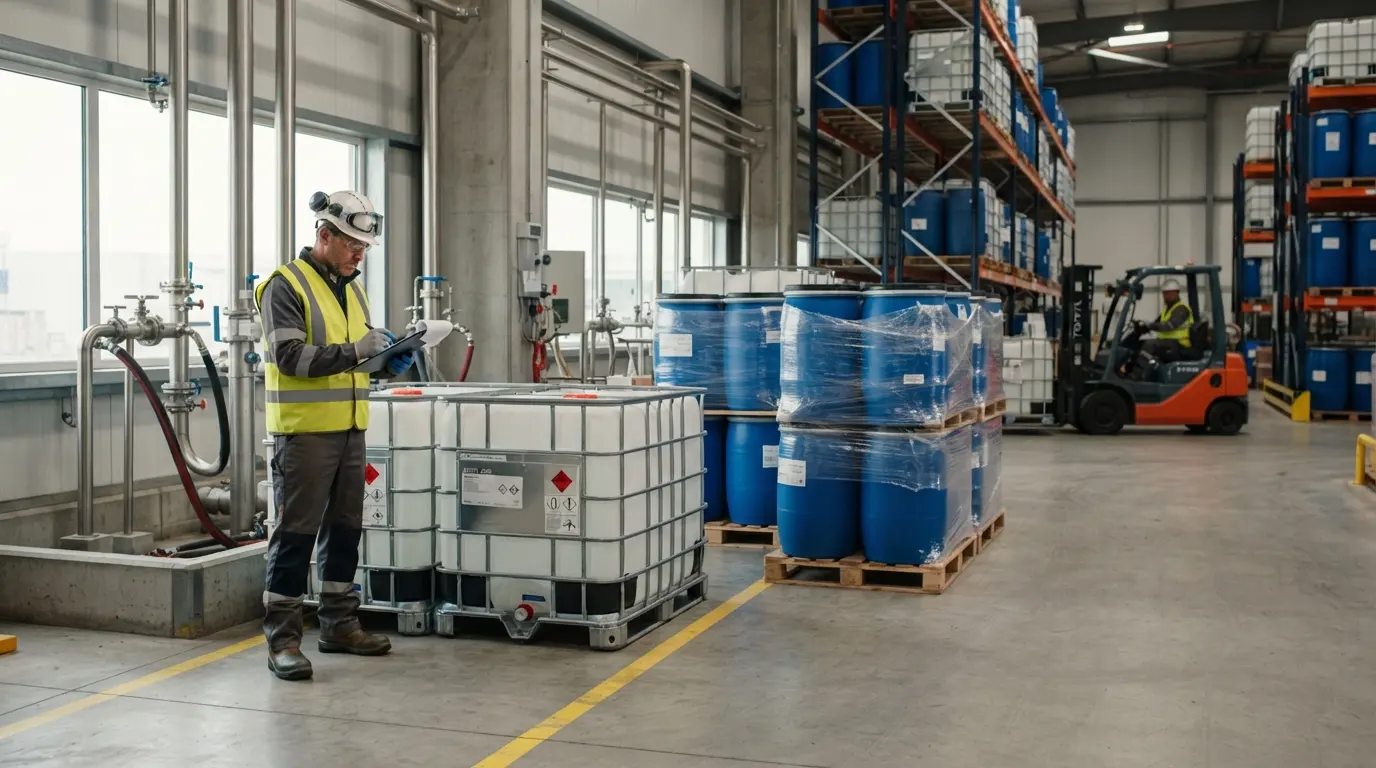
Packaging is one of the clearest ways to separate a serious bulk supplier from a generic seller. Competitor pages commonly discuss drums, IBCs, and ISO tank containers, and Vanchor’s own acetic-acid-related pages follow the same practical packaging logic.hansonchemicals+3
The right format depends on shipment size, handling preference, and how the buyer wants the product received. A smaller industrial order may fit drums, a mid-sized order may fit IBCs, and a large export shipment may be better handled in ISO tanks.vanchorsc+1
| Packaging | Best fit | Why buyers choose it |
|---|---|---|
| Drums | Smaller bulk lots | Easier to handle and store when volumes are not extremely high. |
| IBCs | Mid-volume industrial supply | Balances volume efficiency with simpler handling than large tanker formats. |
| ISO tank containers | Large export shipments | Better suited to high-volume logistics and long-distance transport. |
Packaging also influences quality preservation. If the supplier cannot explain how packaging protects the product during storage and shipment, the buyer should treat that as a weak point rather than a minor detail.vanchorsc
Drums vs IBCs vs ISO Tanks
Drums are usually the most familiar format for smaller bulk needs, especially when the buyer wants easier manual handling. IBCs are often the practical middle ground because they reduce container count while staying manageable for industrial sites. ISO tanks suit high-volume buyers who want a more transport-efficient format for export or large recurring orders.hansonchemicals+1
The right choice is not only about capacity. It also depends on unloading setup, storage space, and whether the receiving site is prepared for the packaging format. That is why a supplier page should help buyers compare packaging instead of only listing it.vanchorsc+1
What Documentation Should Come With the Order
A bulk acetic acid supplier should be able to provide the documents needed for quality verification and safe handling. At minimum, the buyer should expect a COA and SDS, plus batch traceability and export-related paperwork where relevant.vanchorsc+1
COA helps verify the batch that is being purchased. SDS helps the buyer understand hazards and handling requirements. Batch traceability helps connect the delivered material to a specific production lot, which is especially useful when the buyer needs repeatable supply.vanchorsc+1
If the supplier cannot supply these documents clearly, the order is harder to approve internally and harder to audit later. In a commercial setting, documentation is not just a formality; it is part of procurement quality control.basekim+1
When Bulk Concentrate Beats Pre-Diluted Solution
Some buyers need bulk acetic acid as a concentrated raw material, while others may be better served by a ready-to-use solution. Vanchor already separates those two paths across its site, so this page should only clarify the choice and then point readers to the right follow-up page.vanchorsc+1
Bulk concentrate is usually the better fit when the buyer wants a stronger starting material, a more transport-efficient supply structure, or more control over downstream dilution. A pre-diluted solution is often easier when the buyer wants a simpler handling step and less on-site preparation.vanchorsc+1
If the buyer is unsure which path fits the application, the safest approach is to compare the supply form before ordering rather than after. For that reason, the related acetic acid solution manufacturer page is the right next step for buyers who think solution-based supply may be a better fit.vanchorsc
Best-Fit Scenarios
Use bulk concentrate when the site is set up for industrial chemical handling and the buyer wants packaging efficiency. Use a solution when simpler deployment matters more than concentration control. If the buyer’s use case is still being refined, comparing the two forms first prevents the wrong packaging or concentration choice.vanchorsc+1
This is also where sibling content matters. Buyers who need a use-case-specific solution can move to acetic acid solution for cleaning applications, while readers comparing grades can use glacial acetic acid food vs industrial grade.vanchorsc+1
Practical Supplier Warning Signs
A weak supplier usually reveals itself through vague answers, incomplete paperwork, or unclear packaging explanations. If the supplier cannot explain what document set comes with the order, how batches are traced, or which packaging is available for the requested volume, the buyer should slow down.vanchorsc+1
Other warning signs include overpromising without confirming the actual product form, avoiding direct questions about export documents, or treating packaging as an afterthought. In bulk procurement, those gaps are more important than polished sales language because they can create delays or handling issues later.basekim+1
For a serious buyer, the goal is simple: reduce uncertainty before purchase. The supplier should make quality, packaging, and logistics easier to verify, not harder.vanchorsc
Where This Fits in the Vanchor Topic Cluster
This page is the bulk-supplier evaluation piece in the cluster, so it should stay narrow and practical. The parent pillar handles the broader exporter-quality context, while this child focuses on buyer selection, packaging choice, and order-readiness.vanchorsc
If the reader wants broader supplier context, the parent guide is the natural next stop: How a Verified Glacial Acetic Acid Exporter Supports Precision Formulation Work (inferred). For readers exploring related paths, the product and service cluster also includes Glacial Acetic Acid Manufacturer and the broader acetic acid solution manufacturer page.vanchorsc+2
Requesting a Quote
When you request a quote, include the grade or concentration you need, the expected volume, the preferred packaging, and the destination market. That gives the supplier enough context to respond with a useful offer instead of a generic price reply.vanchorsc+1
If you are comparing suppliers, the simplest next step is to review the product options first and then move into a quote request once the packaging and documentation fit is clear. Vanchor’s Product Finder is the most direct place to start that process.vanchorsc


Contact Us
In This Article
Related Posts
Custom Packaging Solutions from an Anhydrous Sodium Acetate Supplier in China
2026-09-23
Application Trends in Anhydrous Sodium Acetate for Special Chemical Manufacturing
2026-09-23
Anhydrous Sodium Acetate for Leather Tanning: Improve Dyeing Uniformity
2026-09-22
Formic Acid 85% for Textile Dyeing: Industrial Applications, Technical Benefits and Future Trends
2026-09-22


