



Cement Additive Manufacturer: Products, Applications, Quality Control, and Sourcing Guide
By vanchor
2026-07-20Related Posts
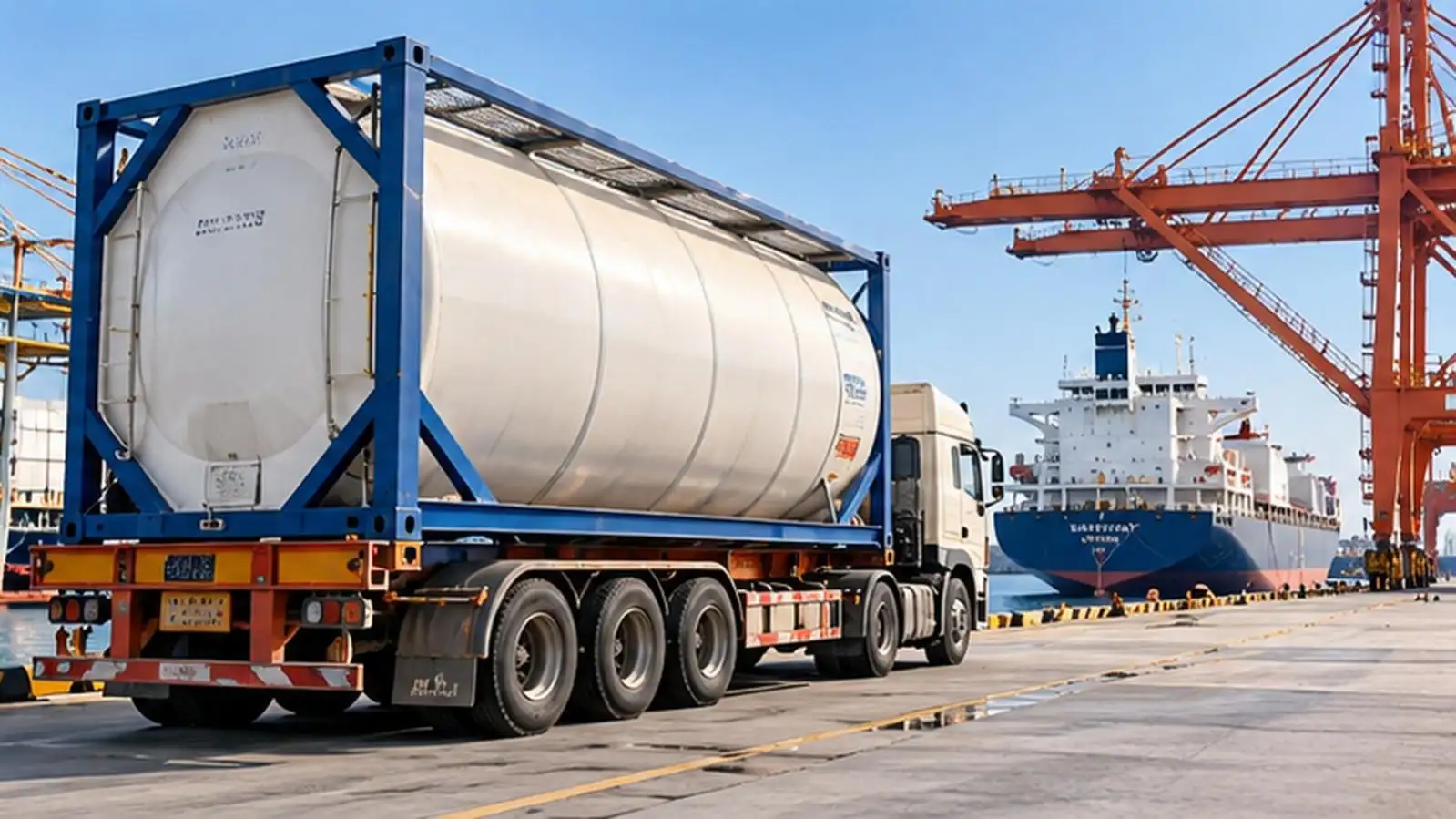
How to Choose a Reliable 2-Ethylhexanol (2-EH) Supplier in China: Quality, Packaging and Shipping
2026-10-22
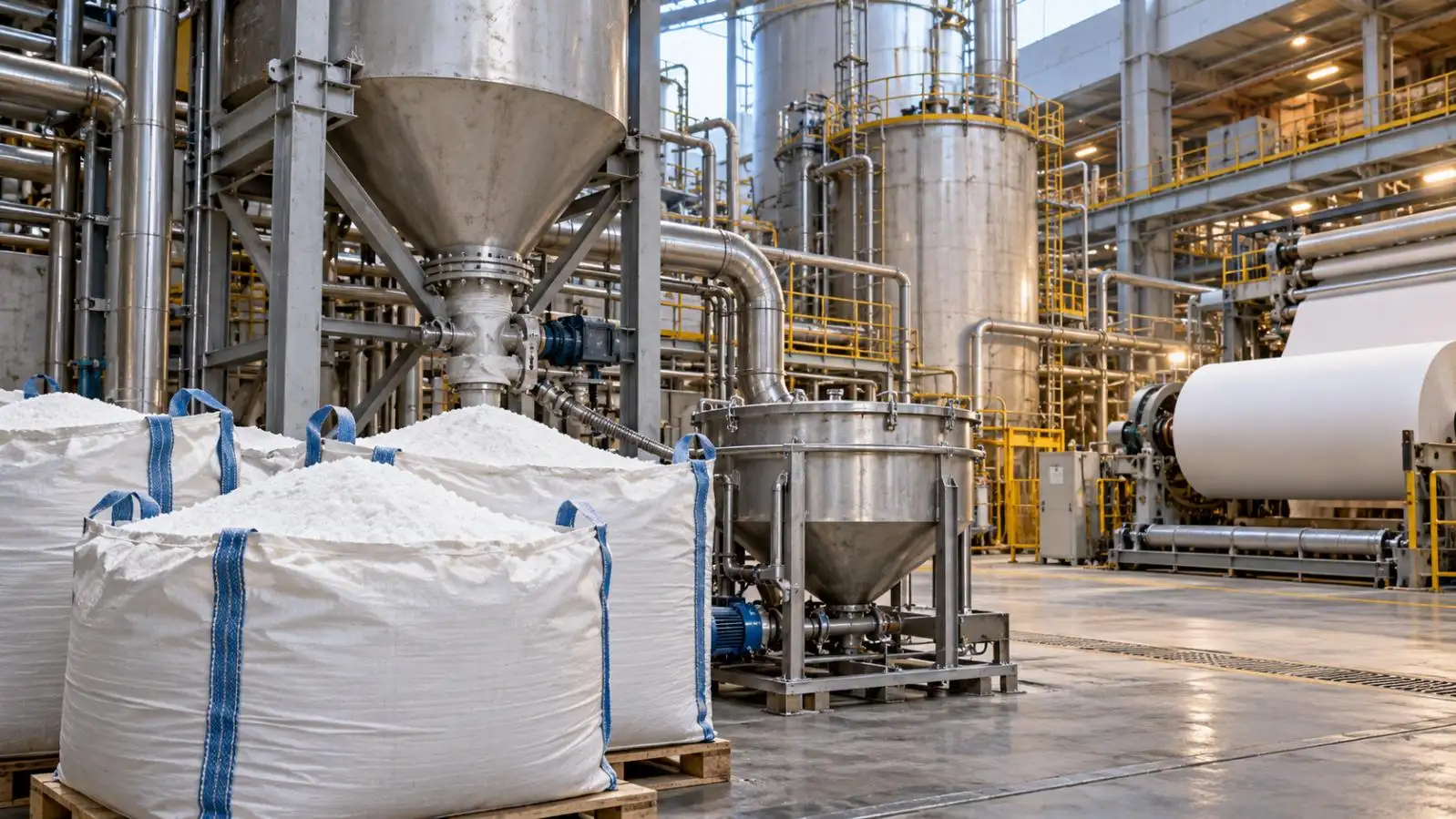
Natural vs Synthetic Sodium Sulfate Anhydrous: Which Is Better for Industrial Applications?
2026-10-22
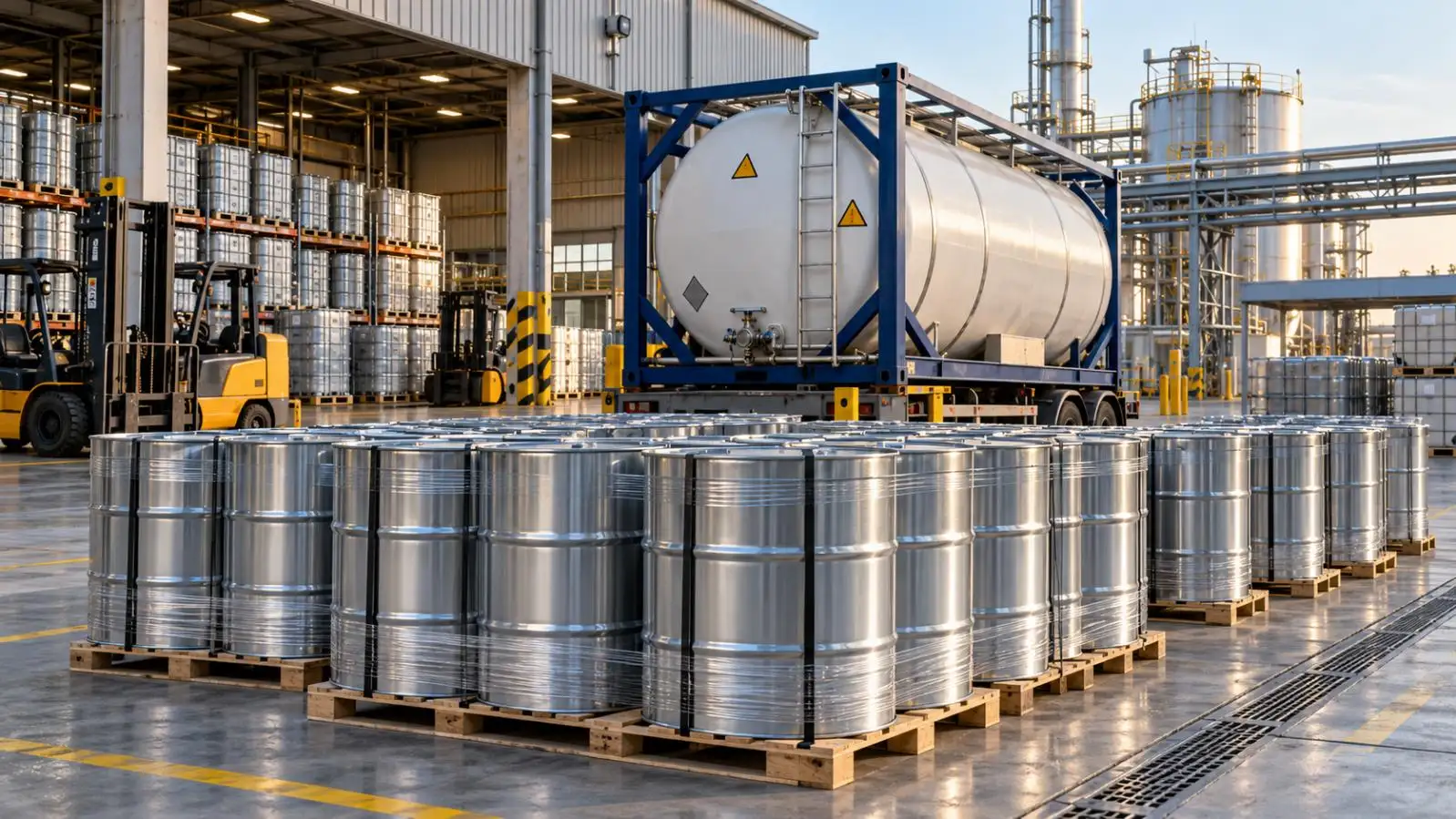
Isobutanol 99.3% Price and Supply in 2026: A Guide for Chemical Importers
2026-10-22
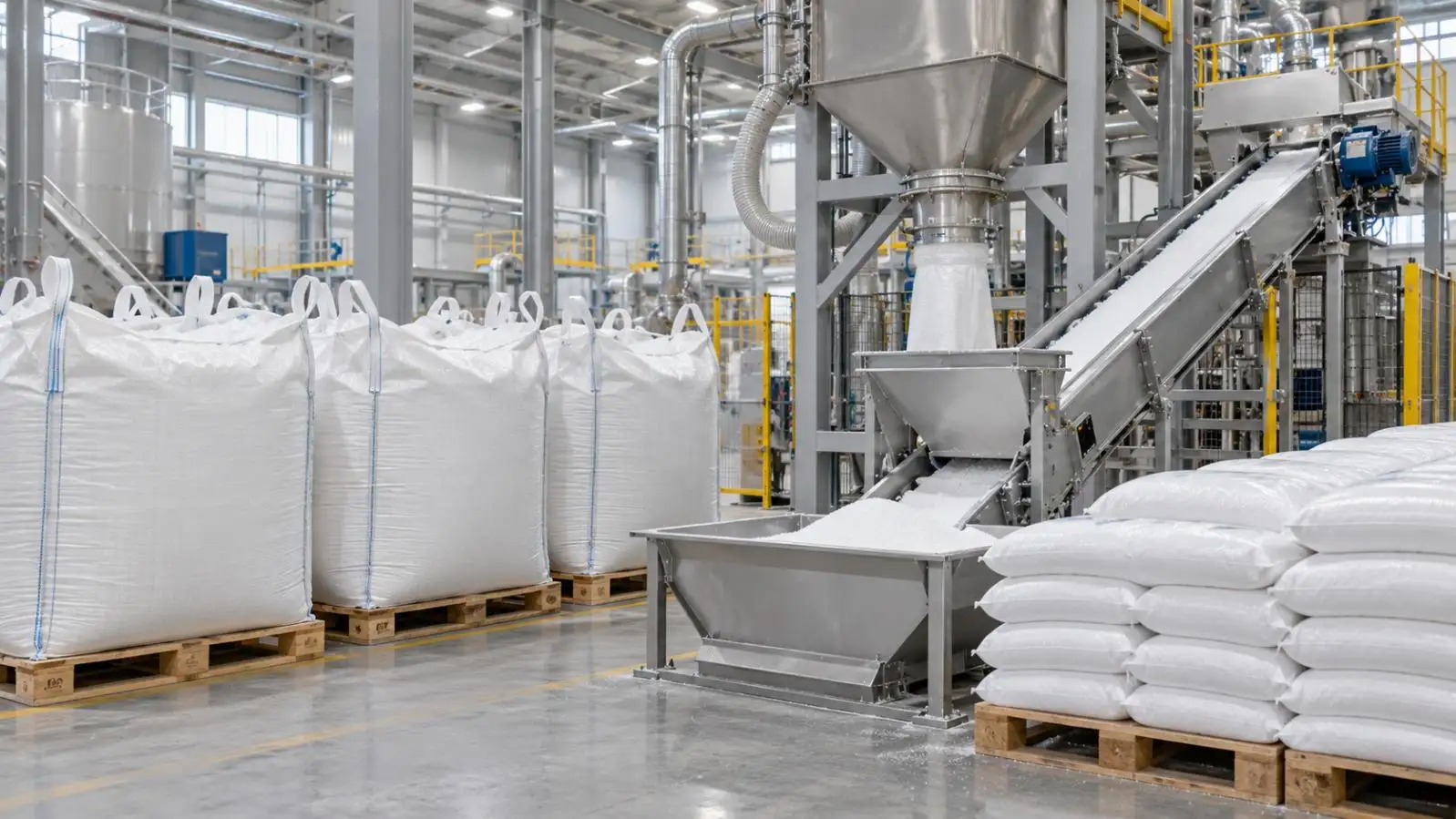
Sodium Sulfate Anhydrous 99% for Detergent Manufacturing: Benefits, Specifications and Bulk Supply
2026-10-22
Cement Plant, Ready-Mixed Concrete Plant, Pre-Cast Plant, Dry-Mixed Mortar Plant, Infrastructure Contractors, Building Material Distributors, and International Bidding companies need to select a reliable Cement Additive Manufacturer.
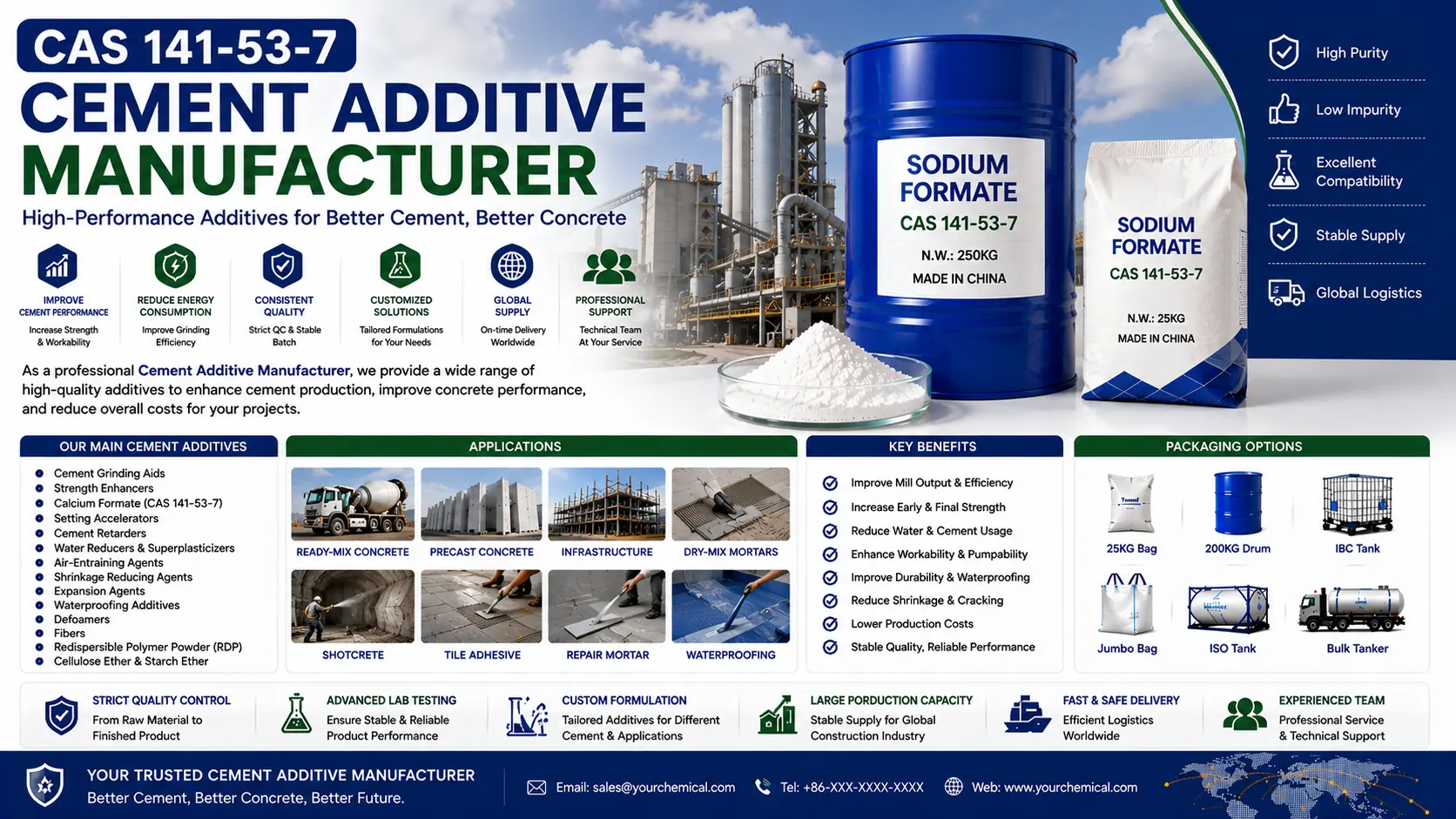
Cement additives are added into the cement to enhance its grinding efficiency, cement strength, setting properties, workability, durability, water resistance and production consistency. They can be added to the clinker grinding process, during cement mixing, in concrete mixing, during the production of mortar or during construction-site preparation, depending on the product and application.
A suitable manufacturer should give you a competitive quote as well as more. Stability of raw materials, accurate formulations, consistent batch quality, technical specifications, laboratory support, flexible packaging, production capacity, complete documentation, reliable delivery are additional requirements that must be met by buyers.
Many additives are available and their selection depends on the properties of the cement used, the type of clinker, gypsum type, supplementary cementitious materials, cement fineness, temperature, water quality, concrete design and local construction conditions.
This guide will tell you about the principal categories of cement additives, how they are used, their technical properties, quality-control needs, methods of testing, packaging, criteria for evaluating suppliers, and purchasing decisions.
What Are Cement Additives?
Cement additives are chemicals or functional materials used to modify cement production or improve the performance of cement-based products.
They may be used to:
- Improve clinker grinding
- Increase mill output
- Reduce energy consumption
- Control cement setting
- Improve early strength
- Improve final strength
- Reduce water demand
- Improve workability
- Reduce shrinkage
- Control air content
- Improve waterproofing
- Reduce cracking
- Improve adhesion
- Increase durability
- Improve cold-weather performance
- Support specialty cement formulations
Cement additives may be supplied as liquids, powders, granules, emulsions, or blended products.
Main Categories of Cement Additives
Cement Grinding Aids
Grinding aids are added during cement milling to improve grinding efficiency and reduce particle agglomeration.
During grinding, fine cement particles can stick together and coat mill surfaces. This can reduce output and increase energy demand.
Potential benefits of grinding aids include:
- Higher mill throughput
- Lower specific power consumption
- Reduced particle agglomeration
- Improved cement flowability
- More stable particle-size distribution
- Reduced pack-set
- Better cement handling
- Improved storage performance
Common grinding-aid chemistries may include:
- Triethanolamine
- Triisopropanolamine
- Diethanol-isopropanolamine
- Ethylene glycol
- Propylene glycol
- Glycerol derivatives
- Organic amines
- Specialty polymer blends
The selected product should be tested with the actual clinker, gypsum, mineral additions, mill type, and target cement grade.
Strength Enhancers
Strength enhancers are used to improve early or later-age cement strength.
They may work by:
- Improving particle dispersion
- Supporting clinker hydration
- Modifying sulfate balance
- Increasing cement fineness efficiency
- Improving packing density
- Supporting supplementary cementitious material activation
Potential benefits include:
- Higher one-day strength
- Higher three-day strength
- Improved 28-day strength
- Reduced clinker factor
- Increased use of slag, fly ash, or limestone
- More stable cement performance
- Improved production economics
The product should not cause excessive setting acceleration, air entrainment, or compatibility problems with downstream concrete admixtures.
Calcium Formate
Calcium formate is widely used in cement-based materials, dry-mix mortar, tile adhesive, repair mortar, and selected concrete formulations.
Potential functions include:
- Accelerating cement hydration
- Improving early strength
- Shortening setting time
- Supporting cold-weather curing
- Improving construction efficiency
- Supporting rapid-repair systems
Common applications include:
- Tile adhesives
- Repair mortars
- Self-leveling compounds
- Dry-mix mortar
- Non-shrink grout
- Precast products
- Winter construction materials
Important specifications may include:
- Purity
- Calcium content
- Moisture
- Insoluble matter
- pH
- Particle size
- Bulk density
- Appearance
Dosage should be confirmed through laboratory trials because cement chemistry, temperature, and other additives can significantly influence performance.
Setting Accelerators
Setting accelerators reduce initial and final setting time.
They may be used in:
- Shotcrete
- Tunnel construction
- Precast concrete
- Emergency repair
- Cold-weather construction
- Rapid-setting mortar
- Underground works
Common accelerator types include:
- Calcium-formate-based products
- Calcium-nitrate-based additives
- Alkali-free shotcrete accelerators
- Aluminate accelerators
- Silicate accelerators
- Calcium chloride
- Specialty blended accelerators
Calcium chloride may not be suitable for reinforced or prestressed concrete because chloride can increase steel-corrosion risk.
Important performance factors include:
- Initial setting time
- Final setting time
- Early compressive strength
- Later strength retention
- Rebound
- Dust generation
- Equipment compatibility
- Corrosion risk
Cement Retarders
Retarders delay cement hydration and extend working time.
They may be used in:
- Hot-weather construction
- Long-distance concrete transport
- Mass concrete
- Large-volume pours
- Oil-well cementing
- Decorative concrete
- Complex pumping operations
Common retarder chemistries include:
- Sodium gluconate
- Citric acid
- Tartaric acid
- Lignosulfonates
- Sugar derivatives
- Hydroxycarboxylic acids
- Specialty organic blends
Potential benefits include:
- Longer open time
- Improved placement flexibility
- Reduced cold-joint risk
- Better finishing time
- Improved hot-weather performance
- Controlled hydration heat
Excessive dosage may cause delayed strength, bleeding, segregation, or surface defects.
Water-Reducing Additives
Water reducers reduce the amount of mixing water needed to achieve a target workability.
Common categories include:
- Lignosulfonate water reducers
- Naphthalene sulfonate superplasticizers
- Melamine-based superplasticizers
- Polycarboxylate ether superplasticizers
Potential benefits include:
- Lower water-cement ratio
- Improved strength
- Better workability
- Improved pumpability
- Lower permeability
- Better surface finish
- Reduced cement demand
- Improved durability
Compatibility with the cement and other admixtures should be tested carefully.
Polycarboxylate Ether Superplasticizers
Polycarboxylate ether, commonly abbreviated as PCE, is widely used in modern high-performance concrete.
PCE molecules adsorb onto cement particles and improve dispersion.
Potential benefits include:
- High water reduction
- Strong slump development
- Good slump retention
- Higher early strength
- Higher final strength
- Reduced viscosity in selected grades
- Improved pumping
- Better self-compacting concrete performance
PCE performance depends on:
- Cement C₃A content
- Sulfate balance
- Cement fineness
- Mineral additions
- Temperature
- Mixing sequence
- Alkali content
- Other admixtures
Different PCE molecular structures may be required for high water reduction, slump retention, precast concrete, or low-viscosity applications.
Air-Entraining Agents
Air-entraining agents create small, stable air bubbles in cement-based materials.
Potential benefits include:
- Improved freeze-thaw resistance
- Better workability
- Reduced bleeding
- Reduced segregation
- Improved resistance to deicing salts
- Easier pumping
Excessive air can reduce compressive strength, so air content and air-void quality should be controlled.
Defoamers
Defoamers reduce unwanted air during cement, mortar, coating, and adhesive production.
They may be used in:
- Self-leveling compounds
- Tile adhesives
- Repair mortars
- Grouts
- Cementitious coatings
- Dry-mix mortar
- Polymer-modified cement systems
Potential benefits include:
- Higher density
- Fewer pinholes
- Improved surface appearance
- Better strength
- More stable rheology
- Reduced entrapped air
The selected defoamer should remain compatible with polymers, cellulose ethers, and water reducers.
Shrinkage-Reducing Additives
Shrinkage-reducing additives help reduce drying shrinkage and cracking.
Applications may include:
- Industrial flooring
- Bridge decks
- Repair materials
- Large concrete slabs
- Precast elements
- Water-retaining structures
- High-performance concrete
Potential benefits include:
- Lower cracking risk
- Improved dimensional stability
- Better durability
- Reduced joint movement
- Improved surface quality
Effects on air content, setting, strength, and finishing should be evaluated before use.
Expansion Agents
Expansion agents produce controlled expansion to compensate for shrinkage.
Common chemistries include:
- Calcium sulfoaluminate
- Calcium oxide
- Magnesium oxide
- Ettringite-forming systems
Applications include:
- Non-shrink grout
- Structural repair
- Equipment foundations
- Large slabs
- Water-retaining structures
- Precast components
Proper dosage and curing are essential. Excessive expansion can damage the material, while insufficient curing can reduce effectiveness.
Waterproofing Additives
Waterproofing additives reduce water absorption or improve resistance to water penetration.
Common types include:
- Integral crystalline additives
- Hydrophobic powders
- Silane and siloxane products
- Stearate-based additives
- Polymer emulsions
- Latex modifiers
- Pore-blocking materials
Potential applications include:
- Basements
- Tunnels
- Water tanks
- Foundations
- Roofs
- Bathrooms
- Swimming pools
- Underground structures
Waterproofing performance should be tested under positive and negative water pressure where relevant.
Redispersible Polymer Powder
Redispersible polymer powder, commonly abbreviated as RDP, is widely used in cement-based dry-mix products.
Potential functions include:
- Improved adhesion
- Increased flexibility
- Better crack resistance
- Improved water resistance
- Better cohesion
- Improved abrasion resistance
- Enhanced freeze-thaw durability
Applications include:
- Tile adhesives
- Exterior insulation systems
- Repair mortars
- Waterproof mortars
- Joint fillers
- Skim coats
- Self-leveling compounds
Important specifications include:
- Polymer type
- Glass-transition temperature
- Ash content
- Bulk density
- Minimum film-forming temperature
- Redispersibility
- Tensile adhesion performance
Cellulose Ether
Cellulose ether provides water retention, thickening, and workability control in cement-based mortar.
Common products include:
- Hydroxypropyl methyl cellulose
- Hydroxyethyl methyl cellulose
- Methyl hydroxyethyl cellulose
- Hydroxyethyl cellulose
Potential benefits include:
- Improved water retention
- Better sag resistance
- Longer open time
- Improved consistency
- Better troweling
- Reduced rapid drying
- Improved bond development
Important specifications include viscosity, moisture, ash, gel temperature, degree of substitution, particle size, and water-retention capacity.
Starch Ether
Starch ether is used at low dosage to modify rheology and improve anti-sag behavior.
Potential benefits include:
- Improved mortar body
- Better anti-slip performance
- Easier application
- Controlled thickening
- Improved troweling
- Reduced sagging
It is often used together with cellulose ether.
Fibers
Fibers improve toughness and help control cracking.
Common types include:
- Polypropylene fibers
- Polyvinyl alcohol fibers
- Glass fibers
- Basalt fibers
- Cellulose fibers
- Steel fibers
Potential applications include:
- Concrete
- Repair mortar
- Plaster
- Shotcrete
- Screed
- Waterproof mortar
- Precast products
Important parameters include fiber length, diameter, tensile strength, dispersion, alkali resistance, and dosage.
Cement Additives for Grinding Plants
Cement grinding plants may use additive systems to optimize:
- Mill output
- Specific power consumption
- Cement fineness
- Particle-size distribution
- Pack-set
- Strength development
- Limestone or slag utilization
- Cement storage and transport
A plant trial should monitor:
- Tons per hour
- Kilowatt-hours per ton
- Blaine fineness
- Residue
- Separator efficiency
- Mill temperature
- Cement flowability
- Setting time
- Mortar strength
- Concrete compatibility
A grinding aid that improves mill output but reduces cement strength may not provide acceptable total value.
Cement Additives for Dry-Mix Mortar
Dry-mix mortar formulations commonly use:
- Cellulose ether
- Redispersible polymer powder
- Calcium formate
- Starch ether
- Defoamer
- Fibers
- Water repellent
- Retarder
- Accelerator
- Air-entraining agent
Applications include:
- Tile adhesive
- Wall putty
- Plaster
- Repair mortar
- Self-leveling compounds
- Exterior insulation systems
- Waterproof mortar
- Joint fillers
The complete formulation should be evaluated because additives can interact with each other.
Cement Additives for Precast Concrete
Precast concrete production requires fast cycles and consistent quality.
Common additive requirements include:
- High early strength
- Rapid demolding
- Low water demand
- Stable flow
- Good surface finish
- Controlled setting
- Low shrinkage
- Reliable reinforcement compatibility
Potential products include:
- PCE superplasticizers
- Accelerators
- Calcium formate
- Defoamers
- Strength enhancers
- Shrinkage reducers
- Release agents
- Curing compounds
Production trials should reflect actual molds, curing temperatures, vibration, and demolding schedules.
Cement Additives for Shotcrete
Shotcrete applications require rapid setting, low rebound, strong early strength, and good pumpability.
Typical chemical systems may include:
- Alkali-free accelerator
- Superplasticizer
- Set stabilizer
- Silica fume
- Fibers
- Hydration-control admixtures
Important performance indicators include:
- Initial setting
- Final setting
- One-hour strength
- Six-hour strength
- One-day strength
- Rebound
- Dust
- Pumpability
- Final durability
Cement Additives for Repair Mortar
Repair mortars may require:
- High adhesion
- Low shrinkage
- Early strength
- Controlled setting
- Crack resistance
- Water resistance
- Sulfate resistance
- Freeze-thaw durability
Typical additives may include:
- Redispersible polymer powder
- Cellulose ether
- Calcium formate
- Fibers
- Defoamer
- Shrinkage reducer
- Expansion agent
- Water repellent
The repair material should be compatible with the existing concrete substrate.
Important Technical Specifications
A professional Cement Additive Manufacturer should provide measurable technical data.
Depending on the product, important specifications may include:
- Active content
- Solid content
- Purity
- Density
- pH
- Viscosity
- Moisture
- Ash content
- Chloride content
- Alkali content
- Particle size
- Setting time
- Water-reduction rate
- Air content
- Slump retention
- Compressive strength
- Flexural strength
- Water retention
- Tensile adhesion
- Shelf life
General descriptions such as “cement grade” or “high quality” are not sufficient for technical purchasing.
Cement Compatibility
Cement composition strongly affects additive performance.
Important factors include:
- Tricalcium aluminate content
- Sulfate balance
- Cement fineness
- Gypsum type
- Alkali content
- Clinker mineralogy
- Limestone content
- Slag or fly-ash content
- Grinding aids already present
- Cement storage age
An additive that performs well with one cement may cause rapid slump loss, delayed setting, or excessive air with another cement.
Compatibility testing should use the buyer’s actual cement whenever possible.
Laboratory Testing
Cement additives should be tested in representative cement-based systems.
Common laboratory tests include:
- Cement paste flow
- Mortar flow
- Setting time
- Water demand
- Air content
- Bleeding
- Slump
- Slump retention
- Compressive strength
- Flexural strength
- Adhesion strength
- Drying shrinkage
- Water absorption
- Waterproofing pressure
- Freeze-thaw resistance
- Chloride permeability
- Sulfate resistance
For grinding aids, testing may also include:
- Mill-output trials
- Specific energy consumption
- Blaine fineness
- Particle-size distribution
- Pack-set
- Cement flowability
Plant and Field Trials
After laboratory screening, a plant or field trial should confirm:
- Dosage
- Mixing behavior
- Production stability
- Setting behavior
- Strength development
- Surface quality
- Storage performance
- Compatibility with other chemicals
- Total cost
- Operator handling
Commercial selection should not rely only on laboratory data.
Quality Control
A dependable manufacturer should maintain quality control throughout production.
Typical procedures include:
- Raw-material qualification
- Incoming-material inspection
- Formula verification
- Controlled dosing
- Reaction monitoring
- In-process sampling
- Active-content testing
- Density and pH testing
- Viscosity testing
- Moisture testing
- Finished-product performance tests
- Packaging inspection
- Batch release
- Retained-sample management
Consistent batch quality helps cement and mortar producers maintain stable production.
Batch Traceability
Each shipment should be traceable through:
- Raw-material batch numbers
- Production date
- Finished-product batch number
- Laboratory results
- Packaging records
- Retained samples
- Warehouse records
- Loading information
- Shipping documents
Traceability supports investigation when product performance changes.
Customized Cement Additives
A capable Cement Additive Manufacturer may offer customized products based on:
- Cement type
- Clinker composition
- Gypsum source
- Mineral additions
- Mill type
- Target fineness
- Strength requirements
- Climate
- Application method
- Construction schedule
- Packaging preference
- Local regulations
Customization may include:
- Grinding-aid formula adjustment
- Amine-content adjustment
- Strength-enhancer modification
- Accelerator dosage optimization
- Retarder selection
- PCE molecular design
- Powder blending
- Private-label packaging
Customized grades should be validated through laboratory and production trials.
Packaging Options
Cement additives may be supplied in:
- 20 kg bags
- 25 kg bags
- 500 kg bulk bags
- 1,000 kg jumbo bags
- 20 kg pails
- 25 kg pails
- 200 kg drums
- 250 kg drums
- IBC tanks
- ISO tanks
- Bulk tankers
- Customized packaging
Packaging selection depends on product form, dosage, storage capacity, unloading equipment, hazard classification, and transport requirements.
Powders should be protected from moisture.
Liquids should be stored in chemically compatible containers.
Storage and Handling
General storage precautions include:
- Store powders in a dry area.
- Keep bags sealed until use.
- Protect liquid additives from freezing.
- Avoid excessive heat and direct sunlight.
- Separate incompatible chemicals.
- Use clean tanks and dosing equipment.
- Follow the current safety data sheet.
- Wear suitable personal protective equipment.
- Use products within the stated shelf life.
- Apply first-in, first-out inventory control.
Improper storage can cause caking, separation, viscosity changes, or reduced performance.
Required Documents
A professional manufacturer should provide:
- Technical data sheet
- Safety data sheet
- Batch-specific certificate of analysis
- Product specification
- Application guidance
- Recommended dosage
- Commercial invoice
- Packing list
- Certificate of origin
- Bill of lading
- Transport documentation
- Inspection reports when required
All documents should show consistent product names, grades, batch numbers, quantities, and packaging details.
How to Evaluate a Cement Additive Manufacturer
Buyers should assess:
- Product range
- Manufacturing capability
- Laboratory equipment
- Cement chemistry knowledge
- Formulation experience
- Quality-control procedures
- Production capacity
- Batch consistency
- Customized-product capability
- Packaging flexibility
- Technical support
- Export experience
- Delivery reliability
- Complaint-handling process
A qualified manufacturer should request detailed cement and application information before recommending a product.
Factory Audit Checklist
A factory audit may review:
- Business and manufacturing licenses
- Raw-material storage
- Production workshops
- Reaction equipment
- Powder-blending lines
- Liquid-filling lines
- Automatic dosing systems
- Laboratory capability
- Quality records
- Batch traceability
- Finished-product warehouse
- Packaging process
- Safety management
- Environmental controls
- Retained-sample system
The buyer should also clarify whether the supplier is the actual manufacturer, a distributor, or a trading company.
How to Request an Accurate Quotation
A complete inquiry should include:
- Product name
- Intended application
- Cement type
- Clinker composition where available
- Required performance
- Target dosage
- Operating temperature
- Order quantity
- Packaging
- Destination
- Incoterm
- Required documents
- Delivery schedule
For example:
“Please quote calcium formate, cement grinding aid, PCE superplasticizer, and dry-mix mortar additives, including samples, TDS, SDS, COA, recommended dosage, packaging options, and CIF delivery terms.”
Detailed information helps the manufacturer provide a technically suitable recommendation and accurate quotation.
Comparing Manufacturer Quotations
Buyers should compare more than unit price.
Important factors include:
- Product chemistry
- Active content
- Purity
- Technical specifications
- Effective dosage
- Cement compatibility
- Strength performance
- Setting behavior
- Batch consistency
- Packaging
- Freight
- Lead time
- Documentation
- Technical support
A lower-priced additive may create higher total costs if it requires more dosage, reduces cement quality, or causes production instability.
Total Application Cost
The total cost includes more than the additive purchase price.
Buyers should consider:
- Effective dosage
- Cement savings
- Energy savings
- Mill output
- Strength improvement
- Production speed
- Rework
- Customer complaints
- Equipment cleaning
- Storage
- Logistics
- Technical support
The most economical product is the one that delivers stable performance and measurable production value at the lowest total cost.
Common Purchasing Risks
Potential risks include:
- Selecting products only by price
- Ordering without cement testing
- Unclear technical specifications
- Inconsistent batch quality
- Low active content
- Excessive moisture
- Poor cement compatibility
- Incorrect dosage
- Damaged packaging
- Incomplete documentation
- Delayed shipment
- Limited technical support
- Inadequate traceability
These risks can be reduced through sample testing, detailed specifications, supplier audits, plant trials, batch-specific documentation, and clear purchase contracts.
Questions to Ask Before Ordering
Buyers should confirm:
- Is the supplier the actual manufacturer?
- Which cement applications does the product support?
- What dosage range is recommended?
- Can samples be provided?
- Can testing with local cement be supported?
- What specifications can be guaranteed?
- Can recent batch COAs be supplied?
- Can customized formulations be developed?
- What is the monthly production capacity?
- What is the normal lead time?
- What packaging options are available?
- Can third-party inspection be arranged?
- Which export documents are included?
- Can technical support be provided during trials?
- How are quality complaints handled?
Conclusion
When selecting a Cement Additive Manufacturer, it is important to completely assess the product chemistry, cement compatibility, manufacturing capability, technical specifications, laboratory testing, quality control, batch consistency, production capacity, packaging, documentation, technical support and delivery reliability.
Cement Additive manufacturers can offer you grinding aids, strength enhancers, calcium formate, waterproofing additives, shrinkage reducers, expansion agents, cellulose ethers, redispersible polymer powders, fibers and customized cement formulations.
Buyers need to give detailed information on cement, applications, obtain samples, read technical documents, do tests using local raw materials, do plant trials and make comparisons of overall usage costs before buying.
A reliable manufacturer should supply proper Cement additive grades, constant batch performance, technical data, which is measurable, flexible packaging, technical guidance which is responsive, full export documentation and reliable shipping all over the world.


Contact Us
In This Article
Related Posts
How to Choose a Reliable 2-Ethylhexanol (2-EH) Supplier in China: Quality, Packaging and Shipping
2026-10-22
Natural vs Synthetic Sodium Sulfate Anhydrous: Which Is Better for Industrial Applications?
2026-10-22
Isobutanol 99.3% Price and Supply in 2026: A Guide for Chemical Importers
2026-10-22
Sodium Sulfate Anhydrous 99% for Detergent Manufacturing: Benefits, Specifications and Bulk Supply
2026-10-22


