



Feed Additive Supplier China: Products, Applications, Quality Control, and Sourcing Guide
By vanchor
2026-07-20Related Posts
How to Choose a Reliable 2-Ethylhexanol (2-EH) Supplier in China: Quality, Packaging and Shipping
2026-10-22
Natural vs Synthetic Sodium Sulfate Anhydrous: Which Is Better for Industrial Applications?
2026-10-22
Isobutanol 99.3% Price and Supply in 2026: A Guide for Chemical Importers
2026-10-22
Sodium Sulfate Anhydrous 99% for Detergent Manufacturing: Benefits, Specifications and Bulk Supply
2026-10-22
For feed mills, livestock farms, aquaculture enterprises, and premix manufacturers, veterinary distributors and food production companies and international procurement teams, the decision on choosing a Feed Additive Supplier China is a critical one.
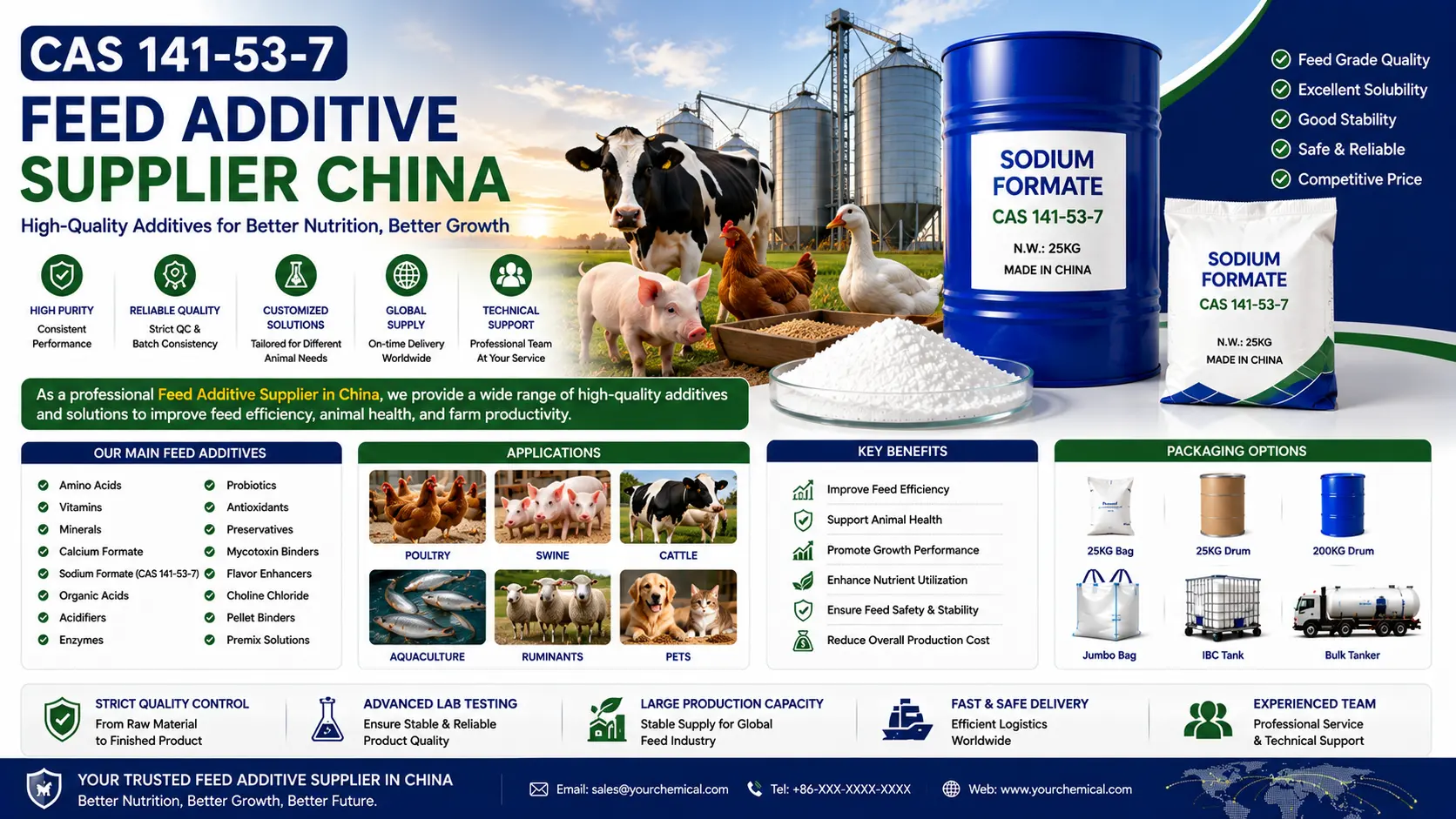
Feed additives are used to enhance animal nutrition, feed efficiency, product stability, digestive performance, growth, reproduction, feed preservation and product consistency. They can offer vitamins, minerals, amino acids, enzymes, organic acids, antioxidants, preservatives, flavor enhancement, toxin management, and/or functional support, depending on the product.
Customers deserve more than just a competitive quote. In addition, they need consistent product specification, batch stability, formulation support, secure packaging, reliable production capacity, full documentation, communication and delivery responsiveness and reliable international delivery.
China is now an important raw material supplier and exporter of amino acids, vitamins and trace minerals, amino acid feeding ingredients, calcium formate and sodium formate, enzymes, antioxidants, preservatives, probiotics, toxin binders and customized amino acid premix ingredients.
But feed additives cannot be chosen strictly on the basis of the product name or cost per kg. They are appropriate depending upon the animal species, growth stage, the formula of feed, dosage, processing temperature, moisture, storage, regulation, and compatibility with other ingredients.
The guide provides an overview of the major categories of feed additives available from Chinese suppliers and their applications, technical specifications, quality-control requirements, preferred packaging, supplier-evaluation methods, sourcing risks and buying considerations.
What Does a Feed Additive Supplier Provide?
A feed additive supplier provides nutritional and functional ingredients used in compound feed, premixes, concentrates, mineral blocks, liquid feed, pet food, and aquaculture formulations.
These additives may be used in feed for:
- Poultry
- Swine
- Cattle
- Sheep
- Goats
- Dairy animals
- Aquaculture species
- Horses
- Rabbits
- Pets
- Specialty livestock
A professional supplier may provide:
- Standard feed-grade ingredients
- Customized specifications
- Premix formulations
- Technical data
- Safety documentation
- Batch-specific certificates
- Sample testing
- Private-label packaging
- Export support
- Application guidance
The supplier should clearly distinguish feed-grade products from industrial, food, pharmaceutical, or technical grades.
Why Source Feed Additives from China?
China has a large manufacturing base for fermentation products, mineral salts, organic acids, vitamins, amino acids, enzymes, and functional feed ingredients.
Potential sourcing advantages include:
- Broad product availability
- Competitive manufacturing costs
- Large production capacity
- Flexible minimum order quantities
- Multiple quality grades
- Customized formulations
- Private-label packaging
- Established export logistics
- Access to upstream raw materials
- Support for bulk procurement
Chinese feed additive suppliers may serve customers in:
- Southeast Asia
- South Asia
- The Middle East
- Africa
- Europe
- South America
- North America
- Central Asia
- Australia
The value of a supplier depends on quality consistency, regulatory compliance, documentation, and technical suitability rather than location alone.
Main Types of Feed Additives
Amino Acids
Amino acids are essential components of animal nutrition and protein synthesis.
Common feed-grade amino acids include:
- L-Lysine
- DL-Methionine
- L-Threonine
- L-Tryptophan
- L-Valine
- L-Isoleucine
- L-Arginine
- Glycine
- Betaine
Potential benefits include:
- Improved protein utilization
- Better growth performance
- Reduced crude-protein requirements
- Lower nitrogen excretion
- Improved feed conversion
- More balanced diets
- Reduced feed cost
- Support for muscle development
Amino acid supplementation allows nutritionists to formulate diets more precisely.
Important specifications may include:
- Assay
- Moisture
- Bulk density
- Particle size
- Optical rotation
- pH
- Ash
- Heavy metals
- Microbial limits
- Packaging
- Shelf life
L-Lysine
L-Lysine is commonly added to poultry, swine, aquaculture, and other animal feeds.
Commercial forms may include:
- L-Lysine hydrochloride
- L-Lysine sulfate
- Liquid lysine
Potential functions include:
- Supporting protein synthesis
- Improving growth
- Balancing cereal-based diets
- Reducing total protein requirements
- Improving feed efficiency
The actual nutritional value depends on lysine content, purity, digestibility, and product form.
DL-Methionine
DL-Methionine is widely used in poultry, swine, aquaculture, and pet-food formulations.
Potential benefits include:
- Supporting feather development
- Improving protein utilization
- Supporting growth
- Balancing plant-protein diets
- Supporting antioxidant metabolism
- Improving feed efficiency
Methionine may be supplied as powder, granules, or liquid analog products.
L-Threonine
L-Threonine supports protein synthesis and intestinal function.
It is commonly used in swine and poultry diets.
Potential benefits include:
- Improved amino acid balance
- Better feed conversion
- Reduced crude-protein levels
- Support for intestinal mucin production
- Lower nitrogen excretion
Vitamins
Vitamins support metabolism, immunity, reproduction, growth, bone development, and overall animal health.
Common feed-grade vitamins include:
- Vitamin A
- Vitamin D3
- Vitamin E
- Vitamin K3
- Vitamin B1
- Vitamin B2
- Vitamin B6
- Vitamin B12
- Niacin
- Calcium pantothenate
- Folic acid
- Biotin
- Vitamin C
- Choline chloride
Vitamins may be supplied as:
- Pure powders
- Stabilized powders
- Coated products
- Beadlets
- Spray-dried products
- Premix concentrates
- Liquid formulations
Important factors include active content, stability, carrier material, coating, particle size, and storage sensitivity.
Vitamin A
Vitamin A supports:
- Vision
- Growth
- Reproduction
- Epithelial integrity
- Immune function
Because vitamin A is sensitive to light, oxygen, heat, and moisture, stabilized feed-grade forms are commonly used.
Vitamin D3
Vitamin D3 supports calcium and phosphorus metabolism.
Potential benefits include:
- Bone development
- Eggshell quality
- Skeletal strength
- Mineral absorption
- Growth performance
Its dosage should be controlled carefully because excessive supplementation may create nutritional problems.
Vitamin E
Vitamin E functions as an antioxidant and supports immune and reproductive performance.
Potential benefits include:
- Protection of cell membranes
- Improved immune response
- Support for fertility
- Reduced oxidative stress
- Improved meat quality
- Better feed stability
Choline Chloride
Choline chloride is widely used in poultry, swine, aquaculture, and livestock feed.
Potential functions include:
- Supporting fat metabolism
- Reducing abnormal fat accumulation
- Supporting growth
- Supporting nervous-system function
- Improving feed utilization
It may be supplied as:
- Powder on a carrier
- Liquid solution
- Silica-based powder
- Vegetable-carrier grade
Quality evaluation should include choline content, moisture, trimethylamine, carrier type, and flowability.
Mineral Feed Additives
Mineral additives supply essential macro and trace elements.
Common products include:
- Calcium carbonate
- Monocalcium phosphate
- Dicalcium phosphate
- Tricalcium phosphate
- Magnesium oxide
- Ferrous sulfate
- Zinc sulfate
- Copper sulfate
- Manganese sulfate
- Sodium selenite
- Cobalt sulfate
- Potassium iodide
- Calcium iodate
Mineral source, purity, particle size, heavy-metal content, solubility, and bioavailability should be considered.
Monocalcium and Dicalcium Phosphate
Feed phosphates supply phosphorus and calcium.
Potential benefits include:
- Supporting bone development
- Improving skeletal strength
- Supporting energy metabolism
- Supporting growth
- Improving feed formulation accuracy
Important specifications may include:
- Total phosphorus
- Available phosphorus
- Calcium
- Fluorine
- Arsenic
- Lead
- Cadmium
- Moisture
- Particle size
Zinc Sulfate
Zinc supports:
- Enzyme function
- Skin integrity
- Growth
- Reproduction
- Immunity
- Hoof and claw health
Feed-grade zinc sulfate may be supplied as monohydrate or heptahydrate.
Ferrous Sulfate
Iron supports hemoglobin formation and oxygen transport.
Feed-grade ferrous sulfate may be used in premixes and mineral supplements.
Important quality factors include iron content, oxidation state, moisture, insoluble matter, and heavy-metal limits.
Organic Acids and Acidifiers
Organic acids are used to control feed pH, preserve feed, support digestion, and reduce the growth of undesirable microorganisms.
Common organic acids include:
- Formic acid
- Propionic acid
- Lactic acid
- Citric acid
- Fumaric acid
- Acetic acid
- Butyric acid
- Benzoic acid
- Sorbic acid
Acidifier products may contain single acids, buffered acids, coated acids, salts, or blended formulations.
Potential benefits include:
- Improved feed preservation
- Lower feed pH
- Reduced mold growth
- Support for digestive conditions
- Improved mineral utilization
- Better feed hygiene
- Reduced spoilage
- Improved storage stability
Calcium Formate
Calcium formate is used in selected feed and premix applications.
Potential functions include:
- Organic-acid delivery
- Feed preservation support
- Calcium supplementation
- pH-control support
- Improved handling compared with some liquid acids
- Reduced corrosiveness in selected formulations
Important specifications may include:
- Purity
- Calcium content
- Formate content
- Moisture
- Insoluble matter
- Heavy metals
- Particle size
- Feed-grade compliance
The dosage should be determined by a qualified nutritionist and according to applicable regulations.
Sodium Formate
Sodium formate has the CAS number 141-53-7.
It may be used in selected feed-preservation, acidification, silage, and functional additive formulations where permitted.
Potential roles may include:
- Formate-ion delivery
- Preservation support
- pH management
- Buffering in blended acidifier systems
- Support for feed hygiene
Buyers should confirm that the supplied grade is specifically suitable and authorized for the intended feed application and market.
Important specifications may include:
- Purity
- Moisture
- Sodium content
- Formate content
- Insoluble matter
- Chloride
- Heavy metals
- Particle size
- Feed-grade documentation
Industrial-grade sodium formate should not automatically be used in feed applications.
Potassium Diformate
Potassium diformate is used as a feed acidifier and preservative in selected markets.
Potential benefits include:
- Feed-hygiene support
- pH reduction
- Improved preservation
- Support for digestive performance
- Easier handling than concentrated liquid acid
Regulatory authorization and maximum inclusion levels vary by market and animal species.
Mold Inhibitors and Preservatives
Feed can deteriorate because of moisture, mold, yeast, bacteria, heat, and long storage.
Preservative products may include:
- Propionic acid
- Calcium propionate
- Sodium propionate
- Sorbic acid
- Potassium sorbate
- Formic acid
- Buffered organic-acid blends
- Mold-inhibitor mixtures
Potential benefits include:
- Reduced mold growth
- Longer feed shelf life
- Lower nutrient loss
- Reduced heating
- Improved storage stability
- Better feed hygiene
- Reduced spoilage during transportation
The effective dosage depends on moisture, feed type, storage duration, temperature, and contamination pressure.
Antioxidants
Antioxidants protect fats, oils, vitamins, pigments, and other feed components from oxidation.
Common antioxidants include:
- BHA
- BHT
- TBHQ
- Ethoxyquin where permitted
- Propyl gallate
- Tocopherols
- Rosemary extracts
- Mixed antioxidant formulations
Potential benefits include:
- Improved fat stability
- Reduced rancidity
- Better vitamin retention
- Longer shelf life
- Improved feed palatability
- Reduced oxidation during storage
Antioxidant selection should consider fat type, processing temperature, storage period, regulatory status, and customer preferences.
Enzymes
Feed enzymes improve nutrient digestion and reduce anti-nutritional effects.
Common feed enzymes include:
- Phytase
- Xylanase
- Beta-glucanase
- Protease
- Amylase
- Cellulase
- Mannanase
- Lipase
- Multi-enzyme blends
Potential benefits include:
- Improved phosphorus utilization
- Better energy release
- Improved protein digestion
- Reduced feed cost
- Lower nutrient excretion
- Improved feed conversion
- Reduced viscosity in the digestive tract
Important specifications include enzyme activity, coating, heat stability, pH range, carrier, particle size, and shelf life.
Phytase
Phytase releases phosphorus bound in phytate.
Potential benefits include:
- Improved phosphorus utilization
- Reduced inorganic phosphate use
- Reduced phosphorus excretion
- Improved mineral availability
- Lower feed cost
Pelleting temperature can reduce enzyme activity, so heat-stable or coated forms may be required.
Xylanase
Xylanase breaks down arabinoxylans in cereal ingredients.
Potential benefits include:
- Reduced intestinal viscosity
- Improved nutrient release
- Better energy utilization
- Improved feed conversion
- Reduced wet litter in poultry
Probiotics
Probiotics are live microorganisms added to feed to support microbial balance and digestive performance.
Common microorganisms may include:
- Bacillus species
- Lactobacillus species
- Enterococcus species
- Saccharomyces cerevisiae
- Clostridium butyricum
Potential benefits include:
- Support for digestive health
- Improved feed utilization
- Competitive exclusion of undesirable microorganisms
- Improved manure quality
- Support during stress
- Improved production consistency
Important quality factors include strain identification, viable count, stability, contamination control, carrier, and shelf life.
Prebiotics
Prebiotics are non-digestible ingredients that support beneficial intestinal microorganisms.
Common examples include:
- Mannan oligosaccharides
- Fructooligosaccharides
- Galactooligosaccharides
- Inulin
- Yeast-cell-wall products
- Beta-glucans
They may support digestive balance, immunity, and feed efficiency.
Toxin Binders
Mycotoxins may contaminate corn, wheat, barley, soybean meal, and other feed ingredients.
Common toxins include:
- Aflatoxin
- Zearalenone
- Deoxynivalenol
- Fumonisin
- Ochratoxin
- T-2 toxin
Toxin binders may contain:
- Bentonite
- Montmorillonite
- Zeolite
- Activated clay
- Yeast-cell-wall fractions
- Enzymes
- Organic adsorbents
- Multi-component blends
Potential functions include:
- Adsorbing selected toxins
- Supporting intestinal protection
- Reducing toxin bioavailability
- Supporting liver function
- Improving production stability
No binder is equally effective against every mycotoxin, so performance data should be reviewed carefully.
Palatability Enhancers
Palatability enhancers improve feed intake and acceptance.
Products may include:
- Sweeteners
- Flavors
- Aromatic compounds
- Molasses powders
- Milk flavors
- Fruit flavors
- Masking agents
Applications may include:
- Piglet feed
- Calf feed
- Pet food
- Mineral supplements
- Medicated feed
- Aquaculture feed
The product should remain stable during feed processing and storage.
Emulsifiers
Feed emulsifiers support fat digestion and feed processing.
Common products may include:
- Lecithin
- Lysolecithin
- Glycerol monostearate
- Sorbitan esters
- Polysorbates
- Specialty emulsifier blends
Potential benefits include:
- Improved fat dispersion
- Better energy utilization
- Improved pellet quality
- More uniform feed mixing
- Support for young animals
Pellet Binders
Pellet binders improve pellet durability and reduce fines.
Common products include:
- Lignosulfonates
- Bentonite
- Modified starch
- Guar gum
- Cellulose-based binders
- Synthetic polymer binders
Potential benefits include:
- Higher pellet durability
- Reduced dust
- Lower feed loss
- Improved transportation stability
- Better handling
- More consistent animal intake
The binder should not reduce nutrient availability or create processing problems.
Anti-Caking Agents
Anti-caking agents improve powder flowability and reduce clumping.
Common products include:
- Silicon dioxide
- Calcium silicate
- Zeolite
- Bentonite
- Magnesium carbonate
- Mineral carriers
They are often used in salt, premix, vitamin, mineral, and acidifier products.
Feed Additives for Poultry
Poultry feed additives may support:
- Growth
- Egg production
- Eggshell quality
- Feed conversion
- Digestive performance
- Litter quality
- Immunity
- Heat-stress management
Common products include:
- Methionine
- Lysine
- Threonine
- Vitamins
- Phytase
- Xylanase
- Probiotics
- Organic acids
- Antioxidants
- Toxin binders
- Pigments
- Minerals
Broiler, layer, breeder, and turkey formulations require different nutritional strategies.
Feed Additives for Swine
Swine feed additives may support:
- Piglet growth
- Sow reproduction
- Feed intake
- Digestive performance
- Protein utilization
- Carcass quality
- Manure management
Common products include:
- Lysine
- Threonine
- Tryptophan
- Valine
- Organic acids
- Enzymes
- Probiotics
- Zinc sources
- Vitamins
- Flavors
- Toxin binders
Feed Additives for Ruminants
Ruminant additives may support:
- Rumen function
- Milk production
- Feed intake
- Fiber digestion
- Mineral balance
- Heat-stress management
- Methane-reduction strategies
- Reproductive performance
Common products include:
- Rumen-protected amino acids
- Yeast cultures
- Sodium bicarbonate
- Magnesium oxide
- Calcium salts of fatty acids
- Mineral premixes
- Vitamins
- Mycotoxin binders
- Silage additives
Rumen-protected products should demonstrate suitable stability and intestinal release.
Aquaculture Feed Additives
Aquaculture feed additives may be used in feed for fish, shrimp, and other aquatic species.
Potential products include:
- Amino acids
- Vitamins
- Minerals
- Enzymes
- Probiotics
- Organic acids
- Antioxidants
- Attractants
- Pigments
- Binders
- Immunostimulants
Important requirements include:
- Water stability
- Pellet durability
- Digestibility
- Low nutrient leaching
- Species compatibility
- Environmental safety
Pet-Food Additives
Pet-food formulations may use:
- Vitamins
- Minerals
- Amino acids
- Antioxidants
- Preservatives
- Palatants
- Probiotics
- Prebiotics
- Joint-support ingredients
- Functional fibers
Pet-food additives often require stricter sensory, contaminant, and labeling controls.
Important Product Specifications
A professional Feed Additive Supplier China should provide measurable technical data.
Depending on the product, important specifications may include:
- Active content
- Assay
- Purity
- Moisture
- Ash
- Bulk density
- Particle size
- pH
- Solubility
- Enzyme activity
- Viable microbial count
- Heavy metals
- Arsenic
- Lead
- Cadmium
- Mercury
- Fluorine
- Microbial limits
- Mycotoxins
- Shelf life
General descriptions such as “feed grade” or “premium quality” are not enough for technical purchasing.
Feed-Grade Versus Industrial Grade
Feed additives must meet the requirements applicable to animal nutrition and feed production.
Industrial-grade products may contain:
- Higher impurity levels
- Inappropriate carriers
- Uncontrolled heavy metals
- Unsuitable processing aids
- Incomplete traceability
- Missing feed-use documentation
Buyers should verify:
- Intended grade
- Manufacturing process
- Regulatory status
- Ingredient specification
- Contaminant limits
- Labeling
- Certificate of analysis
- Production traceability
A matching CAS number does not prove that a chemical is suitable for feed use.
Laboratory Testing
Feed additives may require tests such as:
- Assay analysis
- Moisture testing
- Particle-size measurement
- Solubility
- pH
- Bulk density
- Heavy-metal analysis
- Microbial testing
- Mycotoxin analysis
- Stability testing
- Enzyme-activity testing
- Viable-count testing
- Oxidation-stability testing
- Feed-mixing uniformity
- Pelleting-stability testing
Testing methods should be appropriate for the product and destination market.
Feed Processing Stability
Feed additives may be exposed to:
- Grinding
- Mixing
- Steam conditioning
- Pelleting
- Extrusion
- Drying
- Cooling
- Long storage
Heat, moisture, pressure, and shear may reduce the activity of vitamins, enzymes, probiotics, flavors, and coated products.
Suppliers should provide stability information where relevant.
Mixing Uniformity
Micro-ingredients must be distributed evenly throughout feed.
Factors affecting uniformity include:
- Particle size
- Bulk density
- Electrostatic properties
- Carrier selection
- Mixing time
- Addition sequence
- Equipment design
- Premix concentration
Products with very different particle sizes or densities may segregate during handling.
Quality Control in Chinese Manufacturing
A dependable feed additive manufacturer or supplier should maintain strict quality control.
Typical procedures include:
- Approved raw-material suppliers
- Incoming-material inspection
- Identity testing
- Formula verification
- Controlled weighing
- In-process monitoring
- Finished-product analysis
- Contaminant testing
- Packaging inspection
- Batch release
- Retained-sample storage
- Warehouse hygiene
- Pest control
- Traceability review
Cross-contamination control is especially important for premixes and concentrated additives.
Batch Traceability
Each shipment should be traceable through:
- Raw-material lot numbers
- Production date
- Finished-product batch number
- Laboratory results
- Operator records
- Packaging records
- Retained samples
- Warehouse location
- Loading records
- Shipping documents
Traceability allows faster investigation if quality or performance issues occur.
Sample Evaluation
Before placing a large order, buyers should request representative samples.
Sample evaluation may include:
- Appearance
- Odor
- Color
- Flowability
- Solubility
- Assay
- Moisture
- Particle size
- Heavy metals
- Microbiology
- Feed-mixing trials
- Stability testing
- Comparison with an approved reference product
The sample should represent the intended commercial grade.
Customized Formulations and Premixes
A capable Feed Additive Supplier China may offer customized products based on:
- Animal species
- Growth stage
- Feed ingredients
- Nutrient targets
- Processing conditions
- Climate
- Storage duration
- Local regulations
- Packaging preferences
- Customer branding
Customization may include:
- Vitamin premixes
- Mineral premixes
- Amino-acid blends
- Acidifier blends
- Enzyme combinations
- Antioxidant systems
- Mold-inhibitor blends
- Toxin-binder formulations
- Private-label products
Customized formulations should be developed and reviewed by qualified animal-nutrition professionals.
Packaging Options
Feed additives may be supplied in:
- 20 kg bags
- 25 kg bags
- Multi-layer paper bags
- Woven polypropylene bags
- Aluminum-foil bags
- Fiber drums
- Plastic drums
- 200 kg drums
- 500 kg bulk bags
- 1,000 kg jumbo bags
- IBC tanks
- Customized packaging
Packaging selection depends on moisture sensitivity, oxidation risk, product form, dosage, storage conditions, and destination requirements.
Light-sensitive and oxidation-sensitive products may require barrier packaging.
Storage and Handling
General storage precautions include:
- Store products in a clean and dry warehouse.
- Keep bags and containers tightly sealed.
- Protect products from moisture and direct sunlight.
- Avoid excessive heat.
- Separate incompatible materials.
- Prevent contamination from chemicals or pests.
- Use clean handling equipment.
- Follow first-in, first-out inventory control.
- Observe the stated shelf life.
- Follow the safety data sheet where applicable.
Improper storage can reduce potency, enzyme activity, microbial viability, flowability, or feed safety.
Required Documents
A professional supplier should provide documents appropriate to the product and destination market.
Typical documents may include:
- Product specification
- Technical data sheet
- Safety data sheet
- Batch-specific certificate of analysis
- Ingredient statement
- Manufacturing statement
- Allergen statement where relevant
- GMO statement where required
- Heavy-metal report
- Microbial report
- Certificate of origin
- Commercial invoice
- Packing list
- Bill of lading
- Health or sanitary documents where required
All documents should show consistent product names, grades, batch numbers, quantities, and packaging information.
Regulatory Considerations
Feed additive regulations vary by country and region.
Buyers should confirm:
- Whether the ingredient is authorized
- Permitted animal species
- Maximum inclusion rate
- Labeling requirements
- Purity criteria
- Contaminant limits
- Registration requirements
- Import permits
- Documentation requirements
The buyer remains responsible for confirming compliance in the destination market.
How to Evaluate a Feed Additive Supplier in China
Buyers should assess:
- Product range
- Feed-industry experience
- Manufacturing or sourcing capability
- Quality-management procedures
- Laboratory capability
- Contaminant control
- Batch traceability
- Production capacity
- Customized-formulation ability
- Packaging flexibility
- Export experience
- Technical support
- Delivery reliability
- Complaint-handling procedures
A reliable supplier should clearly explain whether it is the manufacturer, distributor, exporter, or integrated service provider.
Factory Audit Checklist
A factory audit may review:
- Business and production licenses
- Raw-material approval process
- Warehouse hygiene
- Pest control
- Weighing systems
- Mixing equipment
- Fermentation or reaction equipment
- Drying and granulation systems
- Packaging lines
- Laboratory capability
- Cross-contamination controls
- Batch traceability
- Retained-sample management
- Finished-product storage
- Staff hygiene
- Cleaning procedures
- Export records
The audit scope should match the product risk and order volume.
How to Request an Accurate Quotation
A complete inquiry should include:
- Product name
- Required feed grade
- Target specification
- Intended animal species
- Intended application
- Required quantity
- Packaging
- Destination
- Incoterm
- Required documents
- Regulatory requirements
- Delivery schedule
For example:
“Please quote feed-grade sodium formate CAS 141-53-7, calcium formate, lysine, methionine, and mold inhibitor for livestock-feed production, including samples, specifications, COA, SDS, heavy-metal limits, 25 kg packaging, and CIF delivery terms.”
Detailed inquiries help suppliers provide more accurate prices and documentation.
Comparing Supplier Quotations
Buyers should compare more than unit price.
Important factors include:
- Product grade
- Active content
- Purity
- Nutritional value
- Contaminant limits
- Effective dosage
- Stability
- Packaging
- Freight
- Payment terms
- Lead time
- Documents
- Regulatory support
- Batch consistency
- Complaint handling
A lower-priced product may result in higher costs if it contains less active material, has poor stability, or fails to meet import requirements.
Total Purchasing Cost
The total purchasing cost includes:
- Product price
- Packaging
- Inland transportation
- Export fees
- Ocean freight
- Insurance
- Import duty
- Customs clearance
- Local delivery
- Storage
- Testing
- Registration
- Rejected-product risk
- Nutritional value
- Effective dosage
The best supplier provides suitable quality and consistent performance at the lowest total feed-production cost.
Private Label and OEM Supply
Some Chinese feed additive suppliers offer private-label and OEM services.
Potential services include:
- Customized product names
- Buyer-designed bags and labels
- Multilingual packaging
- Premix formulation
- Customized active content
- Customized particle size
- Product blending
- Pallet configuration
- Shipping marks
Private-label projects should define responsibilities for formulation, regulatory compliance, labeling, technical claims, and product registration.
Common Sourcing Risks
Potential risks include:
- Choosing suppliers only by price
- Confusing industrial and feed grades
- Purchasing without sample testing
- Unclear specifications
- Inconsistent active content
- Excessive moisture
- High contaminant levels
- Poor microbial control
- Incorrect packaging
- Missing regulatory documents
- Delayed shipment
- Poor traceability
- Limited technical support
- Misunderstood Incoterms
These risks can be reduced through detailed specifications, laboratory verification, supplier audits, batch-specific documentation, third-party inspection, and clear purchase contracts.
Questions to Ask Before Ordering
Buyers should confirm:
- Is the product specifically feed grade?
- Is the supplier the manufacturer or a distributor?
- Which animal species is the product intended for?
- What active content can be guaranteed?
- What contaminant limits apply?
- Can representative samples be supplied?
- Can recent batch COAs be provided?
- What testing methods are used?
- Can customized premixes be produced?
- What is the monthly production capacity?
- What is the normal lead time?
- What packaging options are available?
- Which export documents are included?
- Can third-party inspection be arranged?
- How are quality complaints handled?
Conclusion
The selection of a reliable Feed Additive Supplier China involves a comprehensive assessment of product grade, active content, purity, nutrient content, control of contaminates, manufacturing ability, quality management systems, batch uniformity, packaging, documentation, regulatory compliance, technical support and export to international markets.
The Chinese suppliers are able to supply amino acids, vitamins, trace minerals, organic acids, sodium formate, calcium formate, enzymes, probiotics, antioxidants, preservatives, toxin binders, pellet binders, acidifiers and customized feed premixes for the global animal-nutrition markets.
Buyers need to make sure to include all application and specification needs, ask for samples, read batch documentation, check feed-grade requirements, test critical parameters, confirm supplier's ability, and consider overall buying costs.
A reliable supplier should deliver fit-for-purpose feed additive grades with measurable specifications, consistent batch performance, secure packaging, responsive communication, full export documentation and reliable global delivery.


Contact Us
In This Article
Related Posts
How to Choose a Reliable 2-Ethylhexanol (2-EH) Supplier in China: Quality, Packaging and Shipping
2026-10-22
Natural vs Synthetic Sodium Sulfate Anhydrous: Which Is Better for Industrial Applications?
2026-10-22
Isobutanol 99.3% Price and Supply in 2026: A Guide for Chemical Importers
2026-10-22
Sodium Sulfate Anhydrous 99% for Detergent Manufacturing: Benefits, Specifications and Bulk Supply
2026-10-22


