



Formic Acid Material Compatibility: Stainless Steel, HDPE, and Tank Selection
By Tonmoy
2026-09-04Related Posts
Custom Packaging Solutions from an Anhydrous Sodium Acetate Supplier in China
2026-09-23
Application Trends in Anhydrous Sodium Acetate for Special Chemical Manufacturing
2026-09-23
Anhydrous Sodium Acetate for Leather Tanning: Improve Dyeing Uniformity
2026-09-22
Formic Acid 85% for Textile Dyeing: Industrial Applications, Technical Benefits and Future Trends
2026-09-22
Formic acid material compatibility cannot be decided from the chemical name alone. A suitable tank material depends on the formic acid concentration, temperature, contact time, exact material grade, fabrication details, and every other wetted component in the system.
HDPE and stainless steel may both be considered during tank selection, but neither should be approved universally without condition-specific evidence. A compatibility chart is a useful screening tool; it is not, by itself, a complete approval for a storage or transfer system.
For broader chemical information, see the Vanchor page on formic acid. For tank selection, however, the key question is not simply “Is formic acid compatible with HDPE or stainless steel?” It is:
Is this exact formic acid product compatible with this exact material, at this concentration and temperature, for the intended exposure time and equipment design?
What determines formic acid material compatibility?
Several variables can change the compatibility assessment.
Concentration
Formic acid solutions at different concentrations should not be treated as interchangeable. A chart that covers dilute or aqueous formic acid may not establish suitability for a more concentrated product. Concentration should be recorded using the supplier’s stated basis, such as mass percent, rather than assumed from a product name.
This is particularly important when a facility handles several commercial grades. The compatibility review for an 85% product should not automatically be transferred to 94% or 99% formic acid.
The product’s concentration should also be considered alongside water content and relevant impurities. Vanchor’s chemical-manufacturing material discusses quality and packaging considerations such as water, chloride, sulfate, iron, color, and nonvolatile residue. These are site-stated product considerations and should not be treated as a universal tank-compatibility specification.
Temperature
Temperature can affect both corrosion and polymer performance. A material rating established at ambient conditions should not automatically be applied to a heated process, warm transfer line, or tank exposed to temperature cycling.
Compatibility references may separate formic acid into different temperature categories. For example, one pump-material reference identifies separate formic acid categories below 50°C and below 100°C. Those categories belong to that reference’s equipment and material scope; they are not universal operating limits for every tank or component.
Contact time
A short transfer through a pipe is different from continuous storage. Residence time, filling frequency, liquid level, and stagnant areas can all affect the practical exposure of the material.
The review should distinguish between:
- Intermittent transfer
- Batch contact
- Continuous circulation
- Long-term storage
- Residual liquid remaining in low points or dead legs
Material grade and construction
“Stainless steel” is not a complete material specification. The exact alloy grade, surface condition, welds, heat-affected zones, nozzles, and fabrication method may all be relevant.
Likewise, “HDPE tank” does not describe every aspect of the equipment. Resin formulation, tank construction, wall design, fittings, reinforcement, temperature exposure, and mechanical loading can affect the final selection.
Vanchor’s industrial descaling guidance also identifies alloy type, concentration, temperature, and contact time as factors in metal compatibility. That statement is presented in an industrial descaling context and should not be interpreted as independent approval of a particular tank material.
HDPE versus stainless steel for formic acid tanks
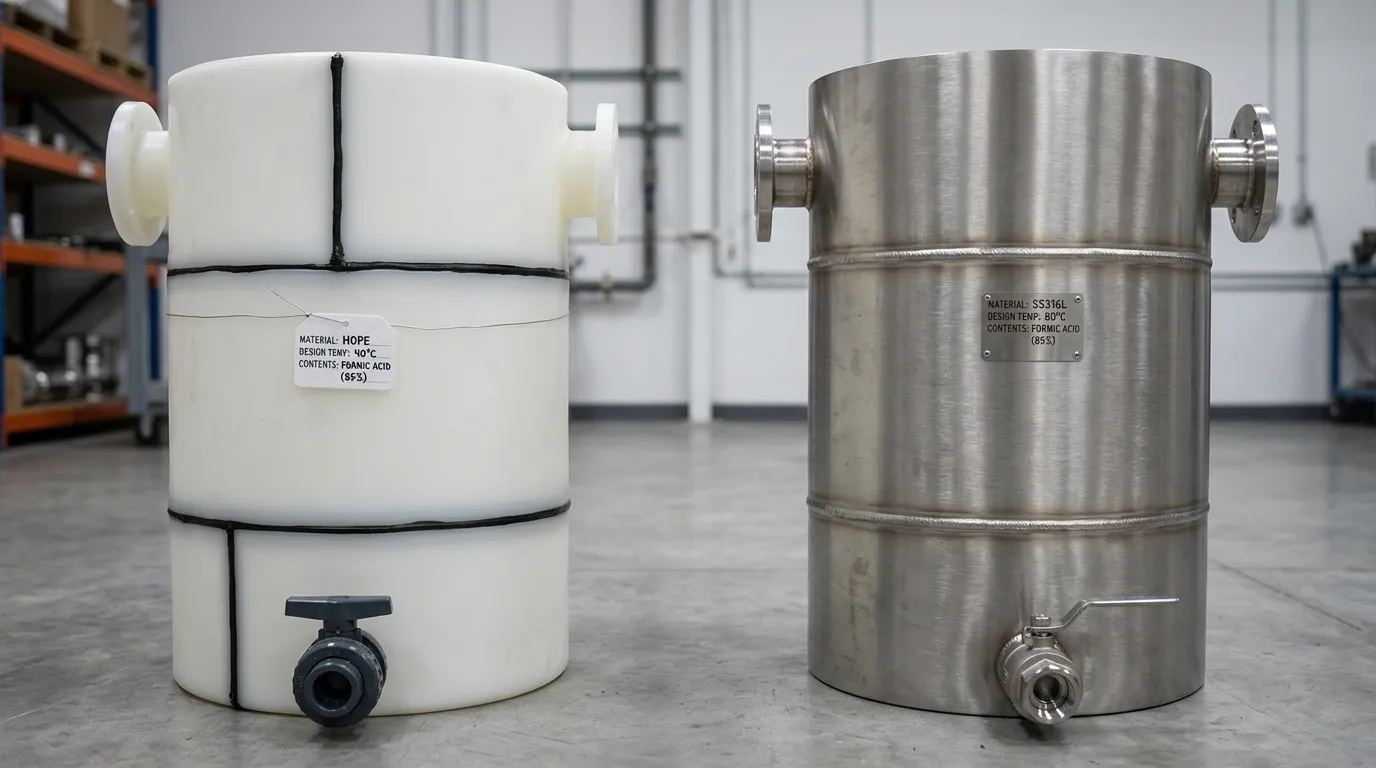
The available compatibility evidence does not support a universal winner between HDPE and stainless steel. The practical comparison is whether each candidate has adequate evidence for the intended service conditions.
| Material candidate | What must be specified | Main validation question | What cannot be assumed |
|---|---|---|---|
| HDPE | Formic acid concentration, temperature, storage time, tank construction, fittings, and mechanical conditions | Does the tank manufacturer’s data cover this exact chemical service and operating range? | That all HDPE tanks have the same resistance or temperature capability |
| Stainless steel | Exact alloy grade, concentration, temperature, weld condition, surface condition, and contact time | Does grade-specific corrosion or compatibility evidence cover the actual service? | That all stainless steel grades perform the same way |
| Complete tank system | Tank wall, nozzles, valves, pump, tubing, gaskets, seals, vents, and sampling points | Are all wetted components compatible under the same conditions? | That tank-wall compatibility approves the entire system |
HDPE tank selection
HDPE should be evaluated using data from the tank or resin manufacturer for the actual formic acid concentration and temperature. The review should also consider whether the tank will experience:
- Long residence times
- Elevated or fluctuating temperature
- Mechanical stress or deformation
- Repeated filling and emptying
- Concentrated product at the tank bottom
- Cleaning chemicals or other process fluids
- Fittings made from different materials
A generic plastics chart may help with initial screening, but it does not replace tank-manufacturer confirmation. It may also cover a different concentration, temperature, exposure time, or test condition than the proposed installation.
The article’s evidence does not establish that HDPE is universally suitable for formic acid tanks. A final decision requires material-specific documentation for the actual service.
Stainless-steel tank selection
Stainless steel requires the same condition-specific approach, with additional attention to alloy grade and fabrication. A stainless-steel tank review should identify:
- Exact stainless-steel grade
- Welded and unwelded areas
- Heat-affected zones
- Internal surface finish
- Nozzles, supports, and dissimilar-metal connections
- Operating and cleaning temperatures
- Expected storage duration
- Any concentration changes during operation
The term “stainless steel” should not be used as if it represented one uniform material. A compatibility statement for one grade or equipment design should not be transferred automatically to another.
The available evidence does not establish universal suitability for 304 stainless steel, 316 stainless steel, or any other stainless-steel grade across all formic acid concentrations and temperatures. Written confirmation should cover the actual alloy and service conditions.
Check the complete wetted system, not only the tank wall
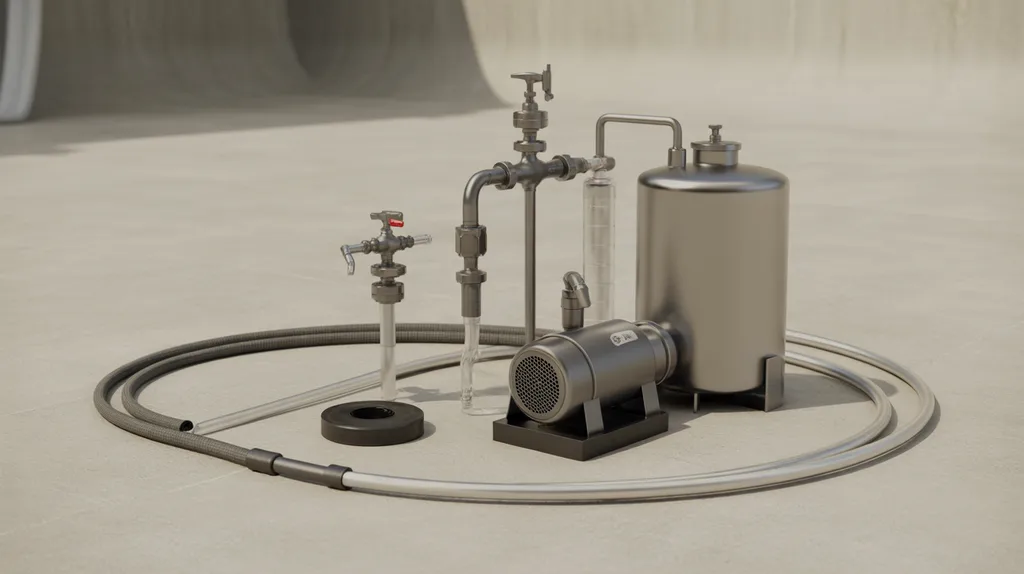
A tank can have a suitable wall material and still present a compatibility problem elsewhere in the system. Formic acid contacts more than the main tank shell.
The review should include:
- Tank wall and internal surfaces
- Nozzles and manways
- Valves and valve seats
- Pumps and pump housings
- Transfer tubing and hoses
- Gaskets and O-rings
- Mechanical seals
- Vents and filters
- Sampling equipment
- Level instruments
- Secondary containment surfaces where chemical contact is possible
Pump, tubing, plastics, metals, and elastomers are often evaluated in separate compatibility references. A rating for one component type should not be transferred to another.
Seals and gaskets require particular attention because they can be made from materials with different chemical and temperature behavior than the tank itself. A generic elastomer list is not enough to approve a specific seal design. The exact material, temperature, concentration, pressure, and movement or compression conditions should be checked with the component manufacturer.
How to use a chemical compatibility chart responsibly
Compatibility charts can help narrow the list of candidate materials, but they should be read within their stated scope. Before relying on a chart, check the following:
- Does it cover the same formic acid concentration?
- Does it cover the same temperature?
- Is the data for a tank, pump, tubing, plastic, metal, elastomer, or another component?
- Does the rating apply to continuous immersion, intermittent contact, or another exposure?
- Are the rating definitions clear?
- Does the chart identify insufficient data separately from an unsuitable rating?
- Does it state a test method, source, or operating basis?
- Does the chart address the exact material grade?
A chemical-resistance guide from W.P. Law’s formic acid compatibility resource explains that its chemical listings and material ratings must be interpreted within defined conditions. It also distinguishes recommended, not recommended, and insufficient-data outcomes and notes that higher temperature can accelerate corrosion. These principles are useful for evaluating a chart, but the guide’s categories should not be presented as a universal approval for every tank design.
The same caution applies to pump and tubing databases. A reference may use a defined temperature, a specific component geometry, or a particular material formulation. If the source does not show data for the actual service, treat the result as a reason for further review rather than as proof of compatibility.
A missing rating should not be interpreted automatically as either approval or rejection. It means that additional technical evidence is needed.
Tank-selection and RFQ checklist for formic acid service
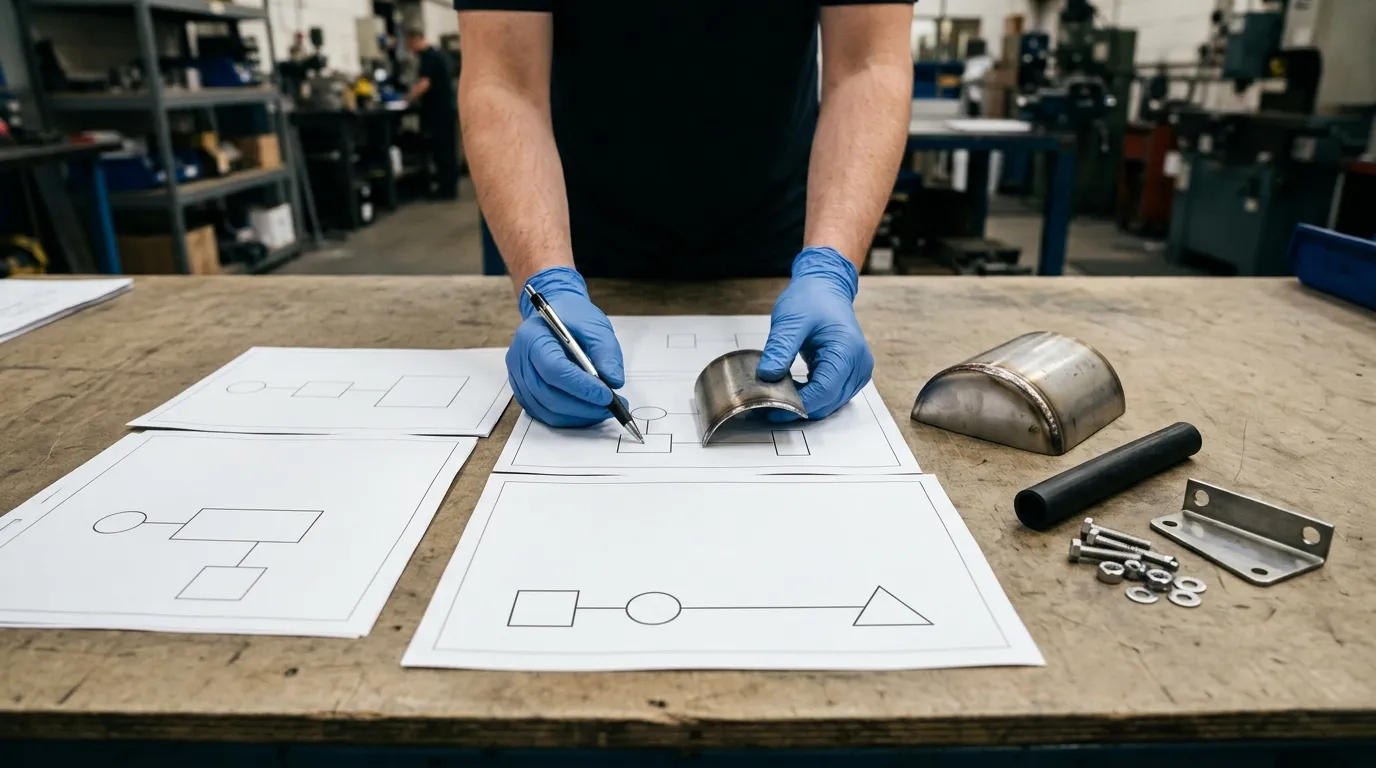
A procurement request or technical review should define the service before asking a tank manufacturer or supplier to confirm compatibility.
Include the following information:
- Formic acid concentration and concentration basis
- Product grade or supplied-product identity
- Normal, minimum, and maximum operating temperature
- Storage, transfer, or batch-contact duty
- Expected contact or residence time
- Tank capacity and mechanical requirements
- Exact proposed tank material
- Stainless-steel grade, where applicable
- HDPE tank construction and resin information, where applicable
- Weld, liner, nozzle, and fabrication details
- Valves, pumps, hoses, tubing, gaskets, and seals
- Cleaning chemicals and cleaning conditions
- Temperature cycling or heating requirements
- Compatibility evidence for each wetted component
- Tank-manufacturer written confirmation
- Relevant TDS, SDS, COA, drawings, and material statements
- Any inspection or validation required before commissioning
For chemical-manufacturing context, readers may also consult formic acid for chemical manufacturing. That type of product information should support chemical identification and quality review; it should not be treated as a tank-material approval.
A practical approval sequence is:
- Define the exact formic acid product, concentration, and operating conditions.
- List every component that may contact the chemical.
- Obtain material-specific compatibility evidence.
- Request written confirmation from the tank and component manufacturers.
- Record the selected materials, operating limits, and evidence basis in the equipment file.
An SDS can support hazard and handling review, while a TDS or COA may support product identity or quality verification. None of these documents should automatically be treated as proof that a complete tank system is compatible.
When additional testing or written confirmation is needed
Further evaluation is particularly important when:
- The concentration or temperature falls outside the range of an available chart.
- The compatibility source reports insufficient data.
- The tank will hold concentrated formic acid for an extended period.
- The system includes welded areas, liners, unusual fittings, or mixed materials.
- The service involves temperature cycling or aggressive cleaning.
- The consequence of leakage or contamination is significant.
- The final formulation differs from the supplied chemical.
- A product is diluted or blended before entering the tank.
Vanchor’s 99% supplier-page guidance states that final diluted formulations should be tested for corrosion and surface compatibility. This is a site-stated recommendation for the relevant formulation context, not evidence that a particular tank material has been approved.
Testing or written confirmation should identify the actual chemical concentration, temperature, exposure duration, material, and component design. It should also state whether the evidence applies to storage, transfer, immersion, or another operating condition.
For readers assessing corrosion in a specific application, formic acid industrial descaling provides related context on the importance of alloy type, concentration, temperature, and contact time. Detailed descaling conditions should remain separate from a general tank-selection decision.
Practical decision rule for formic acid tank selection
Formic acid material compatibility is a condition-dependent engineering decision, not a single property of the chemical and the tank wall.
HDPE and stainless steel can both be evaluated as candidate materials, but the approval basis should include:
- Exact formic acid concentration
- Temperature range
- Contact time
- Exact material grade or construction
- Tank fabrication details
- Pumps, valves, tubing, seals, and gaskets
- Manufacturer or engineering documentation
- Additional testing where the available evidence is incomplete
Before specifying a tank, prepare the service information and request written, condition-specific confirmation. That approach gives operations, QA, engineering, and procurement teams a defensible basis for selecting materials without treating a generic compatibility chart as a complete system approval.


Contact Us
In This Article
Related Posts
Custom Packaging Solutions from an Anhydrous Sodium Acetate Supplier in China
2026-09-23
Application Trends in Anhydrous Sodium Acetate for Special Chemical Manufacturing
2026-09-23
Anhydrous Sodium Acetate for Leather Tanning: Improve Dyeing Uniformity
2026-09-22
Formic Acid 85% for Textile Dyeing: Industrial Applications, Technical Benefits and Future Trends
2026-09-22


