



Incoterms for Chemical Imports: Cost, Risk, and Responsibility Guide
By vanchor
2026-08-01Related Posts
Custom Packaging Solutions from an Anhydrous Sodium Acetate Supplier in China
2026-09-23

Application Trends in Anhydrous Sodium Acetate for Special Chemical Manufacturing
2026-09-23
Anhydrous Sodium Acetate for Leather Tanning: Improve Dyeing Uniformity
2026-09-22
Formic Acid 85% for Textile Dyeing: Industrial Applications, Technical Benefits and Future Trends
2026-09-22
If you are comparing chemical supplier quotes, Incoterms tell you who pays, who carries risk, and where responsibility changes hands. For a broader sourcing view, see Chemical Procurement From China: A Practical Buyer’s Guide (inferred).
Incoterms are official trade terms published by the ICC that define delivery responsibilities in international sales contracts; the current version is Incoterms 2020. In chemical imports, the practical question is not just “what does the quote cost,” but “what part of transport, insurance, and clearance is included, and where does my risk begin?”
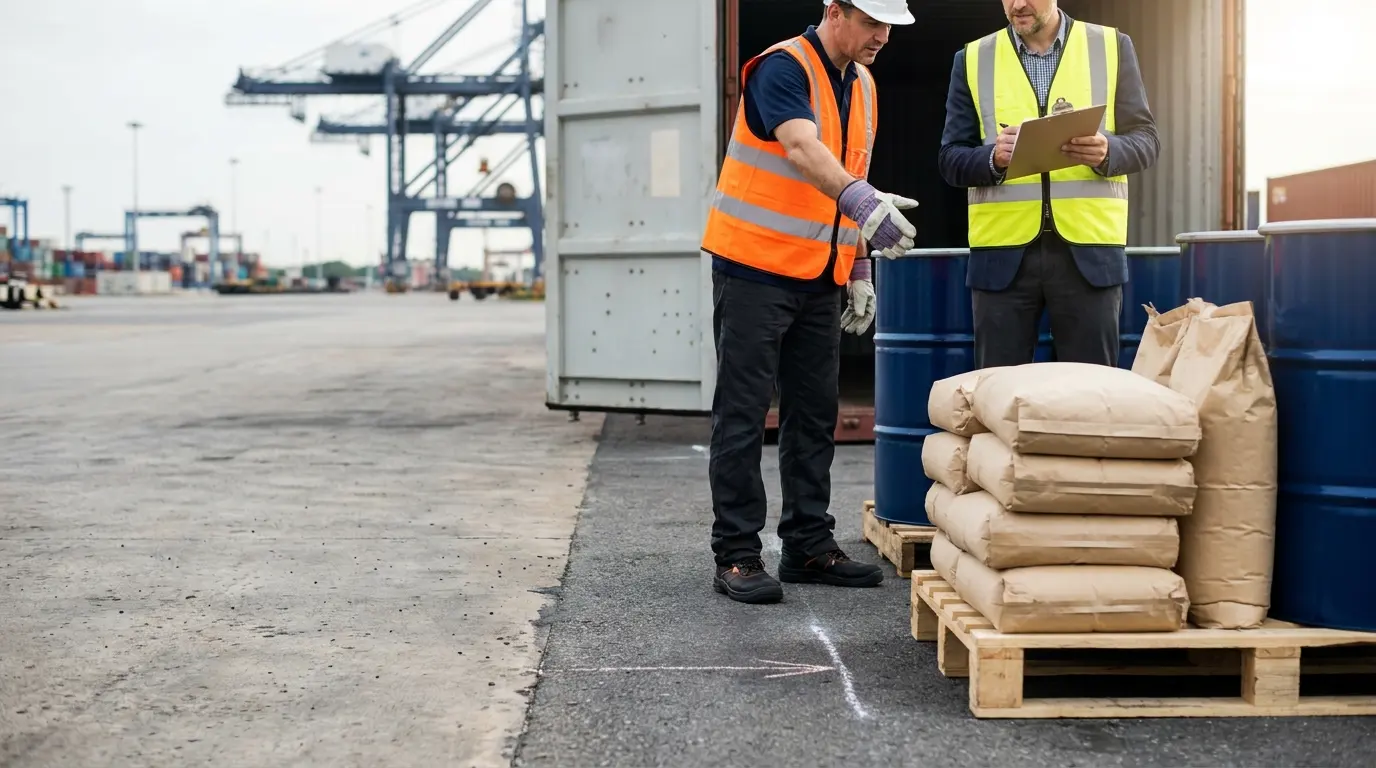
What Incoterms Mean in Chemical Imports
Incoterms are standardized delivery terms used in cross-border trade to clarify the split between buyer and seller responsibilities. They do not decide ownership of the goods, payment terms, or every legal issue in the contract, so they should be read as the delivery layer of the deal rather than the whole agreement.iccwbo+2
For chemical buyers, that distinction matters because a low headline price can hide extra freight, insurance, inland transport, or customs work. The right term makes the quotation easier to compare and helps you see whether the supplier is quoting to the factory gate, to the port, or all the way to your destination.
The Terms Buyers See Most Often
The terms most often relevant in chemical import quotes are EXW, FCA, FOB, CIF, CIP, DAP, and DDP. Not every term fits every transport mode, so it is important to check whether the shipment is moving by sea, inland waterway, air, truck, or a combination of those modes.iccwbo+1
| Term | What it usually means for a chemical buyer | Buyer burden |
|---|---|---|
| EXW | Goods are made available at the seller’s premises. | Highest. Buyer handles pickup, export logistics, and most transport risk. |
| FCA | Seller delivers to a named carrier or handoff point. | High, but cleaner than EXW for international shipping. |
| FOB | Seller delivers on board the vessel at the port of shipment. | Common for sea freight, but only suitable for water transport. |
| CIF | Seller pays cost, insurance, and freight to the destination port. | Buyer still takes risk earlier than many people assume. |
| CIP | Seller pays carriage and insurance to the named destination. | Useful for multimodal transport. |
| DAP | Seller delivers to a named destination, but buyer still clears import. | Buyer handles import clearance and duties. |
| DDP | Seller delivers to destination and handles import duties and clearance. | Lowest buyer burden, but not always practical for chemicals. |
EXW and FCA are often buyer-heavy terms. Under EXW, the buyer is responsible for almost the entire transport chain, which can create extra coordination work if the seller’s facility is far from the export port or if the shipment has special handling needs.
FOB and CIF are still common in many chemical trade conversations, especially for sea freight. FOB is only for water transport, while CIF also includes freight and insurance to the destination port, which makes it useful for quote comparison but not a substitute for understanding where the risk actually transfers.
How Cost and Risk Move Under Each Term
The biggest mistake buyers make is assuming the term that includes more freight also includes more risk protection. It does not. Incoterms separate cost allocation from risk transfer, so a seller may pay more transport cost while the buyer still takes risk earlier in the journey.iccwbo+1
A simple way to think about it:
Cost answers: who pays for freight, insurance, and delivery.
Risk answers: who absorbs loss or damage if something happens in transit.
Responsibility answers: who arranges export clearance, import clearance, and the handoff at the delivery point.
That is why two quotes with the same product price can be very different in practice. One supplier may quote EXW and leave you to manage everything after pickup, while another may quote CIF or DAP and appear more expensive even though some transport work is already included.
What the Quote Includes and What It Does Not
A chemical quote should always be read together with the delivery term. If the quote says CIF, you should still confirm the named port, the insurance scope, and any inland charges after arrival. If the quote says DDP, you should confirm exactly which destination, duties, and import-clearance responsibilities are included, because those details can vary by market and shipment type.business.gov
This is where Chemical Import Landed Cost Calculation becomes the natural next step. Incoterms help you interpret the supplier quote; landed cost tells you the true total import cost.
What Chemical Buyers Should Watch For
Chemical shipments often need more care than ordinary cargo because packaging, hazard status, and documentation can affect whether the chosen delivery term is actually workable. If a product is classified as dangerous goods, the transport plan may need special labeling, declarations, packaging, or carrier approval, even when the Incoterm itself looks simple.business.gov
That is why a delivery term should never be judged in isolation. The same term can be easy for one product and difficult for another depending on whether it is packed in drums, IBCs, bags, or bulk transport, and whether the route involves sea freight, truck, or a mixed-mode shipment.
For operational support around those issues, it can help to review Dangerous Goods Classification for Industrial Chemicals and chemical packaging and logistics. Those pages cover the execution side that sits behind the delivery term.
How to Compare Two Chemical Quotes
When two suppliers offer different Incoterms, compare them using the same checklist:
What is the named delivery point?
Who pays freight?
Who pays insurance?
Who handles export clearance?
Who handles import clearance?
What inland costs still remain?
Does the term fit the transport mode?
This checklist helps you avoid comparing a factory-gate quote with a delivered quote as if they were the same thing. It also makes it easier to spot where a lower quote may simply be shifting responsibility to your side of the transaction.
A useful rule is to compare the full responsibility chain, not just the product price. In chemical importing, that usually means looking at the supplier’s delivery term alongside your own freight, customs, handling, and destination costs. For that reason, the landed-cost page is the right follow-up after this one.
Common Mistakes to Avoid
One common mistake is treating Incoterms as if they decide ownership. They do not; they define delivery responsibilities and risk transfer, but the ownership question belongs elsewhere in the contract.business.gov
Another mistake is assuming CIF or DDP automatically removes all buyer risk. Even when the seller pays for more of the transport, the actual point where risk changes can still occur earlier than the buyer expects.iccwbo+1
A third mistake is using the wrong term for the transport mode. FOB is widely discussed in trade, but it is designed for water transport, so it is not a universal answer for every chemical shipment.business.gov
Questions to Ask Before You Agree
Before you accept a quotation, ask the supplier to confirm:
The exact Incoterm version being used.
The named place or port.
What freight is included.
What insurance is included.
Who handles export clearance.
Who handles import clearance.
Whether the shipment requires dangerous-goods handling.
Which documents will travel with the shipment.
These questions force the quote to become operationally clear, not just commercially attractive. They also reduce the chance of misunderstandings later in the shipping process.
If you are still choosing suppliers, china chemical supplier audit checklist is a useful next resource for checking reliability before you commit.
Quick Buyer Takeaway
For chemical imports, the best Incoterm is the one that matches your transport mode, risk tolerance, and ability to manage logistics. EXW gives you the most control but the most burden, FOB and CIF are common for sea freight, and DAP or DDP can simplify delivery if the destination and clearance responsibilities are clear.
If you are still mapping the wider sourcing process, return to Chemical Procurement From China: A Practical Buyer’s Guide (inferred) for the broader procurement framework.


Contact Us
In This Article
Related Posts
Custom Packaging Solutions from an Anhydrous Sodium Acetate Supplier in China
2026-09-23
Application Trends in Anhydrous Sodium Acetate for Special Chemical Manufacturing
2026-09-23
Anhydrous Sodium Acetate for Leather Tanning: Improve Dyeing Uniformity
2026-09-22
Formic Acid 85% for Textile Dyeing: Industrial Applications, Technical Benefits and Future Trends
2026-09-22


