



Polyacrylamide for Mining Tailings: Thickening, Settling, and Water Recovery
By Tonmoy
2026-09-10Related Posts
Custom Packaging Solutions from an Anhydrous Sodium Acetate Supplier in China
2026-09-23
Application Trends in Anhydrous Sodium Acetate for Special Chemical Manufacturing
2026-09-23
Anhydrous Sodium Acetate for Leather Tanning: Improve Dyeing Uniformity
2026-09-22
Formic Acid 85% for Textile Dyeing: Industrial Applications, Technical Benefits and Future Trends
2026-09-22
Polyacrylamide is used in mining tailings as a flocculant to help fine suspended particles form larger aggregates. These flocs can settle more readily, improving solid–liquid separation in clarification and thickening processes. In suitable systems, better separation may also support recovery and reuse of process water.
The result is not determined by the polymer name alone. Tailings mineralogy, particle-size distribution, solids concentration, pH, dissolved salts, polymer charge, molecular weight, mixing, and residence time all influence performance. A candidate product should therefore be selected through representative slurry testing rather than a universal dosage or general claim that one PAM type is always best.
For broader mining applications, see polyacrylamide for mining.
What polyacrylamide does in mining tailings
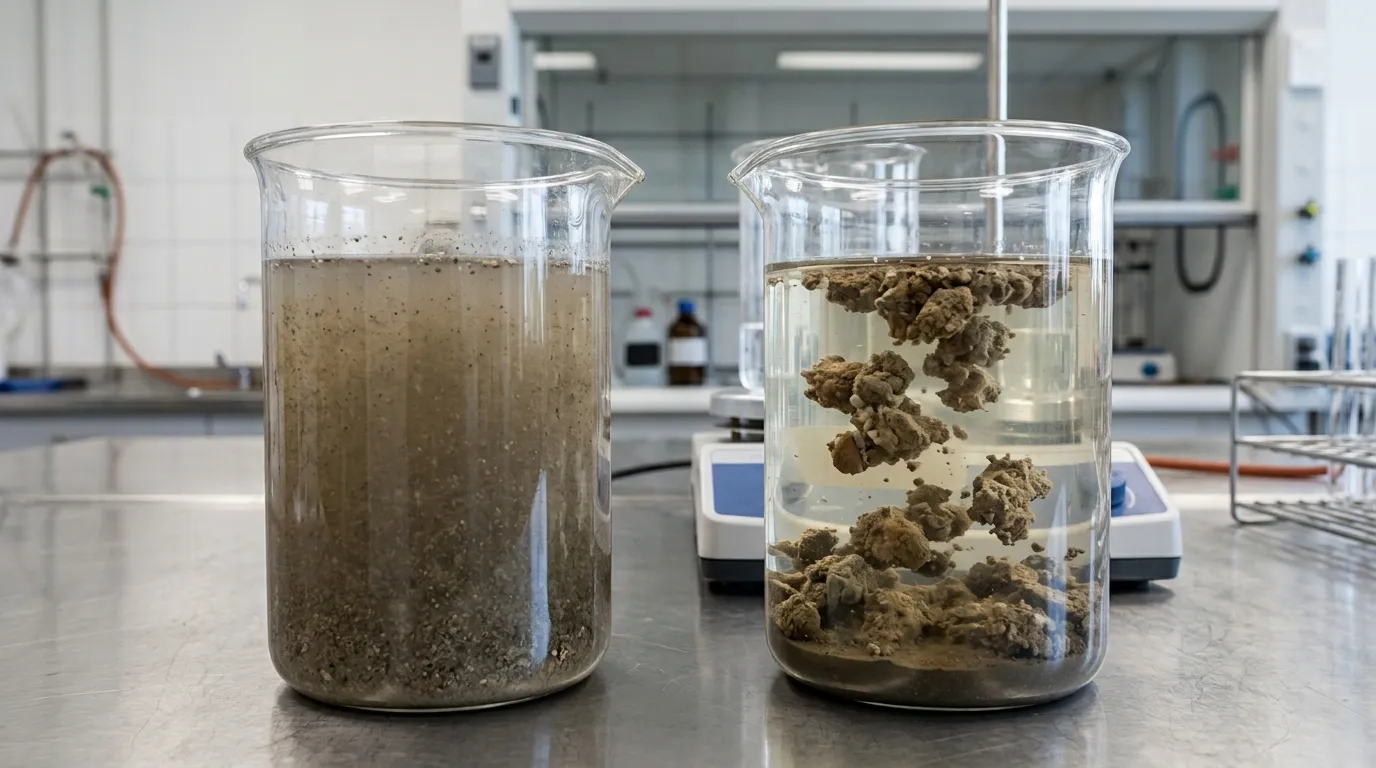
Mining tailings often contain fine mineral particles that remain suspended for extended periods. Their small size and surface properties can make gravity settling slow or incomplete. Polyacrylamide helps address this separation challenge through flocculation.
In practical terms, the polymer can:
- Promote contact and aggregation between fine suspended particles
- Form larger flocs that settle more readily than individual particles
- Support clarification of the liquid overflow
- Help concentrate solids in a thickener underflow
- Improve the separation step required for process-water recovery
Polyacrylamide is therefore a process aid, not a replacement for the entire tailings-management system. Its role is to improve the behavior of the slurry during solid–liquid separation.
Flocculation should also be distinguished from coagulation. The two terms are sometimes used together in water and mineral-processing discussions, but they describe different treatment functions. In this article, PAM refers primarily to the polymeric flocculant used to bring fine particles together into larger aggregates.
The exact response depends on the interaction between the polymer and the tailings surface. A product that performs well with one ore or process-water composition may produce weaker, denser, or less stable flocs in another system.
How PAM connects settling, thickening, and water recovery
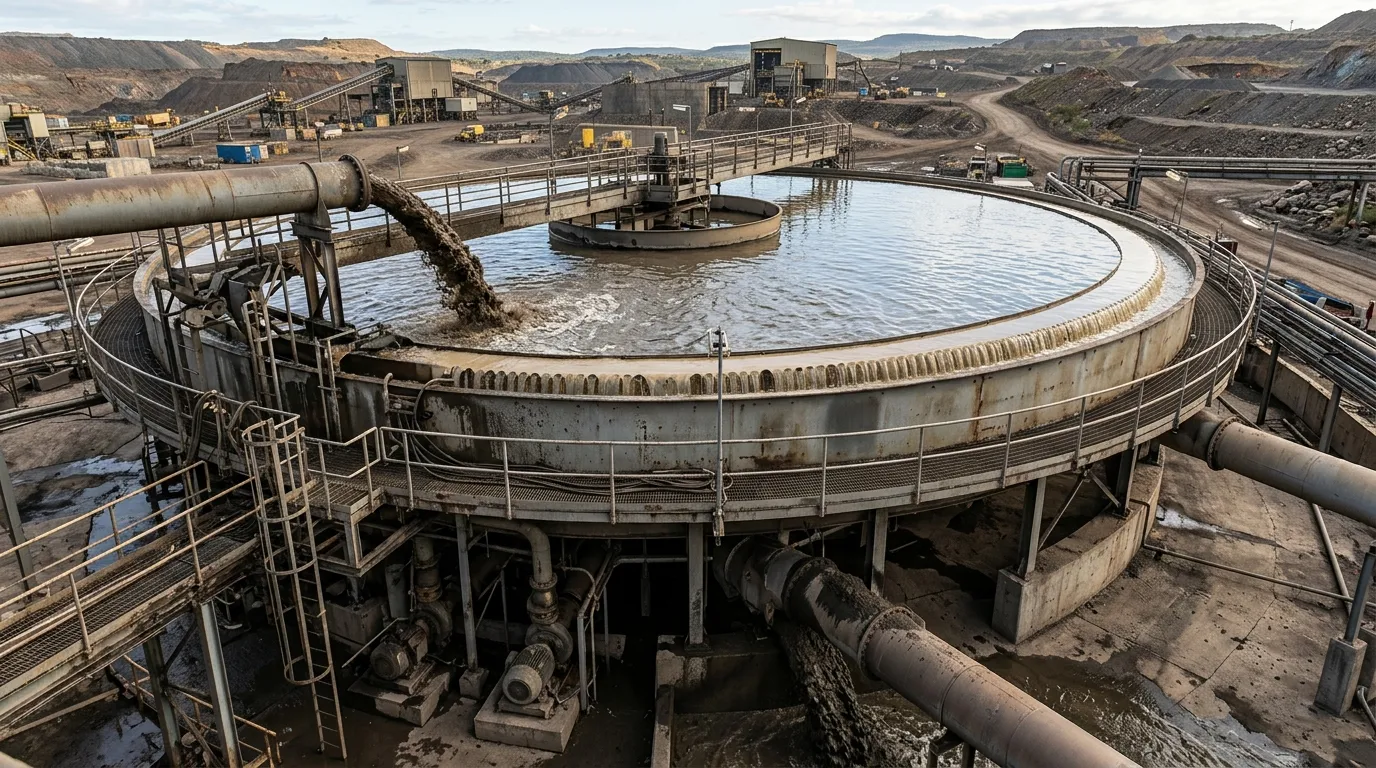
The process objective should be defined before a PAM grade is selected. “Improving tailings treatment” may refer to several different operating goals:
- Settling: reducing the time required for flocculated solids to move out of suspension.
- Clarification: producing a clearer liquid phase or thickener overflow.
- Thickening: increasing the concentration of solids in the underflow.
- Water recovery: separating a liquid phase that may be returned to the process, subject to the mine’s own water-quality and regulatory requirements.
A simplified separation pathway is:
Dispersed fine solids → polymer-induced floc formation → settling or clarification → concentrated underflow and clarified overflow
These outcomes are related but not identical. A polymer may produce rapid initial settling without delivering the desired underflow concentration. It may also generate a visually clear overflow while creating flocs that are too fragile for downstream pumping or filtration.
For operations teams, the evaluation should therefore include more than settling speed. Relevant observations can include:
- Clarity of the overflow
- Settling behavior over the relevant process period
- Floc size and apparent strength
- Solids concentration in the underflow
- Behavior during transfer or downstream filtration
- Compatibility of the recovered water with the process
Water recovery should not be interpreted as automatic approval for discharge or unrestricted reuse. The recovered liquid still needs to meet the mine’s process, environmental, and jurisdictional requirements. The polymer’s use in a separation step does not by itself establish water-quality compliance.
Which PAM characteristics matter for tailings selection?
Polyacrylamide used in mineral-tailings treatment may be supplied in different charge classes, including anionic, cationic, and nonionic forms. These should be treated as different candidates rather than interchangeable versions of the same product.
Anionic PAM
Anionic polyacrylamide may be suitable for some fine inorganic tailings. Research identified medium-charge, high-molecular-weight anionic PAM as a potentially effective candidate in specific fine-coal and sulfide-tailings contexts. That finding should not be converted into a universal recommendation for all mines.
The suitability of an anionic product depends on the surface chemistry of the particles, the process-water composition, the solids concentration, and the intended separation step. A product described as “anionic mining PAM” still requires testing against the actual slurry.
Cationic and nonionic PAM
Cationic and nonionic products may also be considered in mineral-processing applications, depending on the surface properties of the solids and the surrounding water chemistry. Their inclusion in a supplier catalog does not prove that either type is suitable for a particular tailings stream.
The practical question is not simply whether a product is anionic, cationic, or nonionic. The question is how its charge behavior and molecular characteristics interact with the mine’s solids and liquid phase.
Molecular weight and charge density
Molecular weight and charge density are important product descriptors, but they should not be used in isolation. Values reported by different suppliers may not be directly comparable unless the measurement method, units, product form, and test basis are clear.
Selection should consider:
| Selection factor | Why it matters | What to verify |
|---|---|---|
| Polymer charge type | Influences interaction with mineral surfaces and dissolved species | Anionic, cationic, or nonionic designation |
| Molecular-weight description | Can affect chain extension and floc structure | Supplier method, units, and grade scope |
| Charge density | May influence particle interaction and floc formation | Stated basis and test method |
| Mineralogy | Different minerals have different surface behavior | Ore and tailings composition |
| Particle-size distribution | Fine particles can be difficult to settle without effective aggregation | Representative particle-size data |
| Solids concentration | Changes the number and frequency of particle–polymer interactions | Actual process concentration |
| pH and water chemistry | Dissolved salts and pH can change polymer behavior | Representative process-water analysis |
| Process objective | Clarification and thickening may favor different performance characteristics | Defined success criteria |
A general polyacrylamide grade selection resource can support the broader selection discussion, but it should not replace tailings-specific testing.
What should be tested before selecting PAM for tailings?
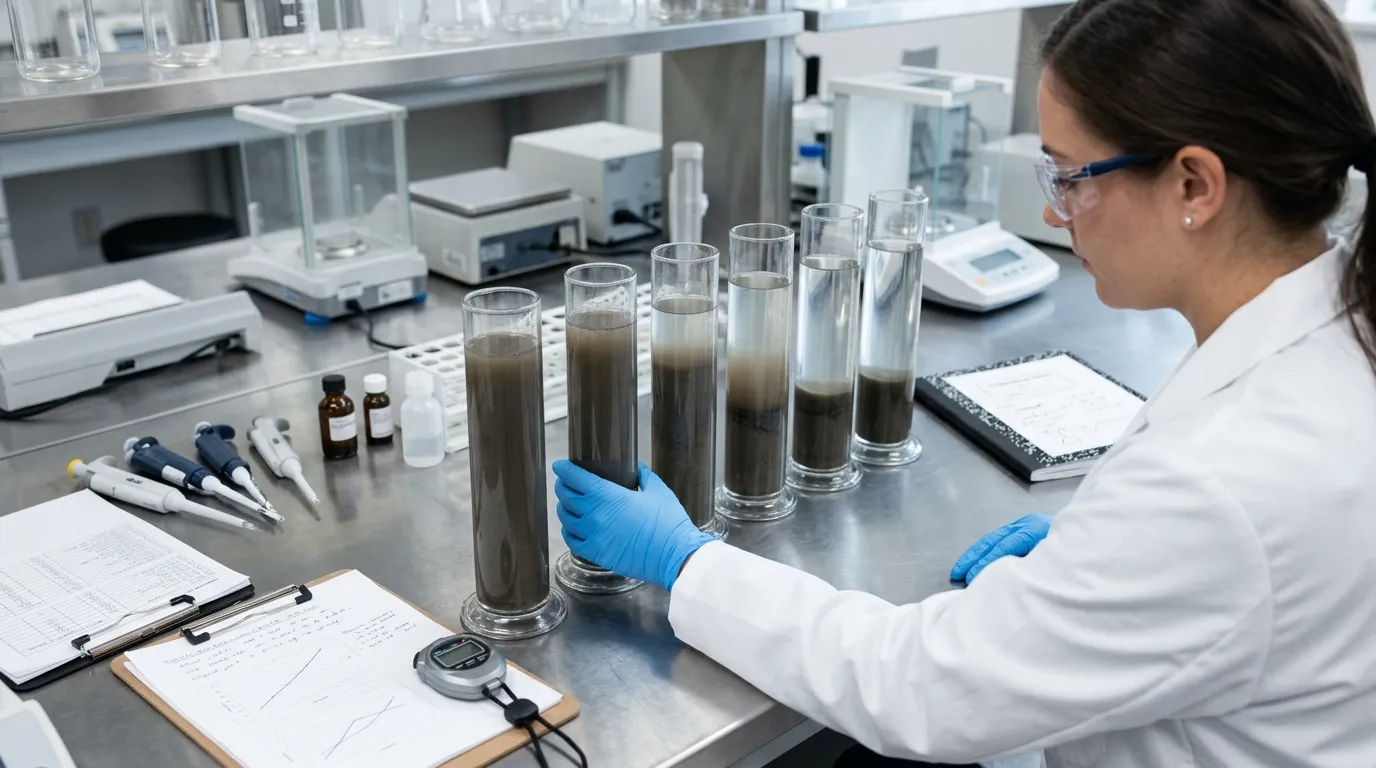
A jar or settling test can screen candidate polymers before a full-scale trial. The test should be designed around the mine’s actual separation objective and use representative tailings and process water wherever possible.
1. Define the process objective
Decide what the test must improve:
- Faster settling
- Clearer thickener overflow
- Higher underflow solids concentration
- Better downstream filtration
- Process-water recovery
- A combination of these objectives
A product that performs well against one criterion may not perform equally well against another.
2. Characterize the slurry and water
Record the conditions that can affect flocculation, such as:
- Solids concentration
- Particle-size distribution
- Mineralogy or major mineral constituents
- pH
- Dissolved salts and ionic strength
- Water hardness or other relevant chemistry
- Temperature where it is operationally significant
Testing with clean water or an unrepresentative laboratory slurry can produce conclusions that do not transfer to the plant.
3. Compare candidate products under controlled conditions
Compare candidate PAM types or grades using the same slurry, water, equipment, observation period, and evaluation criteria. The exact product form should be recorded, because powder, emulsion, and other supplied forms should not be treated as identical without product-specific information.
Avoid comparing one supplier’s molecular-weight description with another supplier’s value as though the figures were standardized. The product documentation should identify the basis and method wherever such data are used.
4. Observe more than initial settling
A useful screening record may include:
- Time-dependent settling behavior
- Overflow appearance or measured clarity, where available
- Floc size and strength
- Sludge or underflow concentration
- Evidence of pin floc, excessive polymer, or fragile aggregates
- Behavior after transfer or agitation
- Compatibility with downstream process requirements
A visual result can help screen products, but it should not be the sole basis for a plant-wide decision.
5. Validate before scale-up
Supplier dosage ranges, when provided, should be treated as starting points for controlled evaluation rather than universal operating specifications. There is no single PAM dosage that can be applied responsibly to all mining tailings.
Before scale-up, repeat the comparison under representative conditions and confirm that the preferred candidate performs against the mine’s defined criteria. Detailed test methodology should remain with the dedicated polyacrylamide jar test procedure.
What should technical buyers request from a PAM supplier?
Procurement and QA teams need enough information to compare products on an equivalent basis. A useful technical request should identify the exact product, not just “mining-grade polyacrylamide.”
Request, where applicable:
- Exact product name and product form
- Charge designation
- Molecular-weight description and measurement basis
- Charge-density description and measurement basis
- Technical data sheet
- Safety data sheet
- Certificate of analysis or batch documentation
- Lot or batch identification
- Recommended application scope
- Test method and conditions behind any dosage or performance statement
- Dosage basis, such as active polymer or supplied product
- Storage and handling information for the exact form supplied
Dosage statements require particular care. A number is not technically meaningful unless the basis is clear. It should be possible to determine whether the value refers to active polymer, product as supplied, a prepared solution, or another basis.
The same caution applies to performance claims. A supplier’s settling result may be useful as an indication for further testing, but it should not be presented as guaranteed performance at another mine. Tailings composition, process-water chemistry, equipment, and operating conditions can all change the outcome.
Vanchor’s mining application page describes polyacrylamide for uses including tailings thickening, slurry clarification, filtration, and water recovery. These are site-stated application descriptions; they do not establish a particular Vanchor grade, dosage, molecular weight, current availability, or guaranteed result.
If polymer preparation is relevant to the evaluation, consult the separate guidance on polyacrylamide make down concentration rather than transferring an unverified preparation condition into a tailings operating recipe.
Important limits: PAM is not a substitute for tailings-facility management
PAM can assist a solid–liquid separation step, but it does not by itself establish the safety or stability of a tailings-storage facility. Facility risk management involves separate engineering, governance, monitoring, and lifecycle controls. The Global Industry Standard on Tailings Management addresses that broader management context.
Similarly, clarified process water is not automatically approved for discharge or unrestricted reuse. Any environmental or water-quality conclusion must be tied to the exact process, product, application, and jurisdiction.
The polymer should therefore be evaluated as one part of the treatment process—not as a substitute for facility design, operational control, environmental assessment, or regulatory compliance.
Practical decision summary for a tailings PAM evaluation
A technically defensible evaluation follows this sequence:
- Define whether the priority is settling, overflow clarification, underflow thickening, filtration support, water recovery, or a combination.
- Characterize the actual tailings and process water.
- Compare suitable PAM charge classes or grades under controlled conditions.
- Record settling, overflow clarity, floc strength, and underflow behavior.
- Check whether supplier dosage and performance data use a clearly defined basis.
- Repeat testing before scale-up.
- Confirm the exact product form, technical documentation, and batch information before purchase.
Polyacrylamide can be a useful flocculant for mining tailings, but the correct product is condition-dependent. The most reliable selection is based on representative testing and clear technical documentation rather than a universal grade label or dosage assumption.


Contact Us
In This Article
Related Posts
Custom Packaging Solutions from an Anhydrous Sodium Acetate Supplier in China
2026-09-23
Application Trends in Anhydrous Sodium Acetate for Special Chemical Manufacturing
2026-09-23
Anhydrous Sodium Acetate for Leather Tanning: Improve Dyeing Uniformity
2026-09-22
Formic Acid 85% for Textile Dyeing: Industrial Applications, Technical Benefits and Future Trends
2026-09-22


