



Soda Ash for Textile Processing: Scouring, Dyeing, and pH Control Uses
By Tonmoy
2026-08-24Related Posts
Custom Packaging Solutions from an Anhydrous Sodium Acetate Supplier in China
2026-09-23
Application Trends in Anhydrous Sodium Acetate for Special Chemical Manufacturing
2026-09-23
Anhydrous Sodium Acetate for Leather Tanning: Improve Dyeing Uniformity
2026-09-22
Formic Acid 85% for Textile Dyeing: Industrial Applications, Technical Benefits and Future Trends
2026-09-22
Soda ash is sodium carbonate (Na₂CO₃), an alkaline chemical used in textile wet processing. Its clearest and most established application is reactive dyeing of cotton and other cellulose fibers, where it helps create the alkaline conditions required for dye fixation.
Textile processors may also include soda ash in alkaline scouring systems or use it as part of pH adjustment. However, its suitability depends on the fiber, dye class, process sequence, bath composition, equipment, and quality requirements. Soda ash should therefore be selected as part of a validated process—not treated as a universal textile recipe or as a direct substitute for every other alkali.
For broader chemical context, see Vanchor’s guide to sodium carbonate industrial uses.
What soda ash does in textile wet processing
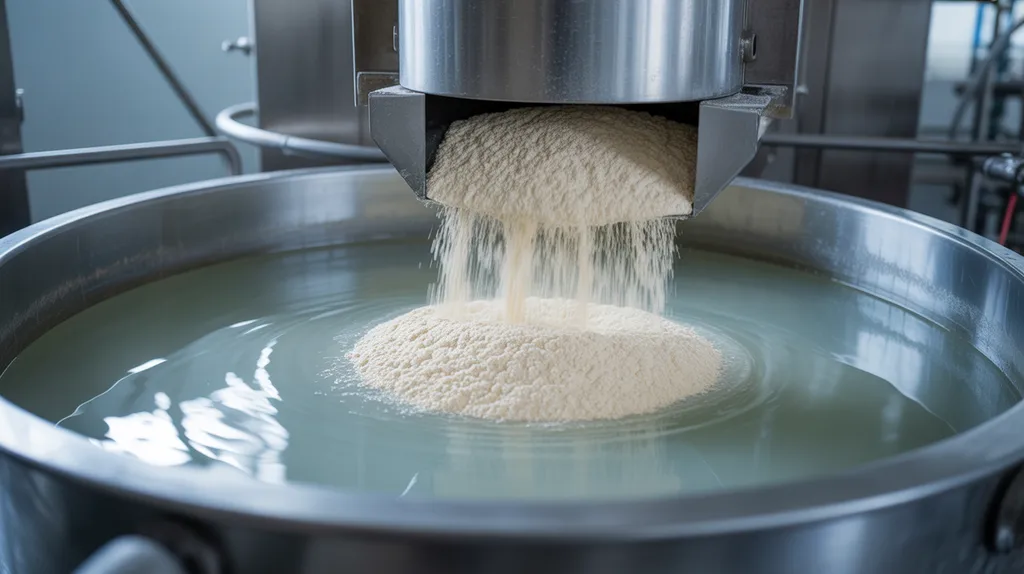
Soda ash supplies alkalinity to a process bath. In reactive dyeing, this alkalinity supports the chemical conditions needed for reactive dye molecules to bond with cellulose fibers. This is why soda ash is commonly associated with the dyeing of cotton and other plant-based fibers using reactive dyes.
The role is different from simply “adding color” to fabric. A reactive dyeing process normally involves several distinct stages, including dye application, fixation, rinsing, and washing-off. Soda ash is relevant to the fixation stage because the bath must reach the required alkaline condition for the dye–fiber reaction to proceed.
The exact result depends on more than the presence of soda ash. Important variables include:
- The type and concentration of reactive dye
- The fiber composition and preparation condition
- Bath composition and water quality
- Temperature and processing time
- Chemical addition sequence
- Liquor conditions and machine design
- Rinsing and washing-off conditions
- The mill’s validated pH and shade-control procedure
Soda ash is therefore best understood as a process chemical that changes bath alkalinity. It is not a guarantee of fixation, shade uniformity, or wash fastness by itself.
Soda ash and caustic soda are also different chemicals. Both can create alkaline conditions, but they should not be treated as interchangeable based only on that shared characteristic. The distinction is important when reviewing a dyeing or pretreatment formulation. Vanchor’s comparison of soda ash vs caustic soda provides a separate discussion of that chemical difference.
Soda ash in reactive dyeing of cotton and other cellulose fibers
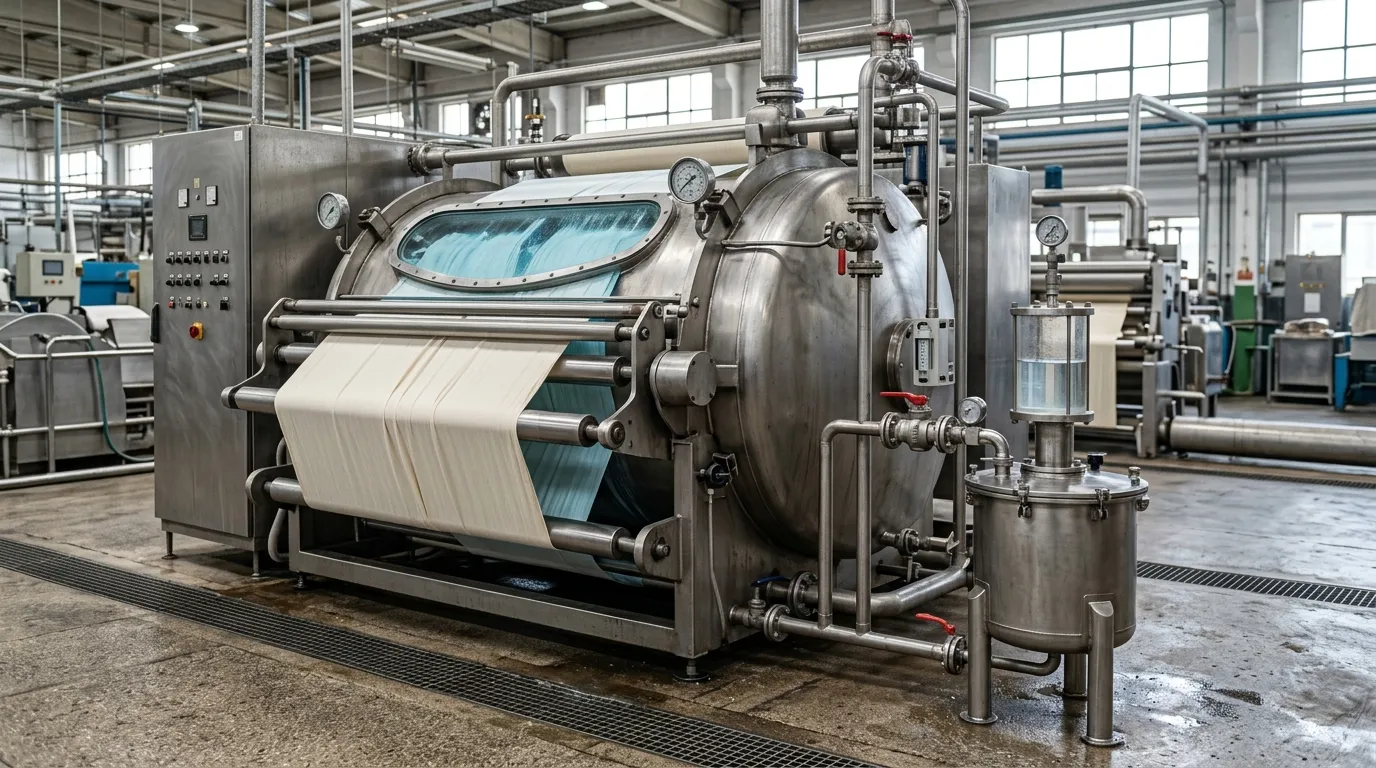
Reactive dyeing is the strongest textile application for soda ash in the available technical evidence. In this process, soda ash helps establish alkaline conditions that support fixation of reactive dyes to cellulose fibers.
Cotton is the most familiar example, but the same process logic can apply to other cellulose-based or plant-derived fibers when the selected dye system and process are suitable. The evidence should not be extended automatically to polyester, wool, nylon, or other fibers that require different dye classes and process chemistry.
A useful way to evaluate soda ash in reactive dyeing is to separate the process objective from the chemical addition:
| Process element | Role of soda ash | What must be controlled | What is not established by soda ash alone |
|---|---|---|---|
| Reactive dyeing of cellulose | Helps create alkaline conditions for fixation | Fiber preparation, dye class, bath composition, addition sequence, temperature and time program | Guaranteed fixation, shade uniformity, or fastness |
| Dye fixation | Supports the dye–cellulose reaction environment | Actual bath condition and the mill’s validated process | A universal recipe for every dye or machine |
| Washing-off | May influence the amount of unfixed dye that must be removed through the overall process | Rinsing, washing sequence, temperature, surfactants, and equipment | A guaranteed reduction in washing requirements |
| Process control | Contributes to bath alkalinity | Measurement method, water quality, chemical consistency, and process repeatability | A fixed pH or dosage independent of the formulation |
Supplier and textile-chemical sources describe soda ash as an alkaline fixing agent for reactive dyes used with cotton and other plant fibers. For example, Dyespin’s soda ash application information and Jacquard’s soda ash guidance connect soda ash with reactive dye fixation on cellulose materials. These sources are useful for explaining the application, but craft-product instructions should not be transferred directly to industrial dyehouse production.
In industrial operations, the dye manufacturer’s technical instructions and the mill’s own validated recipe should control the process. A chemical buyer should confirm that the proposed sodium carbonate grade is consistent from lot to lot and that the supplied documentation matches the exact product form being purchased.
Why excessive or poorly controlled alkalinity matters
More alkali does not automatically mean better dyeing. The effect of excessive or poorly controlled alkalinity depends on the dye, fiber, bath, and operating conditions. It may contribute to changes in fixation behavior, shade consistency, or the requirements of subsequent washing-off.
This should be treated as a process-control consideration rather than a universal performance claim. A mill should evaluate actual bath conditions using its established measurement and quality-control methods instead of relying on the nominal identity of the chemical alone.
Do not use a general online dosage or mixing ratio as an industrial recipe. Soda ash requirements vary with dye class, shade depth, fiber, liquor conditions, equipment, and the manufacturer’s process instructions.
Where soda ash fits in textile scouring
Soda ash may also be included in alkaline scouring systems used to prepare textile fibers before dyeing or other wet-processing stages. Supplier sources describe sodium carbonate light as useful in textile scouring and preparation because alkaline conditions can assist the removal of selected impurities.
However, soda ash should not automatically be treated as a complete scouring system. Scouring performance depends on the fiber and the nature of the material being removed, as well as the rest of the formulation. A production scouring bath may also involve wetting agents, detergents, sequestrants, other auxiliaries, heat, time, and mechanical action.
Before approving soda ash for a scouring process, the technical team should confirm:
- Fiber type and construction
- The impurities or processing residues to be removed
- Compatibility with the other scouring chemicals
- Water hardness and quality
- Equipment and liquor conditions
- Required absorbency or preparation level before dyeing
- The mill’s test method for confirming preparation quality
The available evidence supports describing soda ash as a possible component of an alkaline scouring formulation. It does not support a universal claim that soda ash alone will provide the required preparation for every textile material.
pH control: what soda ash can and cannot establish
Soda ash can be used as part of pH adjustment in textile wet processing because it increases alkalinity. This is relevant to reactive dye fixation and may also be relevant in other alkaline process stages.
The final bath pH is not determined by product identity alone. It depends on the amount added, the water, the dye and auxiliary system, temperature, bath volume, buffering effects, and other chemicals already present. For this reason, product assay, dosage, concentration, and pH must be kept separate:
- Assay describes the chemical content of the supplied product according to its specification.
- Dosage describes how much product is added to a process.
- Concentration describes the amount present in the bath on a defined basis.
- pH describes the resulting acidity or alkalinity of the bath under the measurement conditions.
These are not interchangeable measurements.
A practical pH-control approach is to match the chemical decision to the process objective:
| Process objective | Where soda ash may fit | What the mill should verify |
|---|---|---|
| Reactive dye fixation on cellulose | Creating the alkaline conditions required by the dyeing system | Dye supplier instructions, fiber type, validated pH control, and fixation results |
| General alkaline adjustment | Increasing bath alkalinity as part of a defined formulation | Water quality, other bath components, measurement method, and process limits |
| Scouring preparation | Supporting an alkaline scouring formulation | Fiber, impurity load, auxiliaries, equipment, and preparation test |
| A different buffering or pH-management requirement | May require another chemical system | The intended process function rather than chemical name alone |
Supplier sources describe soda ash as useful for pH adjustment or stabilization in textile applications, but those statements do not establish one universal textile pH range. A textile mill should use its own validated process specification and measure the actual bath condition.
If the process requires a different pH-management function, the relevant chemical should be evaluated separately rather than assuming that every alkaline or pH-related product performs the same role.
Soda ash light versus dense: when form matters to a textile buyer
Soda ash light and soda ash dense are physical forms of sodium carbonate. The distinction can matter for handling, feeding, storage, dispersion, and solution preparation. It does not mean that one form is universally better for every textile process.
Vanchor describes soda ash light as having fine particles and rapid dispersion. This is a site-stated product description, not independent performance testing. Buyers should request the specification for the exact grade being offered rather than relying on the general terms “light” or “dense.”
When comparing forms, review:
| Selection consideration | What may differ | What the buyer should verify |
|---|---|---|
| Physical form | Particle characteristics and bulk behavior | Exact grade and product description |
| Handling | Flow, dust control, feeding, and storage behavior | Packaging, handling instructions, and SDS |
| Dispersion or dissolution | Preparation behavior may vary with physical properties and process conditions | Supplier data and mill-side validation |
| Assay and impurities | Specification limits may differ between products | Current TDS and representative or batch COA |
| Process fit | Equipment and addition method may favor one form | Existing plant procedure and technical trial requirements |
For a fuller discussion of the physical-form distinction, see soda ash light vs dense. Do not transfer the assay, particle characteristics, bulk density, or suitability of one form to the other without product-specific evidence.
Soda ash versus caustic soda in textile processing
Soda ash is sodium carbonate. Caustic soda is sodium hydroxide. They are different chemical identities, even though both can create alkaline conditions.
The practical difference can affect:
- The strength and control of alkalinity
- Compatibility with the fiber and dye system
- Chemical addition and handling procedures
- Equipment requirements
- The process window available to the operator
- The consequences of over-addition
The appropriate choice depends on the process objective and the validated formulation. Soda ash should not be replaced with caustic soda, or vice versa, simply because both are described as alkaline. Their concentrations, active-content bases, and operating effects are not automatically equivalent.
A high-level comparison is more useful than declaring one chemical the universal winner:
| Criterion | Soda ash | Caustic soda | Decision implication |
|---|---|---|---|
| Chemical identity | Sodium carbonate | Sodium hydroxide | Treat as separate chemicals |
| Textile role | Commonly associated with reactive dye fixation on cellulose | Used in other alkaline textile processes and formulations | Select according to the process specification |
| Substitution | Not automatically equivalent | Not automatically equivalent | Validate any change before production |
| Purchasing check | Confirm sodium carbonate grade and form | Confirm sodium hydroxide concentration and form | Do not compare assay values without a defined basis |
QA and procurement checks before approving a textile soda ash supply

A textile buyer should evaluate the exact product offered, not just the commercial name “soda ash.” A practical document-based review should include:
- Chemical identity: Confirm that the product is sodium carbonate and review the stated CAS identity where applicable.
- Physical form: Confirm whether the offer is soda ash light or dense.
- Specification: Request the current technical data sheet and review assay basis, test methods, moisture, insoluble matter, and other limits relevant to the process.
- Safety documentation: Obtain the applicable SDS and ensure that handling instructions match the supplied product.
- Batch evidence: Request a representative or batch-specific certificate of analysis where required by the mill’s QA system.
- Traceability: Confirm lot identification and consistency between the quoted product, documentation, and delivered material.
- Process fit: Match the product form and specification to the dyehouse’s addition, mixing, storage, and quality-control procedures.
- Validation: Use the mill’s approved trial and release procedure before changing grade, form, or supplier.
A stated assay does not establish textile suitability by itself. It also does not establish a particular dyeing result, regulatory approval, or customer-program compliance. Those conclusions require evidence for the exact product, grade, application, and jurisdiction.
Vanchor’s supplied product information identifies a sodium carbonate product as CAS 497-19-8 with an assay of at least 99%, and its textile chemical materials list soda ash among textile-related chemicals. These are site-stated product and catalog details; they should not be expanded into claims about current availability, in-house manufacture, textile-grade approval, or guaranteed process performance. For broader textile chemical context, see textile dyeing and leather chemicals.
Practical selection rule
For reactive dyeing of cotton or another suitable cellulose fiber, soda ash is most relevant when the dye system requires alkaline conditions for fixation. For scouring, treat it as a possible component of an alkaline formulation rather than a complete solution. For pH control, evaluate the entire bath and measure the resulting condition instead of selecting the chemical from its name alone.
Before purchase or process approval, confirm the exact sodium carbonate form, current specification, SDS, COA requirements, and compatibility with the mill’s validated procedure. This approach keeps soda ash for textile processing within its evidence-supported role while avoiding unsupported dosage, performance, and product-compliance assumptions.


Contact Us
In This Article
Related Posts
Custom Packaging Solutions from an Anhydrous Sodium Acetate Supplier in China
2026-09-23
Application Trends in Anhydrous Sodium Acetate for Special Chemical Manufacturing
2026-09-23
Anhydrous Sodium Acetate for Leather Tanning: Improve Dyeing Uniformity
2026-09-22
Formic Acid 85% for Textile Dyeing: Industrial Applications, Technical Benefits and Future Trends
2026-09-22


