



Soda Ash for Water Treatment: Alkalinity, pH, and Dosing Factors
By vanchor
2026-07-19Related Posts
Custom Packaging Solutions from an Anhydrous Sodium Acetate Supplier in China
2026-09-23
Application Trends in Anhydrous Sodium Acetate for Special Chemical Manufacturing
2026-09-23
Anhydrous Sodium Acetate for Leather Tanning: Improve Dyeing Uniformity
2026-09-22
Formic Acid 85% for Textile Dyeing: Industrial Applications, Technical Benefits and Future Trends
2026-09-22
Soda ash is used in water treatment when you need to raise pH and improve alkalinity in acidic water. The exact dose depends on the starting chemistry, the target pH, and how the system is operated, which is why there is no single universal dosage.
If you are choosing between soda ash grades as well as treatment uses, the parent guide on Soda Ash Light vs Dense: How to Choose the Right Grade (inferred) is the right next step for grade selection. This article stays focused on the treatment side: what soda ash does, when it is used, and what changes the dose.
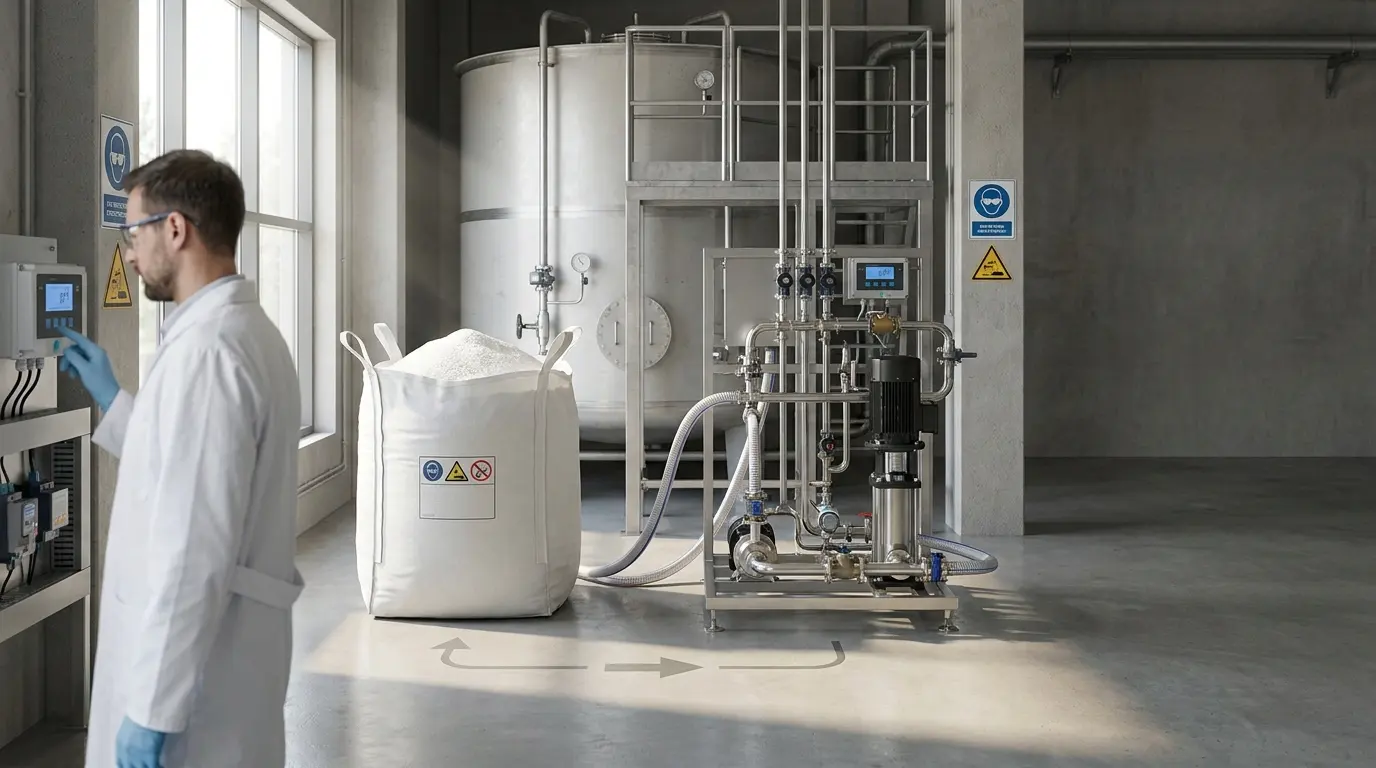
What Soda Ash Does in Water Treatment
Soda ash is sodium carbonate, a water-treatment chemical used to raise pH and add alkalinity. In simple terms, it helps neutralize acidic water and increase the water’s buffering capacity so the pH is less likely to swing sharply.
That matters in real systems because low pH can contribute to corrosion and poor water stability. In treatment terms, soda ash is often chosen when the goal is not just to make the water less acidic, but to improve the chemistry enough that the system is easier to control.
Authoritative water-treatment references describe soda ash as a carbonate source that contributes alkalinity in water and support its use in pH correction and corrosion control. In practical terms, that means the chemical is doing two related jobs: shifting the pH upward and adding carbonate-based buffering.osmre+1
When Soda Ash Is Used
Soda ash is most useful when the water is acidic and the treatment goal is to move the pH into a safer or more workable range. That shows up in private wells, industrial water systems, and some treatment-plant applications where acidic feedwater needs correction.
It is also used in softening-related treatment contexts and in systems where carbonate alkalinity is part of the control strategy. The exact use case matters, because a well-water problem, a plant process stream, and a wastewater stream may all need different targets even if the same chemical is involved.floridadep+1
For readers comparing treatment options, the key question is not “Can soda ash raise pH?” but “Is soda ash the right correction chemical for this specific water and process?” That is where dose factors and comparison with alternatives become important.
What Changes the Dose
The biggest reason soda ash dosing varies is that water is not a fixed recipe. A system with low pH, low alkalinity, and high flow will need a different amount than a small batch tank with mild acidity and strong buffering.
The main inputs are:
Starting pH.
Starting alkalinity.
Water volume or flow rate.
Target pH.
Mixing or circulation quality.
Whether the system is batch-fed or continuous.
Starting chemistry matters first. If the water already has some alkalinity, less soda ash may be needed to move the pH. If the water is strongly acidic, the dose rises because more carbonate is needed to overcome that acidity.
System size matters just as much. A larger volume or higher flow needs more total chemical, even if the target pH is the same. That is why dosing is usually expressed as a process decision, not a single universal number.
Starting Chemistry and Endpoint
The right dose starts with a water test. pH tells you how acidic or basic the water is, but alkalinity tells you how much buffering is already present. Those two measurements are related, but they are not the same thing.
This is the main place where many guides become vague. If you only look at pH, you can miss how much resistance the water has to change. If you only look at alkalinity, you can miss how far the pH still needs to move. For soda ash treatment, you need both pieces of information to judge the dose correctly.
The target pH also matters because the same water may require different treatment depending on the process. A corrosion-control target is not the same as a general stability target, so the dose should be tied to the endpoint, not just the chemical.
System Size and Mixing
Volume and flow determine how much soda ash must be delivered overall. In a batch tank, you are treating a fixed amount of water, so the calculation is straightforward. In a flowing system, the dose has to match the incoming water and stay consistent over time.
Mixing also affects performance. Soda ash needs enough circulation to distribute through the water and react evenly. Poor mixing can make the treatment look underdosed in one area and overdosed in another.
That is why practical application is as important as the chemical choice itself. A correct dose that is added badly can still give poor results.
Soda Ash vs Other Common Choices
Soda ash is not the only way to adjust water chemistry. It is one of the common choices, but the best option depends on the water and the process goal.
| Option | Main use | Practical difference |
|---|---|---|
| Soda ash | Raise pH and add alkalinity | Good when buffering improvement is part of the goal. |
| Caustic soda | Raise pH | Stronger pH increase, but different handling and selection considerations. |
| Lime | Raise pH and support softening | Often used in other treatment setups where process design calls for it. |
For many readers, the decision comes down to the balance between pH correction, alkalinity needs, and how the system is run. If your goal is only a pH lift, another chemical may fit better. If your goal includes buffering and carbonate-based treatment control, soda ash may be the better fit.
Practical Use and Verification
In real use, soda ash should be added in a way that allows even distribution and then checked again after mixing. The point is not just to add chemical, but to confirm that the water actually reached the intended condition.
A simple operating sequence looks like this:
Test the water for pH and alkalinity.
Set the target pH based on the process need.
Add soda ash in a controlled way.
Allow circulation or mixing time.
Retest and adjust if needed.
This verification step matters because the final result depends on the starting chemistry, the dose, and the system’s ability to mix the chemical properly. Overdosing can push the chemistry too far and create scaling or balance issues, so correction should be done in steps rather than by guesswork.
What Buyers Should Check
If you are evaluating soda ash for treatment use, focus on fit first, not just price. The important questions are whether the grade suits the application, whether the supplier provides technical documentation, and whether the supply format works for your operation.
Vanchor’s website identifies soda ash as part of its chemical portfolio and lists water treatment chemicals among its business areas, so the company context is relevant here. For readers who want to move from treatment understanding to grade selection, the next logical step is the parent guide on Soda Ash Light vs Dense: How to Choose the Right Grade (inferred), which handles the grade decision separately.geneo
For sourcing-oriented readers, related pages such as Soda Ash Manufacturer in China and industrial water treatment chemicals provide the broader commercial context without changing the treatment focus of this guide.
Closing Guidance
Soda ash for water treatment is best understood as a pH and alkalinity tool, not just a generic chemical add-on. If you know the starting water chemistry, the target pH, and the system’s mixing conditions, you can judge whether soda ash is appropriate and how carefully it needs to be dosed.
If the next decision is product grade, the pillar article is the right follow-up. If the next decision is supplier selection, the related manufacturer and water-treatment pages give the broader commercial path.


Contact Us
In This Article
Related Posts
Custom Packaging Solutions from an Anhydrous Sodium Acetate Supplier in China
2026-09-23
Application Trends in Anhydrous Sodium Acetate for Special Chemical Manufacturing
2026-09-23
Anhydrous Sodium Acetate for Leather Tanning: Improve Dyeing Uniformity
2026-09-22
Formic Acid 85% for Textile Dyeing: Industrial Applications, Technical Benefits and Future Trends
2026-09-22


