



Sodium Acetate Trihydrate vs Anhydrous: How to Choose the Right Grade
By vanchor
2026-07-11Related Posts
What Purity Is Required for Sodium Formate for De-Icing Applications?
2026-08-21
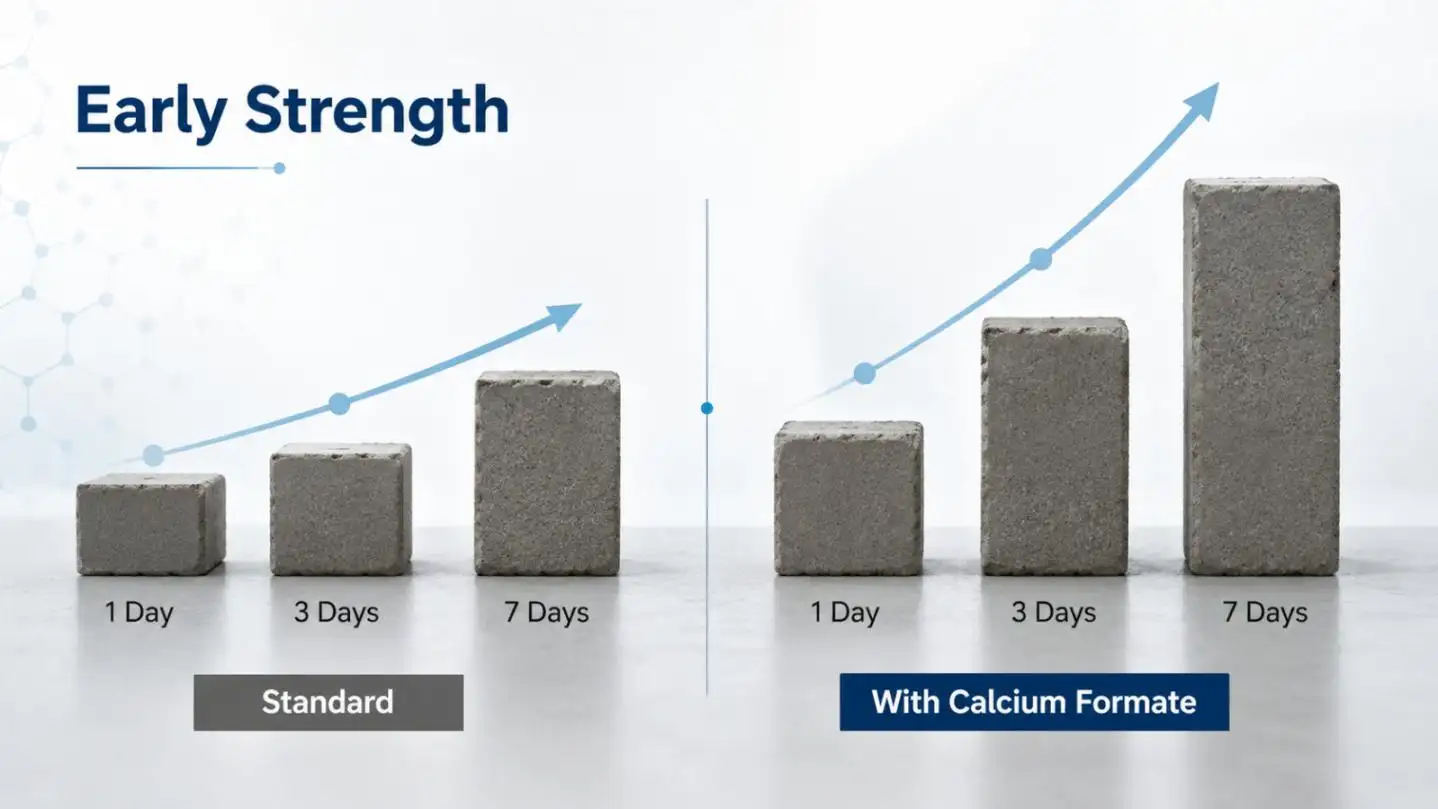
Calcium Formate for Tile Adhesive: How It Improves Early Strength and Setting Time
2026-08-20
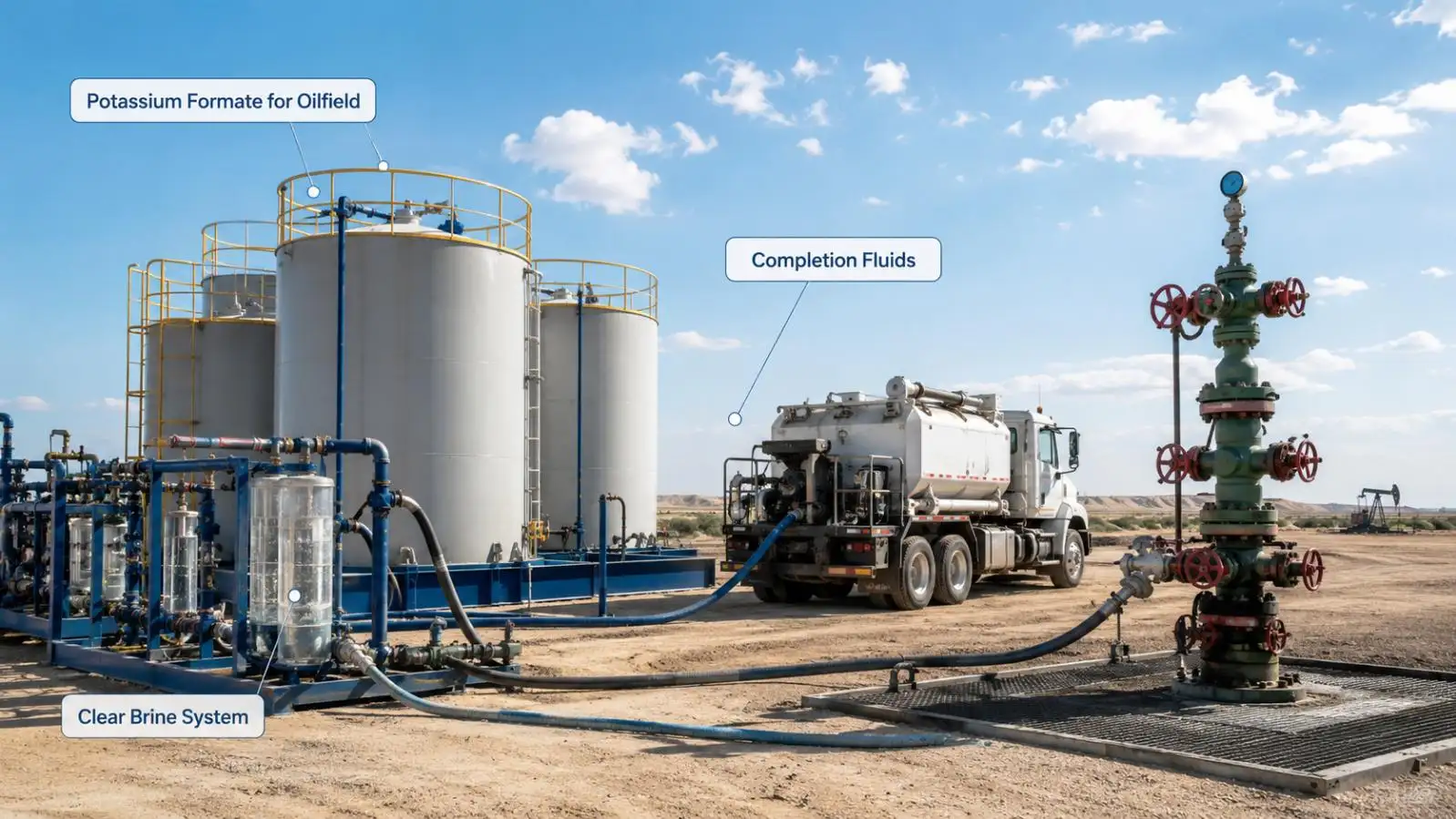
Potassium Formate for Oilfield Completion Fluids: Density, Compatibility and Formation Protection
2026-08-19
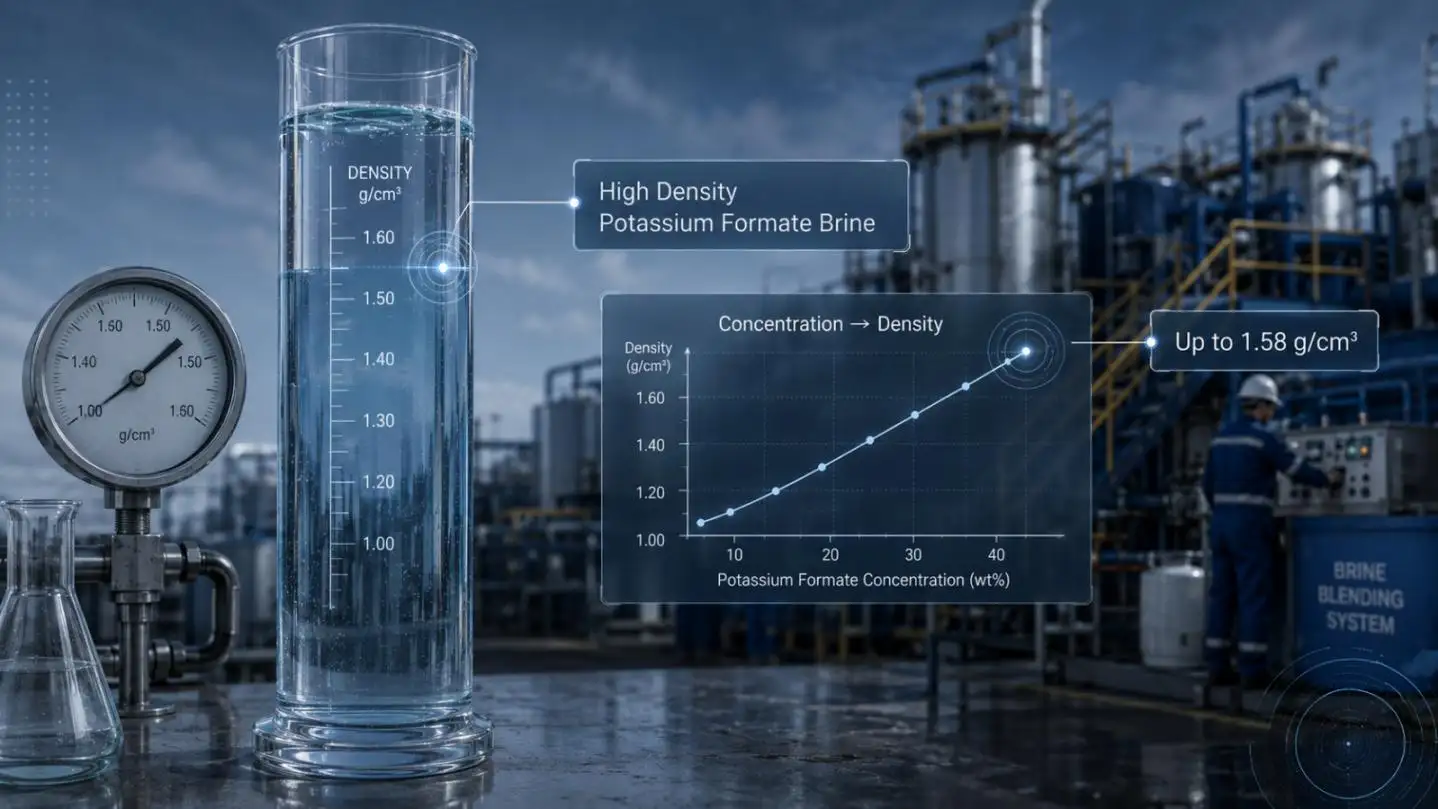
High Density Potassium Formate Brine: Density Range, Properties and Oilfield Applications
2026-08-18
The main difference between Sodium Acetate Trihydrate vs Anhydrous is their water content. Sodium acetate trihydrate contains three molecules of crystal water, while anhydrous sodium acetate contains no chemically bound water.
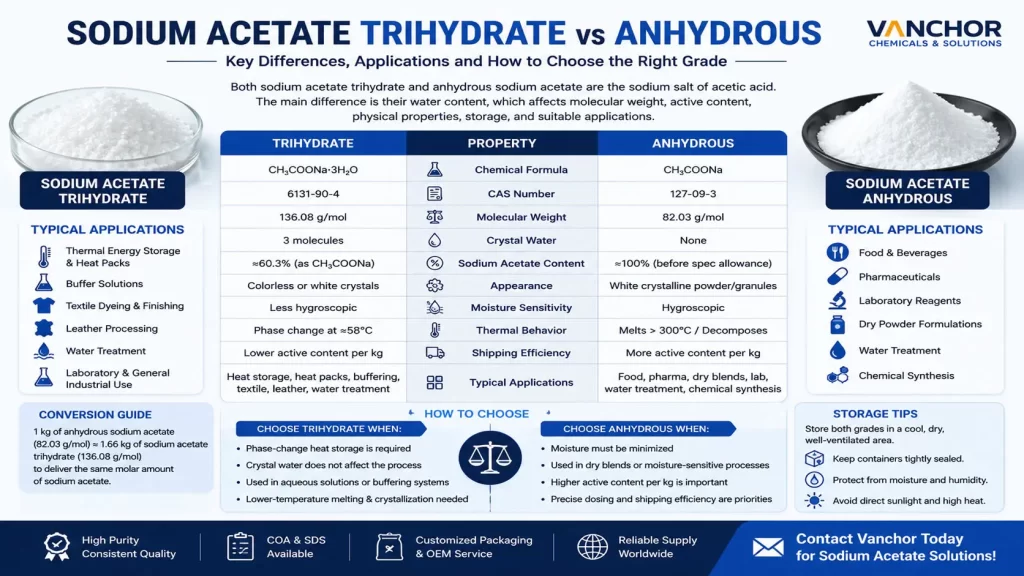
This difference changes their molecular weight, active sodium acetate content, thermal behavior, storage requirements, transportation efficiency and suitability for different production processes.
As a practical guide:
- Choose sodium acetate trihydrate for thermal energy storage, reusable heating pads and processes where crystal water does not interfere with production.
- Choose sodium acetate anhydrous for dry formulations, moisture-sensitive processes and applications requiring more sodium acetate per kilogram.
Both grades are water-soluble sodium salts of acetic acid, but they should not always be substituted on a one-to-one weight basis.
What Is Sodium Acetate?
Sodium acetate is the sodium salt of acetic acid. It is used as a buffering agent, pH regulator, processing chemical and raw material in food, textile, leather, water-treatment, pharmaceutical and laboratory applications.
Commercial sodium acetate is mainly supplied in two forms:
- Sodium acetate anhydrous, which contains no crystal water
- Sodium acetate trihydrate, which contains three molecules of water within its crystal structure
The anhydrous grade has a molecular weight of 82.03 g/mol, while sodium acetate trihydrate has a molecular weight of 136.08 g/mol.
Sodium Acetate Trihydrate vs Anhydrous: Comparison
| Property | Sodium Acetate Trihydrate | Sodium Acetate Anhydrous |
|---|---|---|
| Chemical formula | CH₃COONa·3H₂O | CH₃COONa |
| CAS number | 6131-90-4 | 127-09-3 |
| Molecular weight | 136.08 g/mol | 82.03 g/mol |
| Crystal water | Three water molecules | None |
| Sodium acetate content | Approximately 60.3% by weight | Close to 100% before specification allowances |
| Typical appearance | Colorless or white crystals | White crystalline powder or granules |
| Moisture sensitivity | Contains bound water | Hygroscopic and readily absorbs moisture |
| Thermal behavior | Phase transition near 58°C | Melts or decomposes above 300°C |
| Shipping efficiency | Lower active content per tonne | More active sodium acetate per tonne |
| Typical applications | Heat storage, heat packs, buffering and general aqueous processing | Dry blends, food processing, pharmaceuticals, laboratories and moisture-controlled formulations |
Specifications vary by grade and manufacturer. Buyers should confirm assay, moisture, pH, particle size, impurities and intended-use compliance through the Technical Data Sheet and batch Certificate of Analysis.
What Is Sodium Acetate Trihydrate?
Sodium acetate trihydrate is a hydrated crystalline form containing three molecules of water for each sodium acetate unit.
Its molecular structure means that pure sodium acetate trihydrate contains approximately:
- 60.28% sodium acetate
- 39.72% crystal water
This explains why some industrial specifications describe sodium acetate trihydrate as having an assay of approximately 58%–60% when the result is expressed as anhydrous CH₃COONa. A specification in this range does not necessarily mean that roughly 40% of the product consists of unwanted impurities.
Vanchor supplies sodium acetate trihydrate under CAS 6131-90-4 in colorless crystalline form, with the assay stated on an anhydrous sodium acetate basis.
Typical Applications of Sodium Acetate Trihydrate
Sodium acetate trihydrate is commonly considered for:
- Reusable heating pads
- Thermal energy storage
- Buffer preparation
- Textile dyeing and finishing
- Leather processing
- Wastewater treatment
- Laboratory solutions
- General chemical manufacturing
Its most distinctive application is phase-change heat storage. Sodium acetate trihydrate undergoes a phase transition at approximately 331.5 K, or 58.4°C, allowing it to absorb and release heat during melting and crystallization.
This property supports its use in reusable hand warmers and selected thermal-management systems.
What Is Sodium Acetate Anhydrous?
Sodium acetate anhydrous contains no water of crystallization. It has the formula CH₃COONa, CAS number 127-09-3 and molecular weight of 82.03 g/mol.
It is typically supplied as a white crystalline powder or granular material. Because it contains more active sodium acetate per kilogram, it is often preferred when precise dry dosing, compact transportation or low added water is important.
Typical Applications of Anhydrous Sodium Acetate
Anhydrous sodium acetate is used in:
- Dry food formulations
- Acidity and pH regulation
- Pharmaceutical and laboratory buffers
- Molecular biology solutions
- Chemical synthesis
- Textile and leather processing
- Dry powder manufacturing
- Water-treatment chemicals
- Industrial neutralization processes
Anhydrous sodium acetate is highly soluble in water and produces mildly alkaline aqueous solutions. Commercial laboratory material may have a pH of approximately 8.5–10.0 in concentrated solutions, although the exact result depends on concentration and test conditions.
Which Grade Provides More Active Sodium Acetate?
Anhydrous sodium acetate provides considerably more CH₃COONa per kilogram.
Based on molecular weight:
- 1 kg of pure anhydrous sodium acetate provides approximately 1 kg of CH₃COONa.
- 1 kg of pure sodium acetate trihydrate provides approximately 0.603 kg of CH₃COONa.
- Approximately 1.66 kg of sodium acetate trihydrate is required to provide the same number of sodium acetate moles as 1 kg of anhydrous material.
This conversion is important when changing grades in a formula.
For example, replacing 100 kg of anhydrous sodium acetate with only 100 kg of trihydrate would substantially reduce the effective sodium acetate dosage. The formulation must be recalculated on a molar or active-content basis.
Which Grade Is Better for Thermal Energy Storage?
Sodium acetate trihydrate is the appropriate choice for most phase-change heat-storage applications.
When heated to around 58°C, it changes phase and stores thermal energy. Controlled crystallization releases the stored heat, which is the operating principle behind many reusable heat packs. NIST reports a phase-transition temperature near 331.52 K and documents the associated transition enthalpy.
Anhydrous sodium acetate does not provide the same low-temperature phase-change behavior and is therefore not a direct substitute in this application.
Which Grade Is Better for Dry Formulations?
Anhydrous sodium acetate is generally more suitable when:
- The formulation must remain low in moisture.
- The material is blended directly into a dry powder.
- Precise active-content dosing is required.
- Transportation cost per unit of sodium acetate is important.
- Additional crystal water could affect stability or processing.
- The production process has limited drying capacity.
However, anhydrous sodium acetate is hygroscopic and can absorb water from humid air. It therefore requires effective moisture-resistant packaging and careful warehouse management.
Does Anhydrous Sodium Acetate Cost More?
The anhydrous grade may have a higher price per tonne because additional drying and moisture control are required during production and packaging.
However, price per tonne does not provide a complete comparison.
Buyers should consider:
- Active sodium acetate content
- Required dosage
- Freight cost
- Storage volume
- Packaging requirements
- Moisture control
- Energy needed for dissolving or drying
- Product loss during handling
Because sodium acetate trihydrate contains nearly 40% crystal water, anhydrous material can provide better transport efficiency when the buyer needs sodium acetate activity rather than phase-change performance.
Trihydrate may still offer the lower total cost when its crystal water is acceptable or essential to the application.
How to Choose the Right Sodium Acetate Grade
Choose Sodium Acetate Trihydrate When:
- The application involves heat pads or thermal energy storage.
- Crystal water does not affect the process.
- The product will be dissolved in water before use.
- Lower-temperature melting and crystallization are required.
- The formulation is already calculated on a hydrated-grade basis.
Choose Sodium Acetate Anhydrous When:
- Moisture must be minimized.
- The material is used in dry powder blends.
- High active content per kilogram is required.
- Freight and storage efficiency are priorities.
- The application requires accurate molar dosing.
- The production standard specifically requires the anhydrous grade.
Quality Factors Buyers Should Check
When comparing sodium acetate suppliers, confirm more than the product name.
| Quality Factor | Why It Matters |
|---|---|
| Chemical form | Confirms whether the product is trihydrate or anhydrous |
| Assay basis | Shows whether purity is reported as received or as CH₃COONa |
| Moisture content | Critical for anhydrous applications |
| pH | Affects buffering and formulation performance |
| Chloride and sulphate | Important in sensitive industrial processes |
| Iron and heavy metals | Relevant to color, quality and regulated uses |
| Water-insoluble matter | Influences solution clarity |
| Particle size | Affects flow, blending and dissolution |
| Application grade | Distinguishes industrial, food, pharmaceutical and laboratory material |
| COA and SDS | Verify batch quality and handling requirements |
Food, pharmaceutical and feed applications require a grade manufactured and documented for the relevant regulatory use. Industrial-grade material should not automatically be treated as food- or pharmaceutical-grade.
Storage and Handling
Both forms should be stored in sealed packaging in a cool, dry and ventilated warehouse.
For anhydrous sodium acetate:
- Minimize exposure to humid air.
- Reseal partly used bags immediately.
- Use moisture-resistant packaging.
- Prevent contact with wet floors and walls.
For sodium acetate trihydrate:
- Avoid excessive heat during storage.
- Keep the product below its phase-transition range unless melting is intended.
- Protect crystals from contamination and uncontrolled moisture changes.
- Follow the storage temperature stated by the supplier.
Workers should review the SDS and use suitable eye, skin and dust protection during industrial handling.
Sodium Acetate Supply from Vanchor
Vanchor supplies sodium acetate trihydrate and anhydrous sodium acetate for industrial processing, water treatment, textiles, leather, buffering, food-related production and specialty chemical applications.
Available services include:
- Trihydrate and anhydrous grades
- Industrial and application-specific specifications
- Batch-specific Certificates of Analysis
- TDS and SDS documentation
- Moisture-resistant export packaging
- Bulk and recurring-order support
- Customized labels and packaging
- International logistics coordination
When requesting a quotation, provide the required form, assay basis, application, quantity, packaging, destination port and applicable quality standard.
Frequently Asked Questions
Are sodium acetate trihydrate and anhydrous the same chemical?
They contain the same sodium acetate component, but trihydrate includes three molecules of crystal water while the anhydrous form does not.
Can trihydrate replace anhydrous sodium acetate?
Yes, in some aqueous processes, but not at the same weight. The dosage must be corrected for the lower sodium acetate content of the trihydrate.
How much trihydrate replaces 1 kg of anhydrous sodium acetate?
Approximately 1.66 kg of pure sodium acetate trihydrate provides the same molar amount as 1 kg of pure anhydrous sodium acetate.
Why is trihydrate sometimes listed as 58%–60% purity?
The assay may be expressed as anhydrous sodium acetate. Chemically pure trihydrate contains only about 60.3% CH₃COONa because the remaining mass is crystal water.
Which form is used in reusable heat packs?
Sodium acetate trihydrate is used because of its phase-change and crystallization behavior near 58°C.
Which form is better for dry powder blends?
Anhydrous sodium acetate is generally preferred because it does not introduce chemically bound water.
Is anhydrous sodium acetate moisture-sensitive?
Yes. It is hygroscopic and should be protected from humid air.
Which form is cheaper to transport?
Anhydrous sodium acetate usually provides greater transport efficiency per kilogram of active sodium acetate.
Are both grades soluble in water?
Yes. Both are water-soluble, although dissolution behavior depends on temperature, particle size and concentration.
What documents should a sodium acetate supplier provide?
Buyers should request a batch COA, SDS, Technical Data Sheet, specification and relevant compliance documents.
Select the Right Sodium Acetate for Your Process
The choice between Sodium Acetate Trihydrate vs Anhydrous depends on more than purchase price.
Trihydrate is the preferred grade for phase-change thermal storage and many water-based processes. Anhydrous sodium acetate is better suited to dry formulations, moisture-controlled production and applications requiring maximum active content per kilogram.
Contact Vanchor with your specification, application and destination to receive a suitable sodium acetate grade recommendation, technical documentation and export quotation.


Contact Us
Related Posts
What Purity Is Required for Sodium Formate for De-Icing Applications?
2026-08-21
Calcium Formate for Tile Adhesive: How It Improves Early Strength and Setting Time
2026-08-20
Potassium Formate for Oilfield Completion Fluids: Density, Compatibility and Formation Protection
2026-08-19
High Density Potassium Formate Brine: Density Range, Properties and Oilfield Applications
2026-08-18


