



Specialty Chemical Manufacturer China: Products, Capabilities, Quality Control, and Sourcing Guide
By vanchor
2026-07-20Related Posts
How to Choose a Reliable 2-Ethylhexanol (2-EH) Supplier in China: Quality, Packaging and Shipping
2026-10-22
Natural vs Synthetic Sodium Sulfate Anhydrous: Which Is Better for Industrial Applications?
2026-10-22
Isobutanol 99.3% Price and Supply in 2026: A Guide for Chemical Importers
2026-10-22
Sodium Sulfate Anhydrous 99% for Detergent Manufacturing: Benefits, Specifications and Bulk Supply
2026-10-22
For industrial manufacturers, chemical distributors, oilfield services companies, construction-material manufacturers, mining companies, textile manufacturers, leather manufacturers, feed manufacturers, water-treatment contractors, and international procurement teams, the choice of Specialty Chemical Manufacturer China is a pivotal decision.
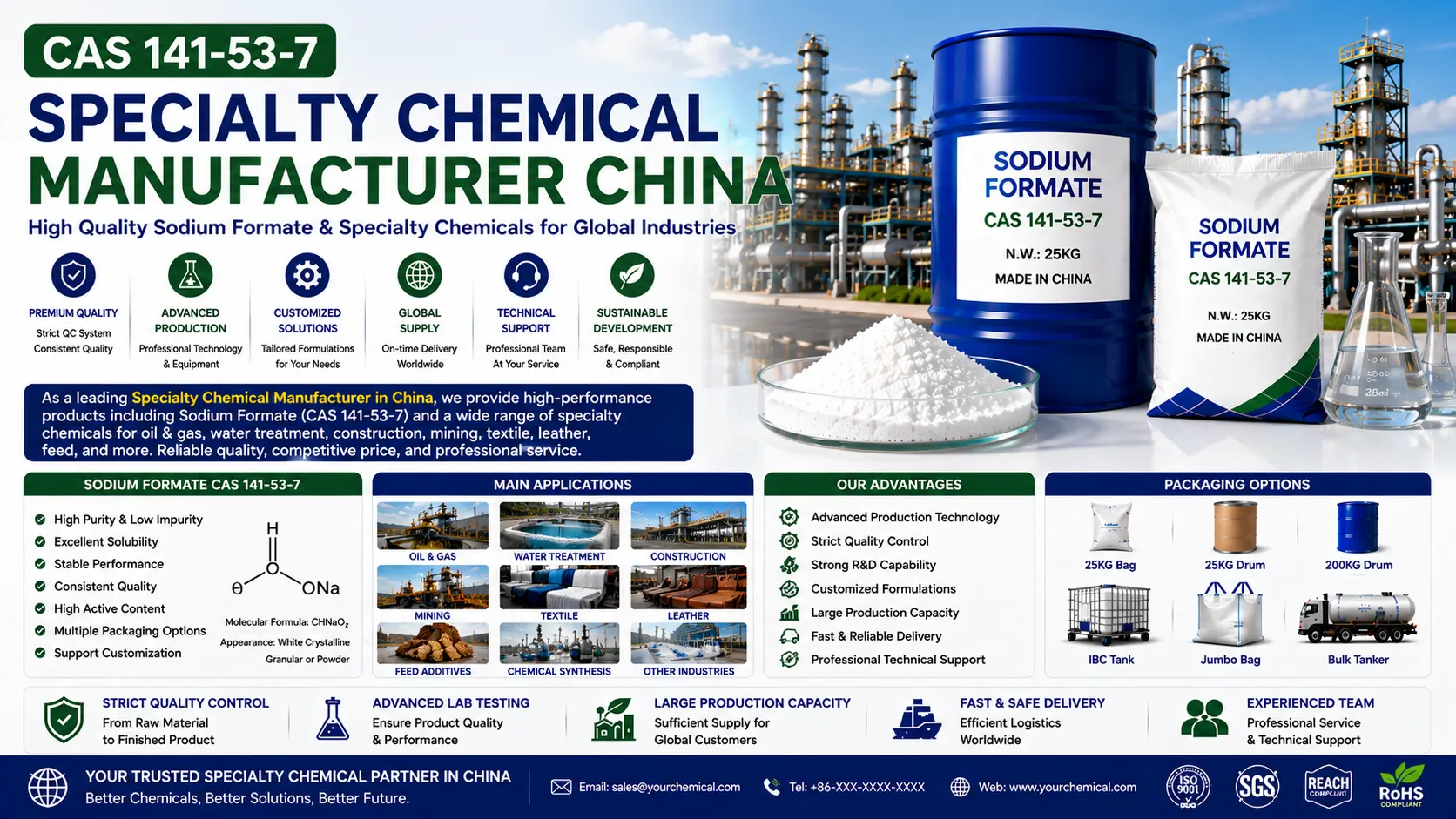
Specialty chemicals are designed to provide a certain performance goal, not just as simple raw materials. They can be used to enhance corrosion properties, scale control, water treatment, dispersion, adhesion, flexibility, processing efficiency, stability, preservation, surface properties, lubrication, and product durability.
China has built up a wide manufacturing capacity for the production of oilfield chemicals, construction additives, mining reagents, textile auxiliaries, leather processing chemicals, feed additives, water treatment chemicals, industrial salts, polymers, surfactants, and customized blends.
Buyers should be mindful, though, that catalog size and unit price are not the only criteria to consider when choosing a supplier. The quality of raw materials, formulation design, process control, application testing, batch consistency, packaging, documentation, regulatory requirements and technical support are all crucial to specialty chemical performance.
This guide covers primary categories of specialty chemicals offered by Chinese manufacturers, application areas, development capabilities, quality control, packaging, method for evaluating suppliers, sourcing risks and total cost.
What Is a Specialty Chemical?
A specialty chemical is a functional chemical product designed to provide a specific effect in an industrial process or finished material.
Unlike commodity chemicals, specialty chemicals are usually selected according to performance factors such as:
- Active content
- Purity
- Molecular structure
- Solubility
- Viscosity
- Compatibility
- Thermal stability
- Salinity resistance
- Surface activity
- Reaction rate
- Film formation
- Dispersion
- Adhesion
- Preservation
- Environmental profile
A specialty chemical manufacturer may supply standard products, modified grades, formulated blends, private-label products, and application-specific solutions.
Why Source Specialty Chemicals from China?
China has a large and integrated chemical manufacturing network.
Potential sourcing advantages include:
- Broad product availability
- Competitive production costs
- Access to upstream raw materials
- Flexible minimum order quantities
- Customized formulations
- OEM and private-label services
- Multiple packaging options
- Large-scale production capacity
- Established export logistics
- Support for different industrial markets
Chinese manufacturers may supply customers across:
- North America
- South America
- Europe
- The Middle East
- Africa
- Southeast Asia
- South Asia
- Central Asia
- Australia
The value of a manufacturer depends on technical capability and quality consistency rather than location alone.
Main Specialty Chemical Categories
Oilfield Chemicals
Oilfield chemicals are used throughout drilling, completion, workover, hydraulic fracturing, production, enhanced oil recovery, water injection, and produced-water treatment.
Common products include:
- Drilling-fluid additives
- PHPA and polyacrylamide
- Friction reducers
- Fluid-loss additives
- Shale inhibitors
- Lubricants
- Corrosion inhibitors
- Scale inhibitors
- Demulsifiers
- H₂S scavengers
- Oxygen scavengers
- Biocides
- Completion brine additives
- EOR polymers
- Profile-control agents
A suitable oilfield chemical should be tested according to temperature, salinity, hardness, pressure, crude-oil composition, and formation conditions.
Sodium Formate
Sodium formate has the CAS number 141-53-7.
It may be used in selected oilfield, leather, textile, construction, mining, feed, and industrial formulations.
Potential applications include:
- Completion and workover fluids
- pH buffering
- Pickling and neutralization
- Process-water treatment
- Industrial chemical synthesis
- Specialty salt formulations
- Low-solids fluid systems
Important purchasing specifications may include:
- Purity
- Moisture
- Insoluble matter
- Chloride
- Iron
- pH
- Particle size
- Appearance
- Packaging
- Shelf life
The correct grade should be selected according to the intended application and destination-market requirements.
Polyacrylamide
Polyacrylamide, commonly abbreviated as PAM, has the CAS number 9003-05-8.
Common grades include:
- Anionic polyacrylamide
- Cationic polyacrylamide
- Nonionic polyacrylamide
- PHPA
- HPAM
- Friction-reducer grades
- EOR polymer grades
- Mining flocculants
- Sludge-dewatering polymers
- Water-treatment flocculants
Applications include:
- Oilfield drilling
- Hydraulic fracturing
- Enhanced oil recovery
- Mining thickening
- Tailings treatment
- Wastewater clarification
- Sludge dewatering
- Paper production
- Industrial solids separation
Important parameters include molecular weight, hydrolysis degree, charge density, active content, dissolution time, residual monomer, thermal stability, salinity tolerance, and insoluble matter.
Water-Treatment Chemicals
Water-treatment specialty chemicals help clarify water, control deposits, reduce corrosion, manage microorganisms, and improve sludge handling.
Common products include:
- Polyaluminum chloride
- Polyacrylamide
- Ferric salts
- Coagulants
- Flocculants
- Scale inhibitors
- Corrosion inhibitors
- Biocides
- Defoamers
- Oxygen scavengers
- Heavy-metal precipitants
- Sludge conditioners
- pH adjusters
Applications include:
- Municipal water
- Industrial wastewater
- Oilfield produced water
- Mining water
- Textile wastewater
- Leather wastewater
- Paper-mill water
- Cooling-water systems
- Boiler-water treatment
Product selection should be based on water analysis and process testing.
Construction Chemicals
Construction chemicals improve concrete, mortar, waterproofing, flooring, repair, and finishing performance.
Common products include:
- Polycarboxylate superplasticizers
- Cement grinding aids
- Strength enhancers
- Calcium formate
- Set accelerators
- Retarders
- Cellulose ether
- Redispersible polymer powder
- Defoamers
- Water repellents
- Shrinkage reducers
- Expansion agents
- Tile-adhesive additives
- Waterproofing chemicals
- Repair materials
Performance depends on cement type, aggregate quality, water chemistry, climate, dosage, and curing conditions.
Mining Chemicals
Mining chemicals support mineral flotation, leaching, thickening, dewatering, dust control, and process-water treatment.
Common products include:
- Xanthate collectors
- Dithiophosphate collectors
- Frothers
- Depressants
- Activators
- pH modifiers
- Polyacrylamide flocculants
- Coagulants
- Leaching reagents
- Dust suppressants
- Grinding aids
- Antiscalants
- Corrosion inhibitors
- Defoamers
Ore-specific testing is essential because mineralogy and water chemistry strongly affect performance.
Textile Chemicals
Textile auxiliaries support pretreatment, dyeing, printing, washing, finishing, and wastewater treatment.
Common products include:
- Wetting agents
- Scouring agents
- Sequestering agents
- Peroxide stabilizers
- Textile enzymes
- Leveling agents
- Dispersing agents
- Soaping agents
- Fixing agents
- Printing thickeners
- Binders
- Silicone softeners
- Water repellents
- Flame retardants
- Antistatic agents
- Defoamers
The correct formulation depends on fiber type, dye class, water hardness, pH, temperature, and machinery.
Leather Chemicals
Leather-processing chemicals are used in soaking, liming, deliming, bating, pickling, tanning, retanning, dyeing, fatliquoring, finishing, and wastewater treatment.
Common products include:
- Wetting agents
- Degreasers
- Enzymes
- Deliming agents
- Pickling chemicals
- Tanning agents
- Retanning polymers
- Leather dyes
- Fatliquors
- Waterproofing agents
- Acrylic binders
- Polyurethane binders
- Waxes
- Topcoats
- Biocides
Suppliers should understand both leather performance and restricted-substance requirements.
Feed Additives
Feed additives support nutrition, preservation, feed efficiency, digestion, and product stability.
Common products include:
- Amino acids
- Vitamins
- Minerals
- Organic acids
- Acidifiers
- Calcium formate
- Sodium formate where authorized
- Preservatives
- Antioxidants
- Enzymes
- Probiotics
- Toxin binders
- Pellet binders
- Anti-caking agents
The supplied grade must be suitable and authorized for feed use in the destination market.
Pulp and Paper Chemicals
Pulp and paper specialty chemicals support pulping, bleaching, retention, drainage, sizing, strength, coating, and wastewater treatment.
Common products include:
- Retention aids
- Drainage aids
- Dry-strength agents
- Wet-strength resins
- Sizing agents
- Defoamers
- Biocides
- Pitch-control chemicals
- Optical brighteners
- Dispersants
- Coating binders
- Flocculants
Performance should be evaluated according to pulp type, filler content, machine speed, pH, and water system.
Surface-Treatment Chemicals
Surface-treatment chemicals modify metal, plastic, glass, mineral, or coated surfaces.
Common products include:
- Cleaners
- Degreasers
- Phosphating agents
- Passivators
- Corrosion inhibitors
- Adhesion promoters
- Silane coupling agents
- Metal pretreatment chemicals
- Scale removers
- Pickling inhibitors
Applications include automotive components, appliances, metal fabrication, electronics, and industrial equipment.
Coating and Adhesive Additives
Specialty additives improve coating, ink, sealant, and adhesive performance.
Common products include:
- Dispersants
- Wetting agents
- Defoamers
- Rheology modifiers
- Leveling agents
- Adhesion promoters
- Crosslinkers
- Matting agents
- Biocides
- UV stabilizers
- Antioxidants
- Water repellents
The additive should be compatible with the resin system, solvent, pigment, substrate, and curing conditions.
Standard Products Versus Customized Formulations
A manufacturer may provide standard grades suitable for common applications.
Customized formulations may be required when buyers need:
- Higher active content
- Lower impurity levels
- Better temperature resistance
- Improved salt tolerance
- Faster dissolution
- Lower foam
- Better compatibility
- Different viscosity
- Modified particle size
- Alternative solvents
- Reduced odor
- Specific color
- Improved environmental profile
- Private-label packaging
Customized development should follow a structured process.
Typical Product Development Process
A professional specialty chemical development process may include:
- Application review
- Raw-material and process analysis
- Target specification definition
- Laboratory formulation
- Compatibility testing
- Performance testing
- Sample preparation
- Customer evaluation
- Pilot production
- Commercial batch validation
- Final specification approval
- Ongoing quality monitoring
The buyer should provide accurate process information to reduce development time.
Raw-Material Control
Specialty chemical quality begins with raw materials.
A reliable manufacturer should control:
- Supplier qualification
- Incoming inspection
- Raw-material identity
- Purity
- Moisture
- Active content
- Color
- Viscosity
- Contaminants
- Storage conditions
- Batch traceability
Changing a raw-material source without validation may affect finished-product performance.
Manufacturing Capabilities
Depending on the product, manufacturing equipment may include:
- Chemical reactors
- Polymerization systems
- Blending tanks
- High-shear mixers
- Powder mixers
- Spray dryers
- Fluid-bed dryers
- Granulators
- Filtration systems
- Evaporators
- Filling lines
- Automatic dosing systems
- Temperature-control systems
The factory should have equipment appropriate to the chemistry and required quality level.
Process Control
Key process variables may include:
- Temperature
- Pressure
- pH
- Reaction time
- Addition sequence
- Mixing speed
- Raw-material ratio
- Concentration
- Drying conditions
- Filtration
- Final adjustment
Inconsistent process control can cause changes in activity, viscosity, color, stability, and application performance.
Important Product Specifications
A professional Specialty Chemical Manufacturer China should provide measurable technical specifications.
Depending on the product, important parameters may include:
- Active content
- Purity
- Solid content
- Density
- pH
- Viscosity
- Molecular weight
- Charge density
- Moisture
- Ash
- Insoluble matter
- Particle size
- Solubility
- Cloud point
- Flash point
- Pour point
- Thermal stability
- Shelf life
General claims such as “premium grade” or “high performance” are not enough for technical procurement.
Laboratory Capability
A capable specialty chemical manufacturer may support:
- Chemical analysis
- Active-content testing
- Viscosity measurement
- Particle-size analysis
- Moisture testing
- Density and pH testing
- Spectroscopic analysis
- Thermal-aging tests
- Corrosion testing
- Scale-inhibition testing
- Flocculation testing
- Dyeing trials
- Cement testing
- Leather trials
- Mining flotation tests
- Application simulations
Laboratory capability should match the industries the manufacturer claims to serve.
Application Testing
A technically suitable product should be evaluated under representative conditions.
Testing may include:
- Field-water compatibility
- Brine testing
- Cement compatibility
- Ore flotation
- Fabric dyeing
- Leather processing
- Feed-grade analysis
- Corrosion protection
- Scale control
- Wastewater clarification
- Adhesion
- Film performance
- Storage stability
The buyer should not rely only on a generic technical data sheet.
Quality Control
A dependable manufacturer should maintain quality control throughout production.
Typical procedures include:
- Raw-material inspection
- Formula verification
- Controlled dosing
- In-process sampling
- Reaction monitoring
- Active-content testing
- Density and pH testing
- Viscosity testing
- Moisture testing
- Application-performance testing
- Packaging inspection
- Batch release
- Retained samples
Stable batch quality is one of the most important advantages in a long-term supply relationship.
Batch Traceability
Each shipment should be traceable through:
- Raw-material lot numbers
- Production date
- Finished-product batch number
- Laboratory results
- Packaging records
- Retained samples
- Warehouse location
- Loading records
- Shipping documents
Traceability allows faster investigation if product performance changes.
Certificate of Analysis
A batch-specific certificate of analysis should include relevant parameters such as:
- Product name
- Grade
- Batch number
- Production date
- Test items
- Specification limits
- Actual results
- Test methods where relevant
- Quality approval
A generic or undated COA provides limited value.
Sample Evaluation
Before placing a large order, buyers should request representative samples.
Sample testing may include:
- Appearance
- Odor
- pH
- Density
- Active content
- Moisture
- Solubility
- Viscosity
- Compatibility
- Application performance
- Stability
- Comparison with an approved product
The sample should represent normal commercial production rather than a specially prepared laboratory sample.
Pilot Production
For customized products or high-volume projects, pilot production can help confirm:
- Raw-material consistency
- Process scalability
- Batch homogeneity
- Packaging compatibility
- Storage stability
- Application performance
- Production cost
- Lead time
Pilot approval should occur before full commercial production.
Packaging Options
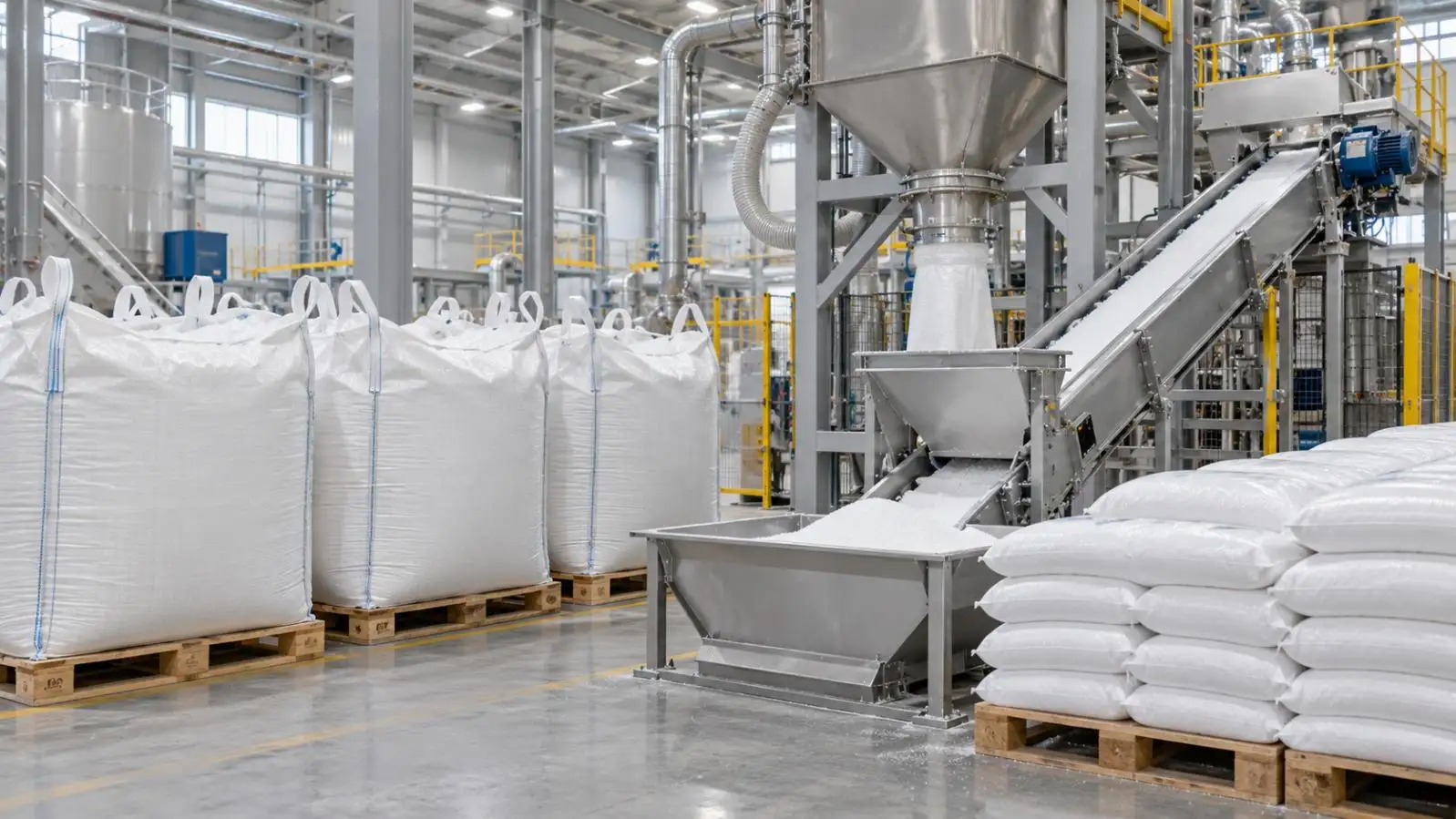
Specialty chemicals may be supplied in:
- 20 kg bags
- 25 kg bags
- 50 kg bags
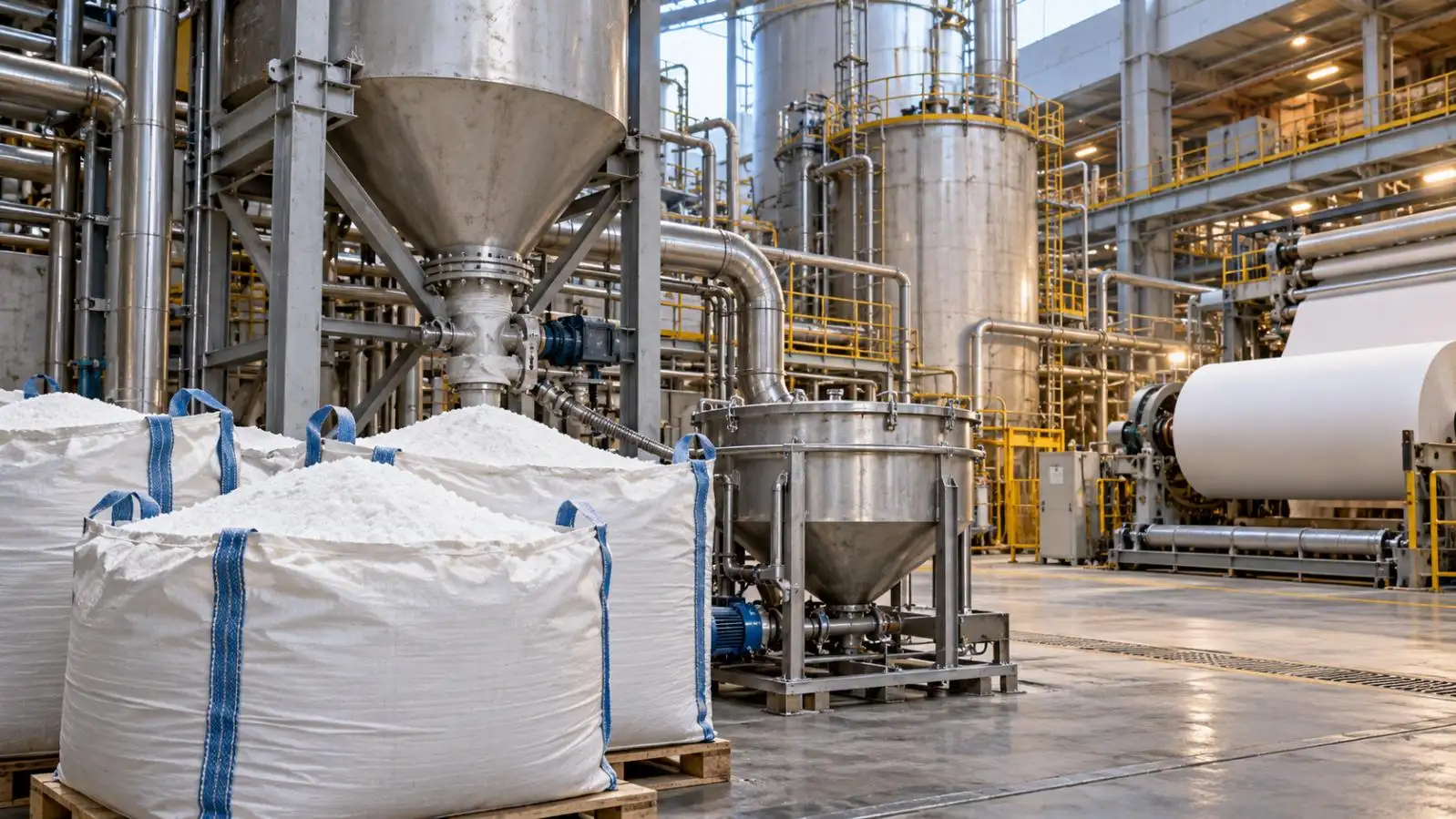
- 500 kg bulk bags
- 1,000 kg jumbo bags
- 20 kg pails
- 25 kg pails
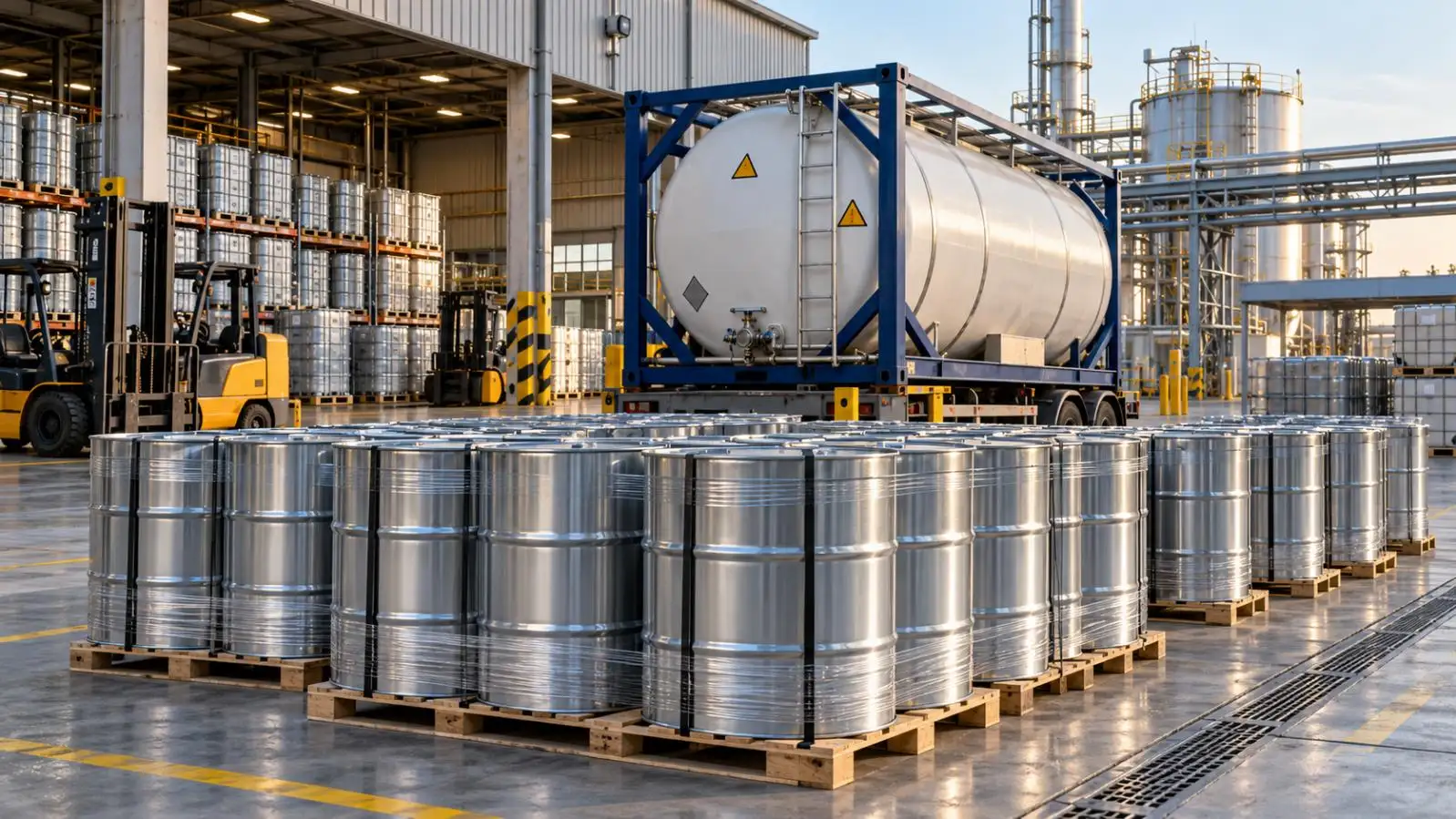
- 120 kg drums
- 200 kg drums
- 250 kg drums
- Fiber drums
- IBC tanks
- ISO tanks
- Bulk tankers
- Customized packaging
Packaging should match product form, hazard classification, moisture sensitivity, storage capacity, and transport requirements.
Private Label and OEM Manufacturing
Many Chinese specialty chemical manufacturers provide OEM and private-label services.
Potential services include:
- Customized product names
- Buyer-designed labels
- Multilingual packaging
- Formula adjustment
- Customized active content
- Customized viscosity
- Customized particle size
- Branded bags and drums
- Pallet configuration
- Shipping marks
- Private technical documents
Private-label projects should clearly define:
- Formula ownership
- Quality specification
- Label responsibility
- Regulatory responsibility
- Technical claims
- Confidentiality
- Minimum order quantity
- Complaint handling
Storage and Handling
Storage requirements depend on chemical properties.
General precautions include:
- Store products in a clean, dry, ventilated area.
- Protect powders from moisture.
- Protect emulsions from freezing.
- Avoid excessive heat and direct sunlight.
- Keep containers tightly closed.
- Separate incompatible chemicals.
- Maintain secondary containment where required.
- Use suitable personal protective equipment.
- Follow the current safety data sheet.
- Apply first-in, first-out inventory control.
Improper storage may cause caking, separation, polymer degradation, viscosity changes, or loss of activity.
Required Documents
A professional manufacturer should provide documents appropriate to the product and market.
Typical documents include:
- Technical data sheet
- Safety data sheet
- Batch-specific certificate of analysis
- Product specification
- Application guidance
- Commercial invoice
- Packing list
- Certificate of origin
- Bill of lading
- Transport documentation
- Dangerous-goods documents where applicable
- Regulatory declarations
- Inspection reports when required
All documents should use consistent product names, grades, batch numbers, quantities, and packaging details.
Regulatory and Compliance Considerations
Requirements depend on the chemical, application, and destination market.
Buyers may need to review:
- Chemical registration
- Hazard classification
- Restricted substances
- Heavy metals
- VOC content
- Biodegradability
- Feed or food authorization
- Textile and leather restrictions
- Construction standards
- Transport regulations
- Labeling requirements
- Import permits
A manufacturer should provide supporting documents but should not make unsupported compliance claims.
Environmental Considerations
Many industrial customers seek specialty chemicals with improved environmental profiles.
Potential requirements include:
- Lower toxicity
- Improved biodegradability
- Reduced VOCs
- Lower phosphorus
- Formaldehyde-free formulations
- Fluorine-free water repellents
- Reduced solvent content
- Lower dosage
- Less sludge generation
- Recyclable packaging
Environmental improvements should be supported by technical data and should not compromise safety or performance.
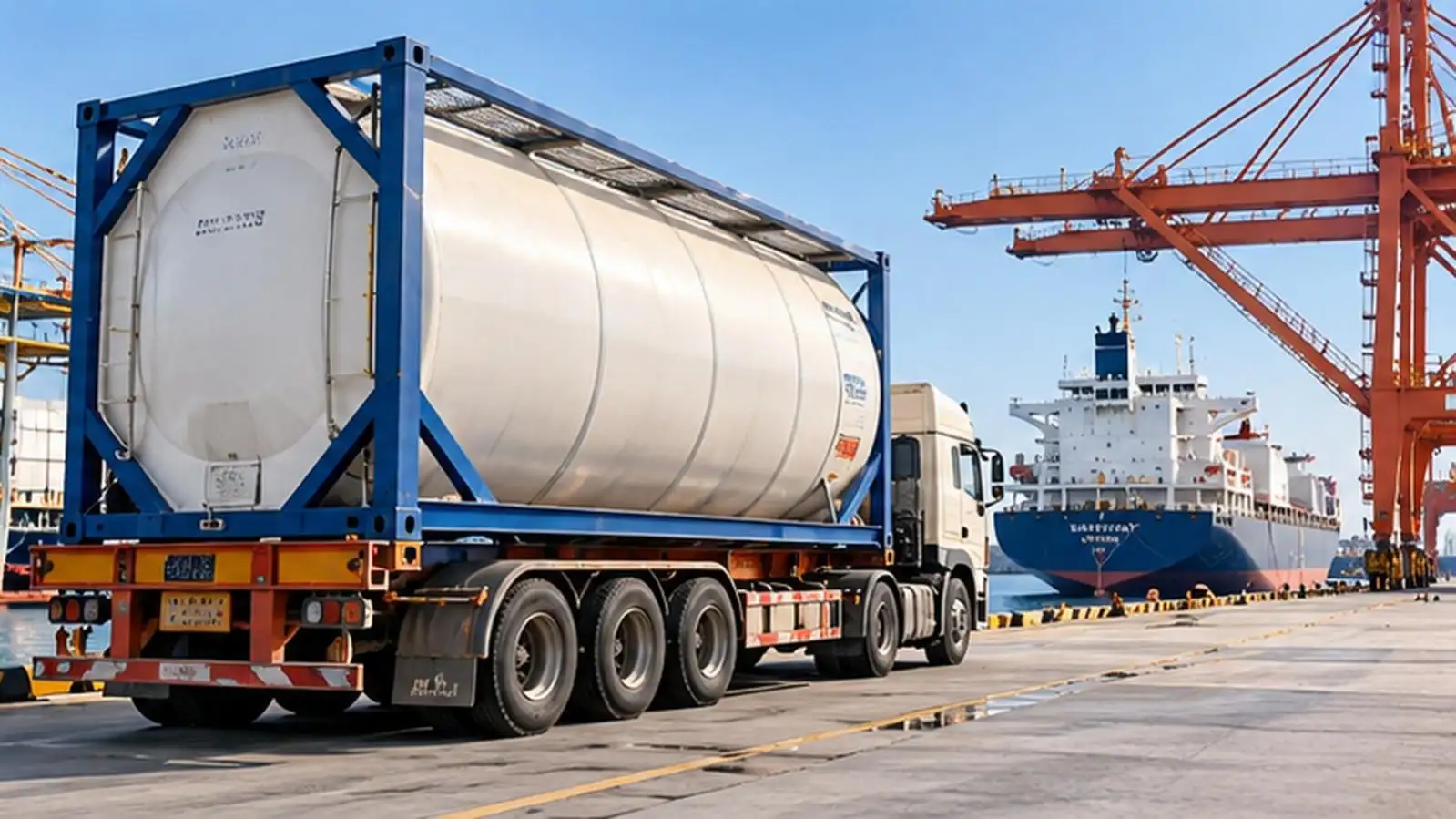
Export Logistics
Specialty chemicals may be shipped by:
- Sea freight
- Rail freight
- Road transport
- Air freight for samples
- ISO tank
- Bulk tanker
Important considerations include:
- Hazard classification
- Container loading
- Temperature protection
- Moisture protection
- Palletization
- Port selection
- Export customs
- Import documentation
- Transit time
- Destination storage
Common Incoterms include:
- EXW
- FOB
- CFR
- CIF
- DAP
- DDP where available
Responsibilities should be confirmed before order approval.
How to Evaluate a Specialty Chemical Manufacturer in China
Buyers should assess:
- Product portfolio
- Manufacturing capability
- Laboratory equipment
- Formulation experience
- Quality-control procedures
- Batch consistency
- Production capacity
- Raw-material control
- Customized-development capability
- Packaging flexibility
- Regulatory support
- Export experience
- Technical service
- Delivery reliability
- Complaint handling
A qualified manufacturer should ask detailed technical questions before recommending a product.
Factory Audit Checklist
A factory audit may review:
- Business and manufacturing licenses
- Production scope
- Raw-material warehouse
- Reaction equipment
- Blending equipment
- Drying and granulation systems
- Filling lines
- Laboratory capability
- Quality records
- Batch traceability
- Retained samples
- Finished-product warehouse
- Safety systems
- Environmental controls
- Wastewater treatment
- Export records
- Staff training
Audit depth should reflect the product risk and annual purchase volume.
Manufacturer Versus Trading Company
A manufacturer produces or formulates chemicals directly.
A trading company sources products from one or more factories.
Both can provide value.
A manufacturer may offer:
- Better process control
- Direct customization
- More stable supply
- Stronger production visibility
A trading company may offer:
- Broader product range
- Consolidated shipments
- Multiple sourcing options
- Lower order flexibility
- Simplified procurement
Buyers should understand the supplier’s actual role and verify the manufacturing source for critical products.
How to Request an Accurate Quotation
A complete inquiry should include:
- Product name
- Intended application
- Required specifications
- Target performance
- Current formulation
- Operating conditions
- Order quantity
- Packaging
- Destination
- Incoterm
- Required documents
- Regulatory requirements
- Delivery schedule
For example:
“Please quote sodium formate CAS 141-53-7, polyacrylamide, corrosion inhibitor, scale inhibitor, cement additive, textile auxiliary, and mining flocculant, including samples, TDS, SDS, batch COA, packaging options, and CIF delivery terms.”
Detailed inquiries help the manufacturer provide an accurate recommendation and quotation.
Comparing Manufacturer Quotations
Buyers should compare more than the unit price.
Important factors include:
- Product chemistry
- Active content
- Purity
- Effective dosage
- Application performance
- Batch consistency
- Packaging
- Freight
- Payment terms
- Lead time
- Documentation
- Technical support
- Complaint handling
- Supply reliability
A lower-priced chemical may create a higher total cost if it requires more dosage, performs inconsistently, or causes production problems.
Total Purchasing Cost
The total purchasing cost includes:
- Factory price
- Packaging
- Inland freight
- Export charges
- Ocean freight
- Insurance
- Import duty
- Customs clearance
- Local delivery
- Storage
- Testing
- Effective dosage
- Waste generation
- Reprocessing
- Production downtime
- Technical support
The best manufacturer provides consistent performance at the lowest total application cost.
Common Sourcing Risks
Potential risks include:
- Choosing a supplier only by price
- Unclear technical specifications
- Purchasing without sample testing
- Inconsistent raw materials
- Low active content
- Excessive impurities
- Poor application compatibility
- Weak batch traceability
- Damaged packaging
- Missing transport documents
- Unsupported compliance claims
- Delayed shipment
- Limited technical support
These risks can be reduced through detailed purchase specifications, sample testing, supplier audits, pilot production, batch-specific documentation, third-party inspection, and clear contracts.
Questions to Ask Before Ordering
Buyers should confirm:
- Is the supplier the actual manufacturer?
- Which products are manufactured in-house?
- Which products are sourced externally?
- What technical specifications can be guaranteed?
- Can representative samples be supplied?
- Can application testing be supported?
- Can customized formulations be developed?
- Can recent batch COAs be provided?
- What is the monthly production capacity?
- What is the normal lead time?
- What packaging options are available?
- Can third-party inspection be arranged?
- Which export documents are included?
- What regulatory support is available?
- How are quality complaints handled?
Conclusion
When choosing a reliable Specialty Chemical Manufacturer China, it is essential to make a comprehensive evaluation of the product chemistry, manufacturing capacity, formulation experience, technical parameters, raw material control, laboratory test, quality management, batches consistency, packaging, documentation, regulatory assistance, technical service and overseas delivery.
The Chinese manufacturers can supply oilfield chemicals, water-treatment chemicals, construction additives, mining reagents, textile auxiliaries, leather chemicals, feed additives, polymers, surfactants, process chemicals and customized industrial formulations.
Buyers should be given comprehensive information about the application, obtain representative samples, read technical documents, obtain laboratory and production trial samples, ensure manufacturing capability, compare total delivered costs, and specify clear quality requirements before purchasing.
A reliable manufacturer should be able to offer appropriate specialty chemical grades, measurable specifications, consistent batch performance, secure packaging, technical assistance, complete export documentation and a reliable supply of goods throughout the world.


Contact Us
In This Article
Related Posts
How to Choose a Reliable 2-Ethylhexanol (2-EH) Supplier in China: Quality, Packaging and Shipping
2026-10-22
Natural vs Synthetic Sodium Sulfate Anhydrous: Which Is Better for Industrial Applications?
2026-10-22
Isobutanol 99.3% Price and Supply in 2026: A Guide for Chemical Importers
2026-10-22
Sodium Sulfate Anhydrous 99% for Detergent Manufacturing: Benefits, Specifications and Bulk Supply
2026-10-22


