



Phosphoric Acid Food Grade vs Technical Grade: Purity and Compliance Compared
By vanchor
2026-07-22Related Posts
Custom Packaging Solutions from an Anhydrous Sodium Acetate Supplier in China
2026-09-23

Application Trends in Anhydrous Sodium Acetate for Special Chemical Manufacturing
2026-09-23
Anhydrous Sodium Acetate for Leather Tanning: Improve Dyeing Uniformity
2026-09-22
Formic Acid 85% for Textile Dyeing: Industrial Applications, Technical Benefits and Future Trends
2026-09-22
Phosphoric acid food grade and technical grade are not interchangeable: the real difference is how tightly each grade controls purity, impurities, and compliance for its intended use. If you’re choosing between them for procurement or formulation, the key question is whether the acid will touch food or only support an industrial process. Phosphoric Acid Manufacturer: Consistent Batch Quality, Predictable Performance (inferred)
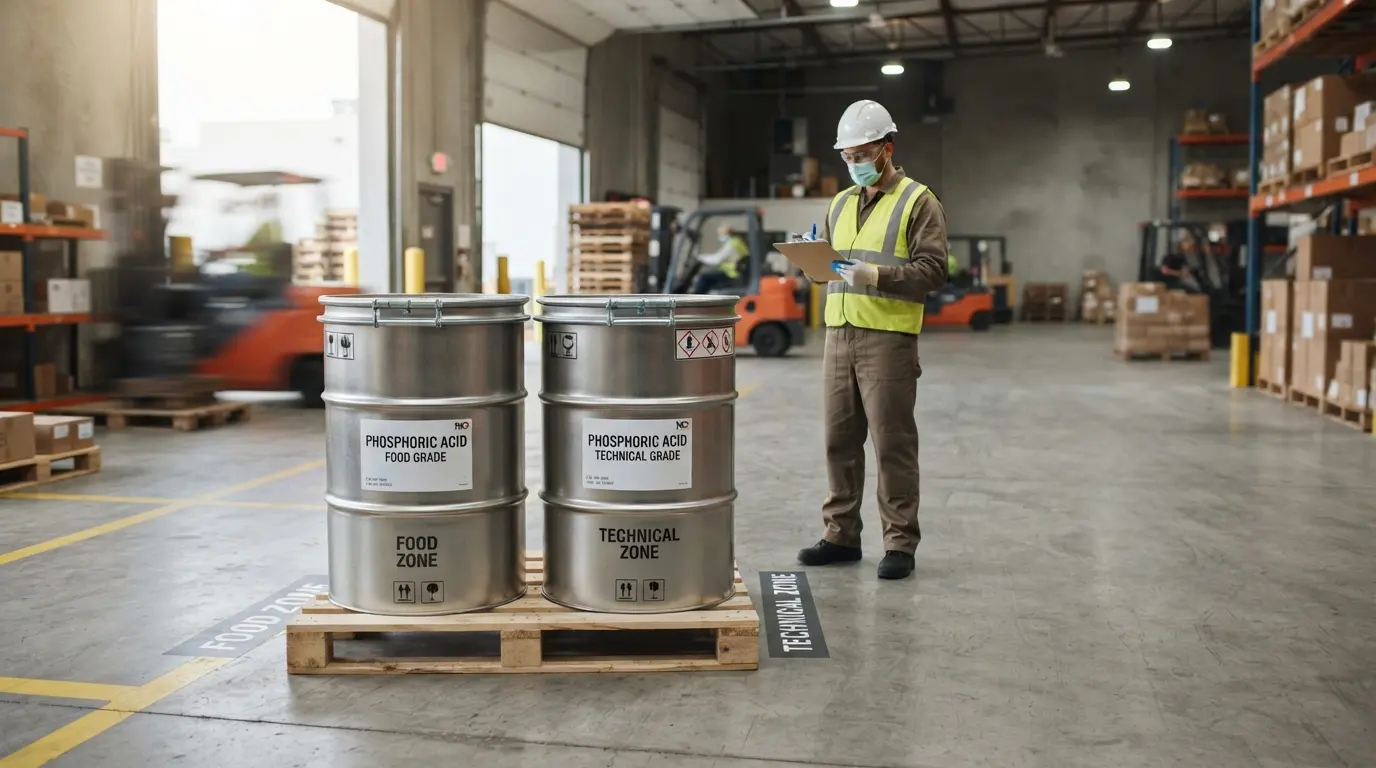
Food Grade vs Technical Grade at a Glance
Food grade phosphoric acid is specified for food and beverage use, where impurity control and regulatory compliance matter. Technical grade phosphoric acid is aimed at industrial applications where those food-use restrictions do not apply, so the acceptable impurity profile is broader.
| Factor | Food Grade Phosphoric Acid | Technical Grade Phosphoric Acid |
|---|---|---|
| Primary use | Food, beverage, and other food-contact applications | Industrial processes |
| Main concern | Compliance and contaminant control | Process performance and cost efficiency |
| Purity focus | Tighter purity expectations | Broader impurity tolerance |
| Typical role | Acidulant, pH control, formulation adjustment | pH control, surface treatment, water treatment |
| Buyer priority | Safety, documentation, and approved use | Fit-for-process and supply economics |
This is why “grade” matters more than concentration alone. Two phosphoric acid products can both be strong acids, yet still belong in very different applications because one is controlled for food use and the other is not.
What “Grade” Really Means
In practice, grade tells you what the product is allowed to be used for and how tightly it is controlled. A food-grade product must meet food-use expectations, while a technical-grade product is built for industrial processes that do not require the same food-compliance framework.
That distinction is more important than many buyers realize. If you only compare percent concentration, you can miss the actual decision factor: whether the material is suitable for the end use.
Why Food Grade Has Stricter Compliance Expectations
Food-grade phosphoric acid is not simply “cleaner” in a vague sense; it is controlled more tightly because it may be used in products people consume. That means impurity limits, trace contaminant control, and documentation become part of the purchase decision, not just the chemistry.
Authoritative food-additive frameworks and national specifications exist for phosphoric acid in food use, including U.S. food-substance listings, EU food-additive specifications, and national food-grade standards such as BIS IS 10508:2020. Competitors often say “food grade is purer,” but they rarely explain that the real issue is whether the product meets a recognized food-use specification and can be verified with batch documentation.legislation.gov+2
Documents Buyers Should Ask For
A supplier should be able to show the paperwork that supports the grade claim. For phosphoric acid, the most practical documents are a COA, MSDS, and TDS, because together they help confirm the batch, the safety profile, and the technical specification.
Vanchor’s phosphoric acid product page says it can provide COA, MSDS, and SGS reports, which makes those documents a legitimate buyer-check step for this product line. If the material is being sourced for food use, that documentation should support the grade claim, not just the shipment itself.medium
chemical export documentation checklist
Typical Uses for Each Grade
Food grade phosphoric acid is used where acidity, pH adjustment, or acidulant function must fit food or beverage requirements. Common examples include soft drinks, processed foods, and other formulation work where the acid becomes part of the final consumable product.
Technical grade phosphoric acid is more typical in industrial settings such as metal surface treatment and water treatment, where the product supports a process rather than a food formulation. Vanchor’s product page lists food processing, metal surface treatment, and water treatment among the application areas for its phosphoric acid offering, which fits the broader food-versus-industrial split.medium
Food-Use Context
In food applications, phosphoric acid may act as an acidulant or as a pH-control ingredient. The key point is not just that it lowers pH, but that the material must be suitable for the food system and comply with the relevant food-use expectations.hfpappexternal.fda
If the application is genuinely food-related, food grade is the safer and more defensible choice. That applies even when technical grade looks cheaper, because cost savings do not offset compliance risk.
Industrial-Use Context
Technical grade is usually the practical choice when the acid stays in an industrial workflow and does not need food compliance. Metal surface treatment and water treatment are common examples because the material is selected for process performance, not for consumable-product compliance.innophos+1
For readers working in those use cases, the technical-grade question is usually about suitability, documentation, and supply reliability rather than food-grade purity. That is also why a dedicated technical-use page is more useful than forcing those details into this comparison.
Phosphoric Acid for Metal Surface Treatment
How to Choose the Right Grade
The simplest way to choose is to start with the end use. If the phosphoric acid will be used in food or beverage production, food grade is the appropriate starting point; if it will be used in an industrial process with no food contact requirement, technical grade may be acceptable.
The second check is documentation. Buyers should confirm the grade on the COA, review the safety and technical sheets, and verify that the product spec matches the intended application. That is especially important when comparing suppliers, because a name alone does not prove the batch meets the right standard.
Simple Decision Rules
Use food grade when the material is intended for food, beverage, or food-contact use.
Use technical grade when the material is for industrial processing and food compliance is not required.
Ask for COA, MSDS, and TDS before committing to a purchase.
Do not choose by concentration alone; grade and use case matter more.
Treat “food grade” as a compliance requirement, not just a marketing label.
This is the practical gap many competitor pages leave out. They describe the grades, but they do not always help the buyer decide which one is actually acceptable for the job.
What Buyers Should Verify Before Ordering
Before ordering phosphoric acid, confirm the grade, concentration, batch documentation, and intended use in writing. If the application is food-related, make sure the supplier can support the claim with the right specification documents rather than just a product name.
Vanchor states that it can provide COA, MSDS, and SGS reports for its phosphoric acid offering, which makes those items relevant to the buying process here as well. For international sourcing, it is also sensible to pair product verification with export paperwork review.medium
Bottom-Line Comparison for Buyers
Food grade phosphoric acid is the right choice when compliance and food safety are part of the requirement. Technical grade phosphoric acid is the better fit when the product is used in industrial processing and does not need food-use approval.
If you are still deciding, the most useful question is not “which one is cheaper?” but “what does the end use allow?” Once that is clear, the grade choice becomes much easier to verify and much harder to get wrong.


Contact Us
In This Article
Related Posts
Custom Packaging Solutions from an Anhydrous Sodium Acetate Supplier in China
2026-09-23
Application Trends in Anhydrous Sodium Acetate for Special Chemical Manufacturing
2026-09-23
Anhydrous Sodium Acetate for Leather Tanning: Improve Dyeing Uniformity
2026-09-22
Formic Acid 85% for Textile Dyeing: Industrial Applications, Technical Benefits and Future Trends
2026-09-22


