



Soda Ash for Detergent Production: Functions, Specifications, and Dosing Factors
By vanchor
2026-07-05Related Posts
Custom Packaging Solutions from an Anhydrous Sodium Acetate Supplier in China
2026-09-23
Application Trends in Anhydrous Sodium Acetate for Special Chemical Manufacturing
2026-09-23
Anhydrous Sodium Acetate for Leather Tanning: Improve Dyeing Uniformity
2026-09-22
Formic Acid 85% for Textile Dyeing: Industrial Applications, Technical Benefits and Future Trends
2026-09-22
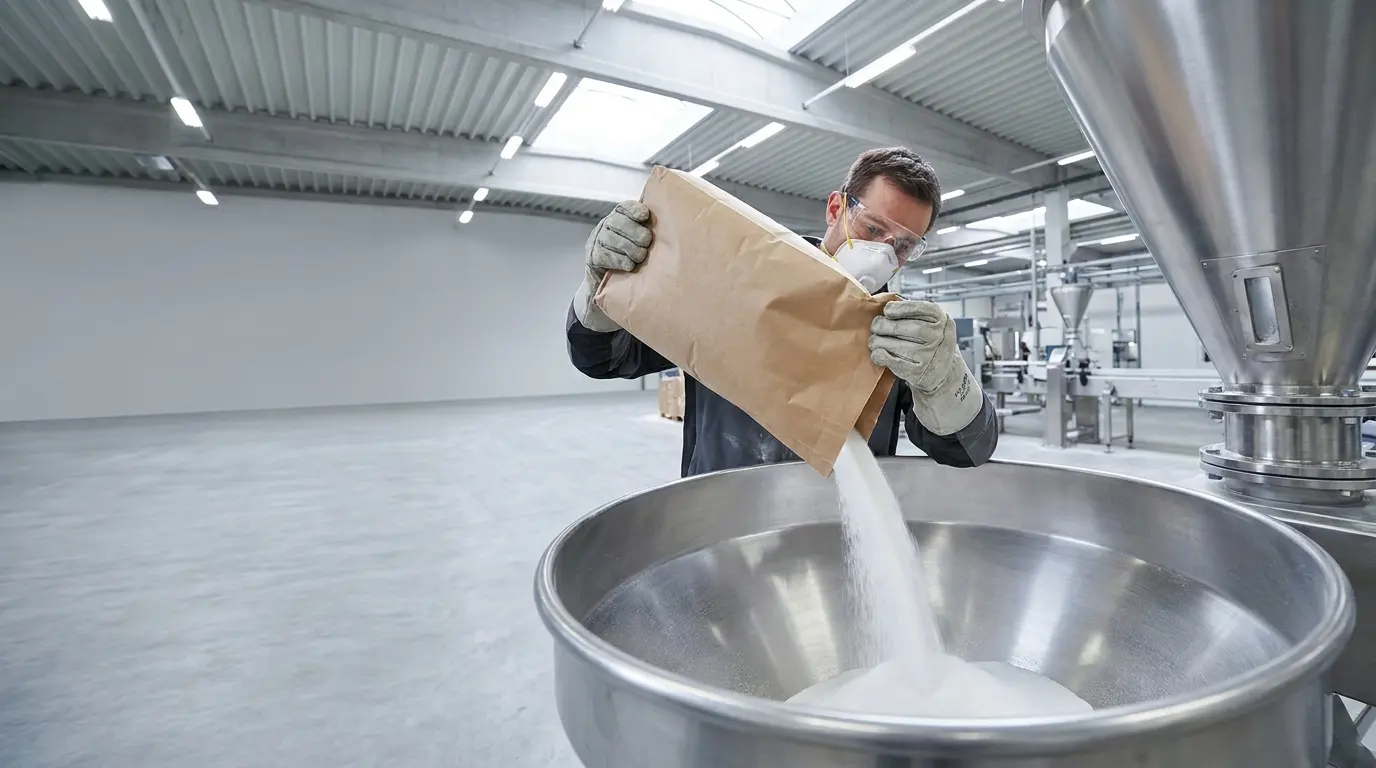
Soda ash, or sodium carbonate (Na₂CO₃), is one of the most widely used raw materials in detergent manufacturing, primarily because it acts as a builder that softens water and boosts cleaning performance. Detergent formulators typically use the Light grade of soda ash, and getting the specification and dosage right directly affects how well a finished formula cleans, foams, and holds its structure. For a full comparison of the physical grades available, see Soda Ash Light vs Dense: How to Choose the Right Grade (inferred); this guide focuses specifically on how soda ash performs and should be specified within detergent formulations.
How Soda Ash Functions in Detergent Formulations
Soda ash's main job in a detergent formula is to act as a builder. A builder is an ingredient that neutralizes the effects of hard water so the surfactant, the actual cleaning agent, can do its job without being wasted on fighting minerals in the wash water.
When water contains dissolved calcium and magnesium ions, those ions bind to surfactant molecules and reduce their ability to lift dirt and grease. Sodium carbonate reacts with these ions, precipitating them out of solution or holding them in a form that no longer interferes with cleaning. This is the same softening chemistry that underlies its use in industrial water treatment chemicals, applied here on a smaller scale inside a wash load rather than a treatment plant.
Beyond water softening, soda ash contributes alkalinity to the wash solution. A 1% solution of sodium carbonate typically shows a pH around 11.5, and this alkalinity helps break down grease, loosen acidic soils, and create the chemical environment in which anionic surfactants work most efficiently. In practical terms, this means soda ash does three things at once inside a formula:
Softens hard water by binding calcium and magnesium ions
Raises the pH of the wash solution to support grease and soil removal
Improves surfactant efficiency by reducing the mineral load surfactants would otherwise have to overcome
This combination is why sodium carbonate functions as a builder rather than just a filler, and why it remains a standard ingredient in powder detergent chemistry even as formulations evolve.
Grade Selection and Specifications for Detergent-Grade Soda Ash
Detergent manufacturers generally use Soda Ash Light rather than the Dense grade. Light soda ash has a finer particle structure and lower bulk density, which allows it to dissolve faster and blend more evenly into powder formulations. If you need the full breakdown of how Light and Dense grades differ across applications, that comparison is covered in the Soda Ash Light vs Dense: How to Choose the Right Grade (inferred) guide.
For detergent use, the specification that matters most is purity, since impurities can affect solubility, appearance, and consistency in the final powder blend. A typical detergent-grade specification looks like this:
| Parameter | Typical Requirement | Why It Matters in Detergents |
|---|---|---|
| Sodium carbonate content | ≥99% | Higher purity means more consistent alkalinity and softening performance |
| pH (1% solution) | Around 11.5 | Confirms the alkalinity level the formula depends on |
| Insoluble matter | Low | Reduces the risk of visible residue or grittiness in powder blends |
| Moisture content | Low, controlled | Prevents caking and clumping during storage and blending |
| Particle form | Light (fine powder) | Supports fast dissolution and even mixing in powder detergents |
Vanchor's sodium carbonate is supplied at ≥99% purity with a pH of approximately 11.5 in a 1% solution, and is available in both Light and Dense grades. For detergent applications specifically, the Light grade aligns with the fine, fast-dissolving profile formulators generally look for.
Dosing Factors for Soda Ash in Detergent Formulations
There is no single dosage figure that applies to every detergent formula, and treating soda ash usage as a fixed percentage can lead to over-alkaline or under-performing products. Instead, the right amount depends on several interacting factors that a formulator needs to weigh together.
Water hardness in the target market is the starting point. Formulas intended for regions with harder water generally need more builder capacity to neutralize calcium and magnesium ions, while soft-water markets require less. Formulation type also matters: powdered detergents can incorporate soda ash directly as a dry ingredient, while liquid detergents are more limited by solubility and stability, since sodium carbonate is less soluble in concentrated liquid systems than in a dissolving powder wash.
Alkalinity and safety limits form another boundary. Because soda ash raises pH, formulators need to balance cleaning performance against skin and fabric safety, since excessive alkalinity can cause irritation or affect certain fabric types over repeated washes. Finally, soda ash rarely works alone. It's typically balanced against other builders and surfactants in the formula, so the effective dose depends on what else is already contributing alkalinity and water-softening capacity.
Because these variables shift from one formulation to another, the practical approach is to determine dosage through formulation trials, using a supplier's technical data sheet as the starting reference point rather than a generic industry percentage.
Applications Within Detergent Manufacturing
Soda ash's role varies somewhat depending on the type of detergent being produced. Its main applications include:
Powdered laundry detergents, where it is one of the primary builders and blends directly into the dry powder mix
Compact and concentrated powder formulations, where its alkalinity helps maintain cleaning performance at lower dosing volumes
Liquid detergents, in a more limited capacity, where solubility constraints mean it is used more cautiously than in powder systems
This is different from soda ash's role in Soda Ash for Glass Manufacturing, where the Dense grade is used as a flux to lower the melting point of silica rather than as a cleaning-performance ingredient. The detergent and glass applications rely on the same base chemical but use different grades for entirely different functional reasons.
Evaluating Soda Ash Suppliers for Detergent Production
Before sourcing soda ash for a detergent line, it's worth confirming a few things directly with the supplier rather than assuming a generic industrial grade will work:
Request a Certificate of Analysis (COA) confirming purity, pH, and moisture content for the specific batch
Ask for the Safety Data Sheet (SDS) and Technical Data Sheet (TDS) to check handling requirements and full specification ranges
Confirm the grade being supplied is Light, since Dense grade is not the standard choice for detergent blending
Check packaging suitability for your storage and production environment, since moisture exposure can affect powder consistency
Vanchor supplies sodium carbonate with COA, SDS, and TDS documentation, and offers it in 40kg or 50kg bags as well as 1000kg FIBC jumbo bags, with packaging designed to limit moisture exposure. The company also provides free samples and customized packaging options, which is useful if you want to validate a batch in a formulation trial before committing to a bulk order. For broader context on how bulk chemical shipments are packaged and handled for export, see chemical packaging and logistics. If you're evaluating suppliers more broadly, background on production scale and quality practices is available on the specialty chemical manufacturer china page.
If you're ready to move from specification review to sourcing, requesting a sample of Vanchor's Soda Ash Light along with its current COA and TDS is a practical next step for validating it against your own formulation before a larger order.


Contact Us
In This Article
Related Posts
Custom Packaging Solutions from an Anhydrous Sodium Acetate Supplier in China
2026-09-23
Application Trends in Anhydrous Sodium Acetate for Special Chemical Manufacturing
2026-09-23
Anhydrous Sodium Acetate for Leather Tanning: Improve Dyeing Uniformity
2026-09-22
Formic Acid 85% for Textile Dyeing: Industrial Applications, Technical Benefits and Future Trends
2026-09-22


